Korean Food / Sujebi: Hand-Torn Dough Soup, Broths and How to Choose
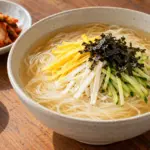
Sujebi is a Korean soup made by tearing wheat dough into thin pieces by hand and cooking them in broth. Broad, irregular pieces replace long noodles, combining soft edges with slightly thicker, chewier areas. Depending on the stock and additions, it ranges from a clear, light bowl to a richly nutty perilla-seed soup.
The texture of hand-torn dough
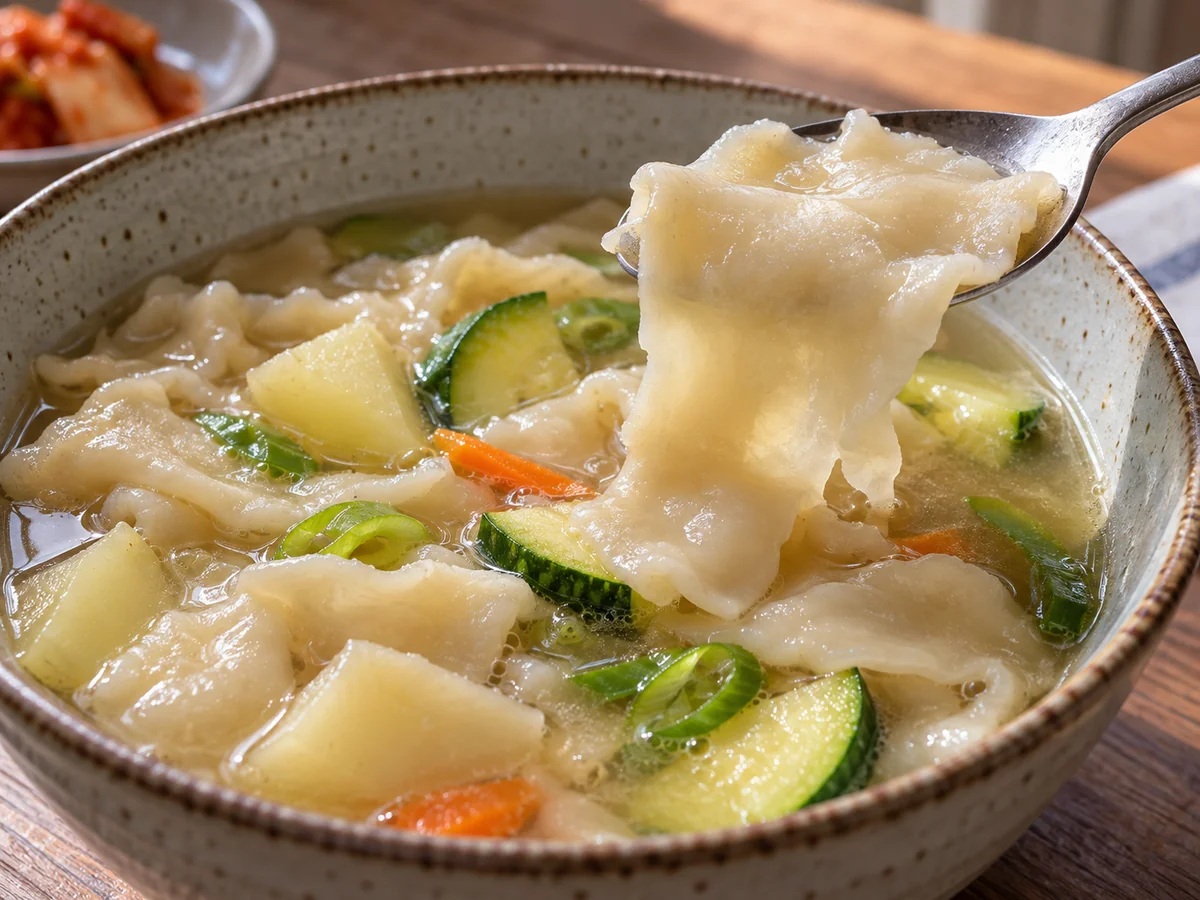
Unfilled dough is the center of sujebi. Even small pieces vary in width and thickness, so a single piece can have smooth, soft areas and more resilient parts. Scooping broth-soaked dough with a spoon differs from lifting long noodles with chopsticks.
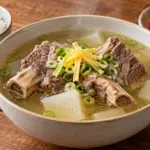
The Korea Tourism Organization’s sujebi introduction describes torn wheat dough cooked in anchovy or beef broth with potatoes, zucchini and other vegetables. Coastal versions may use shellfish and seaweed stocks. The common thread is the dough’s form and cooking method, rather than an absolute requirement for anchovy broth.
The broth may start fairly clear and become cloudier or thicker as the dough cooks. Dough thickness and quantity, and ingredients such as potatoes, also affect it. Instead of treating clarity as proof of quality or thickness as proof of richness, consider your preferred dough thickness and broth body.
How does it differ from kalguksu and dumpling soup?
Sujebi and kalguksu both serve wheat dough in broth. Their defining difference is the dough’s shape: kalguksu uses rolled dough cut into long noodles, while sujebi uses hand-torn pieces. Even with identical stock, their shape and the way you chew them differ.
| Dish | Form of dough | Main eating experience |
|---|---|---|
| Sujebi | Broad, irregular, unfilled pieces | Spoon them with broth and notice textures that vary with thickness. |
| Kalguksu | Rolled dough cut into long noodles | Lift strands and notice their thickness and springiness. |
| Mandu soup | Wrappers filled with meat, vegetables or other ingredients | Enjoy wrapper and filling together. |
Kaljebi usually combines kalguksu noodles and sujebi pieces. Choose it to try both, but proportions and quantity vary by restaurant. If sujebi contains dumplings, check the dumpling fillings and varieties too. A combined menu name does not mean you receive a full bowl of each dish.
Choosing clam, perilla or kimchi sujebi
For a basic clear version, ask whether the stock is anchovy-based and whether chili or seasoning is already included. “Clear” describes color or cloudiness, not an absence of chili or light seasoning. For a nonspicy meal, ask specifically whether hot Cheongyang chilies can be omitted or condiments served separately.
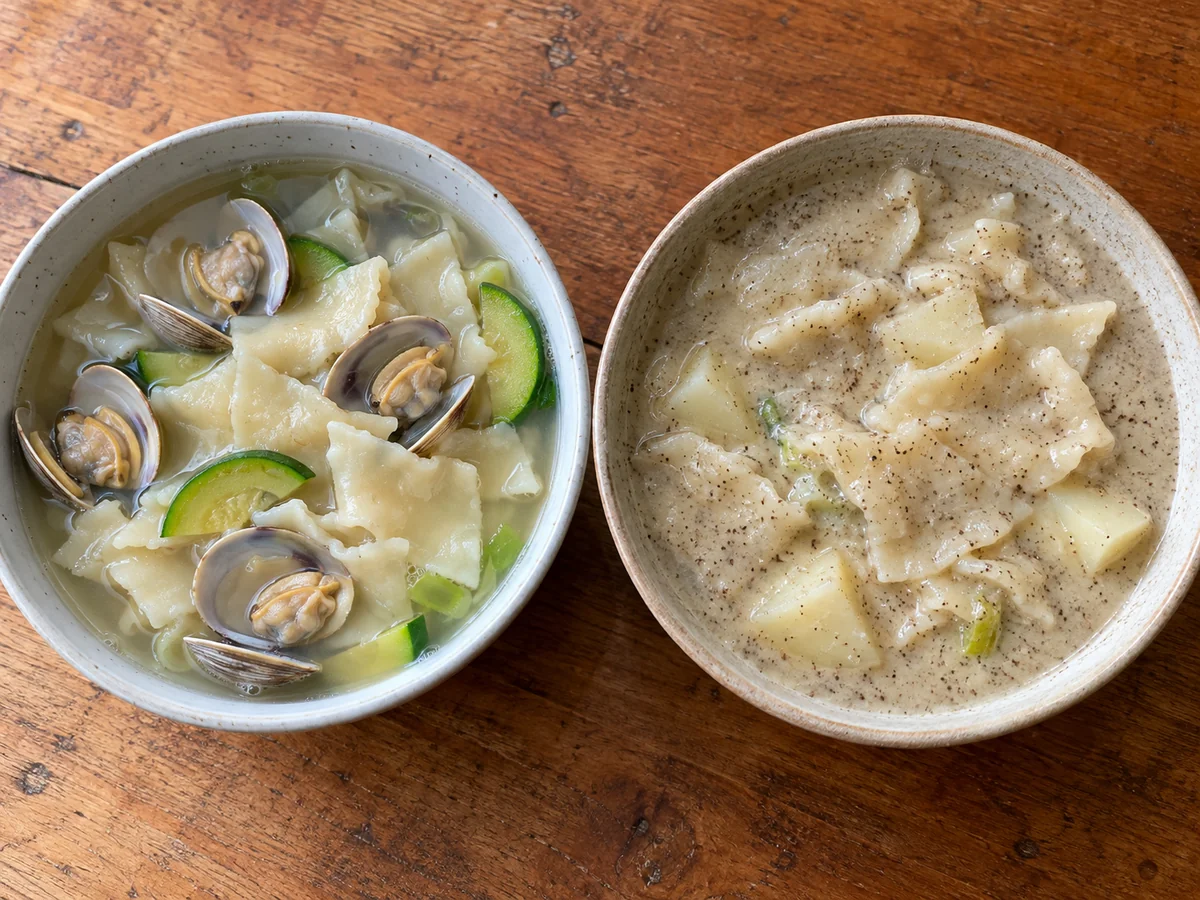
Clam sujebi pairs shellfish savoriness with mild dough. KBS WORLD’s clam sujebi recipe gives an example with anchovy-kelp stock, clams, potato and zucchini. A clam name does not mean a stock made only from clams; check the base stock too if avoiding ingredients.
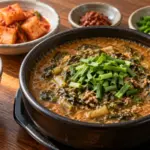
Perilla sujebi is chosen for its nutty aroma and the broth’s body. A creamy appearance does not mean milk is a basic ingredient, but actual additions still require checking. Nor do visible vegetables and perilla alone establish that it is vegetarian.
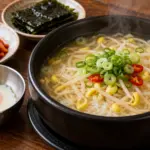
Kimchi sujebi suits a desire for sourness and heat from kimchi and its seasoning. Ripeness and additional chili change the result, so distinguish whether you want acidity or spiciness. For potato sujebi, ask whether potato is a solid ingredient or part of the dough to avoid a different dish from what you expected.
How the dough gets into the broth
The general process is to make dough, let it rest, stretch and tear it thin, then cook it with vegetables in broth. The sujebi recipe from Korea.net and the Institute of Traditional Korean Food separately explains resting the dough and tearing thin pieces for cooking. Resting is a preparation stage, not equivalent to using the mixture immediately after flour meets water.
Overly thick pieces can cook at different rates outside and inside. Stretching their edges thin is not merely decorative: it helps achieve a comfortable thickness and even cooking. Dropping in rounded lumps produces a different texture.
At home, consider the thickness and amount of dough rather than relying only on a fixed number of minutes. Cut open thick pieces to check for uncooked dough in the center. Keeping pieces consistently thin and following the recipe’s quantities and cooking process helps avoid a soft outside with an undercooked middle.
How to eat it and what to check before ordering
Taste the broth first, then take out a little dough and let it cool. Broad pieces can fold on the spoon and trap hot broth, making them hotter than they look. Divide large pieces into manageable bites to appreciate both broth and dough.
Add a separate seasoning sauce in small amounts. Soy-based sauce adds salt; chili-containing sauce can add heat too. Try kimchi as a side before putting it all in the broth to preserve the base flavor. With perilla broth, taste its nutty character before adding strong spices or condiments.
- Check whether the serving is an individual bowl or a jar or pot for sharing.
- Ask separately about dough and broth for ingredients to avoid, including seafood or meat stocks, perilla and wheat.
- If heat matters, ask whether chili is already included rather than relying on a name such as “spicy” or “warming.”
- For kaljebi or dumpling sujebi, check which ingredients are combined and in what quantities.
Start by deciding whether you want thin, soft pieces or thicker, chewier dough rather than simply choosing the most familiar variety. Then choose clear stock, clams, perilla or kimchi for the flavor you prefer.