Korean Food / Ganjang Gejang: Soy-Marinated Crab, Flavor and How to Eat It
Ganjang gejang is raw crab marinated in seasoned soy sauce, served with rice to balance its tender flesh and savory seasoning. Unlike steamed or boiled crab, it retains a moist, slippery texture, with the crab’s sweetness and aromatic seasonings following the saltiness of the sauce. Before ordering it for the first time, check how it differs from spicy marinated crab, what crab and portion you will receive, and whether eating raw seafood is appropriate for you.
Marinating in soy sauce is different from cooking
The purpose of the marinade is to flavor the crab. Even if the soy sauce is boiled when the seasoning is prepared, the finished dish is not equivalent to crab that has been thoroughly cooked in a steamer or soup. Likewise, a restaurant’s description of the crab as “aged” does not mean its flesh has become firm and opaque through cooking.
The Encyclopedia of Korean Culture’s entry on gejang describes a preserved food flavored by pouring soy sauce over crab, with methods varying across periods and regions. Its long culinary history and the storage and safety requirements of a product sold today are separate matters. A storage period in an old recipe cannot simply be applied to crab you have just bought.
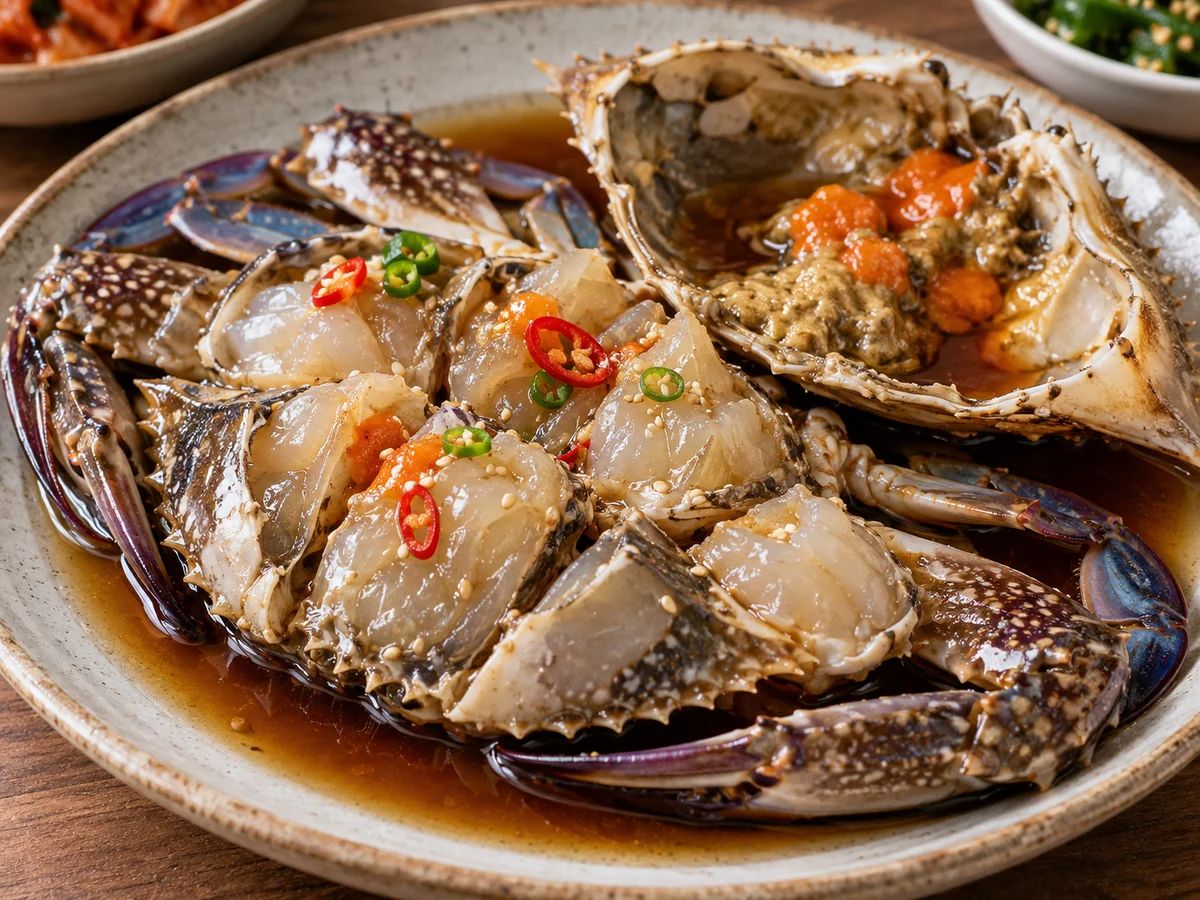
Swimming crab is a common choice, but the species, size and way it is cut vary by menu. One large crab divided into pieces offers a different eating experience from several small crabs, even though both dishes are called ganjang gejang. The species and actual quantity are more useful details than the apparent size of a plate in a photograph.
Distinguishing crab meat, roe, innards and marinade
The flesh inside the body can feel moist and soft rather than separating into firm flakes like cooked crab. Simply squeezing it out by pressing the shell may mix in small shell fragments or splash the marinade. Instead, gently remove a little meat from an exposed cut surface. Starting with a small amount helps you assess the texture without taking in too much sauce at once.
The orange and brown parts inside the shell are not all the same ingredient. Roe and innards vary with the crab’s sex and condition, and color in a photograph cannot tell you how much roe there is or establish freshness. If you specifically want roe, check whether the menu specifies female crab and ask what the serving actually contains.
Garlic, ginger, chili and sweet ingredients may flavor the soy marinade. Some versions taste salty first; others have more pronounced sweetness or aromatic vegetables. More sauce or a darker color does not necessarily mean a stronger crab flavor. Begin with the amount of marinade already coating a small piece of meat.
How do ganjang gejang, yangnyeom gejang and crab soup differ?
When choosing a crab dish, first consider whether the crab is cooked and whether you want a rice accompaniment or a soup. Ganjang gejang and yangnyeom gejang have different seasoning styles; steamed crab and crab soup also differ in cooking method.
| Dish | Main flavor and texture | What to check |
|---|---|---|
| Ganjang gejang | Soy marinade and tender raw crab meat | Crab species, roe and portion size |
| Yangnyeom gejang | Raw crab with spicy red-pepper seasoning | Heat, sweetness and preparation |
| Steamed swimming crab | Cooked flesh and the crab’s own flavor | Size, number of crabs and dipping sauce |
| Swimming crab soup | Broth simmered with crab and vegetables | Broth’s heat and how many people share a pot |
Choosing soy-marinated crab to avoid heat does not guarantee that it contains no chili. Red yangnyeom gejang also varies in its balance of sweetness and heat. Spiciness and raw seafood are separate questions, so explain both requirements if you are looking for a mild crab dish.
How to eat it with rice and gim
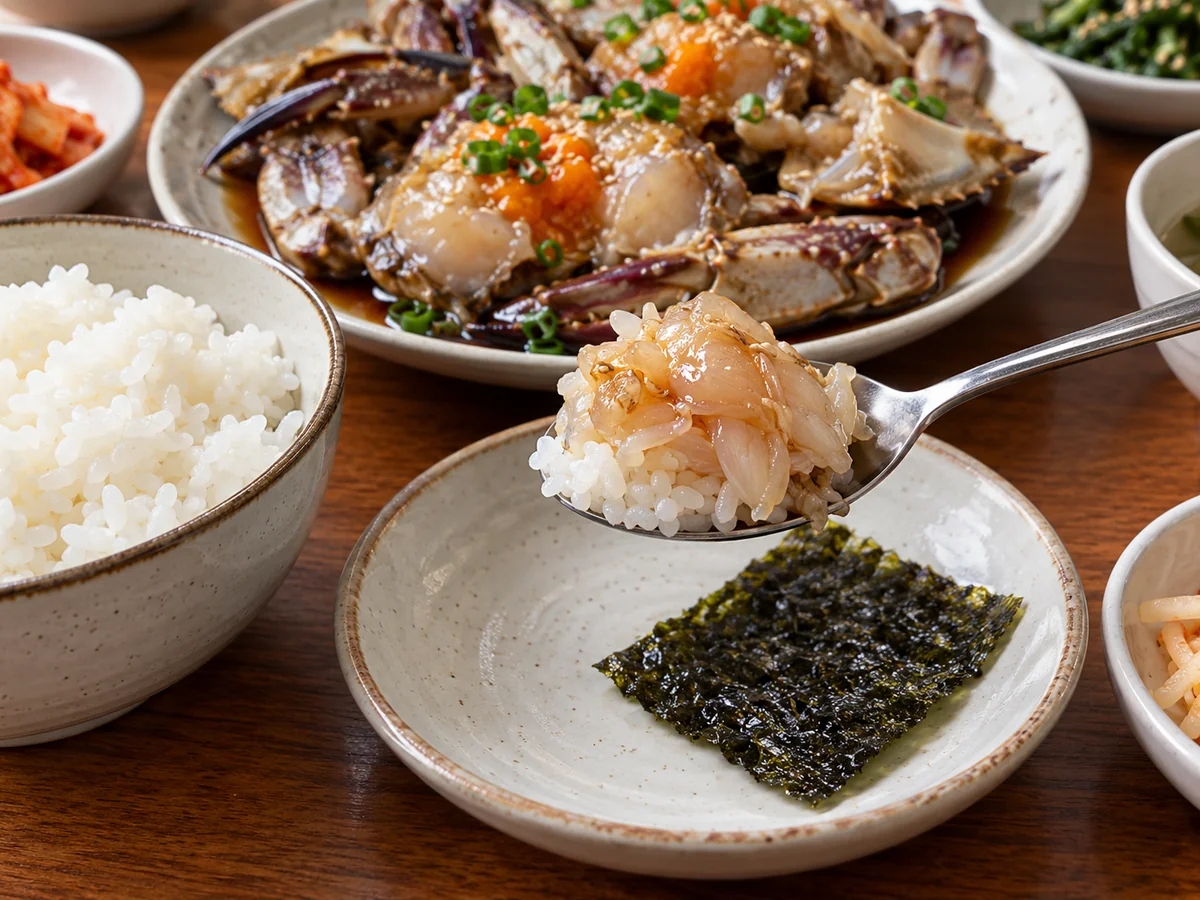
The Korea Tourism Organization’s ganjang gejang guide describes eating the crab with rice and mixing rice with the contents of the shell. To control the seasoning, taste the meat and marinade before adding small amounts to your rice, rather than pouring sauce over the whole bowl immediately.
- Place one piece of crab on a side plate if provided, and carefully take a little meat from the cut body section while avoiding the shell.
- Taste a small amount on its own or on a spoonful of plain rice to judge the intensity.
- If you want to add innards or soy marinade, mix only a little into part of the rice. Allow for the sauce already coating the crab meat.
- If gim, dried seaweed sheets, is provided, put a little rice and meat on a small piece. Try the next bite without seaweed to compare.
Mixing rice inside the crab shell is an option, not a requirement. If the innards’ flavor is unfamiliar, start with meat and rice. Using all the sauce in the shell may make the rice too salty, and the shell’s edges can be sharp, so do not scrape it forcefully with a spoon.
What to check in set meals, individual dishes and takeaway products
A set meal often includes crab, rice, soup and side dishes. An individual crab dish may require a separate rice order. Even when a price is shown per person, a minimum party size may apply. Solo diners should check the minimum order and whether rice is included.
Crab counts alone do not reliably compare portions. A large and small crab provide different amounts of edible meat, and a listed weight may or may not include marinade. Read what terms such as albagi, indicating roe, amge, female crab, or sunsal, removed meat, mean for that particular product. Meat-only products should not automatically be assumed to have identical ingredients or storage conditions.
Takeaway and delivery products differ from a meal served for immediate eating. On receipt, check the refrigeration or freezing instructions and use-by date, as well as any separate limit after opening. Reusing leftover marinade directly in another dish or leaving it on the table for a long time should not be treated as a standard way of enjoying the food.
Consider the raw-seafood aspect separately from flavor
Soy marination should not be assumed to provide the same safety as thorough cooking. The US Centers for Disease Control and Prevention’s Vibrio prevention guidance recommends avoiding raw or undercooked seafood and cooking it before eating, especially for people with underlying conditions such as liver disease. People in these groups, or anyone advised by a clinician to avoid raw seafood, should choose cooked crab dishes.
This is general raw-seafood prevention guidance, not a study evaluating ganjang gejang alone. Taste, smell and color cannot guarantee safety; extra salt or improvised home freezing should not be assumed to solve the same risks. Check the ingredients too if you have an allergy to crab or components of the soy marinade.
When choosing ganjang gejang, consider whether you enjoy soft raw crab, whether the seasoning and portion suit you, and whether raw seafood is appropriate for you. If you decide to eat it, start with a small piece of crab and plain rice, then adjust the seasoning gradually to understand the dish’s character.