Korean Food / Yakgwa: Ingredients, Syrup-Soaked Texture, and How to Eat It
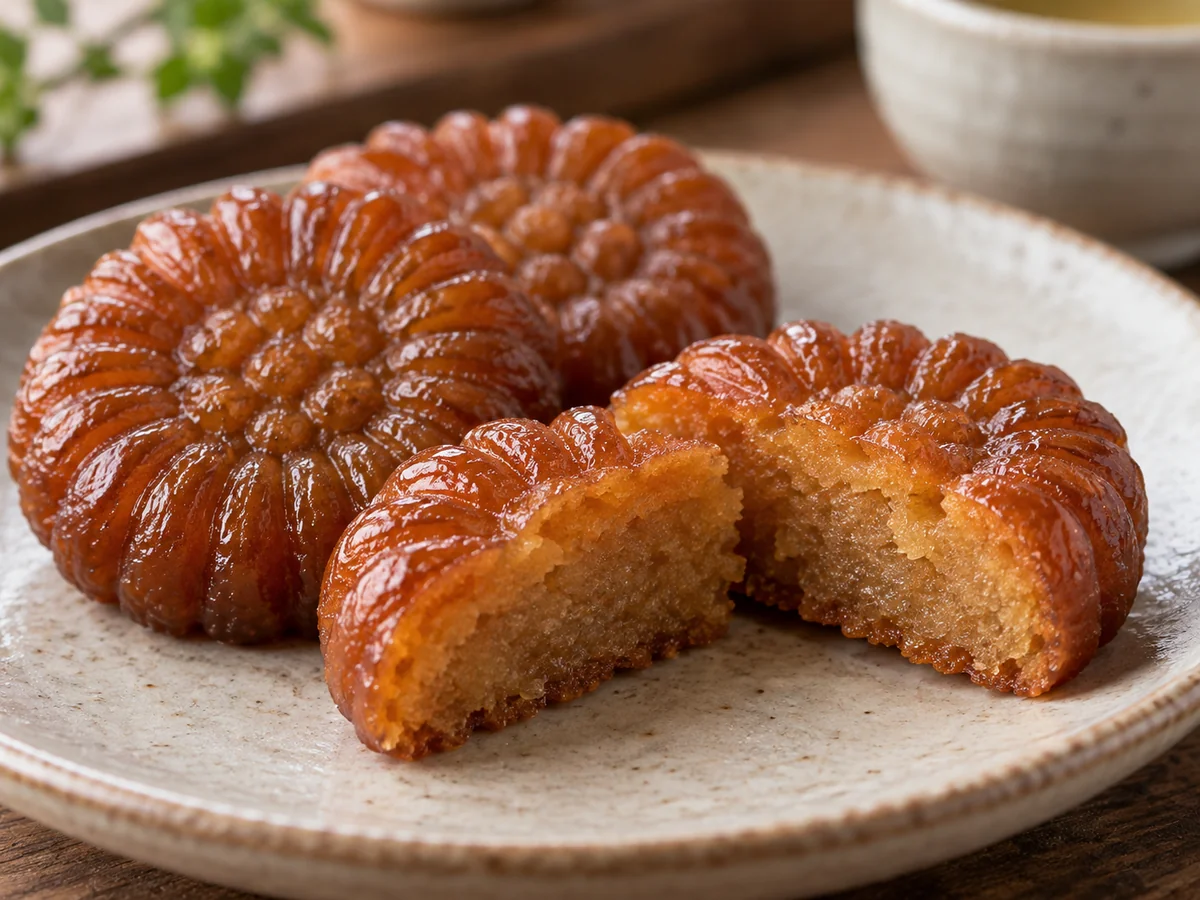
Yakgwa is a traditional Korean sweet made by shaping a flour dough mixed with ingredients such as oil and honey, cooking it in oil, and letting a sweet syrup of honey or grain syrup soak into it. Round pieces stamped with a flower pattern are familiar, with a rich exterior, sweetness throughout, and a dense, moist texture. Its ingredients and preparation differ from rice cakes and crisp cookies.
A yumilgwa sweet made with flour, oil, and honey
Yakgwa belongs to yumilgwa, a category within traditional Korean confectionery, or hangwa. Yumilgwa are sweets made from flour dough with ingredients such as honey and oil, then cooked in oil. The Encyclopedia of Korean Culture’s yakgwa entry (in Korean) describes dough made with flour, honey, and sesame oil, shaped in a yakgwa mold, cooked in oil, and then soaked in grain syrup or honey.
Ginger juice or clear rice wine may be added to the dough, and cinnamon may flavor the syrup. Not every yakgwa uses the same spices or proportions. Some have a distinct sesame oil aroma, while others have only a faint ginger or cinnamon note, so the actual flavors vary.
Cooking flour dough in oil gives it richness, but that is not the end of the process. Jipcheong, the step of soaking the sweet in honey or grain syrup, is important to yakgwa’s characteristic sheen and moisture. Expect a texture different from a cookie with a little sweet sauce brushed on its surface.
A bite of yakgwa may start with a slightly firm exterior before reaching a softer, syrup-soaked center. Depending on the product, it can be chewy, crumble softly, or reveal fine layers. Dough preparation, thickness, cooking in oil, and the extent of syrup soaking vary, so not every yakgwa has the same texture.
A cut piece shows a dense interior, with syrup absorbed into small spaces or layers. Sweetness may be strongest at first, followed by the richness of oil and aromas such as ginger or cinnamon. Even a small-looking piece can taste intense, so start with a small portion and take your time.
Calling yakgwa “chewy” does not mean it has the same texture as tteok, or Korean rice cakes. Its stickiness and density come from syrup absorbed into cooked wheat-flour dough, unlike the springiness of rice-flour dough. If you expect a light sweet that snaps and crumbles, yakgwa’s moist weight can be surprising.
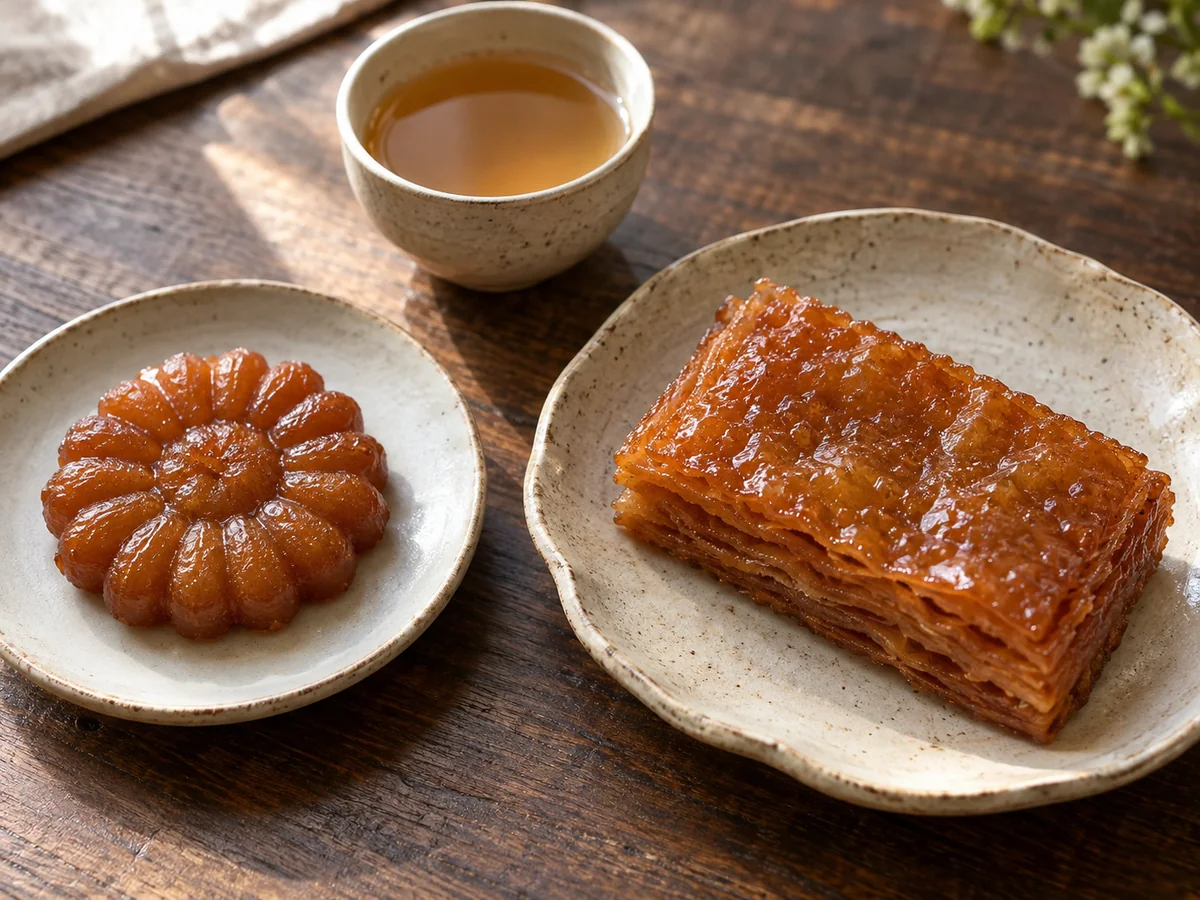
Flower-shaped yakgwa and square moyakgwa
Flower-patterned yakgwa is familiar in molded or stamped forms. Sizes range from small bites to pieces approaching the size of a palm. Size changes not only the amount in a piece but also how the exterior and interior feel when bitten together.
Square versions are called moyakgwa. The Encyclopedia of Korean Culture’s yumilgwa entry (in Korean) distinguishes names such as moyakgwa, dasikgwa, and mandugwa according to how they are shaped. Some moyakgwa show overlapping layers of dough, which you can examine along the cut face and edges.
| Choice | Features to examine | What to notice when tasting |
|---|---|---|
| Round, flower-patterned pieces | Stamped pattern, thickness, and density inside | Difference in moisture between surface and center |
| Moyakgwa | Square shape and visible layers or grain | How the layers break and how much syrup they hold |
| Small yakgwa | Bite size and individual wrapping | Ease of sharing or comparing several flavors |
| Flavored or topped variations | Ingredients such as ginger, cinnamon, or nuts | Base dough flavor alongside the added aromas |
Shape alone cannot establish which type will be moister or crisper. Flower-shaped pieces can differ in syrup absorption, and square ones vary in layer thickness and firmness. Rather than expecting every moyakgwa to feel the same, consider the seller’s description together with the cut surface.
Why does the name contain “yak”?
The name yakgwa reflects an older food culture in which honey was highly valued. The Encyclopedia of Korean Culture connects the name with the inclusion of honey in the dough. The word yak, which can mean medicine, should not be taken as a modern promise of medicinal or therapeutic effects.
Yakgwa was also served at celebrations and ceremonial tables. The Korea Tourism Organization’s yakgwa introduction describes it as a traditional sweet eaten during holidays or celebrations. It need not be reserved for special occasions, however; small amounts can also be enjoyed with tea in everyday life.
“Traditional sweet” does not mean its method and ingredients have remained fixed in one form. Products sold today may use sugars other than honey or grain syrup, different oils, and various toppings. If you want a particular ingredient’s aroma, check the actual ingredients and product description rather than relying on the word “traditional.”
Try small pieces with tea or coffee
Yakgwa leaves a strong impression of sweetness and richness, so a lightly sweetened or unsweetened tea or coffee makes it easier to distinguish the flavors. Try alternating a small piece with a sip of warm tea. If the drink is also very sweet, the overall sweetness may stand out more than the yakgwa’s aromas.
For a large piece, place it on a plate and divide it into comfortable bites to examine the interior. Syrup on the surface may stick to your fingers, so a small fork or confectionery tongs can help. Crisper versions may shed crumbs when cut, making a plate useful.
If you choose yakgwa served with ice cream or another dessert, try a bite of the yakgwa alone before combining them. You can then notice the contrast in temperature and texture with cold cream. Such pairings are variations rather than the default way to eat it; plain yakgwa is enough for a first introduction.
Check aroma, texture, and packaging before buying
For your first purchase, consider how sweet and moist it is, whether ginger or cinnamon is prominent, and whether the dough breaks into delicate layers. A darker photograph does not prove that a product contains more honey or was cooked for longer. Choosing a small amount and tasting the center with the exterior helps you find your preference.
For gifts or travel, individual wrapping and resistance to crumbling also matter. If a box contains several varieties, check whether they share the same ingredients and storage instructions. If you need to avoid honey, sesame, nuts, or another ingredient, examine the ingredient list rather than assuming that removing a topping is enough.
Follow the storage instructions on the product instead of applying room-temperature, refrigerated, or frozen storage to every yakgwa. Products also differ in how much they firm up when cold. Try yours in the recommended condition first, then use its moisture, layers, and aroma as a basis for comparing another product.