Korean Food / Galchi Jorim: Braised Cutlassfish, Flavor and How to Eat It
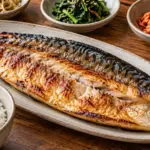
Galchi jorim is cutlassfish cut into sections and braised with vegetables such as Korean radish in a soy sauce and chili seasoning. Its tender white flesh, savory spicy sauce and sauce-soaked radish make it a natural partner for rice. Whereas grilled cutlassfish emphasizes its crisp surface, this dish centers on moist flesh and vegetables infused with seasoning.
Cutlassfish cut into sections and braised
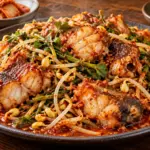
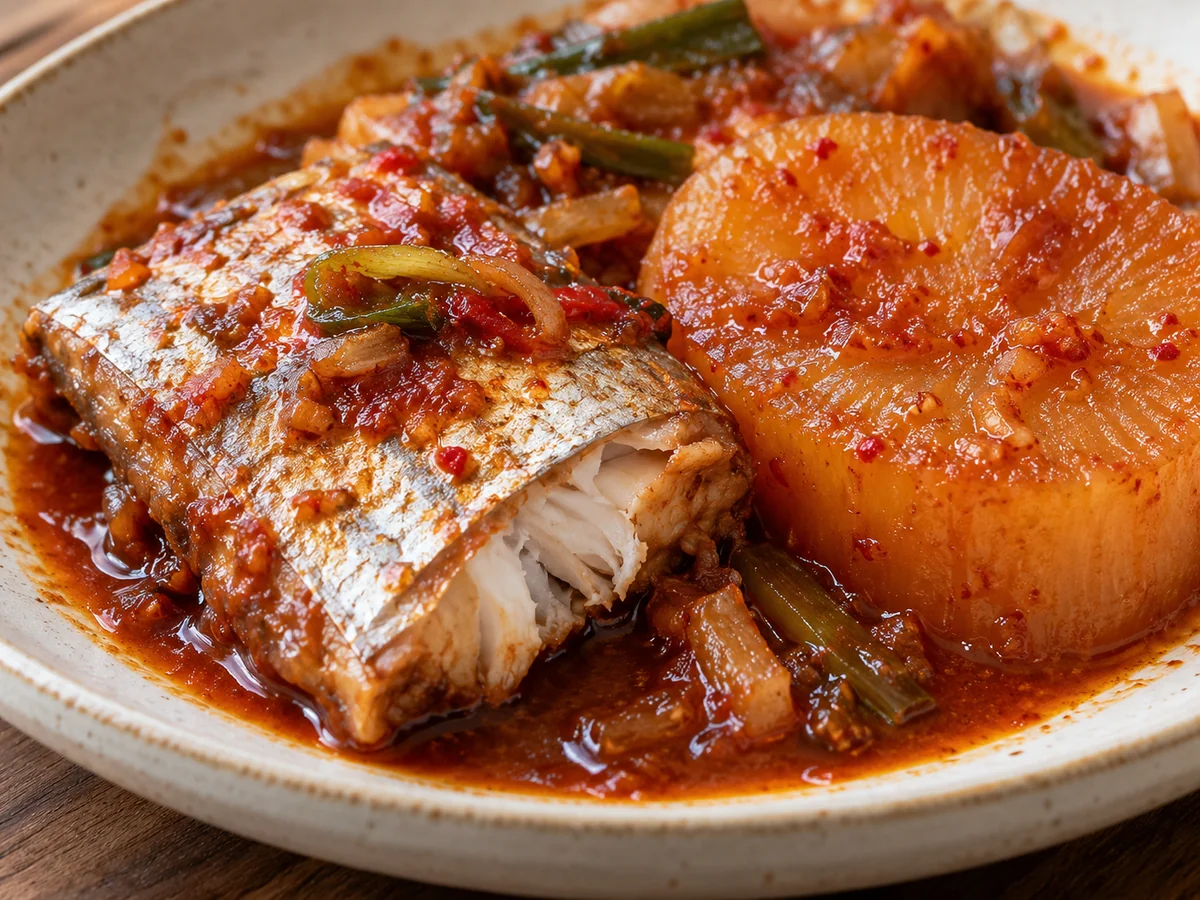
Cutlassfish has a long, laterally flattened body. For braising, the body is cut into sections, so the pieces on the plate look different from thick, round cross-sections of other fish. Some silvery skin may remain visible through the sauce, or the red seasoning may obscure its original color.
The Korea Tourism Organization’s introduction to galchi jorim describes cutlassfish and radish simmered in a pot with chili powder seasoning. Fish submerged in liquid can resemble a soup, but the usual focus is on braising flavor into the fish and vegetables and eating those ingredients with rice.
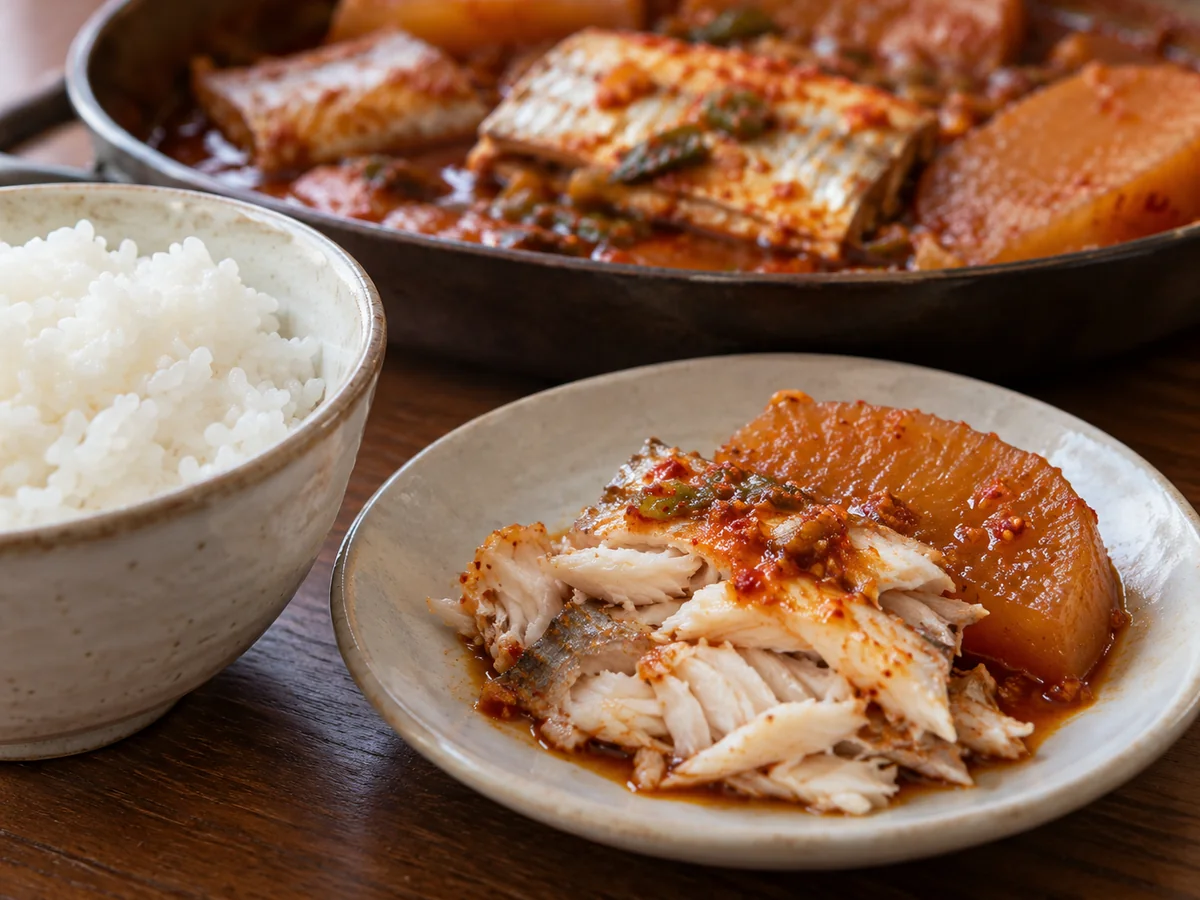
Cooked cutlassfish flakes easily. Roughly turning it in the pot or gripping it hard with chopsticks can break it apart. When sharing at a restaurant, move a section to a small plate before separating the flesh; this makes the sauce and bones easier to manage. There is no need to break everything into small pieces in the communal pot.
Why the radish matters as much as the fish
Thick radish slices absorb the braising liquid, losing their firmness at the surface and becoming tender inside. Unlike the lightly flaking fish, radish releases moisture and seasoning as you chew. Alternating a bite of fish with a piece of radish reveals how differently the ingredients carry the same sauce.
A red exterior does not mean a radish piece is seasoned equally all the way through. Split a large piece with a spoon and try the center too. Combining its strongly flavored surface and milder middle with rice helps adjust each bite. Divide it rather than eating a large piece at once, as hot moisture can remain inside.
Some restaurants add potatoes, onions or green onions. Potatoes break into a fluffy texture rather than behaving like radish and can change the liquid’s consistency; onions and green onions add sweetness and aroma. Alongside the size of the fish, check which vegetables line the bottom of the pot: they can noticeably change the meal.
Red sauce does not tell you how spicy it is
The seasoning is more than chili heat. Salty ingredients such as soy sauce, the aroma of garlic and green onion, and sweetness from ingredients or added seasonings work together. Equally red dishes can taste different depending on the chilies and how far the sauce has reduced. Asking about the standard heat level is more reliable than judging by color.
Some versions have just a little braising liquid; others leave plenty of sauce. Reduction may make saltiness more noticeable, but liquid volume alone does not reveal salt concentration. Taste the sauce clinging to the flesh first, then add only what you need to your rice. Pouring it over the entire bowl at the start is difficult to undo.
If the pot keeps simmering on a tabletop burner, its consistency changes during the meal. Follow the staff’s advice on whether the fish is already cooked and when to lower the heat. Adding a lot of water simply because the liquid has reduced can alter both seasoning proportions and cooking conditions.
How to separate the flesh while checking for bones
Cutlassfish requires checking not only the central skeleton but also small bones along the edges. Sauce can hide them, and tender flesh does not mean boneless flesh. Even prepared sections are best examined on a small plate instead of putting a whole piece into your mouth.
- Move one section onto a plate without crushing the flesh. Use tongs or a fish-serving utensil if provided.
- Check the upper and lower edges of the section for fins and small bones, separating those areas a little at a time.
- Gently divide the flesh along the central bone. Check on the plate that no bones have come away with the lifted flesh.
- Eat the separated flesh with rice, adding radish and sauce as needed. Put discarded bones on a plate away from the food you are eating.
This is a general way to check for bones, not a method that automatically removes every one. Crumbling the flesh too finely can make mixed-in bones harder to find, so separate it gradually along its natural flakes. If someone cannot easily check fish bones independently, set aside carefully checked flesh for them first.
Choosing between braised, grilled and soup versions
The Encyclopedia of Korean Culture’s entry on cutlassfish notes that the fish is grilled and braised, and is also used in soups in some regions. Even with the same fish, handling moisture and seasoning differently changes the character of the meal.
| Dish | What it emphasizes | Questions to ask |
|---|---|---|
| Galchi jorim | Seasoned flesh and radish, with braising sauce | How spicy is it, which vegetables are included, and is there a minimum number of diners? |
| Grilled cutlassfish | A grilled surface and relatively plain flesh inside | How salty is it, and is the serving a whole fish or sections? |
| Cutlassfish soup or stew | Broth cooked with cutlassfish and vegetables | Is the broth clear or red, and which vegetables are used? |
Even if you choose grilled fish to avoid a spicy braise, check its salt seasoning and accompanying sauces separately. Conversely, a soup or stew name does not guarantee a mild dish. Consider both menu photographs and the description; explaining whether you want the sauce flavor or the fish’s own flavor makes choosing easier.
Check serving size and what is included before comparing prices
Galchi jorim may be an individual set meal or a shared pot. Before assuming that a listed “one serving” can be ordered alone, check the minimum party size, whether rice is included and which side dishes accompany it. If the dish combines several fish or other seafood, check those ingredients too.
The same number of sections does not mean the same amount of flesh: body and tail pieces differ in thickness. A whole large fish, divided sections and a bone-removal service also lead to different dining experiences. If origin or chilled versus frozen matters to you, consult the menu and the restaurant’s labeling or explanation rather than guessing from silver skin or sauce color.
For your first galchi jorim, taste a little flesh, radish and rice separately before combining them. Notice the tender fish and the flavor absorbed by the vegetables before adding more sauce. Eating slowly while checking for bones helps you discover its specific qualities beyond simply “spicy fish.”