Korean Food / Bibim-guksu: Mixed Noodles, Sauce, and How to Eat Them
Bibim-guksu is a dish of cooked noodles mixed with seasoning and other ingredients. Today, a familiar version combines chilled wheat noodles, a red gochujang-based sauce, and vegetables for a sweet, tangy, spicy flavor, but soy sauce versions also exist. Looking at the noodles, sauce, and garnishes together makes it easier to distinguish it from bibim-naengmyeon or jjolmyeon.
Noodles mixed with sauce rather than served in soup
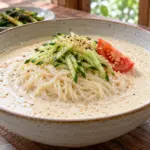
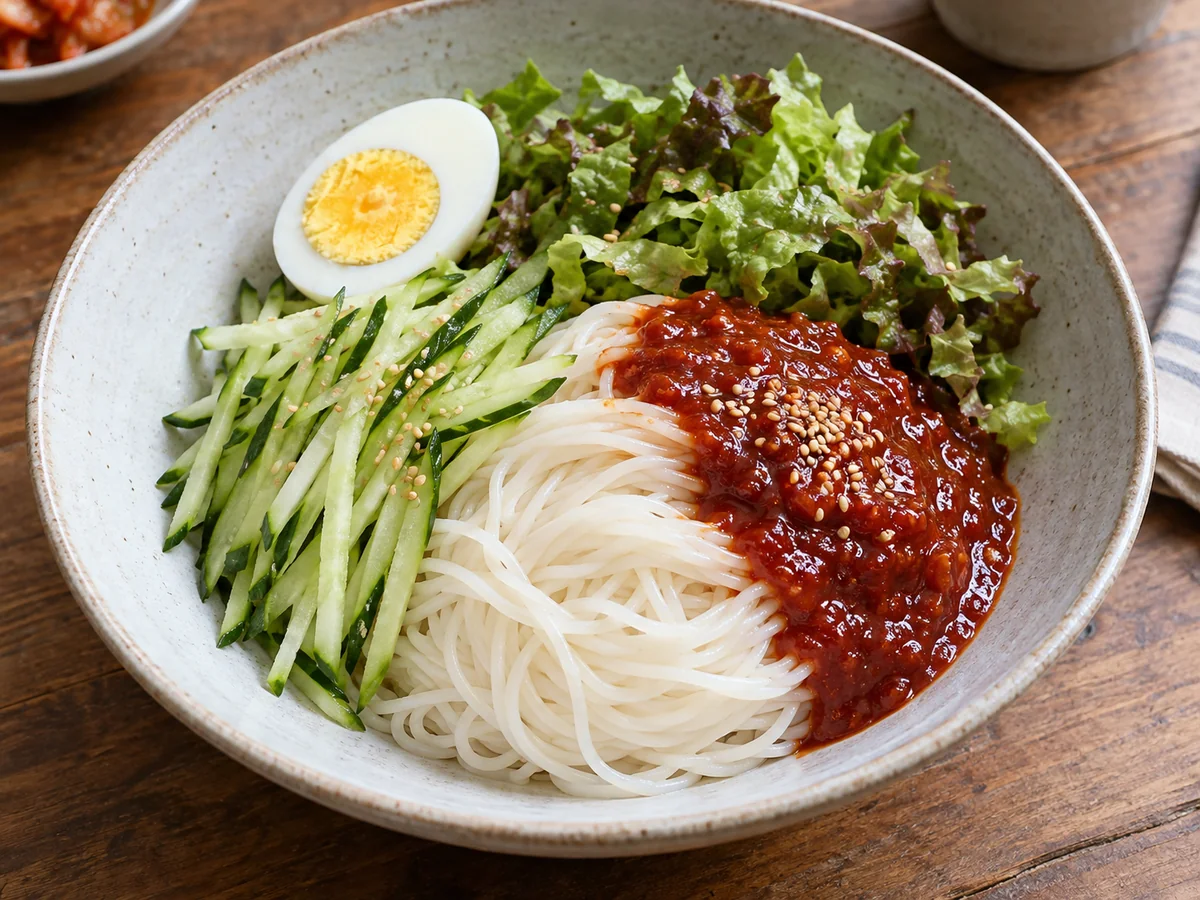
Unlike noodles served with hot broth poured over them, bibim-guksu centers on mixing cooked noodles until the seasoning coats them evenly. Wheat noodles such as thin somyeon or medium-thick jungmyeon are common. Cooled noodles may arrive topped with cucumber, lettuce, and egg, or the restaurant may mix them with the sauce before serving.
The Korea Tourism Organization’s introduction to bibim-guksu describes a sweet, spicy sauce using gochujang, chili powder, and fruit, with vegetable and egg garnishes. Fruit such as pear can contribute sweetness and flavor, but it is not an essential ingredient in every bowl.
Rinsing cooked noodles in cold water and draining them gives them a temperature and springiness different from hot noodles. A restaurant may use enough sauce for a little to collect at the bottom of the bowl, but it is better to expect a meal of noodles and sauce than a dish with plenty of broth to spoon up.
Heat, sweetness, acidity, and crunchy vegetables
Red bibim-guksu sauces often combine chili heat with sweetness, acidity, and saltiness. Vinegar or kimchi can supply tanginess, while sugar or fruit affects the sweetness. Two equally red bowls may taste quite different depending on which element the restaurant emphasizes.
Vegetables such as cucumber and lettuce bring crunch and fresh aromas between the coated noodles. If they arrive neatly arranged on top, try mixing them with the noodles instead of leaving them as decoration. This lets you vary the proportion of noodles and vegetables in each bite rather than eating all the vegetables at once.
Egg contributes a mild texture that contrasts with the spicy sauce. It may appear as strips of cooked egg or as a boiled egg, and some bowls have none. Egg or vegetables do not make the sauce itself mild, so ask separately about adjusting the heat when ordering.
Kimchi and soy sauce versions
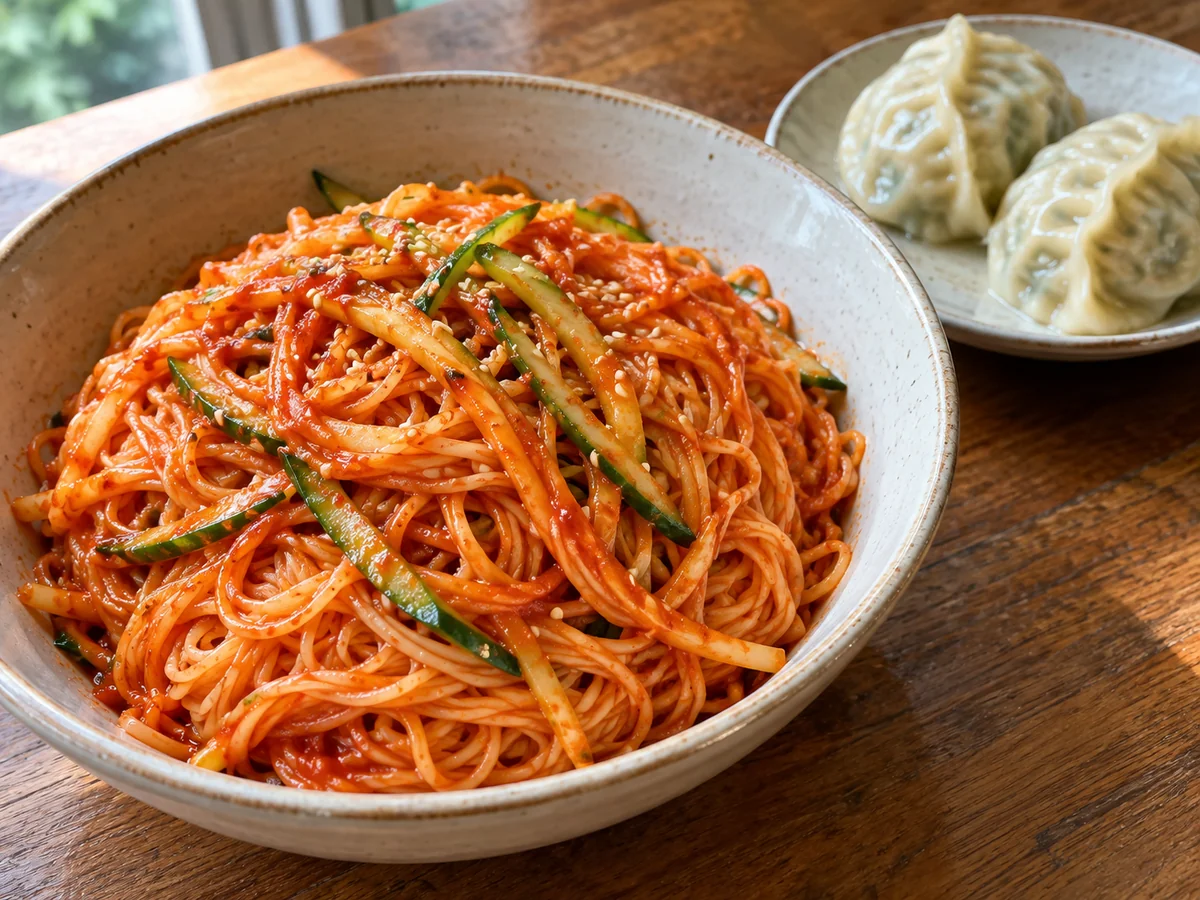
Kimchi bibim-guksu mixes chopped kimchi with the noodles and seasoning. The kimchi’s degree of fermentation, saltiness, and acidity add to the sauce, making it different from noodles with gochujang sauce and fresh vegetables alone. Crunchy pieces of kimchi between the noodles are another part of its character.
The name bibim-guksu does not necessarily mean red, spicy noodles. The Encyclopedia of Korean Culture’s bibim-guksu entry (in Korean) also describes noodles mixed with soy sauce, sesame oil, and ground sesame mixed with salt, then topped with cooked meat, mushrooms, or egg. It also introduces the names goldongmyeon and guksu-bibim.
A soy sauce version can suit someone looking for a savory, nutty flavor rather than a chili-centered sauce. Still, the name alone does not guarantee the absence of chili or other spicy ingredients. To avoid heat, check the actual sauce and ask about garnishes such as meat and egg as well.
How to distribute the sauce evenly
If the garnishes and sauce are arranged separately, look under the noodles and around the edge of the bowl first. Checking whether the noodles have already been mixed, or whether sauce sits underneath them, helps you avoid adding too much extra. If sauce is served separately, you can start with only part of it.
- Move large garnishes, such as half a boiled egg, to one side of the bowl temporarily.
- Lift and lower small bundles of noodles to loosen clumps, mixing the vegetables and sauce from the bottom upward.
- Mix evenly so that uncoated noodles at the edge and concentrated sauce at the bottom do not remain in separate places.
- Taste a bite of noodles with vegetables, add only the seasoning needed, and eat the larger garnishes alongside.
Picking up too many noodles at once can splash sauce onto clothing or pull up a large tangled mass. Mixing and eating in smaller bundles is easier. If the noodles clump, check the restaurant’s advice and the purpose of any separately provided broth before pouring in a large amount of water or soup.
Compare the noodles in bibim-naengmyeon and jjolmyeon
Red sauce, vegetables, and egg can make these three dishes look similar. To choose between them, consider the noodle ingredients, thickness, and resistance when chewing rather than the color of the sauce. The noodles used can also vary within a single dish name.
| Dish | Typical noodle characteristics | What to consider |
|---|---|---|
| Bibim-guksu | Often wheat noodles such as somyeon or jungmyeon | Wheat noodles combined with sauce and vegetables |
| Bibim-naengmyeon | Aroma and springiness vary with buckwheat, starch, and other ingredients | Noodle composition and how much chew you enjoy |
| Jjolmyeon | Thick, springy noodles mixed with vegetables | Whether you want a particularly chewy texture |
The aroma and springiness of naengmyeon depend on its noodle mixture. The Korea Tourism Organization’s jjolmyeon introduction describes thick, chewy noodles mixed with vegetables such as bean sprouts and cabbage. If you prefer noodles that are easier to bite through to a strong, springy chew, somyeon-style bibim-guksu may be an option.
Choosing a meal and side dishes
Bibim-guksu can be a meal on its own, or it can be shared with dumplings or meat. Mild steamed mandu add a soft filling that contrasts with the noodles, while grilled meat lets you alternate between its flavor and the tangy sauce. If you have already ordered enough food, an extra side is not necessary.
Broth served alongside may be intended for sipping between bites, or the restaurant may suggest adding it to the noodles. Practices vary, so ask before pouring it into your bowl. A substantial change in the ratio of sauce to noodles can alter the intended flavor.
For a first order, check the noodle type, standard spice level, whether it contains kimchi, and whether sauce can come separately. If chili sauce is too much for you, ask whether there is a soy sauce version. More than its red appearance, bibim-guksu is defined by the way the noodles and vegetables are evenly coated and eaten together.