Korean Food / What Is Jokbal? Pork Cuts, Texture and Spicy or Chilled Styles
Jokbal is Korean pork trotter and lower-leg meat cooked in liquid with soy sauce and aromatic ingredients, then sliced. A piece can combine tender lean meat with springy skin, eaten with salted fermented shrimp, ssamjang or vegetables. Besides the basic version, options include spicy bul-jokbal and chilled naengchae-jokbal with mustard dressing, so consider both the cut and seasoning.
Which part of the pig is jokbal, and what is its texture?
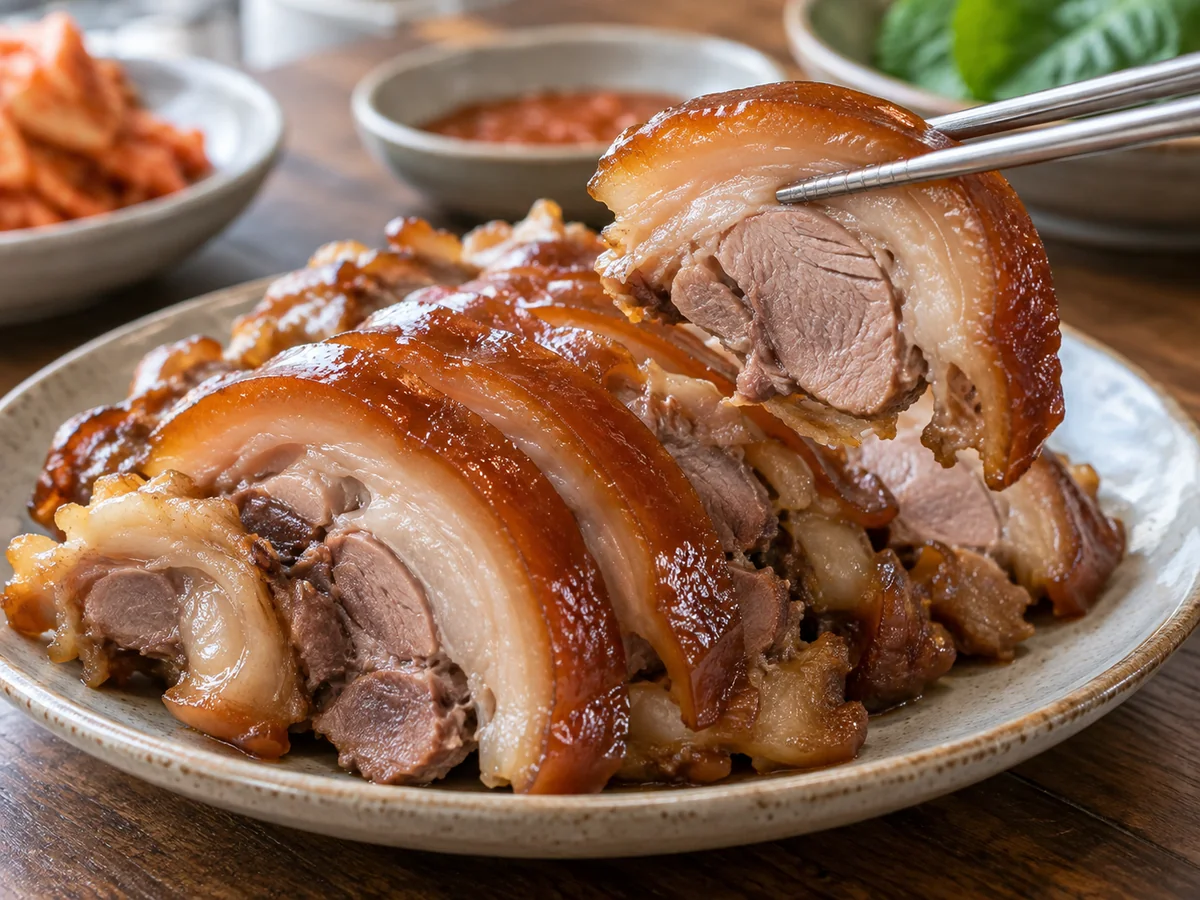
It differs from thin slices of belly such as samgyeopsal. The trotter and adjoining lower leg contain skin, meat, tendons and other tissues, cooked thoroughly before slicing. Soft and resilient textures can therefore occur in one piece. Meat usually arrives sliced, but bones may be included or small fragments may remain.
The Korea Tourism Organization's jokbal introduction describes pork trotters cooked with soy sauce, ginger and other seasonings and their characteristic chew. The brown surface develops through seasoning and cooking; the meat inside does not all have the same color or saltiness.
For a first taste, choose a small slice with skin and lean meat together. Compare it with a leaner piece to notice what the skin contributes. If springy skin is unfamiliar, start with a meatier slice and check its seasoning before adding sauce.
Soy seasoning, aromatics and serving temperature
Basic jokbal combines salty-sweet soy seasoning with ingredients such as ginger or garlic. Aromatics and sweetness vary between restaurants, so similar-looking platters need not taste alike. A name referring to herbal ingredients is a reason to ask about the dominant aroma when comparing menus.
Warm jokbal can feel softer in both skin and meat; cooled servings may have a more pronounced springiness. Neither temperature is automatically superior. Asking how it is served helps match your expectation of texture.
The pork is already seasoned, so try a slice before adding plenty of salted shrimp or ssamjang, a seasoned dipping paste. Sauce can complement the meat or substantially change its flavor. Small amounts make the skin's texture and the aromatics easier to distinguish during the first few bites.
Basic, spicy and chilled mustard-dressed versions
| Type | Main character | What to check |
|---|---|---|
| Basic jokbal | Soy seasoning and the texture of meat and skin | Temperature and balance of meat and bones |
| Bul-jokbal | Added spicy seasoning | Heat and whether it is boneless |
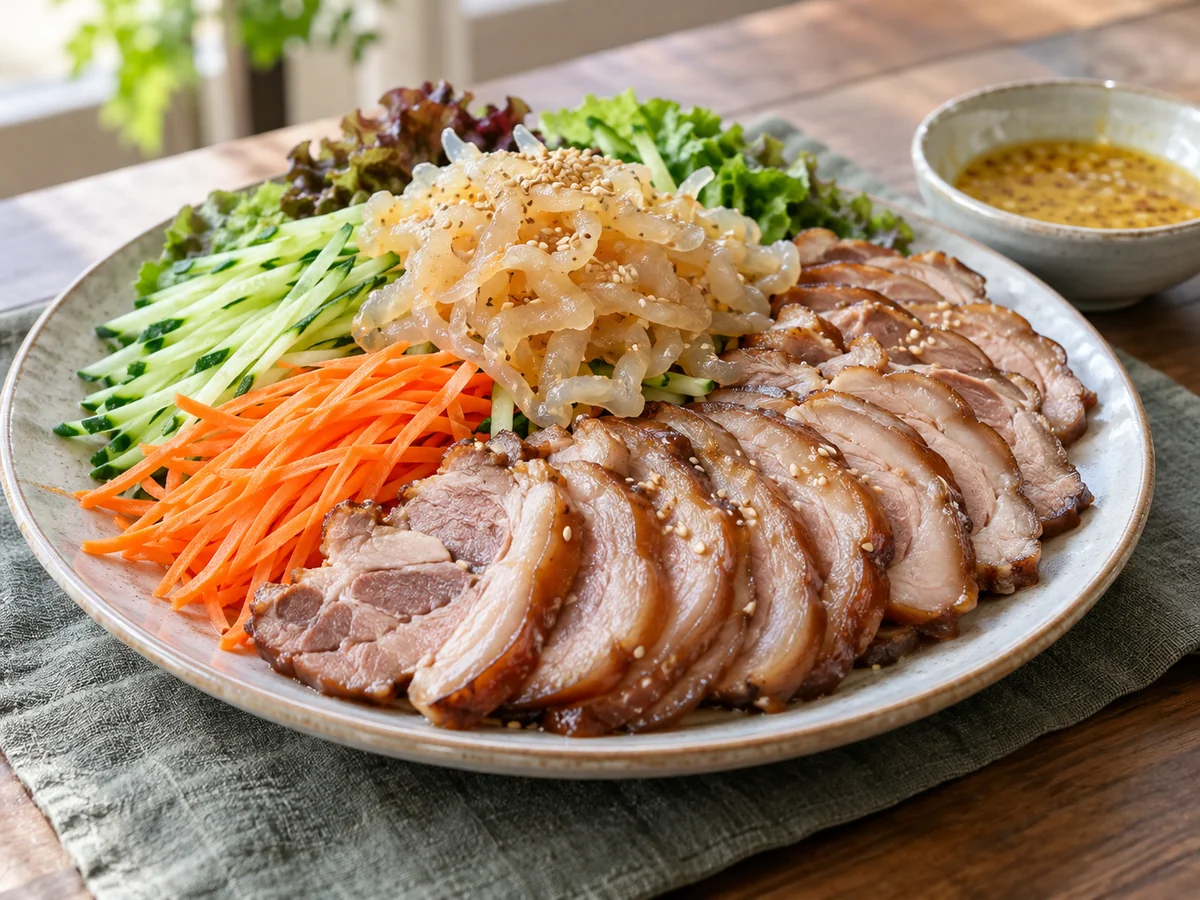
| Naengchae-jokbal | Cool vegetables and tangy, pungent mustard sauce | Mustard strength and additions such as jellyfish |
| Half-and-half | Two seasonings or serving styles | Which two versions, portion balance and pricing |
Bul, meaning fire, emphasizes heat, but actual spice levels vary by product and restaurant. Give an example of the heat you enjoy and ask what can be adjusted. Some versions also emphasize sweetness or a grilled aroma, so the name alone does not define one flavor.
Naengchae-jokbal is more than ordinary jokbal served cold. The Korea Tourism Organization describes thin slices with cucumber and other vegetables, jellyfish and mustard sauce. Mustard's nose-tingling pungency differs from chili heat; asking for sauce separately can help you control it.
Compare the cut with bossam before comparing sauces
Both bossam and jokbal can be meals of cooked pork with vegetables or kimchi. Bossam commonly uses sliced boiled belly or shoulder, whereas jokbal highlights the skin, meat and tendons of the trotter and adjoining lower leg.
The brown, soy-seasoned skin of jokbal and the relatively gently seasoned boiled pork of bossam make the contrast easy to see. Yet bossam has different seasonings and methods too, and jokbal aromatics vary: color or sauce is not an absolute dividing rule.
If you prefer tender lean meat, check bossam's cut and fat ratio. If you enjoy resilient skin, consider jokbal. A combination menu does not necessarily supply a full platter of each merely because it names two dishes; check the total portion and accompaniments.
Building a vegetable wrap and choosing accompaniments
You can eat the meat alone or wrap it in lettuce or perilla leaves. Vegetables, shredded radish, garlic, chili and salted shrimp may accompany it, but the standard set varies. Start with meat and a little seasoning instead of overloading a single wrap.
- Choose a small slice, check its seasoning and look for any remaining bone.
- Place it on lettuce or a perilla leaf with a little salted shrimp or ssamjang.
- Add radish, garlic or another accompaniment, adjusting the balance of meat and vegetables.
Raw garlic and fresh chili can greatly change the aroma and heat. Add them one at a time to compare, rather than including everything in the first wrap. Salted fermented shrimp is a shrimp-based condiment; if that is unsuitable, ask whether another sauce is available.
Noodles such as makguksu can be eaten between bites of pork, with portions chosen for the whole meal. Whether noodles are included or ordered separately varies. With naengchae-jokbal, which already combines dressing and vegetables, taste the intended combination before adding more ssamjang.
Front or rear leg, and choosing a portion
Menus sometimes distinguish front and rear legs. Front-leg jokbal is not always softer, nor is rear-leg meat necessarily tough. Size, trimming, cooking and serving temperature all shape the texture. Ask about the lean-to-skin ratio as well as the cut, and explain how many people will eat.
Whether the platter includes large bones or has been deboned also matters when assessing edible portions. Small, medium and large have different meanings at different restaurants, and accompanying noodles or rice balls affect how much pork you need. Consider the whole setting rather than the platter's size alone.
For a first order, check the temperature and portion of the basic version. Look at bul-jokbal or naengchae-jokbal if you specifically want chili or mustard. Distinguishing springy skin, tender meat and the sauces and vegetables lets you find a meal that suits your preferences.