Korean Food / What Is Tteokguk? Rice Cakes, Broth and New Year Traditions
Tteokguk is a Korean soup of thinly sliced rice cakes simmered in broth and topped with ingredients such as meat or egg. A spoonful combines warm broth with soft, pleasantly chewy rice cakes, and the dish is especially associated with Seollal, Korean Lunar New Year. Beef, beef-bone or anchovy stock, and the addition of dumplings, give each bowl a different character.
These rice cakes are not a sweet dessert
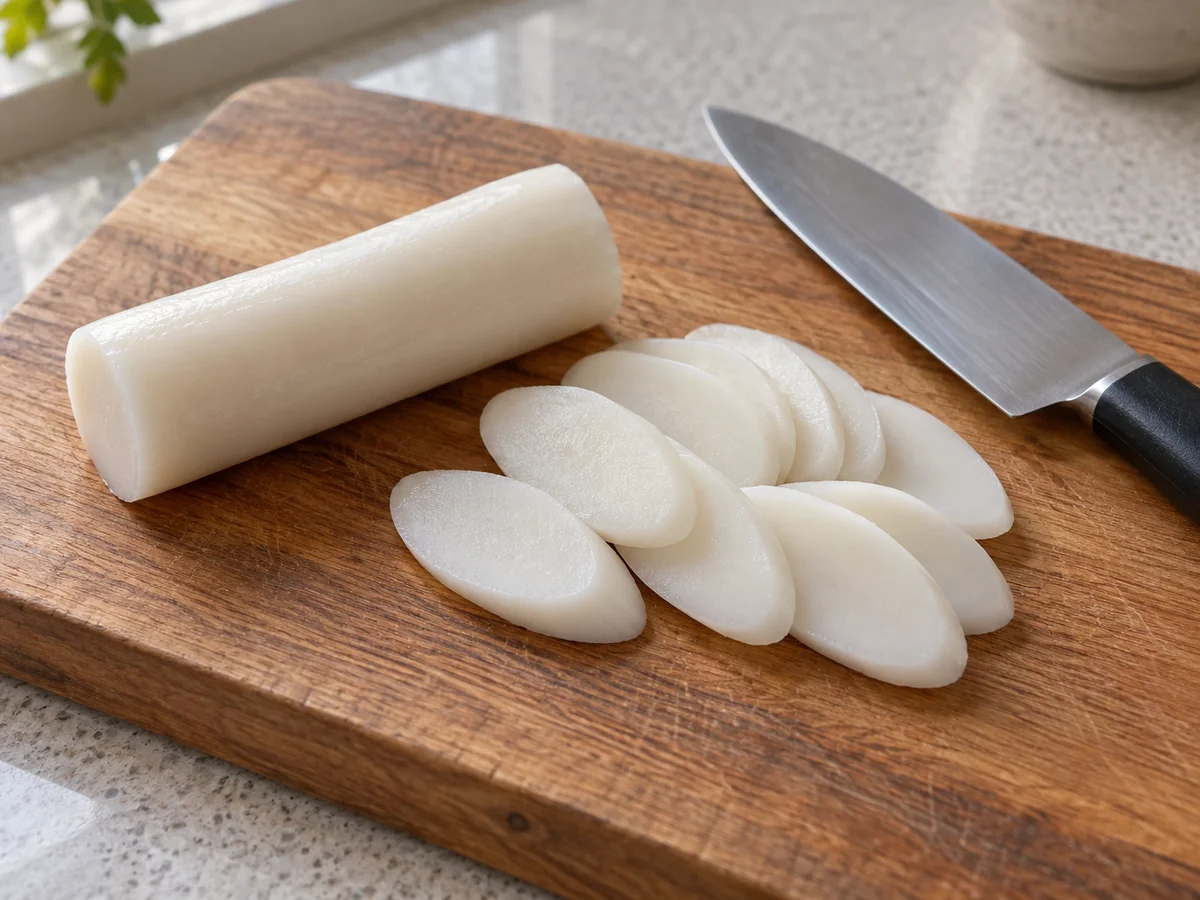
The familiar white slices come from garaetteok, long cylinders made with non-glutinous rice, cut thinly on the diagonal. The rice cakes themselves are not sweet like a confection with sugar or red bean filling: their mild rice flavor accompanies the broth. Tteok covers many foods, so distinguish these soup rice cakes from sweet snack varieties.
The Encyclopedia of Korean Culture entry on garaetteok (in Korean) explains slicing the long cakes for tteokguk and using them in dishes such as tteokbokki. Starting with the same rice cake, thin soup slices fit conveniently on a spoon, while thicker or longer pieces provide a more substantial chew.
The texture depends on thickness, storage and time in the broth. Freshly served slices may be soft outside with a resilient center; left longer, they absorb broth and soften further. Rice cakes do not all reach one identical texture at the same moment.
How broth and toppings change the flavor
Beef broth gives the rice cakes a savory meat base. A beef-bone version can have a milky appearance and richer taste, while anchovy or other seafood stock brings a different aroma. The Korea Tourism Organization's tteokguk introduction describes regional stocks, including anchovy, as well as beef.
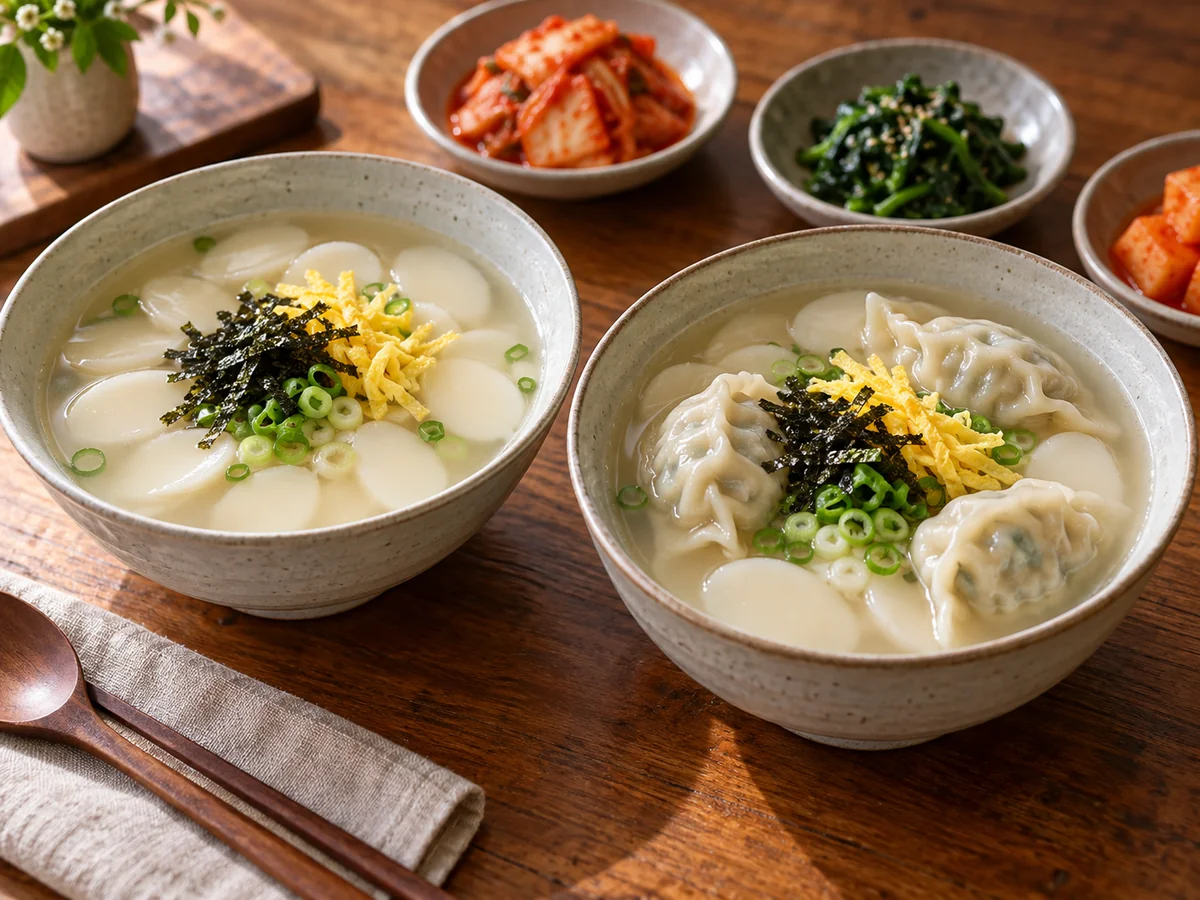
Toppings add flavor and presentation. They may include cooked beef, thin strips of egg omelet called jidan, laver and green onion. Egg can also be stirred directly into the broth, so the absence of visible egg strips does not prove that the soup contains no egg.
A clear soup may still use beef stock, and white broth does not necessarily contain milk. If avoiding ingredients, check the stock and toppings separately rather than judging by color. When asking to omit egg or meat, also ask whether those ingredients are already in the prepared broth.
Tteokguk, tteok-manduguk and manduguk
These menus may share a stock, but their main pieces and textures differ. Dumplings add the flavors of their filling and wrappers, so choose the ingredients you want rather than thinking of them simply as extra volume in rice-cake soup.
| Menu | Main pieces | When to choose it |
|---|---|---|
| Tteokguk | Thinly sliced rice cakes | For rice-cake chew and broth |
| Tteok-manduguk | Rice cakes and dumplings | To try both textures together |
| Manduguk | Dumplings | For the filling and wrappers |
| Joraengi-tteokguk | Small rice cakes pinched in the middle | For a different shape and bite from thin oval slices |
Joraengi-tteokguk is associated with the Kaesong region. The Encyclopedia of Korean Culture (in Korean) describes cocoon-shaped rice cakes with indented centers. Rather than treating one story about the shape as settled history, you can first enjoy its appearance and texture.
For tteok-manduguk, consider the different fillings of meat and kimchi mandu. Even if you order expecting a clear, gentle broth, biting into a kimchi dumpling can bring a different flavor.
What eating tteokguk at Seollal means
In Korea, tteokguk is a Seollal food shared to mark the new year. It is connected with families gathering over a bowl, and the saying about growing a year older after eating it belongs to that food culture. It is a familiar New Year expression, not a way of calculating actual age from the number of bowls eaten.
The encyclopedia's tteokguk entry (in Korean) says the precise beginning of the Seollal custom is uncertain and notes records in late-Joseon seasonal-custom texts. Calling it an old food should not turn into an invented, definite story of its creation in a particular era.
White rice cakes and long garaetteok are sometimes explained as symbols of a fresh start or wishes for longevity, but not every household eats them with identical symbolism in mind. The soup is also an ordinary meal outside Seollal, rather than a holiday-only dish.
Eating hot rice cakes and broth
Lift a few slices with broth and let them cool briefly. Even thin slices can overlap into a dense mouthful, so avoid piling too many onto one spoon. If laver or pepper is provided separately, taste the broth first and add a little at a time.
A dumpling's center can feel hotter than its outside. Serving it onto a small dish and dividing it helps you inspect the filling and manage the temperature. If rice cakes and dumplings are awkward together, use a spoon for the slices and chopsticks with a spoon to divide the dumplings.
The rice cakes are the main starch, so extra rice is not essential. Before adding it, check how many rice cakes and dumplings are already in the bowl. As you eat slowly, the cakes absorb broth and the consistency changes; a difference between the first and final spoonful is part of the dish's behavior.
Choose the broth and solid ingredients separately
- Broth: Check whether it uses beef, beef bones, anchovies or another base.
- Main pieces: Are there only rice cakes, or dumplings as well?
- Toppings: Ask about beef, egg and laver and explain any requirements.
- Portions: Consider the rice cakes, dumplings and included rice before ordering more.
Choose basic tteokguk to focus on the rice cakes, or tteok-manduguk if you also want dumplings. Compared with tteokbokki and its red sauce, tteokguk focuses on rice cakes in broth. Cutting and cooking the same rice-based ingredient differently changes the experience of the whole bowl.