Korean Food / What Is Tteokbokki? Rice Cakes, Sauces, Types, and How to Eat It
Tteokbokki is a Korean dish of rice cakes cooked in a seasoned sauce. The familiar red version is often spicy, but soy-seasoned gungjung tteokbokki also exists. For a first order, check the sauce, heat level, and other ingredients before choosing extras.
What goes into tteokbokki?
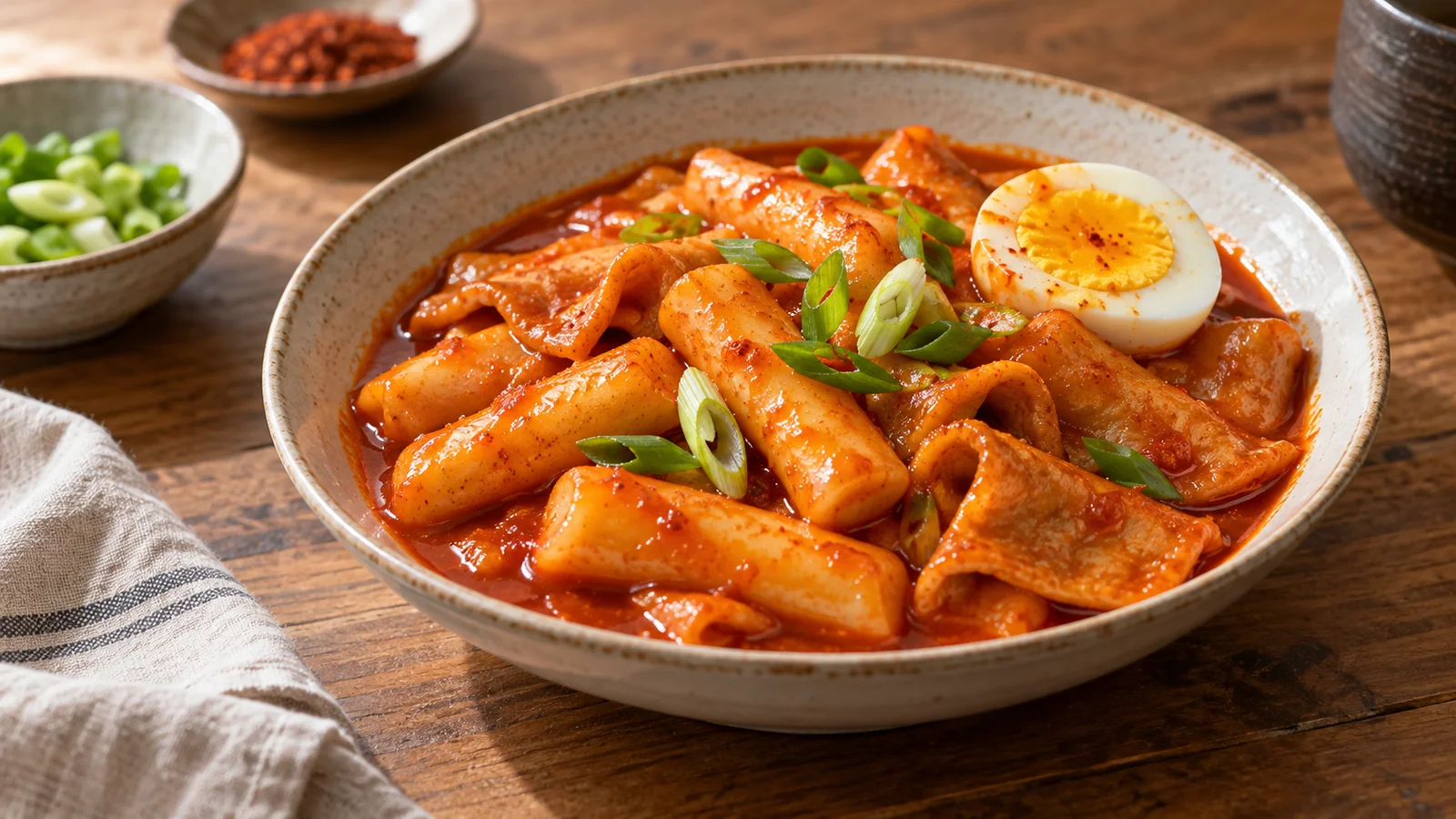
Rice cakes are the main ingredient, often joined by fish cake, scallion, or cabbage. Some cakes are rice-based and others use wheat flour. The word “rice cake” on an English menu is therefore not enough to confirm that a dish contains no wheat.
The Korea Tourism Organization’s food guide distinguishes red-sauce and soy-seasoned versions. The combination of chili paste, chili powder, sweetness, and stock varies. Stock may contain fish or meat even when none is visible, so vegetarian suitability needs a separate check.
Flavor and texture
The cakes are soft but springy, carrying sauce on their surface. Thickness, cooking time, and cooling affect the texture even within the same type. Avoid treating rice-based and wheat-based cakes as two textures that never vary.
A red sauce usually combines sweetness, saltiness, and chili heat. A thin, brothy version feels different from a thick, reduced sauce. A restaurant’s “mild” level is its own standard; adding cheese does not remove the spicy seasoning.
How do the main types differ?
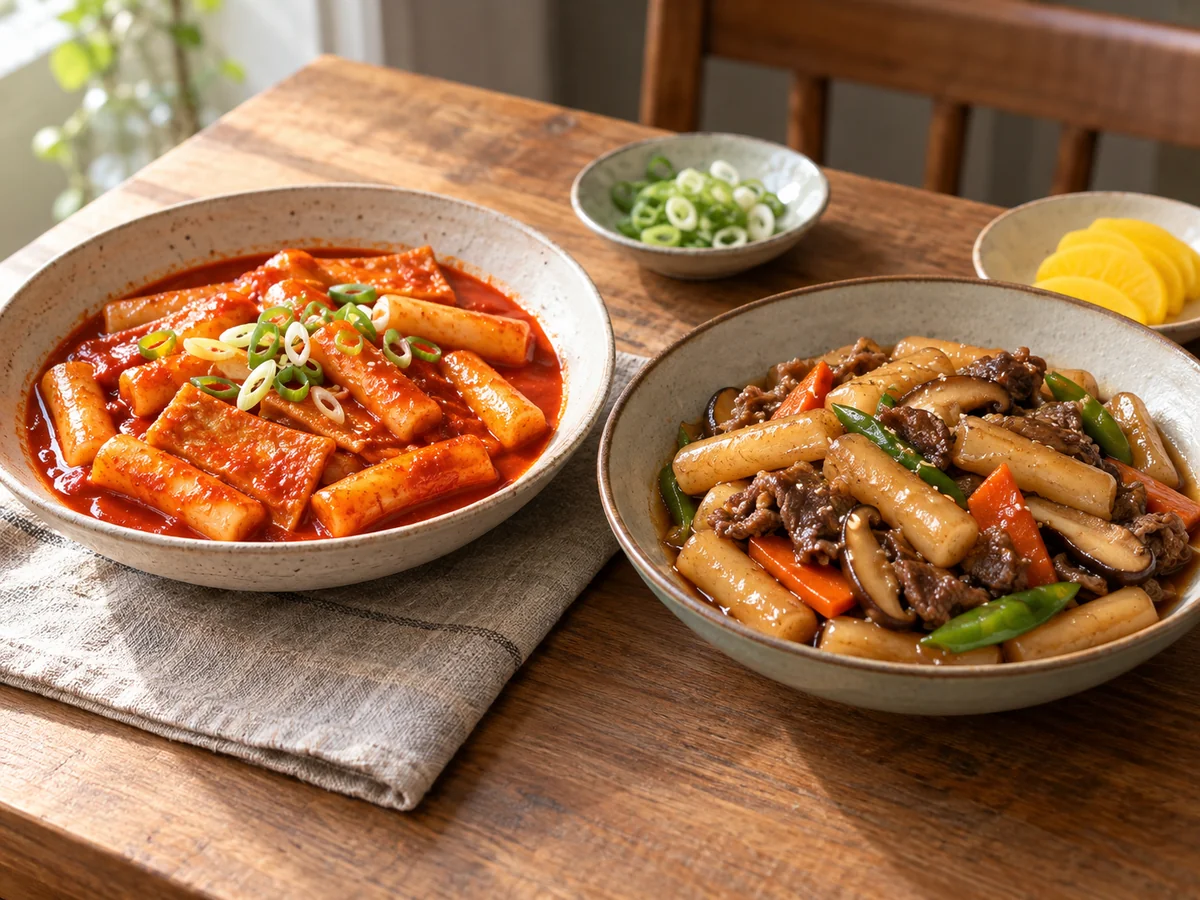
- Regular tteokbokki: Cooked cakes served in a bowl or on a plate, often with red sauce.
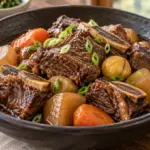
- Gungjung tteokbokki: A soy-seasoned preparation with ingredients such as beef and vegetables.
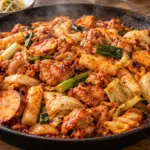
- Jeukseok tteokbokki: A tabletop preparation cooked with vegetables and optional extras. The name describes the cooking method, not the heat level.
- Rosé or cheese versions: Variations that may add cream or cheese. Check dairy ingredients and the underlying sauce separately.
Separate sauce choice from extra ingredients
Read a tteokbokki menu along three independent lines: what the cakes are made from, what the sauce is, and how it is cooked. Rice versus wheat concerns the cakes; chili versus soy concerns seasoning; tabletop concerns preparation. Rice cakes are not automatically milder, and tabletop cooking does not establish greater heat.
Extras change the ratio of cakes to sauce. Noodles absorb liquid and can soften as the pot stands, so consider the existing portion and your eating pace before adding them. Cheese and egg offer another flavor combination; they do not remove chili already in the dish.
If one diner struggles with heat, ask whether the seasoning can actually be adjusted rather than relying on the name of the lowest level. A separate soy-seasoned dish or an accompaniment such as gimbap may suit the group. Accompaniments do not make the tteokbokki itself non-spicy, so decide on the sauce before choosing additions.
How do you eat it?
- Try one small piece with a little sauce to judge the heat and temperature.
- Let a hot cake cool; if a piece is too large or chewy, ask whether it can be cut.
- Try accompanying foods individually to see how they work with the sauce.
- For tabletop cooking, check with staff when the ingredients are ready.
There is no need to rush through a large cake or drink lots of sauce. Using less surface sauce may not remove heat already absorbed by the cake. If you struggle with spicy food, ask about a soy-seasoned or genuinely mild option before ordering.
What should you check when ordering?
Check the serving size, any minimum order, and whether noodles or eggs are included. “Brothy” and “tabletop” describe different things: one concerns liquid, while the other concerns preparation. A dish can have both features.
For allergies, ask about wheat, fish cake and stock, soy-containing seasonings, egg, and dairy as relevant to you. Removing a piece after everything has cooked together may not meet your needs. Establish the heat level, rice-cake and stock ingredients, and any extras before placing the order.