Korean Food / What Is Galbijjim? Beef or Pork, Soy or Spicy, and How to Eat It
Galbijjim is a Korean dish of beef or pork ribs cooked until tender with seasoning and ingredients such as vegetables. Versions range from sweet-savory soy seasoning to chili-based sauces. Check the meat, sauce, and bone-in portion before deciding what to order.
What cooks alongside the ribs?
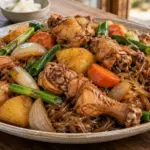
Ribs provide meat around the bone. Radish, carrots, or chestnuts may accompany them, absorbing seasoning while adding different textures. The Korea Tourism Organization’s food guide describes a soy-seasoned preparation with substantial vegetable pieces. The exact mixture belongs to the recipe rather than to one universal version.
Although jjim is sometimes translated as steamed, galbijjim is easier to picture as ribs braised in seasoned liquid. The amount of sauce varies. Glass noodles and rice cakes may be included or sold as extras, so do not assume they come with every platter.
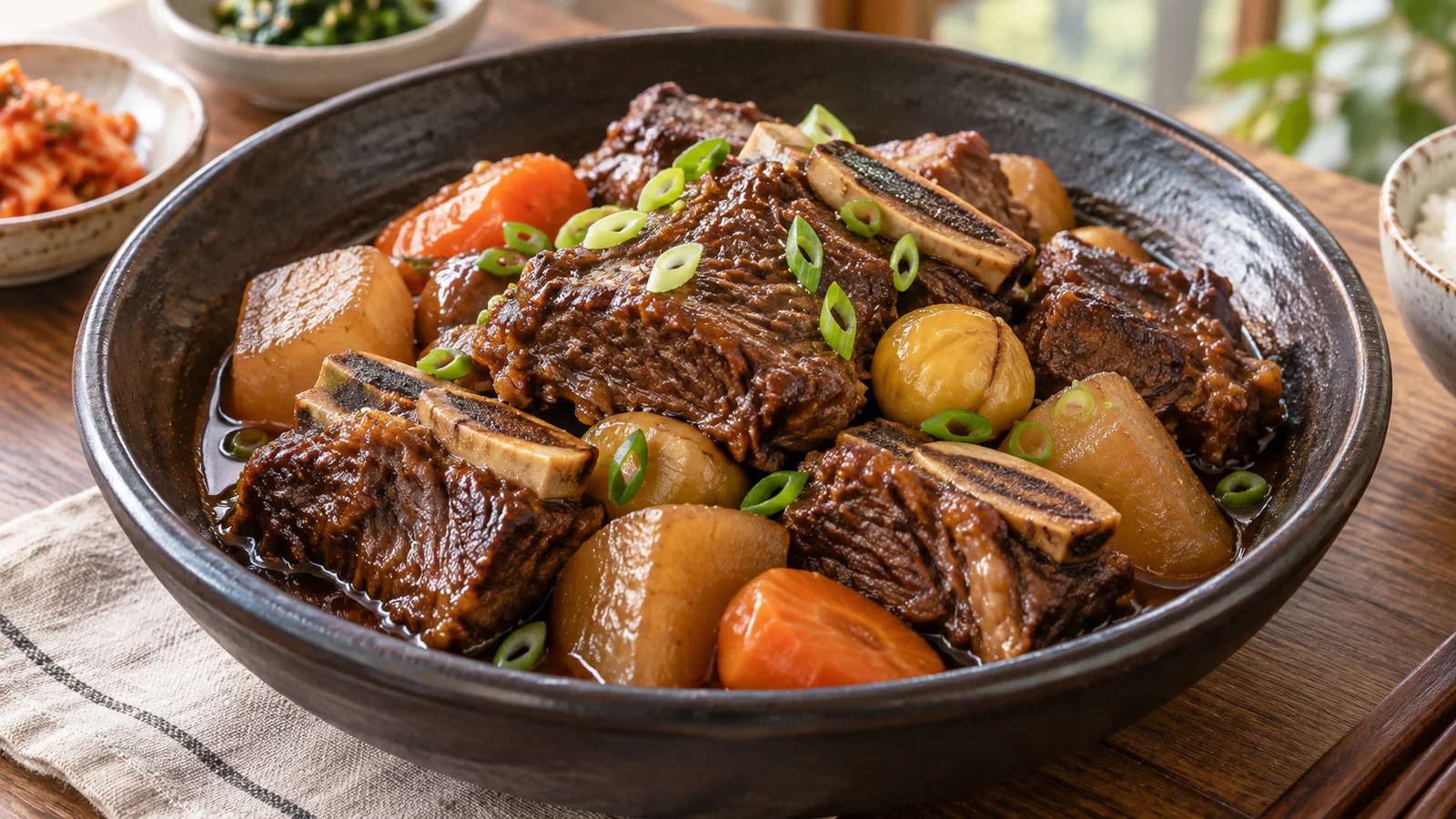
Choose the animal and the sauce independently
Beef versus pork identifies the meat, but does not automatically determine tenderness or heat. Cut, thickness, and cooking also affect texture. Choose the animal first, then soy-based or chili-based seasoning; treating them as separate questions avoids assuming pork always means spicy.
With soy seasoning, consider saltiness, sweetness, and aromatics such as garlic. With chili seasoning, also ask about heat. Meat already cooked in sauce retains flavor even if some liquid is removed afterwards. Ask about changes before ordering rather than expecting to reverse the marinade at the table.
When comparing platter sizes, check whether a stated weight includes bones and how much of the dish consists of vegetables or noodles. Counting bone-in ribs does not establish equal edible meat. Combine the restaurant’s suggested diner count with your plans for rice or extras. Try sauced glass noodles in a small amount before deciding how much rice to eat alongside them.
Soy-seasoned or spicy?
Soy-based versions combine saltiness, sweetness, and aromatics such as garlic. Reduced sauce can be concentrated, making small bites with rice a useful way to balance the meal. Chili versions add heat, but color alone does not reliably measure its intensity.
Adding cheese or rice cakes does not remove the original seasoning. Ask about adjustment before ordering, particularly when the meat has already absorbed the sauce. This is more useful than assuming an extra ingredient will turn a spicy preparation into a mild one.
How do you eat bone-in galbijjim?
Move a rib to a side plate if provided and separate the meat from the bone. Use supplied tongs or scissors as appropriate, asking staff if needed. Check pieces covered in sauce for small bone fragments instead of assuming tenderness means the dish is boneless.
Alternate meat with rice and vegetables. Glass noodles can carry plenty of seasoning, so try a small portion first. Soft-looking vegetables may still be hot inside. Distinguish edible chestnut pieces from shells, and watch for stones if whole jujubes are included.
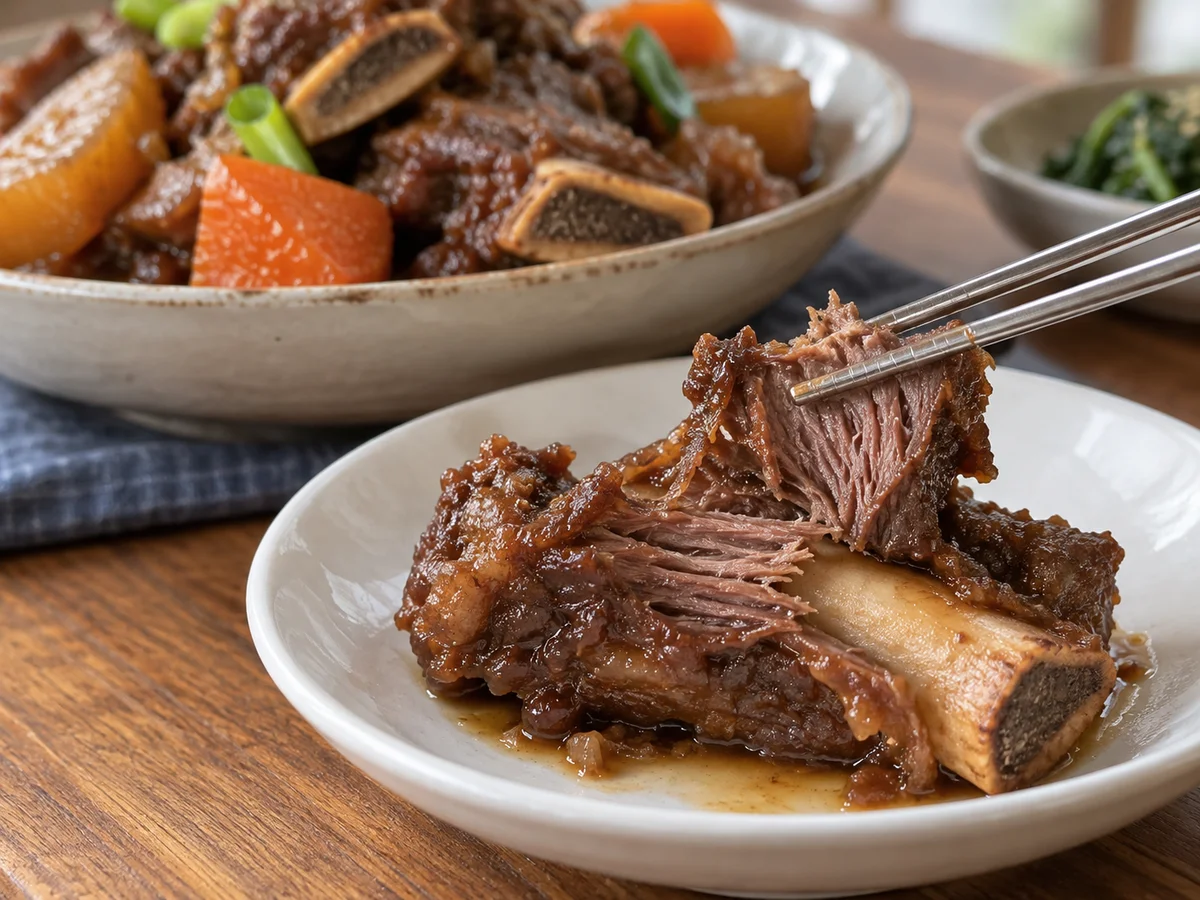
How does it differ from grilled ribs or rib soup?
Grilled ribs emphasize a cooked surface and grilled aroma. Galbijjim brings ribs and vegetables together in a braising sauce. Galbitang is a soup eaten with its broth. The shared word galbi therefore does not tell you the whole meal format.
Before ordering, confirm the meat, heat level, suggested number of diners, and whether rice is included. Soy and wheat may appear in seasoning, and nuts or other ingredients may be added. When ingredients matter, the actual preparation is more informative than the name alone.