Korean Food / What Is Jjimdak? Soy-Braised Chicken, Glass Noodles, and Menu Choices
Jjimdak is a Korean chicken dish cooked in seasoning with ingredients such as potatoes, vegetables, and glass noodles. Andong-style jjimdak is known for a sweet-savory soy-based sauce, which can still be hot from chilies. Before ordering a shared platter, check the spice level, bones, and suggested number of diners.
What ingredients are in the platter?
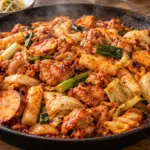
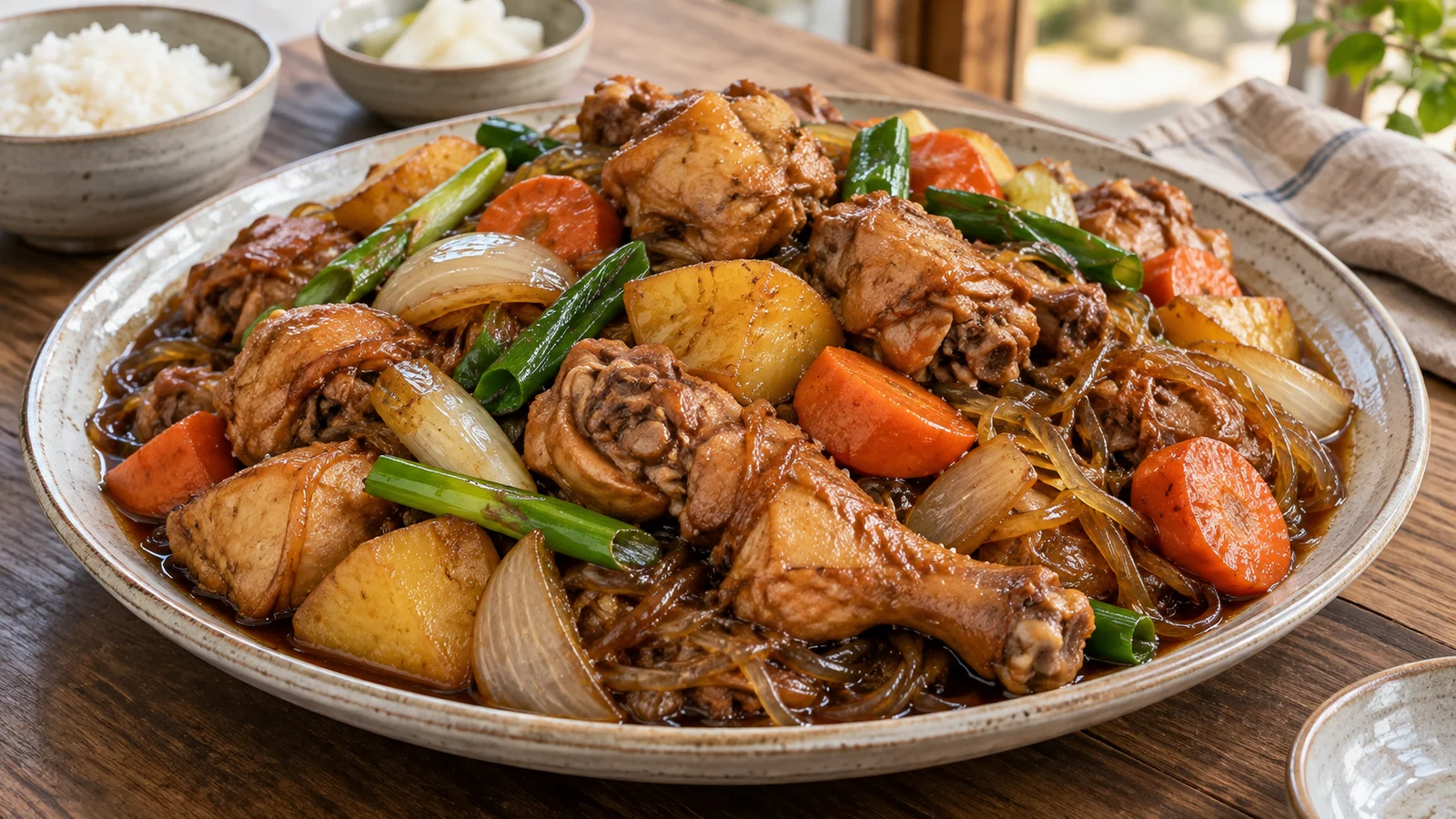
Chicken, potatoes, carrots, onions, scallions, and glass noodles form a familiar combination. The Korea Tourism Organization’s food guide describes the Andong version as chicken, vegetables, and noodles cooked in soy seasoning. Some menus offer boneless chicken, but the cuts and portions still depend on the restaurant.
Potatoes soften in the sauce, while noodles carry the seasoning into each bite. Wide noodles, rice cakes, or cheese may be available as variations. Find out what is included and what costs extra. A platter chosen mainly for chicken may be different from one chosen for abundant noodles.
Why can a brown sauce still be spicy?
Brown sauce suggests soy seasoning, not an absence of chili. Peppers can make jjimdak noticeably hot alongside its sweetness and saltiness. Picking visible chilies out after cooking does not remove heat already dispersed through the sauce.
If heat is a concern, ask what the restaurant means by mild and whether the dish can be cooked without added chilies. Darkness does not reliably measure either spice or salt. Select the seasoning with your dining companions in mind before choosing extras.
How do you eat the chicken and noodles?
Shared platters are common. Transfer a little chicken, vegetables, and noodles to a side plate, checking for bones as you eat. A boneless option should not be treated as a promise that no small bone can ever remain.
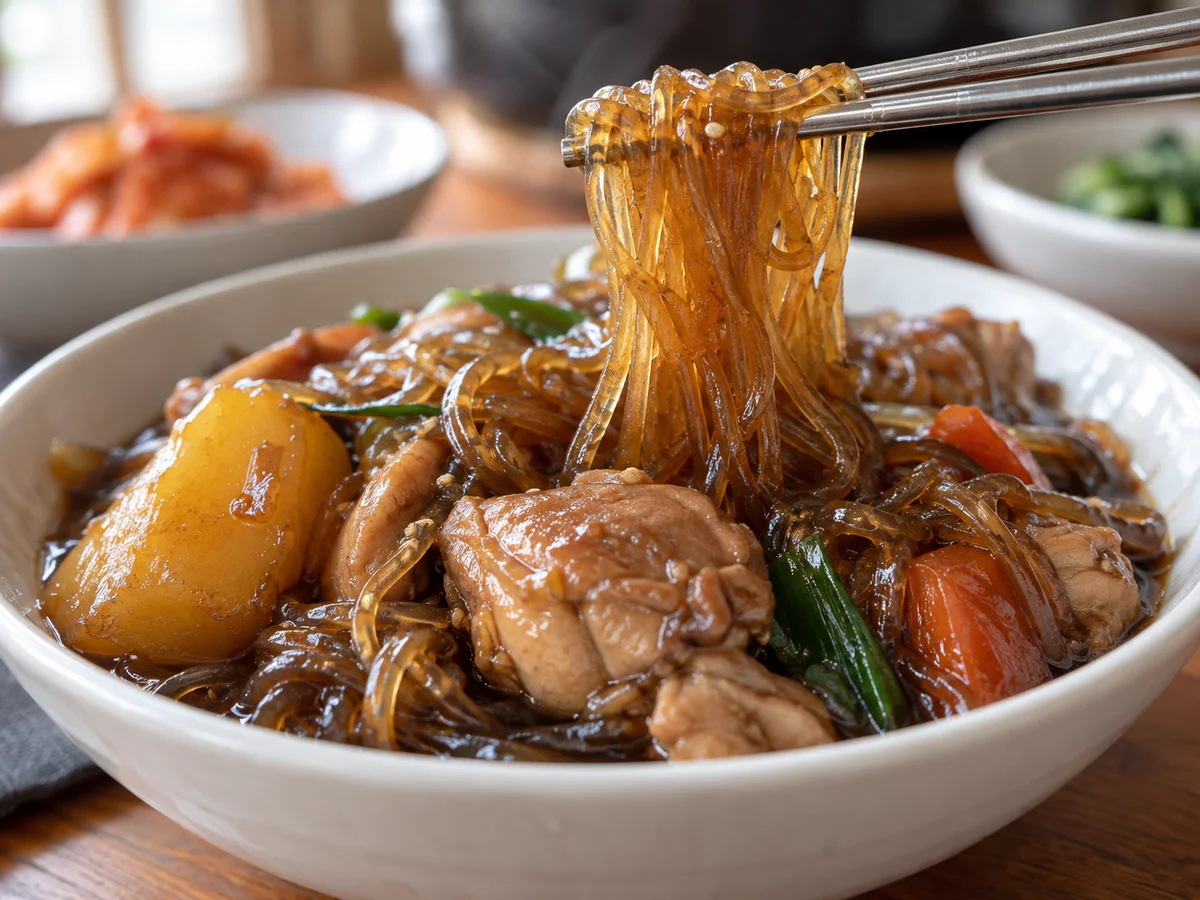
Noodles may tangle and hold substantial sauce; use provided tongs or ask for help cutting them if needed. Alternate them with chicken, potatoes, and rice instead of filling up on one component immediately. Add sauce to rice gradually so you can judge the seasoning.
Distinguish jjimdak, dakgalbi, and dakbokkeumtang
All three use chicken, but the rest of the meal differs. Jjimdak commonly combines a soy-centered sauce, potatoes, vegetables, and glass noodles. Dakgalbi emphasizes iron-pan cooking or charcoal grilling; dakbokkeumtang is familiar as chicken cooked with red seasoning and broth. This compares preparation and meal structure, not three fixed positions on a heat scale.
Glass noodles are a substantial part of jjimdak rather than a garnish. Check the basic contents before adding more, depending on whether chicken or noodles and potatoes are your priority. Extra noodles can change the sauce balance as they sit, so ask about timing and availability.
Brown soy sauce can still be hot from chilies. For a group, agree on heat, bones, and basic size before choosing cheese or other additions. Boneless is a convenient format, not a promise that every menu has the same cut or quantity. Read half-chicken or whole-chicken labels alongside the recommended diner count.
What should you ask when ordering?
Ask how many people a small, medium, or large platter serves, and how a half-chicken or whole-chicken option is defined. Check whether stated portions include bone weight, whether glass noodles are included, and whether rice is separate.
Soy and wheat may be present in seasoning, and added cheese introduces dairy. Dietary checks should cover the sauce and extras as well as the chicken. For a first order, settle on heat level and bones, then select the basic size for your group before adding more ingredients.