Korean Food / What Is Kimchi Jjigae? Flavor, Ingredients, and How to Eat It with Rice
Kimchi jjigae is a Korean stew built around kimchi, with additions such as meat, tofu, and vegetables. The tang of fermented kimchi combines with spicy seasoning, while pork or tuna changes the flavor. Check the main ingredient, heat level, and whether rice is included before ordering.
What kimchi is used?
Napa cabbage kimchi is a familiar base, often fermented enough to develop a noticeable tang. The kimchi’s maturity and seasoning affect the stew. There is no fixed number of aging months that every kimchi stew must meet.
The Korea Tourism Organization’s food guide describes fermented kimchi cooked with pork. Methods differ, including whether the kimchi is stir-fried first. Rather than claiming that one untested method is always superior, look at the finished stew’s acidity and balance of broth and solids.
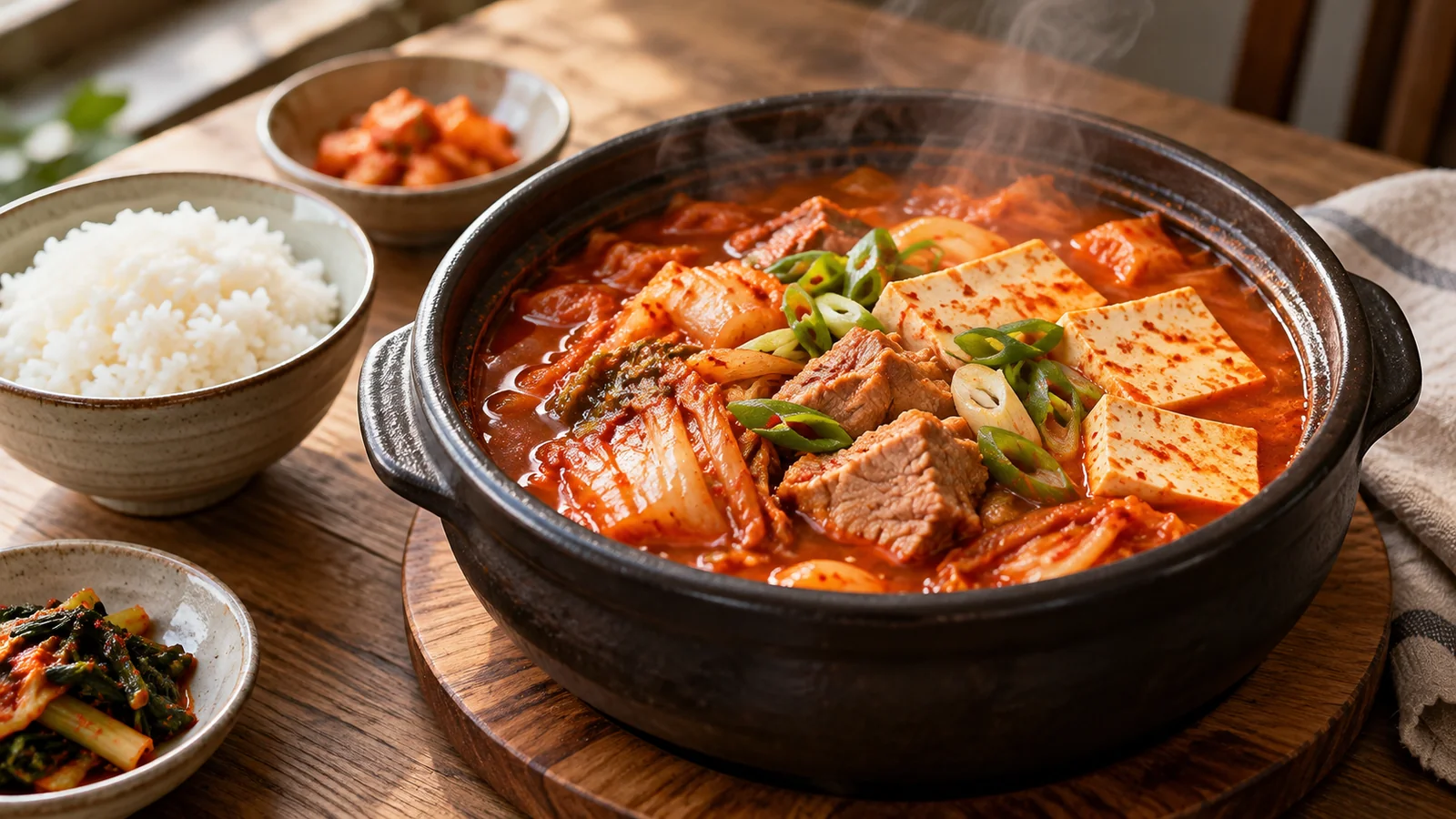
Separate acidity, chili heat, and the main protein
Acidity and chili heat are different sensations. A stew with a pronounced fermented tang is not necessarily the hottest, and reducing extra chili may leave the kimchi’s acidity unchanged. When asking for something gentler, explain whether you mean less heat or less sourness.
Pork contributes meat flavor and richness; tuna adds a fish-based savory character. More tofu primarily adds a soft ingredient rather than changing what the kimchi or stock contains. If you need to exclude meat or fish, check the base broth as well as the named addition.
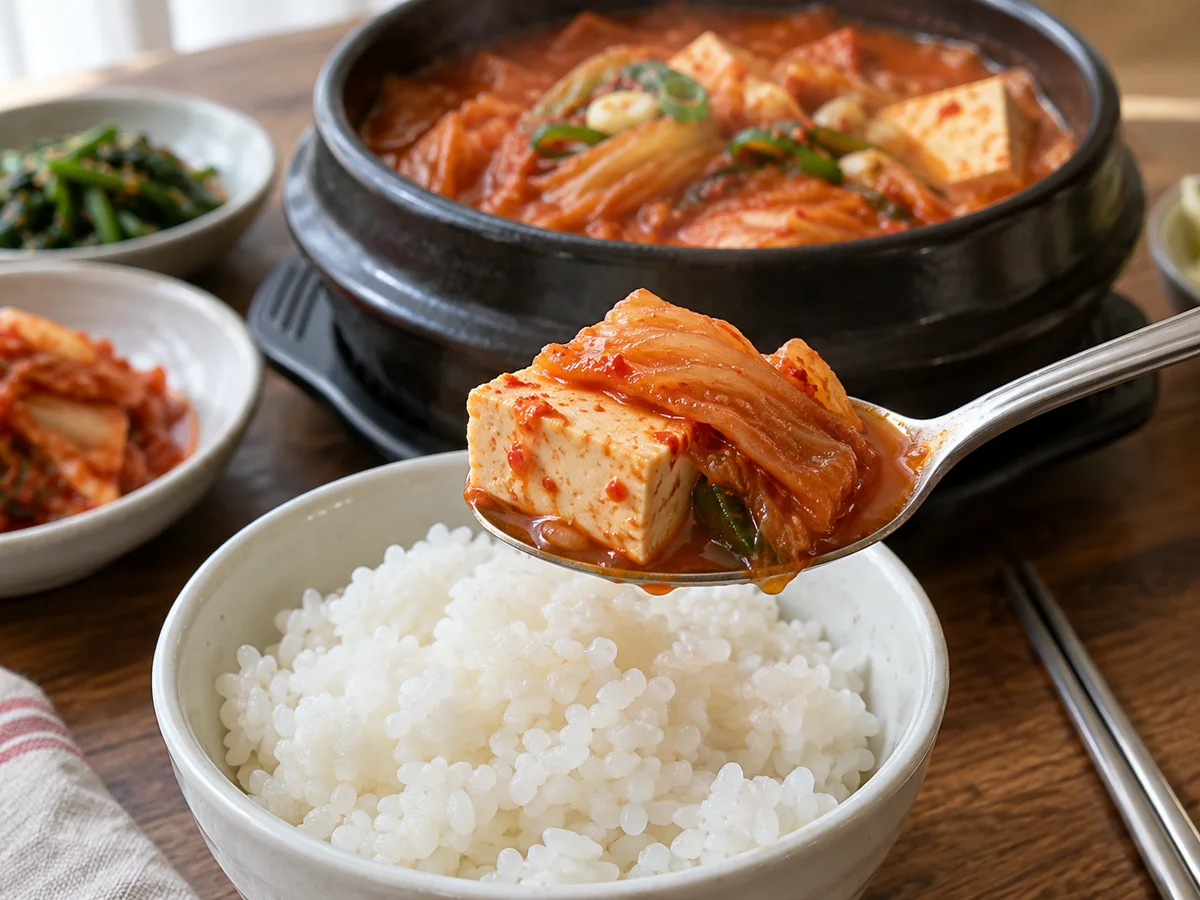
Instead of pouring the stew over all your rice immediately, try a little broth with a piece of kimchi and meat. You can then control how much seasoning reaches the rice. If soft tofu is what you most want, compare sundubu jjigae, while judging the heat of either stew from the actual restaurant’s preparation rather than the dish name.
Pork, tuna, and tofu versions
- Pork: Combines meat and kimchi; the cut and amount change its richness.
- Tuna: Adds flaked fish and a different savory character. Choosing tuna does not by itself establish that the stock contains no pork.
- Tofu-focused: Extra tofu does not guarantee vegetarian suitability; the kimchi and stock may still contain animal ingredients.
More than one main ingredient can appear in a pot. A menu name is not a complete absence-of-ingredients guarantee, so ask about the actual recipe when avoiding a particular food.
Stew, soup, or braised kimchi?
Kimchi jjigae provides both broth and solids to eat with rice. Kimchi soup generally emphasizes broth, while braised kimchi emphasizes ingredients such as tender kimchi and meat. These are useful starting points for comparing menus.
Recipes vary, so no single liquid ratio divides every soup from every stew. Braised kimchi need not be completely dry either. Decide whether you want a brothy meal or larger pieces of slow-cooked kimchi and meat, then read the restaurant’s description.
How do you eat it with rice?
Taste a little broth, then combine small amounts of kimchi and meat with rice. Adding a spoonful at a time helps you judge acidity and heat before mixing everything together. Rolled egg or other sides may accompany it, but no single pairing is mandatory.
Use a serving ladle and individual bowls for a shared pot. Hot earthenware and metal pots can burn, so avoid holding them and let spoonfuls cool as needed. If the dish continues cooking at the table, ask staff when the meat is ready.
What should you check before ordering?
Check whether it comes in individual bowls or a shared pot, how many portions are required, and whether rice costs extra. Noodle and tofu additions depend on the menu. A large pot in a photograph does not establish the serving size.
Kimchi seasoning may contain fish or shrimp, and stock may contain other animal ingredients. For dietary restrictions or allergies, ask separately about the kimchi, broth, and main additions. Choose your preferred main ingredient, then clarify acidity, heat, and rice before ordering.