Korean Food / What Is Samgyeopsal? Pork Belly, Korean BBQ, and Lettuce Wraps
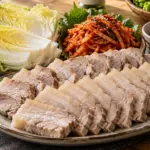
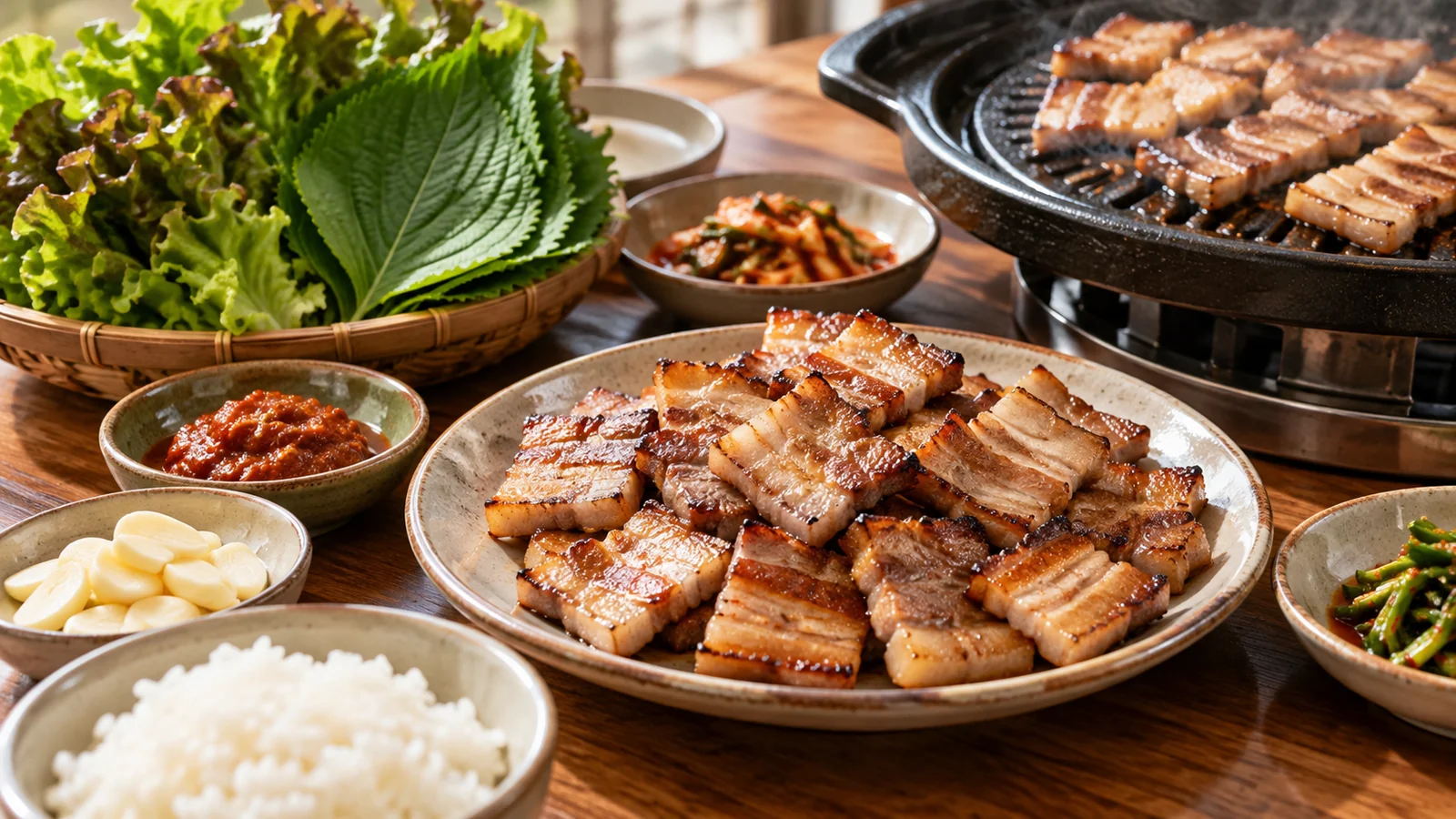
Samgyeopsal is pork belly, commonly enjoyed in Korea as grilled meat with leafy wraps and side dishes. Layers of lean meat and fat give it a rich flavor when cooked. For your first Korean BBQ meal, check the ordering unit and whether staff or diners cook the meat.
What cut of meat is it?
Pork belly contains layers of lean meat and fat. The ratio, thickness, trimming, and presence of skin change the texture even within the same cut. A skin-on menu name does not mean the dish has become an entirely different meat.
Bacon may also use pork belly, but cured or smoked bacon differs from the unseasoned pork belly commonly grilled for this meal. If an English menu says “pork belly,” check processing and seasoning rather than assuming it means bacon.
Flavor, thickness, and seasoning
The cooked fat adds richness, while the browned surface provides another texture. Thin slices and thick pieces require different handling and feel different to eat. Choose according to your preferred texture and the restaurant’s method, rather than treating thickness as an automatic quality ranking.
A menu translated as “fresh pork belly” may be describing an unseasoned preparation; it should not be treated as a universal guarantee about storage history. Ask separately if chilled or frozen handling matters to you. For marinated pork belly, check the sauce and its heat level.
How does Korean BBQ ordering work?
A menu may quote a serving weight and price per portion. Check the minimum order, whether your group must begin with the same meat, and how additional portions are sold. Rice, stew, or noodles may be ordered separately.
The Korea Tourism Organization’s food guide describes tabletop grilling with side dishes and leafy wraps. Some restaurants cook everything for you, while others expect diners to do it. Asking “Will staff cook the meat?” at the start clarifies what you need to do with the tools.
What if you cook at the table?
The grill and utensils can be hot. Follow the restaurant’s instructions for the burner and ask staff if you cannot judge when meat is ready. A browned surface or photograph is not proof that a thick piece is cooked through.
Keep plates and utensils used for raw meat separate from cooked food and eating utensils. The US government’s basic food safety guidance likewise advises separating equipment for raw meat and ready-to-eat food. Do not return cooked pork to the plate that held it raw.
How do you make a ssam wrap?
Put cooked pork on a small lettuce or perilla leaf and add a little ssamjang, a seasoned Korean dipping paste. Add a small amount of rice or scallion salad if you like. A modest filling is easier to fold and lets you taste the meat.
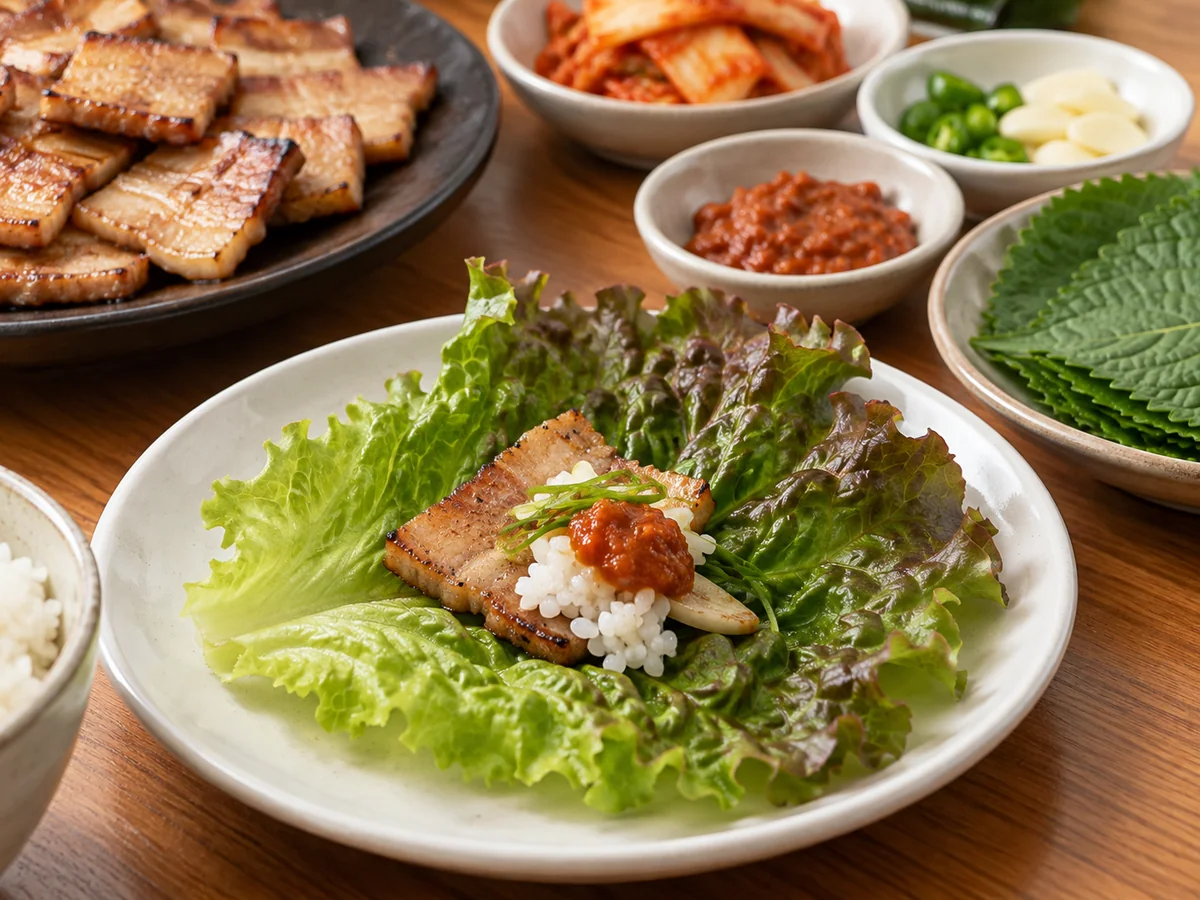
Wrapping is optional. Try some pork first, then compare salt, ssamjang, and different accompaniments. Raw garlic and chili can be strong, and ssamjang is already seasoned, so add them gradually.
Plan the meal from the first order to the finish
This is a pork dish and does not suit a pork-free diet. Ssamjang may contain soy or wheat, and sesame-based dips introduce sesame. Ask about shared grills and side-dish ingredients if those matter to your dietary needs.
Start with seasoning and thickness, then clarify who cooks and how portions are ordered. Thick pieces require attention to the serving-size cuts and cooking through; thin slices call for matching the amount on the grill to your eating pace. A single memorized cooking time cannot cover every thickness, so follow the restaurant’s instructions.
Putting every accompaniment into one wrap can make garlic or dipping paste dominate the pork. Try one cooked piece alone, then another with a leaf and a little seasoning. Changing the proportion of meat, vegetables, and paste lets you compare combinations within the same meal.
If you want meat already seasoned before cooking, compare the menu with bulgogi. With unseasoned pork belly, much of the flavor choice happens through accompaniments. Rice, stew, and cold noodles are not automatically all included. Decide on a finishing dish after seeing the meat portion and check extra charges; there is no compulsory sequence of courses.