Korean Food / What Is Sundubu Jjigae? Soft Tofu, Broth, Types, and How to Eat It
Sundubu jjigae is a Korean stew made with soft, unpressed tofu, broth, seasonings, and additions such as seafood or meat. A red, spicy version is familiar, but dishes built around sundubu vary. Check the main additions, heat level, and egg preparation when ordering.
How is sundubu different from firm tofu?
Sundubu is the soft curd formed before substantial pressing removes water and gives tofu a firm shape. It breaks apart easily and is convenient to scoop with a spoon. Irregular pieces in the stew are normal rather than a sign that neat tofu cubes have gone wrong.
The Korea Tourism Organization’s food guide describes soft tofu cooked with ingredients such as seafood. Distinguish the tofu from the completed dish: soybean-based tofu does not make a meat- or seafood-stock stew vegetarian.
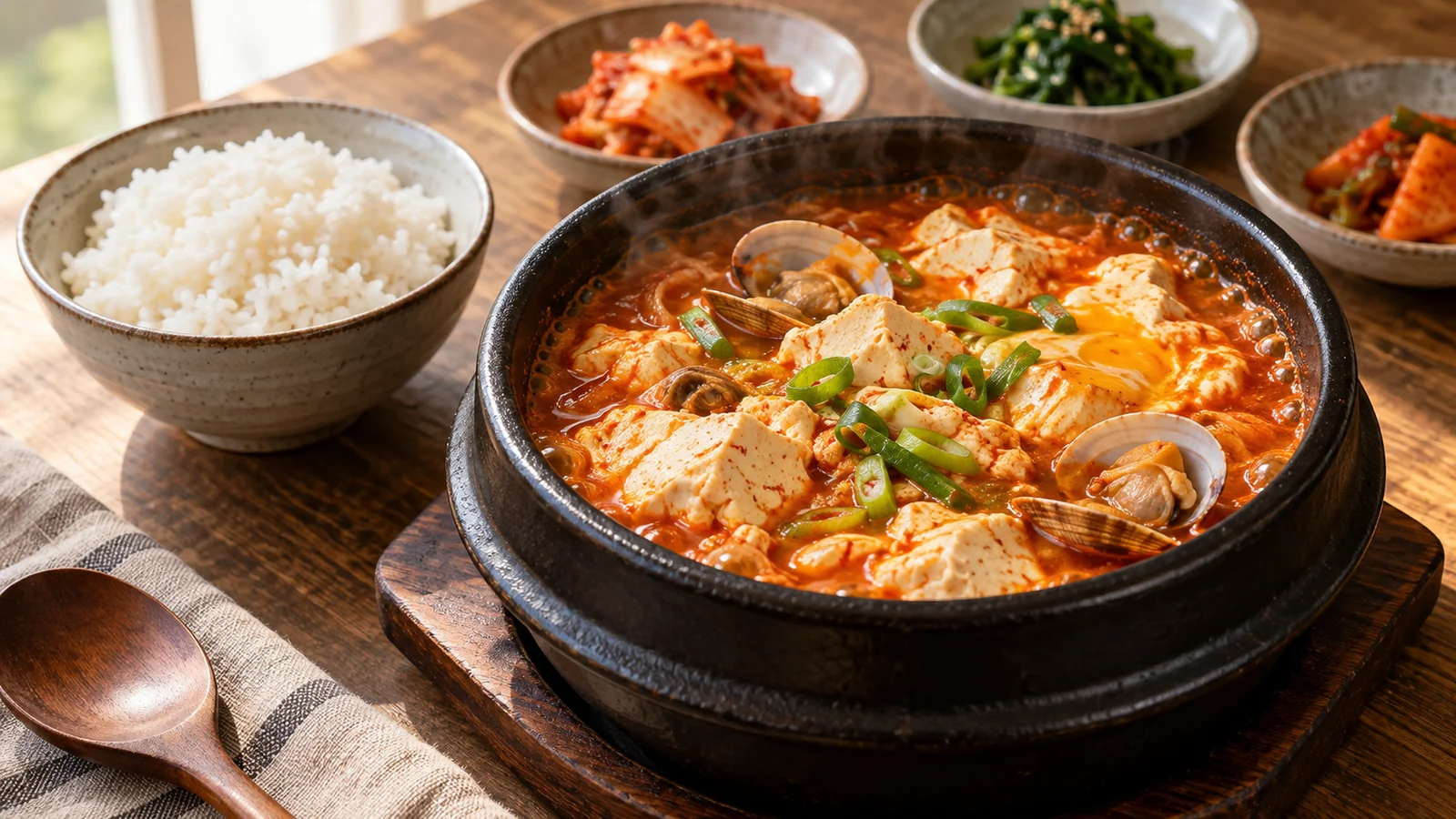
Soft tofu and mild broth are different choices
Soft curds are easiest to scoop with a little broth. Leave manageable pieces intact if you want to notice their texture; stirring more distributes the tofu through the liquid. Neither approach is compulsory, and breaking the tofu into smaller pieces does not itself change the broth’s seasoning.
The contrast is between delicate tofu and a broth flavored by chili, seafood, meat, or other ingredients. More tofu does not necessarily mean a genuinely mild dish. For less heat, ask whether the seasoning can be adjusted or whether a separate clear sundubu preparation is available.
Kimchi jjigae centers on kimchi and its tang, whereas sundubu jjigae centers on soft tofu. Both may contain meat or seafood; neither name establishes vegetarian suitability or a fixed heat level. Add broth to rice gradually so you can keep tasting the tofu and control how much seasoning accompanies each bite.
Seafood, meat, or a non-red preparation?
For seafood versions, ask which shellfish or other seafood is included. For meat versions, check whether it is beef or pork. Mixed options may combine several additions, so the ingredient description is more useful than a short menu name.
Some sundubu dishes are served in a clear preparation or with perilla seed seasoning. A clear tofu dish is not necessarily the red stew with its chili simply removed; the stock and method may differ. Nor does a pale color mean no animal stock or seasoning. Ask how that specific dish is prepared.
What should you do with the egg?
An egg may already be in the stew, arrive separately, or not be provided at all. If it comes separately, ask staff when and how to add it. Mixing changes how it blends with the broth; leaving it less disturbed preserves more of its shape.
A hot-looking pot does not guarantee that an egg reaches the degree of cooking you need. Ask for a fully cooked egg from the kitchen if that is important, or request its omission before the dish is prepared.
How do you eat it with rice?
Taste a little broth, then eat small amounts of tofu and other ingredients with rice. A spoon is often easier than chopsticks for the fragile curds. Check the temperature of each spoonful and separate any seafood shells from the edible portion.
If the meal includes stone-pot rice, staff may explain how to transfer the rice and what to do with the remaining crust. Not every tofu stew includes this rice service. Confirm the actual meal arrangement and follow that restaurant’s instructions.
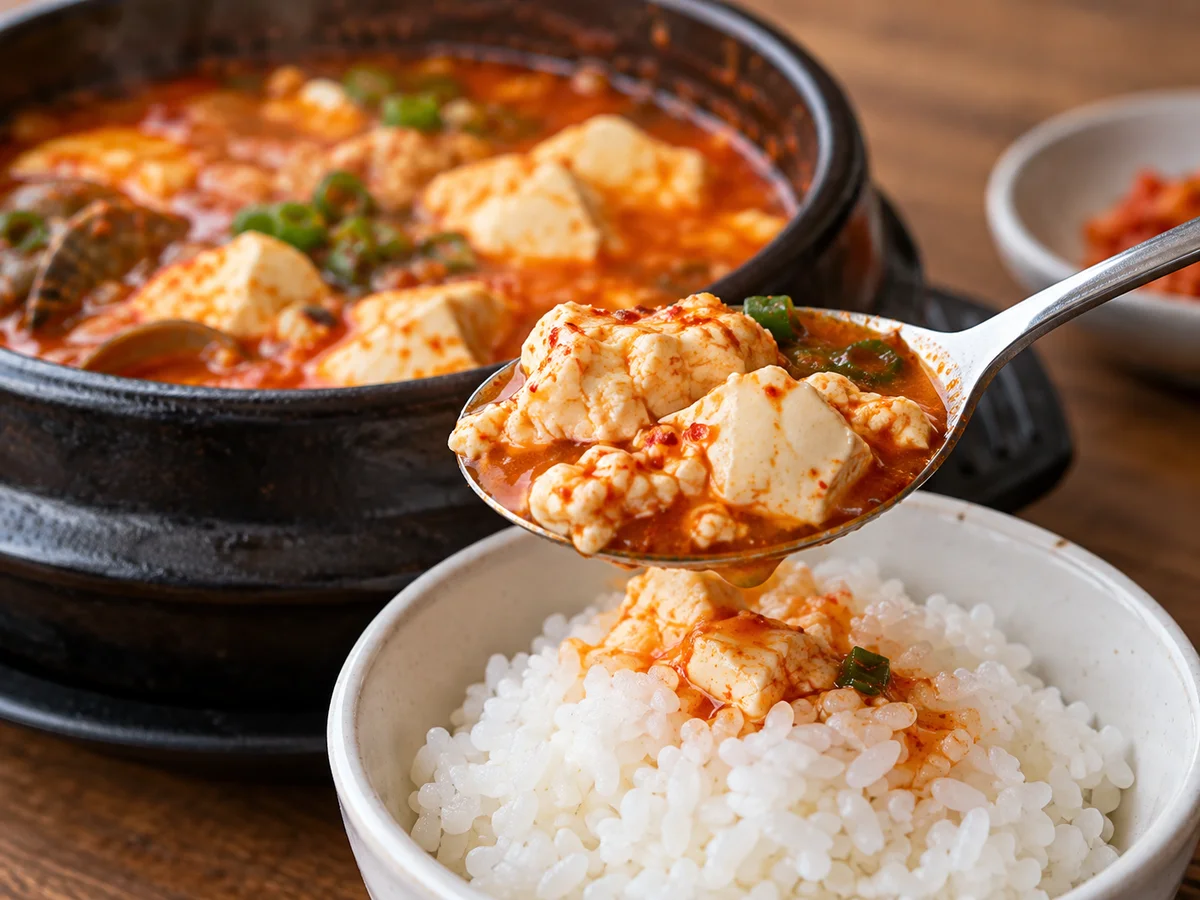
What should you check before ordering?
Ask whether the stew is individual, whether rice and sides are included, and which meat or seafood is used. Extra toppings change the balance, so a simple version is a reasonable starting point.
Soy is part of the tofu; shellfish, shrimp, egg, and stock ingredients may also matter for allergies. Removing a visible topping after cooking may not be sufficient, so ask about preparation and shared equipment. Decide whether delicate tofu or a strongly flavored broth is your priority, then select additions and heat accordingly.