Korean Food / What Is Gimbap? Ingredients, Types, and How It Differs from Sushi
Gimbap is a Korean dish made by rolling rice and assorted fillings in gim, a sheet of dried seaweed, then slicing the roll. Vegetables may be joined by egg, meat, or tuna, and the balance of rice and fillings changes its flavor and texture. For your first order, choose a filling you like and check any ingredients you need to avoid.
What goes into a gimbap roll?
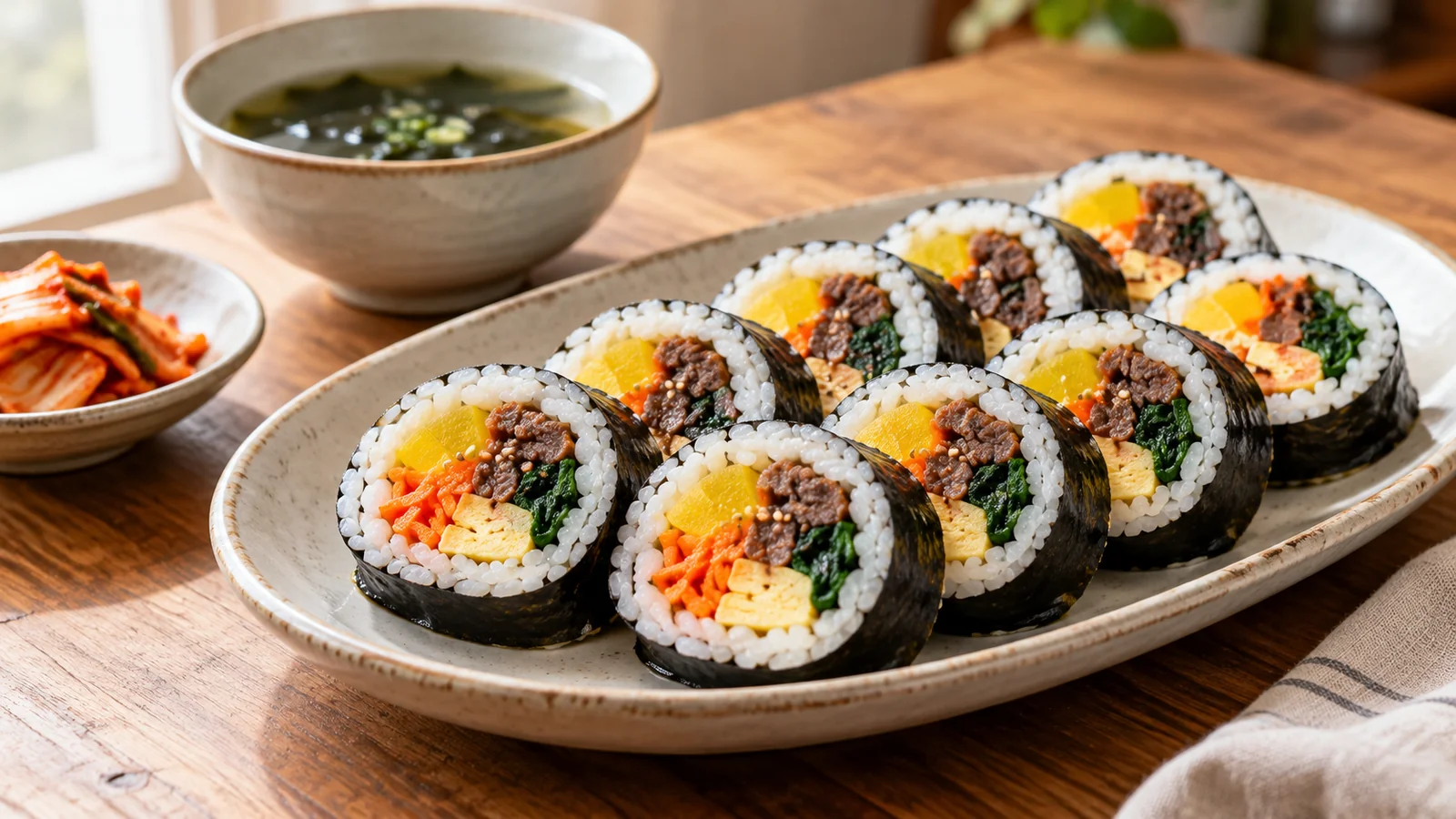
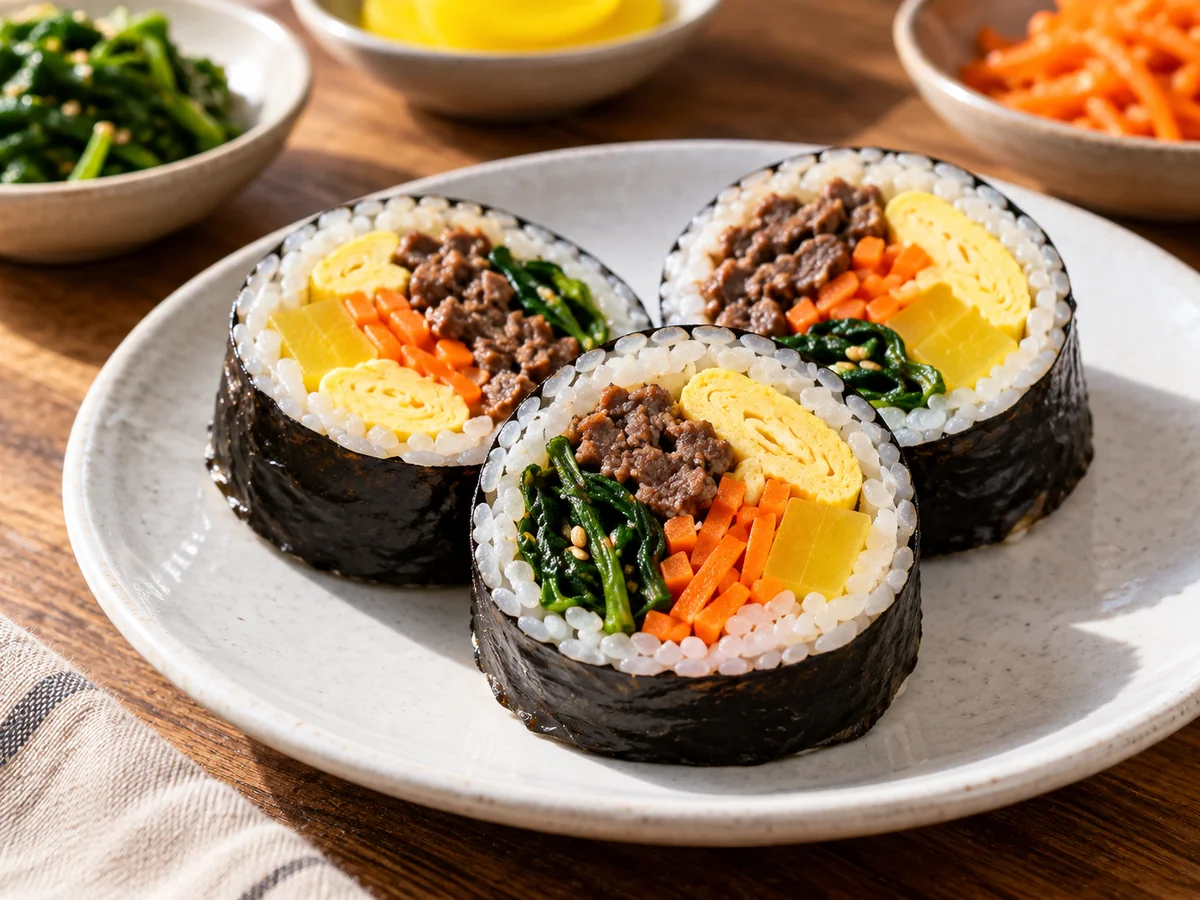
Seaweed forms the outside, while rice holds the filling together. Common fillings include pickled yellow radish, carrot, spinach, seasoned burdock root, and strips of cooked egg. Ham or fish cake may also appear. There is no fixed combination shared by every shop.
The Korea Tourism Organization’s food guide describes vegetable rolls as well as tuna and beef options. A cross-section helps you see the main ingredients, but it does not reveal everything in a sauce or seasoning. If you have an allergy or dietary restriction, a photograph is not enough to confirm suitability.
What does gimbap taste like?
A slice brings soft rice, the aroma of seaweed, and the crunch of pickled radish together. Sesame oil can add a nutty aroma; seasoned burdock or bulgogi can add sweetness and saltiness. A tangy bite of pickled radish does not mean that every roll contains vinegar-seasoned rice.
Tuna mixed with mayonnaise makes a moist filling, while a vegetable-heavy roll gives more crunch. A roll can contain spicy peppers, fish cake, or kimchi even when the menu does not prominently call it “spicy.” Ask about the actual filling if you prefer mild food.
How is gimbap different from sushi?
Gimbap centers on rice and fillings rolled in seaweed; sushi is defined by its seasoned, vinegared rice and comes in several forms. Because sushi can also be rolled, the presence of seaweed alone does not distinguish the two.
Many familiar gimbap fillings are cooked, pickled, or seasoned, but exceptions exist. “Gimbap always contains cooked ingredients, while sushi always contains raw fish” is not a reliable rule. Look at both the rice seasoning and the actual filling rather than judging by shape alone.
Which type should you choose?
- Basic gimbap: A way to explore the usual vegetable-and-egg combination. It may still contain ham or fish cake.
- Tuna gimbap: Often contains tuna mixed with mayonnaise, so check both fish and egg ingredients where relevant.
- Beef gimbap: Features seasoned beef; sweetness and the proportion of vegetables vary.
- Vegetable gimbap: A meat-free name does not guarantee a vegan roll. Ask about egg, fish cake, sauces, and seasonings.
Miniature rolls and versions that replace some rice with egg offer different proportions. Start with familiar fillings, or share two different rolls to compare which combination you enjoy.
How do you eat gimbap?
Pick up the sliced pieces one at a time. Hold a loose slice gently at the sides, or use a small plate to catch any filling. If a piece is too large, there is no need to force it into one bite.
Try it plain before adding a separately offered sauce. Gimbap is already seasoned and does not require dipping in soy sauce. Soup or tteokbokki can accompany it, although a spicy dip changes the flavor. For packaged or takeaway rolls, follow the stated storage and eating instructions rather than assuming they can be left at room temperature indefinitely.
Choose the filling balance for the meal you want
Two whole rolls need not offer the same eating experience. A thicker layer of rice can soften the perceived seasoning, while more pickled radish or seasoned burdock can emphasize crunch or sweetness. “Extra filling” is therefore less informative than knowing which filling has increased.
For a moist, rich roll, ask whether tuna is mixed with mayonnaise. For more crunch, look at the fresh and pickled vegetables. An egg-heavy version changes the texture compared with a rice-heavy roll, but its name alone does not establish carbohydrate content or calories. Use that product’s nutrition information if those figures matter.
When pairing a roll with tteokbokki, consider whether you also want spicy ingredients inside the gimbap. Strong seasoning in both can make the roll’s separate flavors harder to distinguish. If gimbap is the meal itself, neither soup nor dipping sauce is compulsory. Taste the original roll before deciding which accompaniment adds something you want.
What should you check when ordering?
Find out whether the price is for a whole roll or individual pieces, how it is sliced, and how large a portion is. That makes it easier to choose accompanying food. A menu photograph alone is not a dependable portion guide.
Name any ingredients you cannot eat before ordering. Even a shop that rolls gimbap to order may use fillings and sauces prepared in advance. Depending on your needs, check sesame, egg, fish, soy, wheat-containing seasonings, and shared equipment. A familiar filling, a clear answer about spicy ingredients, and a check on sauces make a practical first order.