Korean Food / What Is Bossam? Boiled Pork, Kimchi, and How to Make a Wrap
Bossam is a Korean meal of sliced boiled pork served with kimchi, cabbage, or other wrapping leaves. The meat’s savory flavor can be combined with as much spicy kimchi or salty condiment as you prefer. Try the components separately first, then build a small wrap.
What comes on a bossam platter?
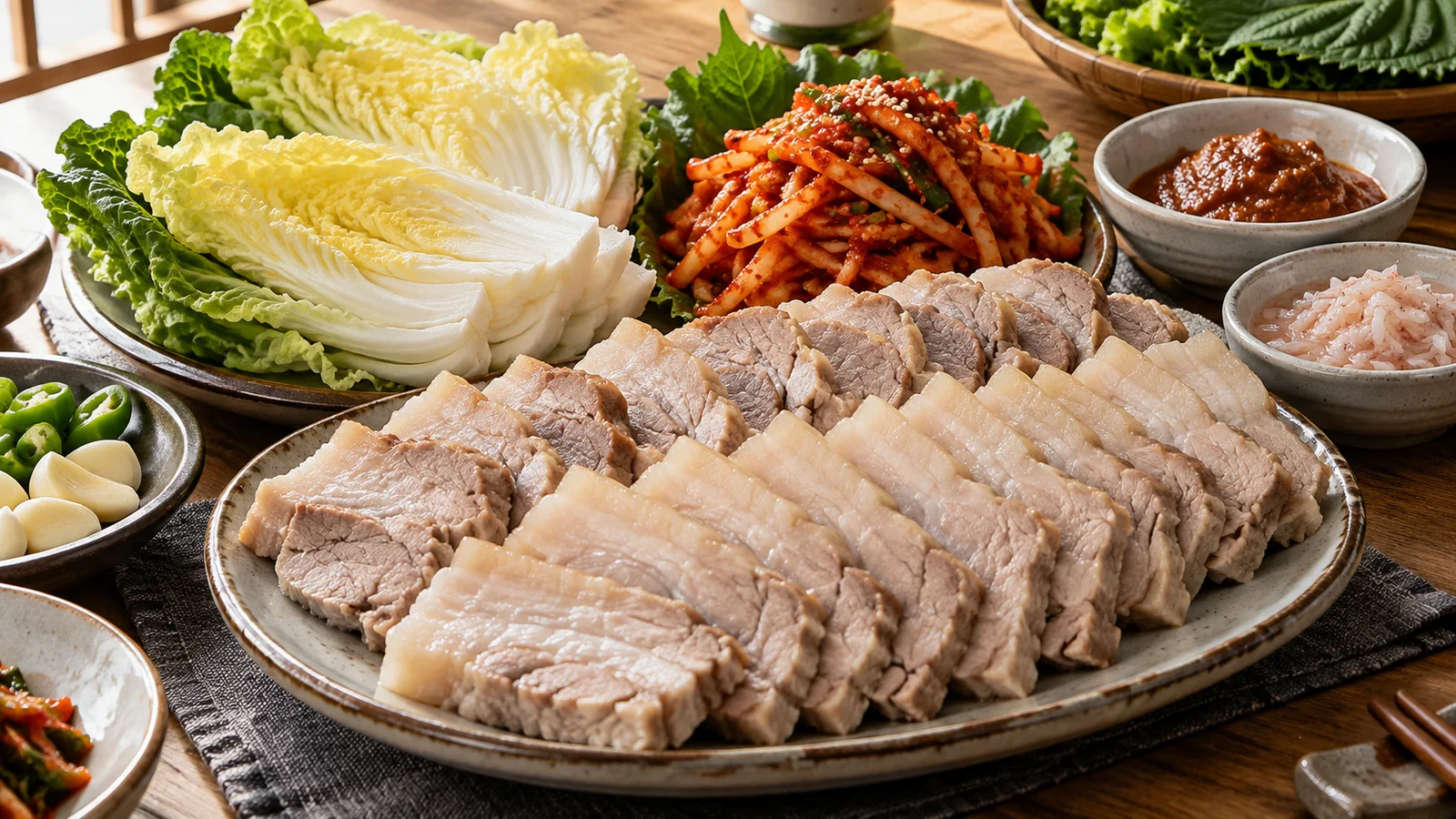
Pork belly or shoulder may be boiled and sliced, accompanied by kimchi, seasoned radish, cabbage, and condiments. The Korea Tourism Organization’s food guide describes pork served with kimchi seasoning or spicy radish. The cut, proportion of fat, and accompaniments depend on the restaurant.
Look for alternating lean and fat layers if you enjoy a richer texture, or ask about leaner cuts if that is your preference. Not every menu offers a choice. Boiling does not mean all fat disappears or justify treating every bossam platter as nutritionally identical.
How do the meat and accompaniments taste?
Compared with grilled pork belly, boiled pork highlights the texture of the meat and fat rather than a strongly browned surface. Kimchi adds chili and acidity, while radish contributes crunch. Bossam kimchi is not guaranteed to be sweet or mild, so taste a little before making a wrap.
Saeujeot is salted, fermented small shrimp; ssamjang is a seasoned paste served with wraps. Both can be salty. Start with a small amount instead of stacking generous portions of meat, kimchi, and condiment into one bite, where salt might overwhelm the other flavors.
How do you make a bossam wrap?
- Choose a manageable piece of cabbage or lettuce.
- Add a slice of pork and a little kimchi or radish.
- Add a small amount of condiment if wanted.
- Fold into a bite-sized wrap and adjust the next one to taste.
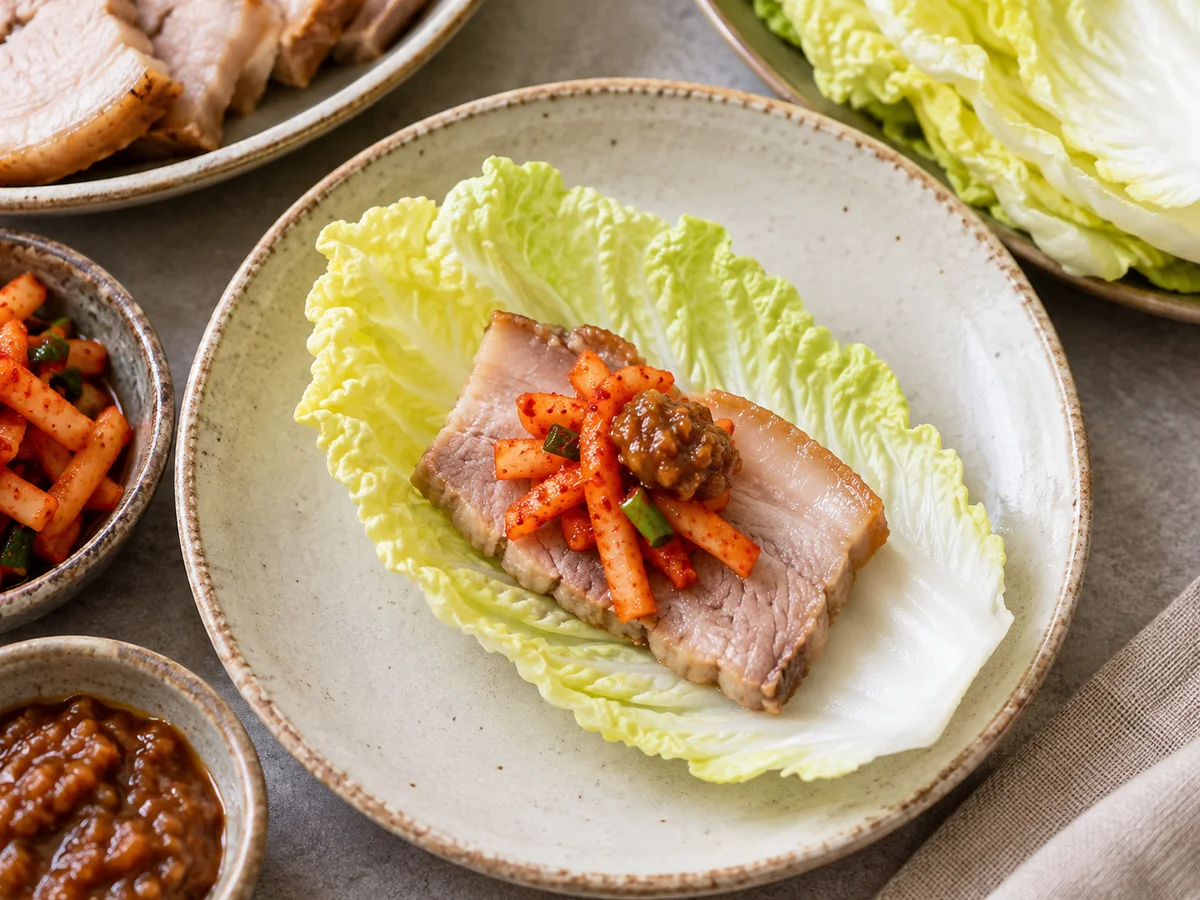
If the wrap is unwieldy, reduce the filling or eat the components separately. Garlic and fresh chili are optional rather than compulsory. Finding a comfortable size and a balance you enjoy matters more than fitting every accompaniment into one mouthful.
Compare bossam, suyuk, and jokbal by cut and serving
Suyuk broadly describes meat cooked in water. Bossam suggests boiled pork arranged with kimchi and wrapping vegetables, so its meat can also be described as suyuk. The names do not necessarily indicate completely separate meats. Accompaniments are part of understanding the meal.
Jokbal uses foot and leg portions and highlights the springiness of skin and connective tissue. Bossam’s balance of lean meat and fat depends on the cut. Explain whether you prefer lean slices, layers of fat, or springy skin; this is more informative than asking only which dish is less rich.
Compare kimchi and condiments too. For oyster bossam, ask how oysters are served and included. If avoiding salted shrimp, check fermented seafood in the kimchi as well. Taste pork alone, then add kimchi and sauce one at a time. This helps distinguish your preferred ratio instead of treating a wrap containing every accompaniment as compulsory.
What should you check before ordering?
Ask how many people each platter serves and whether rice is included. Oyster bossam adds oysters; it is not simply another name for the basic dish. Seafood restrictions also require checking shrimp condiment and fermented seafood in the kimchi.
Ask whether condiments and kimchi can be served separately if you want control over flavor. Taste the pork, then add one accompaniment at a time. For takeaway, ask the seller about packing, storage, and reheating rather than assuming meat and cold vegetables should be handled identically.