Korean Food / What Is Bibimbap? Ingredients, Types, and How to Eat It
Bibimbap is a Korean dish of rice topped with vegetables and other ingredients, then mixed with a sauce before eating. Meat and egg are common additions, but the toppings, bowl, and seasoning vary by region and restaurant. For your first bowl, check what is included and add the sauce gradually to suit your taste.
What is bibimbap?
The name combines the ideas of “mixing” and “rice.” The toppings often arrive arranged in separate patches of color, but you mix the rice, toppings, and seasoning together to eat. Before mixing, you can see each ingredient; afterward, a spoonful brings several flavors and textures together.
There is no single fixed set of ingredients. At home, people may use vegetables and seasoned side dishes already on hand. Restaurants may add meat or local ingredients to create their own version. The Korea Tourism Organization’s introduction to bibimbap also describes rice served with vegetables and meat, with variations using seasonal and regional ingredients.
What ingredients go into bibimbap?
Rice, vegetables, and namul
Rice is the base that brings the toppings and sauce together. White rice is common, but some versions use barley or mixed-grain rice. Even with similar toppings, the choice of grain changes the texture and flavor.
You may find soybean sprouts, spinach, bracken fern, carrots, zucchini, and mushrooms. Some are blanched or stir-fried and seasoned; others, such as lettuce or seasoned shredded radish, add a different texture. Namul can refer to vegetable side dishes prepared by blanching or stir-frying and seasoning. A bowl full of vegetables is therefore not necessarily a bowl of raw vegetables.
Meat and egg
The meat may be cooked, such as stir-fried beef or bulgogi, or uncooked, as in yukhoe, a Korean raw beef preparation. There are also versions built around vegetables and mushrooms without meat, so the actual menu description matters.
Egg may come as a fried egg, an egg yolk, or another preparation. Whether egg is included and how thoroughly it is cooked depend on the restaurant. If you want a fully cooked egg, ask whether this can be arranged when ordering.
Gochujang, sesame oil, and other seasonings
Gochujang, a Korean fermented red chili paste, adds heat and seasoning, while sesame oil and sesame seeds contribute a nutty aroma. The sauce may already be in the bowl or served separately. Some versions use a soy sauce-based dressing, so bibimbap does not always taste of gochujang.
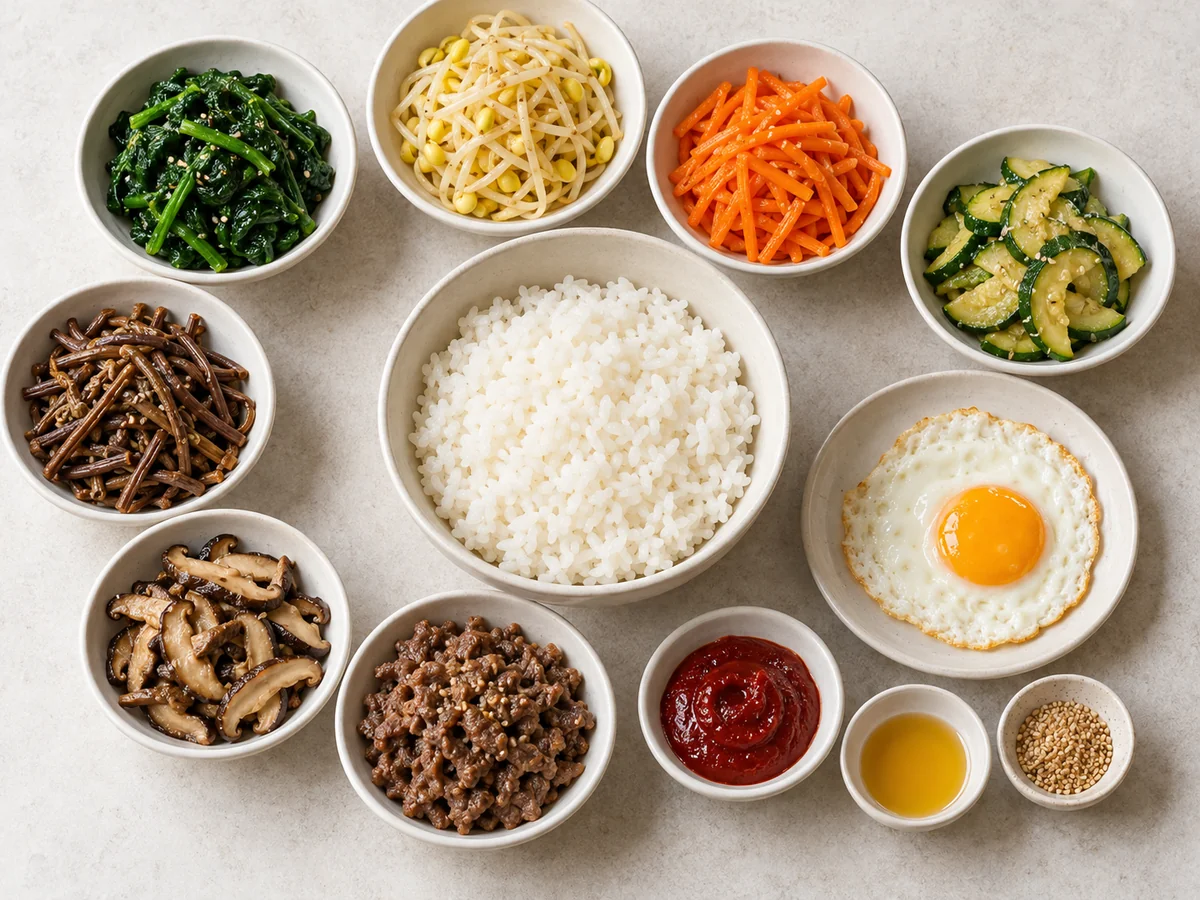
An example ingredient arrangement with rice, vegetables, cooked meat, egg, and seasonings shown separately. Actual ingredients and portions vary. AI-generated image.
What does bibimbap taste like?
The flavor comes from the combination rather than one ingredient alone. Soft rice meets crisp vegetables, tender namul, and the savory flavors of mushrooms or meat. Gochujang brings spicy, sweet, and salty notes, while sesame oil adds a nutty aroma.
The level of heat depends on the sauce and how much you use. If gochujang is served separately, you can start with a small amount. Vegetables and meat may already be seasoned, so taste a spoonful before adding more sauce.
You can also enjoy the vegetables and sesame aroma without adding gochujang. However, some bowls arrive with the sauce already mixed in or contain other spicy ingredients. If you prefer mild food, ask before ordering whether the sauce can be served on the side.
How do you eat bibimbap?
The following approach makes it easier to adjust the seasoning. It is a practical way to mix and taste the ingredients, rather than a strict rule of dining etiquette.
- Check the ingredients and sauce. Look at the meat and egg and see whether sauce has already been added. If there is an ingredient you cannot eat, tell the staff before mixing.
- Add a little of any separately served sauce. Start with part of it instead of pouring it all in. If sauce is already on top, try mixing before adding extra.
- Mix all the way down to the rice. Use your spoon to bring rice up from the bottom and combine it with the toppings and sauce. Chopsticks can help separate ingredients that are difficult to mix.
- Taste a spoonful and adjust. Add a little more sauce if you want stronger seasoning or more heat. If soup and side dishes come with the meal, you can enjoy them between spoonfuls.
The Korea Tourism Organization’s guide to eating Jeonju bibimbap likewise describes mixing with a spoon or chopsticks, tasting, and then adding more gochujang. Soup can be eaten separately; there is no need to pour a large amount into the rice just because the mixture feels dry.
A stone bowl can be very hot. Avoid touching it with bare hands, and check the temperature of each spoonful before eating. A hot bowl alone does not tell you whether the meat or egg is cooked to the degree you need, so ask about cooked ingredients when ordering.
What types of bibimbap are there?
Names can describe the bowl, a main topping, or a region. As a result, labels such as “stone bowl,” “yukhoe,” and “Jeonju” can overlap on the same menu rather than always referring to separate, mutually exclusive dishes.
Regular bibimbap and dolsot bibimbap
Regular bibimbap is generally served in a bowl, which may be ceramic or metal. Dolsot bibimbap comes in a heated stone bowl that keeps the meal warm. Rice touching the bottom may develop a crisp layer, although this depends on the cooking method and how long it stays against the bowl.
Consider whether you would prefer a regular bowl or want the hotter rice and possible crisp texture of a stone bowl. Even when the toppings are similar, the vessel and temperature change the eating experience.
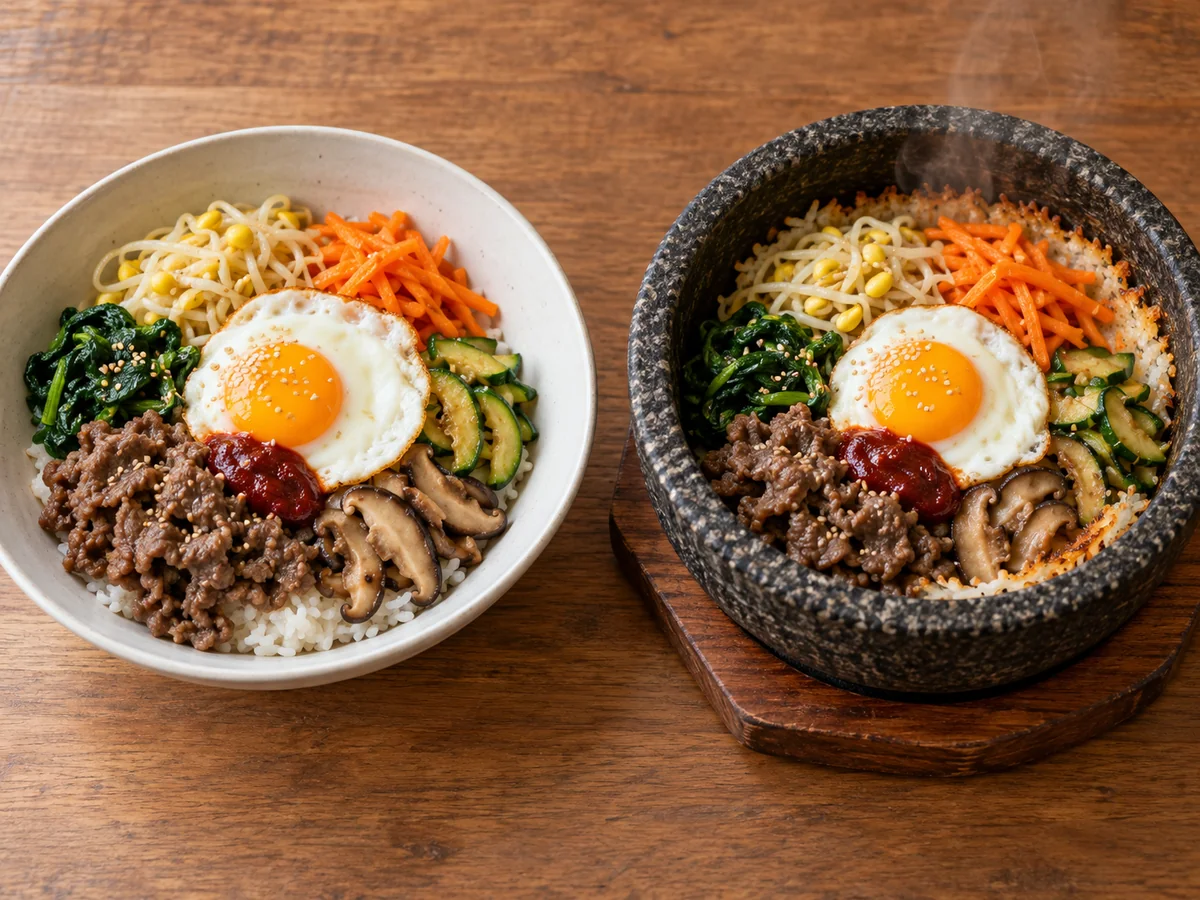
A regular bowl on the left and a stone bowl on the right. This illustrative comparison shows the vessels and presentation; it is not a photograph of a particular restaurant’s menu. AI-generated image.
Yukhoe bibimbap
Yukhoe bibimbap features uncooked beef as a main topping. The Korea Tourism Organization’s description of yukhoe bibimbap includes raw beef, vegetables, and egg yolk on rice, mixed with sesame oil and gochujang seasoning.
If you do not want raw meat, check whether a regular bibimbap or another menu option uses cooked meat. When a menu simply says “beef,” ask how it is prepared.
Jeonju bibimbap and regional versions
Jeonju bibimbap is a well-known version named after a Korean city. The Korea Tourism Organization’s Jeonju bibimbap guide describes toppings such as soybean sprouts, bracken fern, spinach, beef, and hwangpomuk. Hwangpomuk is a yellow mung bean starch jelly that adds color and a different texture.
The name “Jeonju bibimbap” alone does not determine whether the beef is cooked or which bowl is used. Restaurants can vary their ingredients and presentation while drawing on a regional style. Use the regional name as a starting point, then check the actual menu description.
What should you check before your first order?
Bibimbap can offer room for adjustments, but not every restaurant can make every change. Explain the conditions that matter to you before ordering.
- Spiciness: Ask, “Can I have the gochujang on the side?” Adjusting the heat may be difficult if the sauce is mixed in during preparation.
- Meat and egg: Check whether meat is included, whether it is cooked, and whether the egg can be fully cooked.
- Vegetarian requirements: Ask about broth used to cook the rice and seasonings used for vegetables and sauces, as well as visible meat and egg. Removing meat alone does not guarantee that the dish meets your dietary requirements.
- Allergies: Name the foods you need to avoid and ask about toppings, sauces, and preparation. Depending on your allergy, ingredients to check may include egg, sesame, soy, and wheat.
Removing an ingredient and making a dish suitable for someone with an allergy are different matters. Also ask whether shared equipment or work surfaces could bring the food into contact with an allergen. The UK government’s advice on eating out with an allergy recommends contacting the restaurant in advance about suitable food and possible allergen cross-contact during preparation.
For a first bowl, start with three choices: temperature, type of meat, and level of heat. A version with cooked meat and sauce served separately lets you add seasoning gradually and explore how the ingredients come together.