Korean Food / What Is Jeyuk-Bokkeum? Spicy Pork, Bulgogi and Meal Options
Jeyuk-bokkeum is thinly sliced pork stir-fried with vegetables and seasonings such as gochujang and chili powder. Its salty, sweet and spicy coating makes it suitable alongside rice or served over rice in a bowl. Names and methods can overlap with pork bulgogi and duruchigi, so check the seasoning, amount of liquid and meal setting together.
Which pork cuts and vegetables are used?
Shoulder and neck are common cuts that can be sliced thinly and cooked conveniently. Belly is another possibility, so the name does not specify a single cut. Leaner pieces have a more distinct meaty bite; a mixture of fat can add richness and tenderness.
The Korea Tourism Organization's introduction to jeyuk-bokkeum describes pork seasoned with gochujang, chili powder, soy sauce and garlic, then cooked with vegetables. Onion, green onion and cabbage may cook with the meat; perilla leaves or chilies can add aroma.
Thin slices overlapping as they cook can look like small clusters holding sauce. Pick up a piece to see its thickness and fat ratio and the amount of onion or cabbage. The balance of meat and vegetables varies, so equally sized plates can make quite different meals.
Distinguishing heat, sweetness and cooking aroma
Red seasoning is typical, but the proportions of gochujang and chili powder and the strength of sweetness are not fixed. Some versions taste sweet first; others leave a stronger garlic or chili aroma. Color alone is not a reliable measure of heat.
Some menus emphasize a smoky or flame-cooked aroma, but jeyuk-bokkeum is not necessarily charcoal-grilled or flavored by one particular technique. It may be stir-fried in a pan or on a griddle, brought out cooked, or finished at the table. Read the menu description if the method matters to you.
Taste a piece alone and then with rice to judge the seasoning's strength. Rice and leafy wraps change how the seasoning is experienced, but do not remove heat already absorbed by the meat. If you are sensitive to chili, ask before ordering whether the sauce or chilies can be reduced.
The boundaries with pork bulgogi and duruchigi are flexible
Seasoned pork dishes can vary between restaurants despite identical names, or look similar despite different names. The comparison below is a starting point; the actual ingredients and cooking method take priority.
| Name | Commonly associated style | What else to check |
|---|---|---|
| Jeyuk-bokkeum | Pork and vegetables stir-fried in red seasoning | Cut, heat and meat-to-vegetable ratio |
| Pork bulgogi | Marinated pork grilled or otherwise cooked | Soy or chili-paste seasoning and cooking method |
| Duruchigi | May involve cooking several ingredients with a little liquid | Pork, tofu, kimchi or other ingredients and remaining liquid |
Pork bulgogi is not always brown with soy sauce, nor is jeyuk the only spicy pork dish. Pork bulgogi can also use gochujang. As in the introduction to bulgogi, separating meat, seasoning and cooking method helps explain the overlap in names.
Duruchigi is not restricted to pork either. The Encyclopedia of Korean Culture (in Korean) describes cooking various ingredients in an iron pot, with regional differences in composition and preparation. Rules such as “jeyuk has no liquid and duruchigi always has kimchi” do not fit every menu.
Eating it with rice or in leafy wraps
The pork is already seasoned: put a little on rice or alternate bites. With plenty of sauce, add only as much as you want to each portion of rice. There is no need to mix the whole bowl immediately if you want to taste the meat's texture separately.
If lettuce or perilla leaves are provided, use them for ssam, or leafy wraps. Add pork and onion, plus a little rice if you like. When the meat is well coated, avoid adding a large amount of ssamjang dipping paste at first. Raw garlic or chili changes the aroma and heat again, so try additions individually.
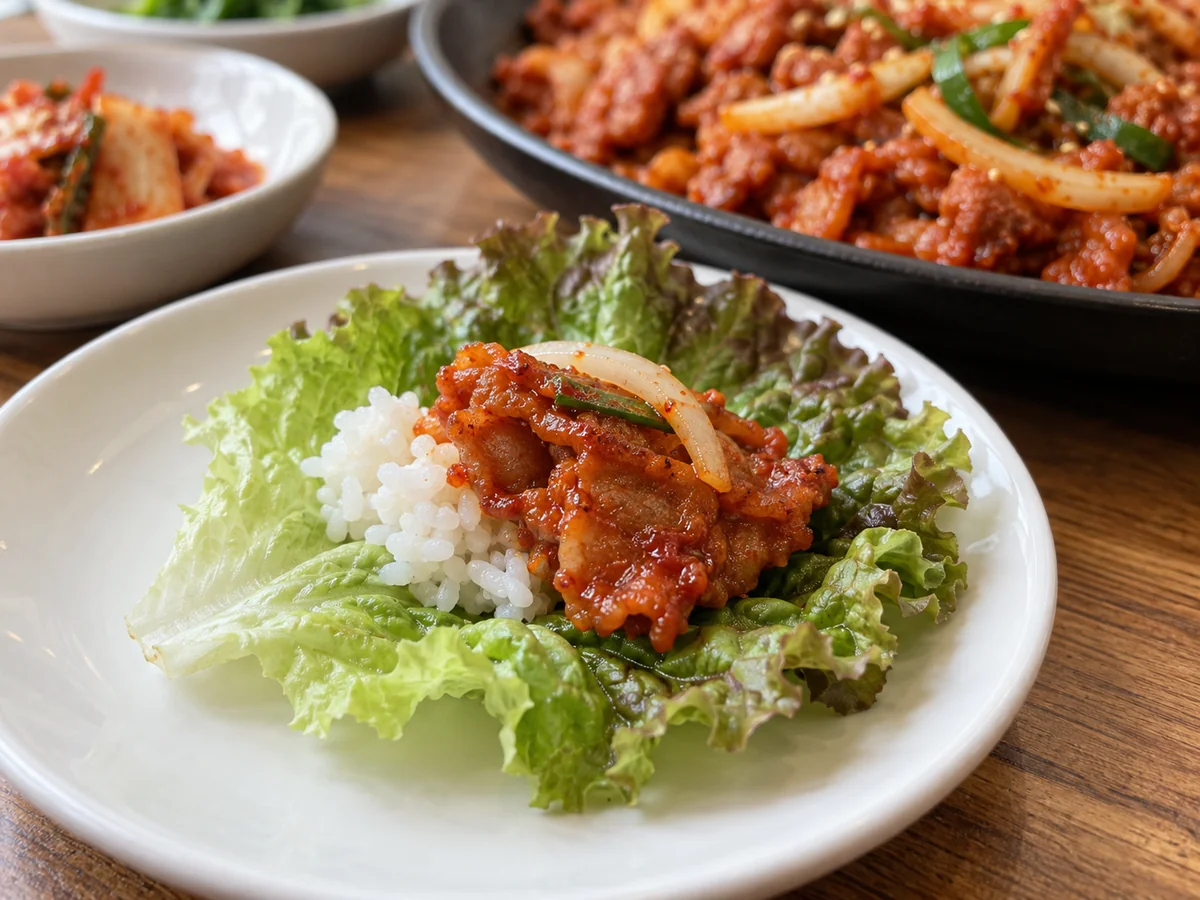
A griddle on the table may merely keep cooked pork warm. If you are expected to cook it yourself, check when it is ready to eat. Distinguish cooking meat from ready-to-eat pieces and use the tongs and plates for their intended purposes.
A jeyuk set meal versus a rice bowl
A jeyuk set may serve pork, rice, soup and side dishes separately. This makes it easy to adjust each bite's ratio of meat to rice and alternate wraps or sides. However, “set meal” does not guarantee a fixed number of side dishes or identical contents everywhere.
Jeyuk-deopbap presents the stir-fried pork over rice in one bowl. Rice and sauce are already in contact, making them convenient to eat together, but you do not have to mix all the meat and sauce at once. Combine small portions to adjust the seasoning.
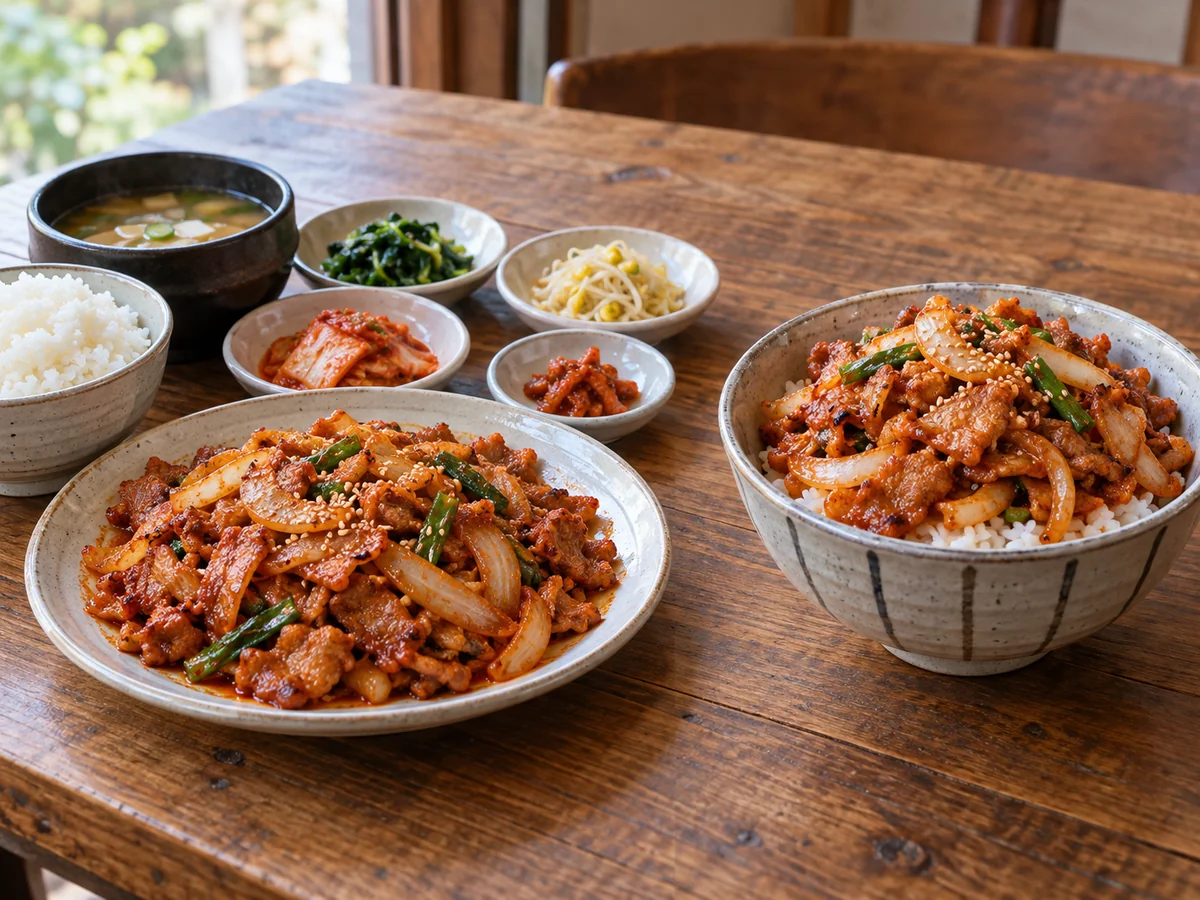
For a simple solo meal, examine the rice and pork portions in the bowl. For vegetables and a variety of sides, check the set's contents. A shared pork plate may have different ordering rules from an individual set, so ask about minimum portions and whether rice is included.
Practical criteria for a first order
- Pork cut: Ask about the lean proportion for less fat, or the amount of fat if you prefer richer, softer meat.
- Seasoning: Check heat, sweetness and possible adjustments. A soy-seasoned alternative may be available.
- Cooking and service: Is it a finished plate or a griddle dish cooked at the table?
- Meal setting: Is it a single dish, a set or a rice bowl, and are rice and wrap vegetables included?
If you enjoy heat but prefer lean pork, ask whether the jeyuk uses a leaner cut. If you expected soy seasoning from the name, a red version may differ from what you imagined. Choosing the cut, seasoning and meal format separately makes an unfamiliar menu easier to navigate.