Korean Food / Kongguksu: Cold Soybean Noodles, Flavor, and Seasoning
Kongguksu is a cold noodle dish served in a broth made from cooked, ground soybeans. Its focus is a nutty bean flavor and a thick broth, quite different from tangy naengmyeon or spicy bibim-guksu. Taste the soybean broth before adding salt or sugar so you can adjust the seasoning without losing its original balance.
The white broth comes from soybeans
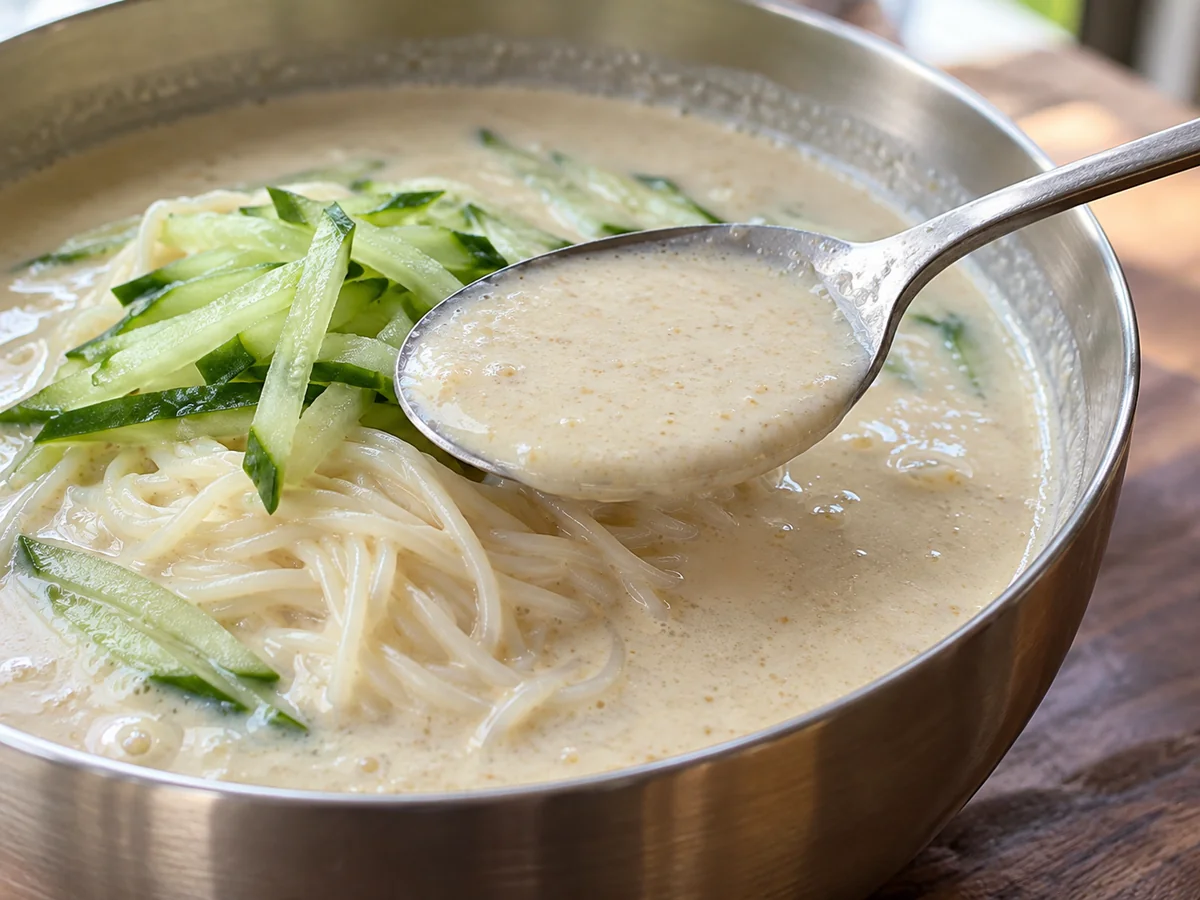
The base of kongguksu is made by soaking and cooking soybeans, then grinding them with water. Cooked noodles are cooled, placed in a bowl, and covered with the chilled soybean broth. Garnishes may include cucumber strips or tomato. Although it can look pale and rich like cream, a typical soybean broth is based on beans rather than dairy products.
The Encyclopedia of Korean Culture (in Korean) defines kongguksu as cooked noodles served in a broth of ground beans, and notes that older cookbooks also describe wheat noodles in soybean broth. That does not mean present-day restaurants all use the same bean mixture, noodles, or broth consistency.
How finely the beans are ground and strained, and how much water is added, can produce anything from a broth that is easy to sip to one that sits heavily on a spoon. Consider both flavor and thickness, without assuming that thicker always means better. Whether the broth works well with the noodles and whether you enjoy the texture are more useful ways to judge a bowl.
Taste a spoonful of broth before the noodles
Strong seasoning can make it harder to distinguish the flavor of the beans themselves. Before loosening the noodles, try a little broth and notice its nutty aroma, sweetness, and saltiness. This helps you separate the gentle bean flavor from aromas contributed by the garnishes or other ingredients.
Next, gently loosen the noodles and try them with the broth. Noodles lifted out on their own may seem lightly flavored, while a spoonful of broth alone may seem stronger than the bowl tastes as a meal. Adjusting the seasoning after a mouthful of broth-coated noodles gives you a better sense of the balance you will actually eat.
Finely ground soybean broth feels smooth, while versions with small particles have a more noticeable bean texture. If the solids settle or the thickness looks uneven, stir gently with a spoon. In bowls served with ice, melting changes both the concentration and the temperature, so the initial thickness will not necessarily last until the end.
Should you add salt or sugar?
Both seasoning kongguksu with salt and sweetening it with sugar are established ways to eat it. There is no need to treat either as the only correct choice. The Korea Tourism Organization’s summer food guide also recommends tasting the soybean broth first, then adding salt or sugar to suit your preference.
Salt adds a savory, salty dimension that can make the mild broth feel more like a soup served with a meal. Sugar brings sweetness forward for those who prefer sweet soybean broth. Some restaurants serve it already seasoned, so the presence of condiments on the table is not a reason to add them immediately.
- Taste a little broth on its own, then loosen the noodles and try a mouthful.
- If it needs seasoning, add a small amount of salt or sugar. If you are unsure, put some broth in a side dish and compare the effect there first.
- Mix thoroughly, taste again, and add more only if needed.
If you plan to eat salty side dishes such as kimchi, try a mouthful with the sides before settling on the final seasoning. Broth seasoned strongly on its own can taste too salty alongside them. Once a condiment is mixed into the whole bowl it is difficult to remove, so adding a little at a time is easier to manage.
Regular kongguksu and seoritae kongguksu
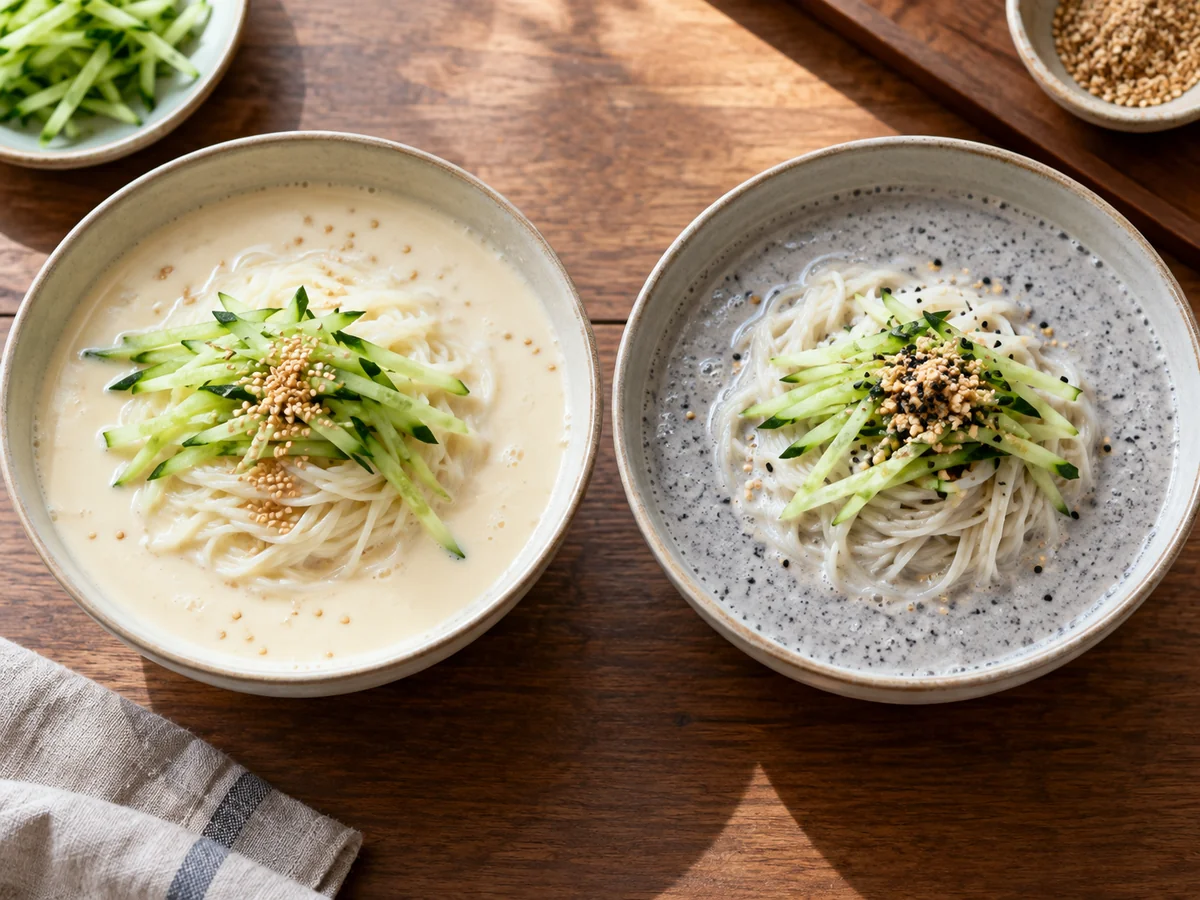
Alongside white or pale ivory bowls, you may see kongguksu with a grayish broth. Using black-skinned beans such as seoritae, or grinding the bean skins into the broth, can change its color and the appearance of small particles. The Korea Tourism Organization’s introduction to seoritae kongguksu describes a cold soybean broth made with seoritae, which have black skins and green interiors.
A finished seoritae broth does not have to be ink-black. Its color and texture depend on whether the beans are peeled, mixed with other beans, and how they are ground and strained. A darker color alone does not establish a higher bean content or nutritional superiority.
When choosing a bowl for the first time, ask about the thickness and smoothness as well as the type of bean. Looking at both nuttiness and the texture left in your mouth will tell you more than predicting the flavor from the bean’s name alone. Even two restaurants serving seoritae kongguksu can offer quite different experiences.
How does it compare with other noodles?
As a cold noodle dish, kongguksu is easy to associate with naengmyeon. But an opaque, nutty broth of ground beans has a different character from naengmyeon broth made with stock, dongchimi radish water kimchi, or similar ingredients. Do not assume that vinegar and mustard are standard additions just because the noodles are cold.
| Flavor you want | Dish to consider | What to check |
|---|---|---|
| Cold, nutty broth | Kongguksu | Broth thickness and seasoning; type of noodle |
| Cold, tangy broth | Mul-naengmyeon | Broth base; vinegar and mustard adjustments |
| Noodles mixed with a red sauce | Bibim-guksu or bibim-naengmyeon | Noodle ingredients and springiness; heat and acidity |
| Warm broth and noodles | Janchi-guksu, kalguksu, and similar dishes | Stock, noodles, and garnishes |
Kongguksu itself may use thin somyeon or somewhat thicker noodles. Thin noodles combine lightly with the broth, while thicker ones can offer a more pronounced chew. If the menu photograph does not make this clear, ask which noodles the restaurant uses.
Check ingredients and seasonal availability
Kongguksu is popular in summer, and some restaurants offer it only as a seasonal item. Specialist restaurants may sell it at other times, so summer is not the only time it can be eaten. If you are visiting specifically for a restaurant’s kongguksu, check that it is available before going.
A plant-based soybean broth does not establish the ingredients of the entire finished dish. It may have an egg garnish or contain other additions, so if a vegetarian or vegan meal matters to you, check the broth, noodles, and toppings separately. If you need to avoid soybeans, nuts, or other ingredients, ask about the broth mixture rather than looking only at the garnish.
For a first bowl, start with the original broth and adjust it gradually while eating the noodles and side dishes together. Discovering whether you enjoy the combination of a nutty broth texture and cold noodles is more helpful than deciding whether salt or sugar is the one right answer.