Korean Food / Jjolmyeon: Chewy Noodles, Flavor and How to Mix Them
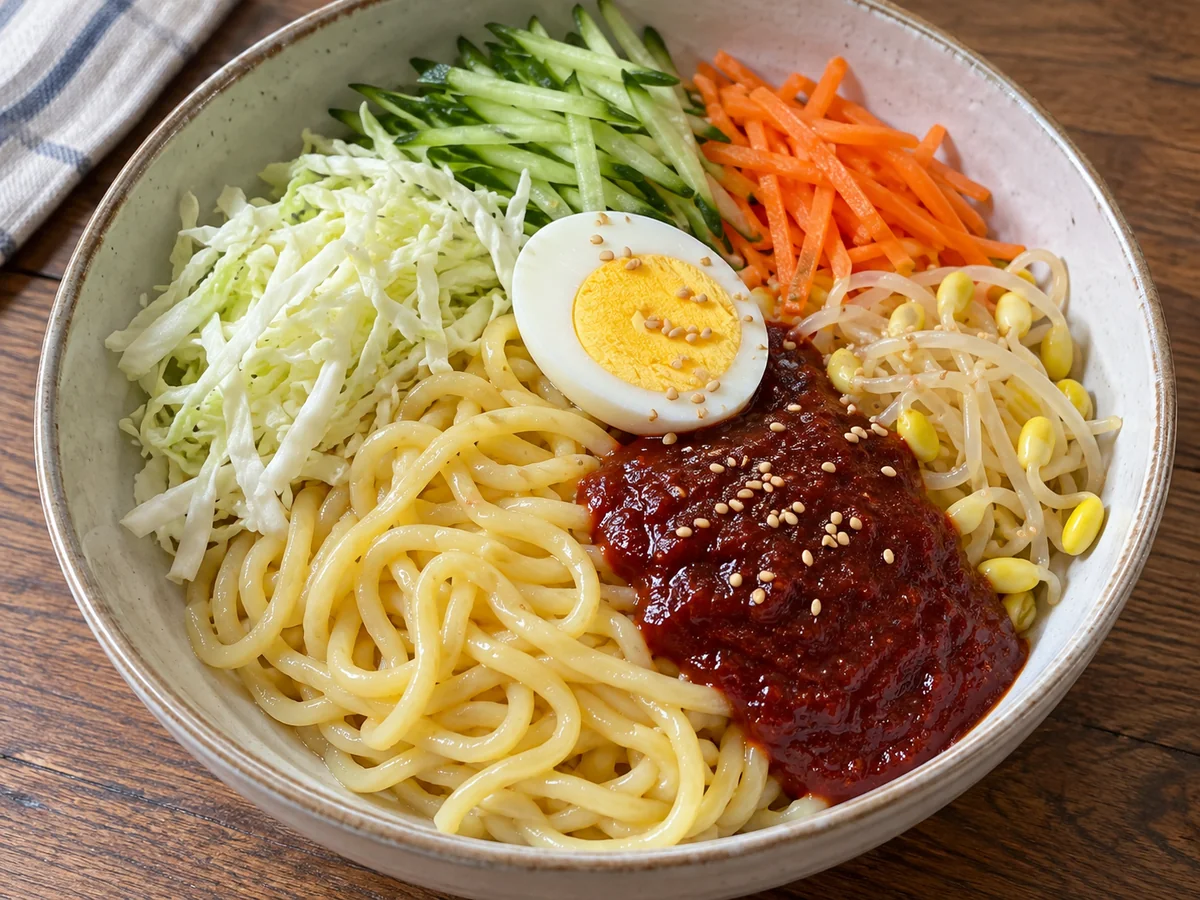
Jjolmyeon is a Korean dish of highly resilient noodles mixed with vegetables and a spicy, tangy, sweet sauce. It can resemble bibim guksu, but its thicker, chewier noodles stand out alongside crunchy cabbage and soybean sprouts. When choosing it, consider how much you enjoy a firm chew as well as your preferred heat level.
Springy noodles are the defining feature, beyond the spicy sauce
The name evokes a chewy texture. The Korea Tourism Organization’s jjolmyeon introduction also connects the name with chewiness and describes a casual snack-shop dish of yellowish noodles and vegetables mixed with sweet-spicy seasoning. Using gochujang sauce does not make it identical to other mixed noodle dishes.
Even an individual strand tends to resist the bite rather than fall apart easily. If you expect soft, thin noodles, it may seem tougher than anticipated. That is an attraction for those who enjoy chewiness; if chewing is difficult or long noodles are hard to handle, take small portions or consider another noodle dish.
Color cannot establish the noodles’ ingredients or proportions. If avoiding wheat or another ingredient, check the noodles and sauce separately. The name jjolmyeon does not impose one recipe on every product and restaurant.
Why cabbage, sprouts and cucumber are included
The vegetables are more than decoration. Shredded cabbage adds crunch, soybean sprouts give different stem and bean textures, and cucumber adds fresh aroma and moisture. Carrot or egg may accompany them, but combinations vary. Plenty of vegetables creates layers of texture unlike chewing noodles alone.
The seasoning commonly combines gochujang-style heat and sweetness with acidity from vinegar or similar ingredients. Heat can emerge after an initially sweet impression, and strong acidity does not guarantee mildness. Check the stated heat level and sauce quantity rather than the depth of the red color.
Even mixing helps avoid heavily sauced and nearly plain patches. If you want control, however, ask for sauce separately before everything is mixed. Once fully dressed, the sauce is difficult to remove selectively.
How does it differ from bibim guksu and bibim naengmyeon?
All three can have red sauce and vegetables and look similar in photographs. Consider strand thickness, texture and serving format rather than a single ingredient name. Naengmyeon recipes vary in buckwheat and starch content; they are not all simply buckwheat noodles.
| Dish | Main difference you notice | What to check |
|---|---|---|
| Jjolmyeon | Thick, resilient noodles and crunchy cabbage and sprouts stand out. | Whether you like a firm chew and can adjust the sauce. |
| Bibim guksu | Often uses thin somyeon mixed with sauce and feels relatively lighter. | The noodles used and the sauce’s sweetness and acidity. |
| Bibim naengmyeon | Uses naengmyeon noodles and toppings in a cold serving. | Noodle type and toughness, plus accompanying broth. |
Knowing naengmyeon noodles and the difference between broth and mixed versions helps reveal choices within “red mixed noodles.” Exceptions vary by restaurant and product, so use the table as a guide to ordering rather than a universal classification.
Did jjolmyeon originate in Incheon?
The dish is associated with Incheon. The Incheon Tourism Organization’s food guide recounts that a noodle factory produced thick strands while making naengmyeon in the early 1970s, and a nearby snack shop sold them mixed with gochujang seasoning and vegetables. The same guide notes that several origin accounts exist.
It is therefore appropriate to describe the single-accident story as a widely repeated account, rather than establish every detail or a first inventor as certain. What matters to understanding today’s dish is its connection to Incheon’s noodle-making and snack-shop culture and its combination of resilient noodles, sauce and vegetables.
How to mix the noodles and vegetables evenly
If sauce is on one side, gently loosen the noodles and turn vegetables through them. Separating the strands distributes flavor more evenly than piling sauce onto a clump. Work in small turns inside the bowl rather than lifting a large bundle high enough to splash sauce.
- Move egg or large toppings briefly to the edge if they obstruct mixing. Leave any extra sauce aside for now.
- Separate small portions with chopsticks, lifting vegetables and sauce through the noodles.
- Taste a few strands with vegetables before deciding whether to add sauce.
- Take a manageable portion and chew it thoroughly. Ask for scissors to shorten long or especially resilient noodles if needed.
Even served cold, it is not necessarily like mul-naengmyeon swimming in icy broth. Jjolmyeon is generally known as a mixed noodle dish without broth; consult the description if a separate broth-based version is offered. Warm soup served alongside need not be poured onto the noodles.
Pairing it with dumplings or gimbap
Dumplings or gimbap offer textures different from the noodles. Choose steamed or pan-fried dumplings according to whether you want a soft wrapper or a crisp surface. With already well-seasoned jjolmyeon, try dumplings plain before soaking them in sauce.
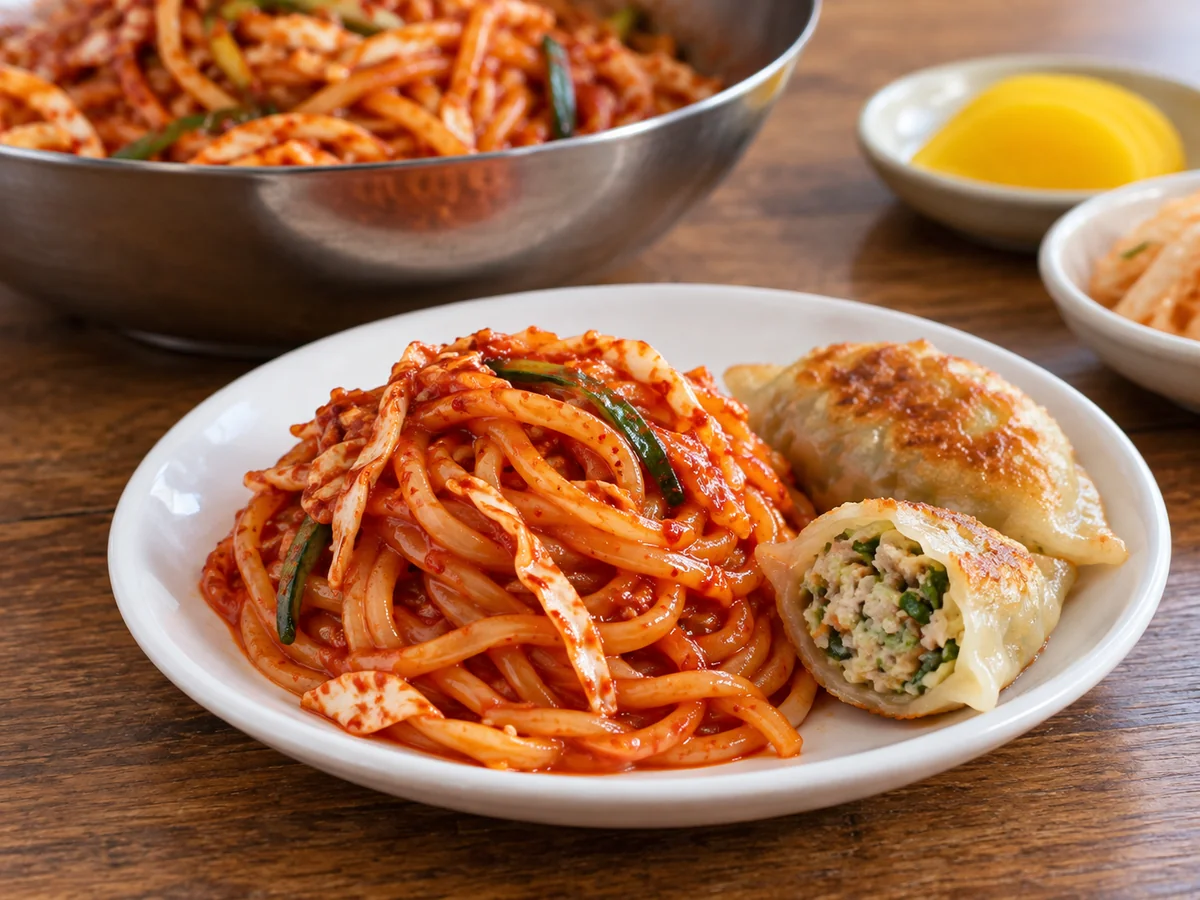
A side dish does not remove the noodles’ heat. If spicy food is difficult, ask at the start whether the dish can be made milder or the sauce served separately rather than simply ordering more sides. Checking the regular portion and set contents also helps avoid excess food.
First assess noodle resilience, vegetable proportion and the sauce’s acidity and sweetness rather than just its redness. The combination of chewy noodles, crisp vegetables and spicy sauce is the reason to choose jjolmyeon when those textures and flavors appeal to you.