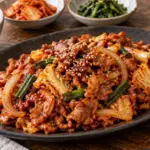
Korean Food / What Is Yukgaejang? Beef, Green Onions and Noodle Variations
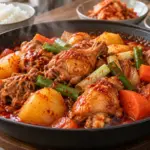
Yukgaejang is a spicy Korean soup made by simmering shredded, well-cooked beef with green onions, vegetables and chili seasoning. Its strands of meat, softened green onions and red broth make a satisfying meal with rice. Vegetables, richness and heat vary by restaurant, while similarly named dishes such as dakgaejang or Jeju bracken yukgaejang can have different ingredients.
Shredded beef and green onions form the core
The Encyclopedia of Korean Culture (in Korean) defines yukgaejang as a spicy soup of boiled beef that has been shredded and seasoned. Unlike soups featuring large intact pieces, its familiar form has strands of meat dispersed through broth and vegetables.
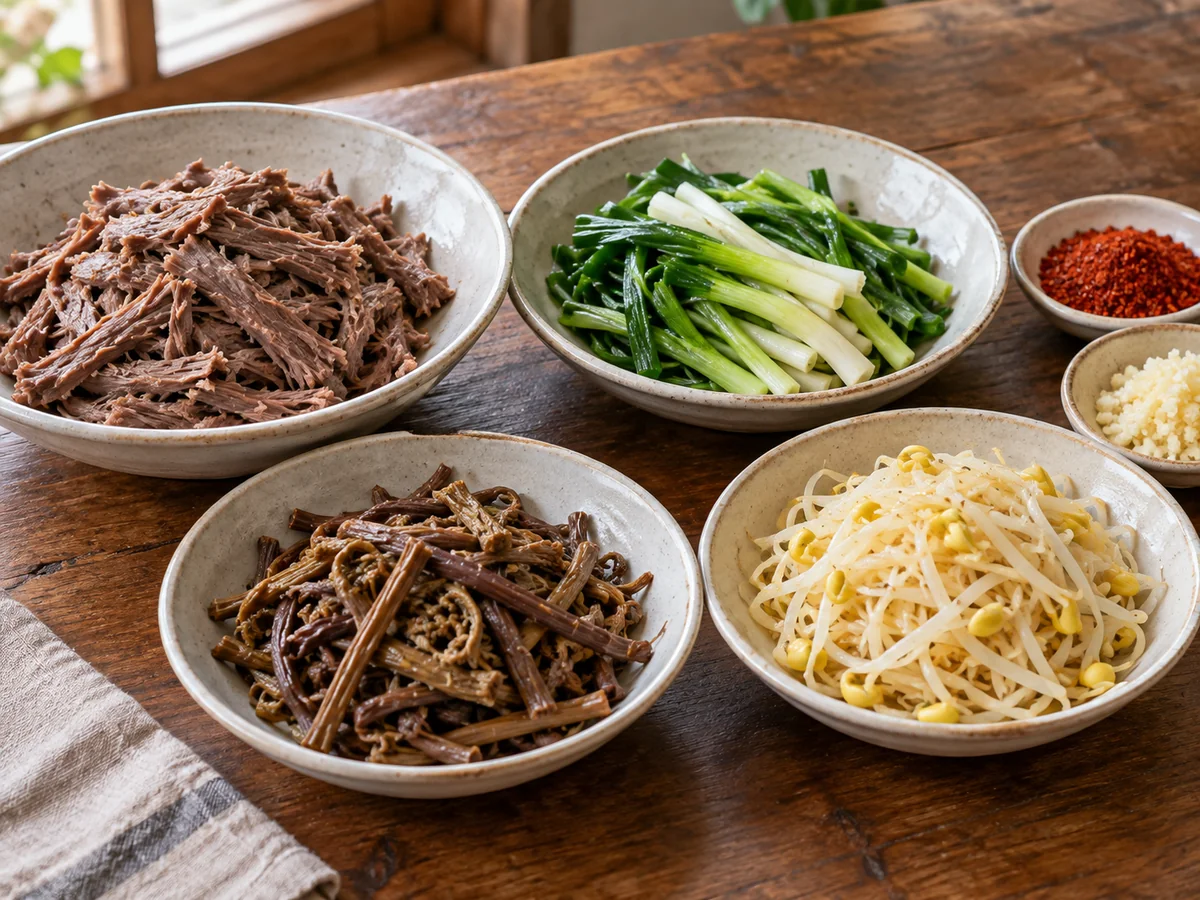
Cuts such as brisket or shank are cooked until they can be shredded, and long pieces of green onion simmer until soft. The Korea Tourism Organization's introduction also highlights beef, green onions and chili seasoning. Cooked green onions bring sweetness and softness rather than the sharpness of raw onions.
Other versions add bracken fern, mung bean sprouts, taro stems or radish. None must contain every vegetable; some kitchens focus on green onions with a simpler selection. Bracken contributes a soft, fibrous bite, while sprouts can provide lighter crunch. The vegetables are therefore as useful as the amount of meat when choosing a bowl.
Three flavors to notice in the red broth
First, notice the beef broth's savory flavor. A spoonful can reveal whether the meat tastes rich or the onions and vegetables come through more lightly. Tasting some meat separately with rice also makes its shredded texture easier to appreciate.
Second, distinguish the heat and aroma of chili powder or chili oil. Visible red oil does not mean every bowl is equally oily, and the depth of red does not precisely measure heat. If spicy food is unfamiliar, try a little broth before adding all your rice.
Third, taste the softened green onions and other vegetables. Plenty of onion brings sweetness between the beef and chili flavors, while a higher proportion of bracken or taro stems makes the stem vegetables more noticeable. Separating broth, meat and vegetables in a few bites tells you more about your preferences than the single description “spicy.”
How dakgaejang and yukgaejang-kalguksu differ
Changing the meat or combining the soup with noodles creates different menu options. Even if the red broths look similar, check the ingredient named on the menu and the serving format.
| Menu | Main difference | What to check |
|---|---|---|
| Yukgaejang | Soup with shredded beef, green onions and vegetables | Whether rice is included and which solids are used |
| Dakgaejang | Chicken-centered version instead of beef | Whether the stock is also chicken and the meat is boneless |
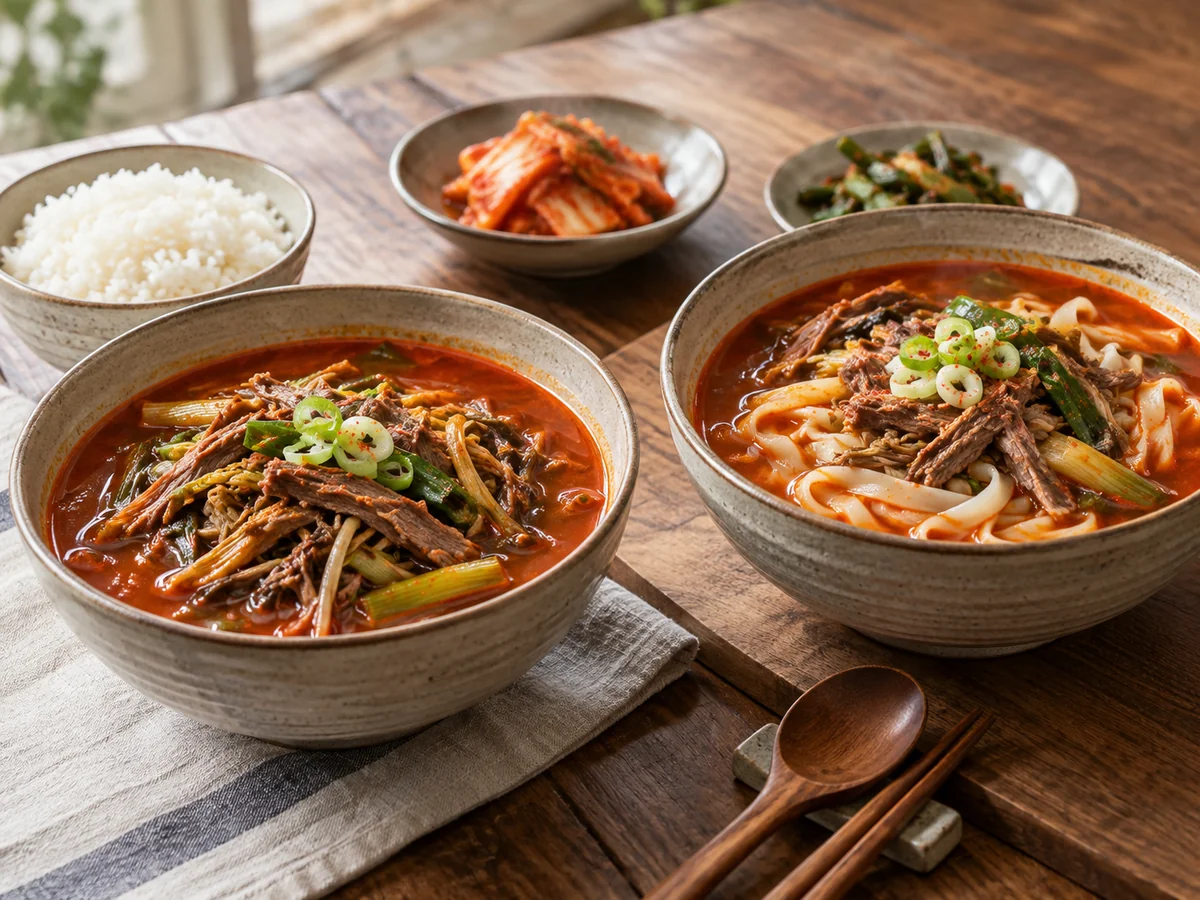
| Yukgaejang-kalguksu | Wheat noodles in yukgaejang broth | Noodle portion, extra rice and noodle doneness |
| Jeju bracken yukgaejang | Regional dish simmered with pork and bracken | Meat, thick texture and use of buckwheat |
In particular, Jeju bracken yukgaejang is not simply the usual red beef soup with extra fern. The Korea Tourism Organization's description of the Jeju dish explains its long-simmered pork broth and bracken, thickened with buckwheat flour. A regional name is a reason to check the ingredients again rather than expect the familiar version.
For the noodle option, imagine the way flat wheat kalguksu noodles carry broth. Choose according to whether you prefer alternating rice and soup or eating a bowl built around noodles.
Why taste it before adding rice?
Start by checking the broth's seasoning and heat, then try some beef and green onion with rice. Salt or pepper on the table is not an instruction to add it: the soup may already be fully seasoned. Taste the original flavor and adjust only what seems missing.
Putting all the rice into the soup combines them immediately, but the grains absorb liquid and change texture. Keep rice separate or add it gradually if you prefer firmer grains. Small combinations also make portions easier to control if the heat feels strong.
A spoonful can contain both hot broth and long pieces of onion. Use chopsticks to separate lengthy strands of meat or vegetables, and let the broth cool a little. With noodles, lift small portions to avoid splashing and remember that noodles left in the soup continue softening.
Besides asking how spicy it is, ask whether the chili seasoning is already mixed into the broth. This clarifies whether adjustment is possible. Soup prepared in a large batch may not allow the chili to be removed after ordering, and a clear alternative is not available everywhere.
If you avoid beef, removing visible meat does not solve the issue: ordinary yukgaejang centers on beef stock as well as meat. Another dish may be more suitable. Likewise, the name dakgaejang does not establish that every stock or seasoning ingredient comes only from chicken; ask about what matters to your diet.
- Solid ingredients: Is it mainly beef and green onion, or are bracken, taro stems or sprouts included?
- Meal format: Does it include rice, or can you choose kalguksu or other noodles?
- Extras: Check individual menus for egg, glass noodles or dumpling additions.
- Heat and richness: Describe what you prefer and ask what can actually be changed.
Common questions
Does yukgaejang always contain bracken?
No. Some versions focus on beef and green onions; others add bracken, sprouts or taro stems. Check before ordering if you want to avoid a particular vegetable's texture.
Can a soup without red broth still be called yukgaejang?
The name usually brings to mind a spicy red beef soup, but regional dishes such as Jeju bracken yukgaejang have different ingredients and broth. Consider the full menu name, meat and cooking method instead of judging by color alone.