Korean Food / What Is Miyeokguk? Seaweed Soup, Beef and Seafood Variations
Miyeokguk is a Korean soup made by simmering rehydrated seaweed in broth flavored with beef, shellfish, fish or other ingredients. Soft seaweed and a marine aroma are its defining features, while the additions change the broth's character. It is known as a birthday food but is also an everyday soup eaten with rice.
How miyeok differs from laver and kelp
Miyeok is an edible seaweed whose leaves open and soften when soaked and cooked. It differs in species and texture from the roasted laver wrapped around gimbap and the kelp often used for stock. Their shared identity as seaweed does not mean miyeokguk tastes like roasted laver or has the firmer bite of pieces of kelp.
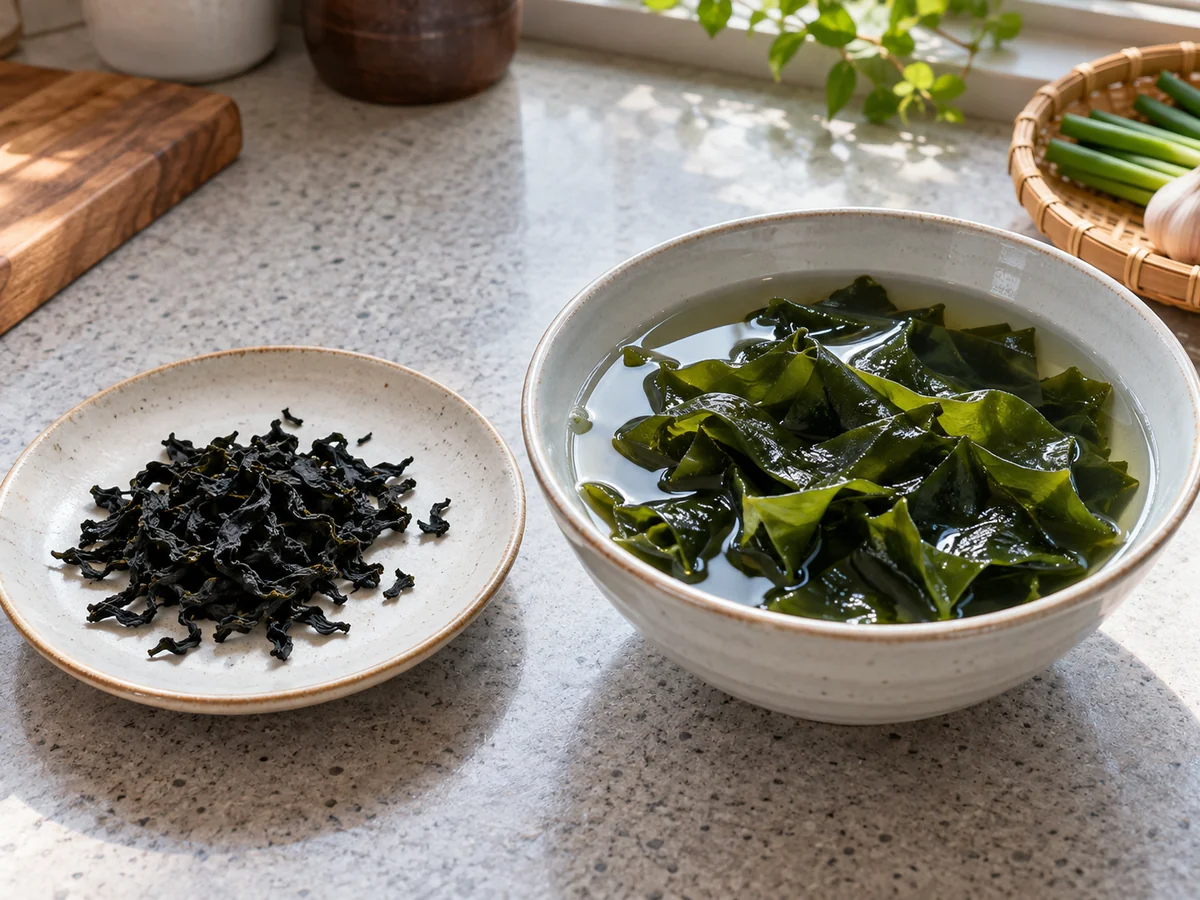
Dried miyeok looks small, hard and tightly gathered, but expands as it absorbs water. It is soaked, trimmed or cut before going into the soup; the broad leaves in the bowl were not necessarily that size in the package. The proportion of stems to leaves and the length of the pieces also affect the bite.
Longer cooking softens the seaweed as it takes up broth. If its smooth texture is unfamiliar, divide long leaves into manageable bites with a spoon or chopsticks rather than swallowing them together. Noticing whether it remains chewy or becomes very tender can help you find a preferred style.
How beef, shellfish and fish change the broth
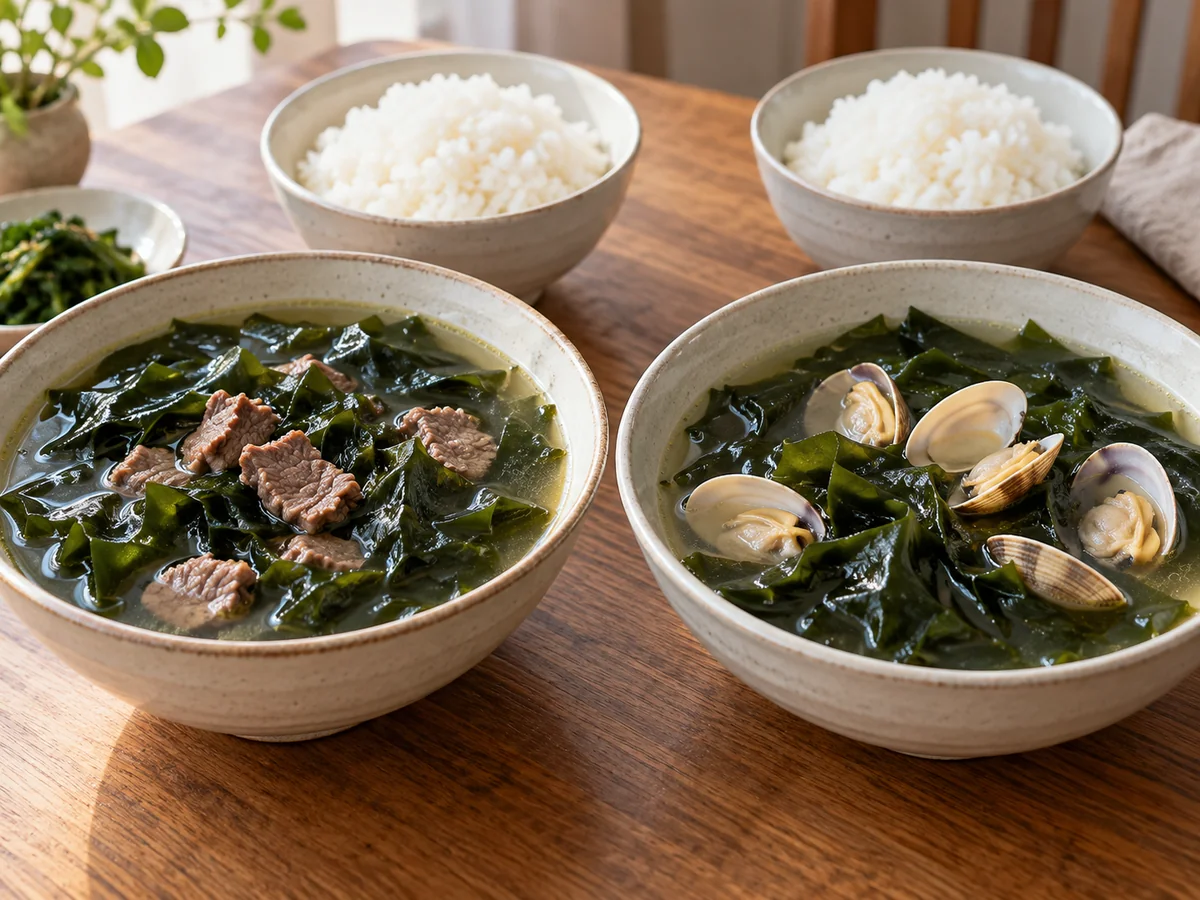
The Korea Tourism Organization's introduction to miyeokguk describes beef-broth versions and coastal preparations using clams or white fish. Rather than defining it as exclusively beef soup, consider which ingredient flavors the seaweed.
| Version | Main flavor and texture | What to check |
|---|---|---|
| Beef miyeokguk | Savory meat broth, seaweed and beef pieces | Cut and size of meat, richness of broth |
| Clam or mussel miyeokguk | Shellfish aroma and savory flavor | Which shellfish and whether shells remain |
| Fish miyeokguk | Fish broth and tender flesh | Fish species and remaining bones |
| Clear, seaweed-centered soup | Seaweed and the stock used | Whether animal stock is used despite no visible meat |
Sesame or perilla oil can add a nutty aroma, and soup soy sauce is one way to season it. The oil and soy sauce, the initial frying of the seaweed and the concentration of the broth vary by kitchen. A light or dark color alone does not establish the flavor.
If you are vegetarian or avoid beef or shellfish, check the particular menu. Almost no visible meat does not make a soup vegetarian. In fish versions, look for bones among the flesh as you eat.
A gentle flavor does not mean a flavorless soup
Ordinary miyeokguk does not center on hot chili seasoning. Taste the marine aroma and seasoning of the broth first, then compare bites with beef or shellfish. Lack of chili heat and low salt are different things, so a gentle-looking bowl need not require extra seasoning.
Choose beef miyeokguk for the way meat flavor combines with the seaweed, or shellfish miyeokguk for its distinct marine aroma. Even within one type, the amount of oil and length of cooking change the impression. For a first order, consider whether you generally prefer meat or seafood broth.
Its connection with birthdays and childbirth
Eating miyeokguk on birthdays is a well-known Korean custom. A familiar bowl of soup takes on a celebratory meaning when it appears at a birthday meal. Families do not all prepare that meal identically, and a birthday can still be celebrated without miyeokguk.
The soup also has a strong connection with food traditionally served after childbirth. The National Folk Museum of Korea's encyclopedia entry on cheotgukbap, the first postpartum soup-and-rice meal (in Korean) records miyeokguk and white rice, along with meanings of care and ritual. It provides cultural context; historical beliefs should not be equated with established modern medical effects.
Focusing only on birthdays can make the soup sound reserved for special occasions. When choosing a meal, it is equally reasonable to think of beef or clam miyeokguk with rice as ordinary food. Its celebratory and everyday roles coexist.
Eating it alongside rice
Taste the broth and seaweed first, then keep rice separate or spoon a little soup onto the amount you want to eat. Adding all the rice lets it take up the soup's flavor, but also changes the grains' texture as they absorb liquid. Neither method is compulsory; choose what you enjoy.
For long leaves, chopsticks can help rather than trying to gather everything with a spoon. Put shellfish shells or fish bones in a small separate dish. The bowl and broth can be hot, even when the soup looks clear; do not assume a pale broth is cool.
A soup ordered alone and a set with rice and side dishes can make different-sized meals. If eating other dishes, check whether this is a small accompanying soup. Look at the actual menu setting instead of expecting every restaurant's bowl and quantity of seaweed to be the same.
Choosing your first bowl
- Stock and main addition: Is it flavored with beef, shellfish or fish?
- Seaweed texture: Are the leaves cooked very soft, or do the stems retain some bite?
- Meal setting: Check rice and side dishes, and the difference between a single dish and a set.
- Dietary requirements: Ask about the broth as well as visible meat or seafood.
If seafood aroma is unfamiliar but you enjoy beef broth, beef miyeokguk can be a starting point. If you like shellfish, ask which type is used. Slowly comparing the soft seaweed and the broth helps you find your preferred bowl within this varied soup.