Korean Food / What Is Dakgangjeong? Glazed Chicken and Yangnyeom Differences
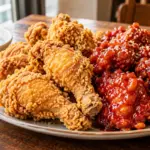
Dakgangjeong is fried chicken finished with a glossy, sweet coating. Bite-sized boneless pieces are familiar, with red sweet-spicy seasoning as well as soy- or garlic-focused variations. It resembles yangnyeom chicken, but noticing the sticky glaze around small pieces and its crisp or chewy surface helps explain its character.
Frying chicken before adding a glaze
Chicken is cut into manageable pieces, coated, fried and then covered in sweet-salty seasoning. How far the sauce is reduced and how it is mixed determine whether the surface has a thin glaze or a generous layer of thicker sauce. Meat, fried coating and seasoning are eaten together in each piece.
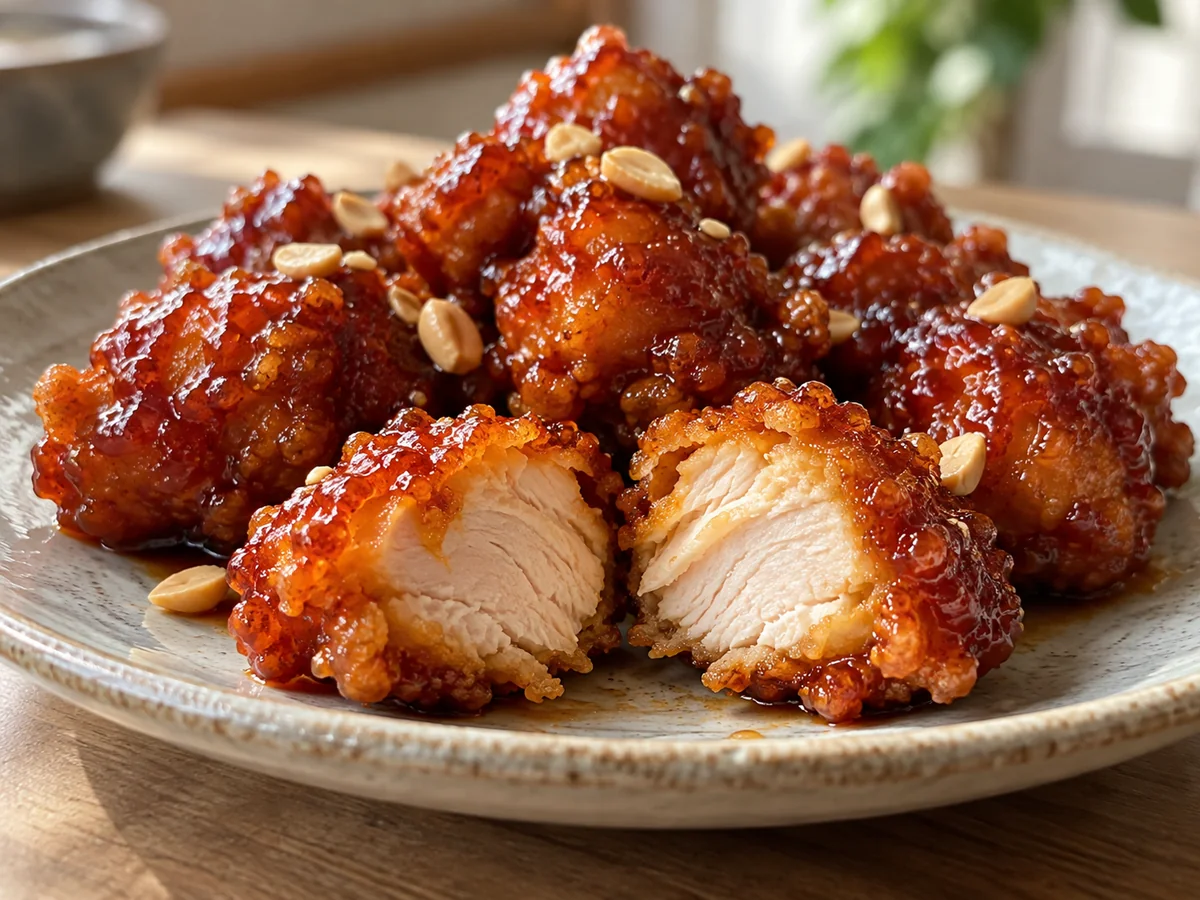
The Korea Tourism Organization's introduction describes boneless chicken glazed with sweet-spicy gochujang sauce or sweet soy sauce and sprinkled with crushed nuts such as peanuts. Dakgangjeong does not therefore mean only one red sauce.
Even boneless versions differ in cut and size. If the menu only says dakgangjeong, check for bones and ask about the meat used. With so many small pieces, consider the meat-to-coating ratio as well as convenience.
Feeling both crisp coating and sticky seasoning
The surface can have lightly crisp parts alongside areas made sticky by sauce. Sweet and salty flavors cover the fried coating; chili seasoning may leave heat afterward. Sweet does not mean mild, so ask separately if you are sensitive to chili.
A more reduced glaze can cling thickly, while a sauce containing more water creates a moister texture. Dakgangjeong need not be hard, nor does every version stay crisp after cooling. Cutting a piece open reveals the thickness of its coating and the meat inside.
Try the chicken and glaze before adding another sauce. If strongly seasoned, eat one piece at a time or combine it with rice or a mild accompaniment. Nuts add toasted flavor and crunch but are not mandatory in every version.
How clear is the difference from yangnyeom chicken?
Both dishes coat fried chicken with sauce and are closely related. Dakgangjeong commonly suggests smaller pieces and a sweet, sticky coating, but some shops make small boneless yangnyeom chicken or larger dakgangjeong. Names alone cannot draw a sharp line around every product.
| Comparison | Common dakgangjeong style | Common yangnyeom style |
|---|---|---|
| Size | Small pieces convenient to pick up | A chopped whole bird or boneless pieces |
| Coating | Sweetness and a sticky glaze can stand out | Often generously covered in red sauce |
| Additions | Nuts, sesame or rice cakes | Pickled radish or separate sauces |
| Check in practice | Cut, bones, piece size and sauce consistency vary by shop | |
“Yangnyeom is eaten hot and dakgangjeong cold” is not a reliable dividing rule either. Dakgangjeong can be eaten freshly made and warm or later after takeout. Choose the texture and service you want rather than identifying the dish by temperature alone.
Choosing red, soy and garlic versions
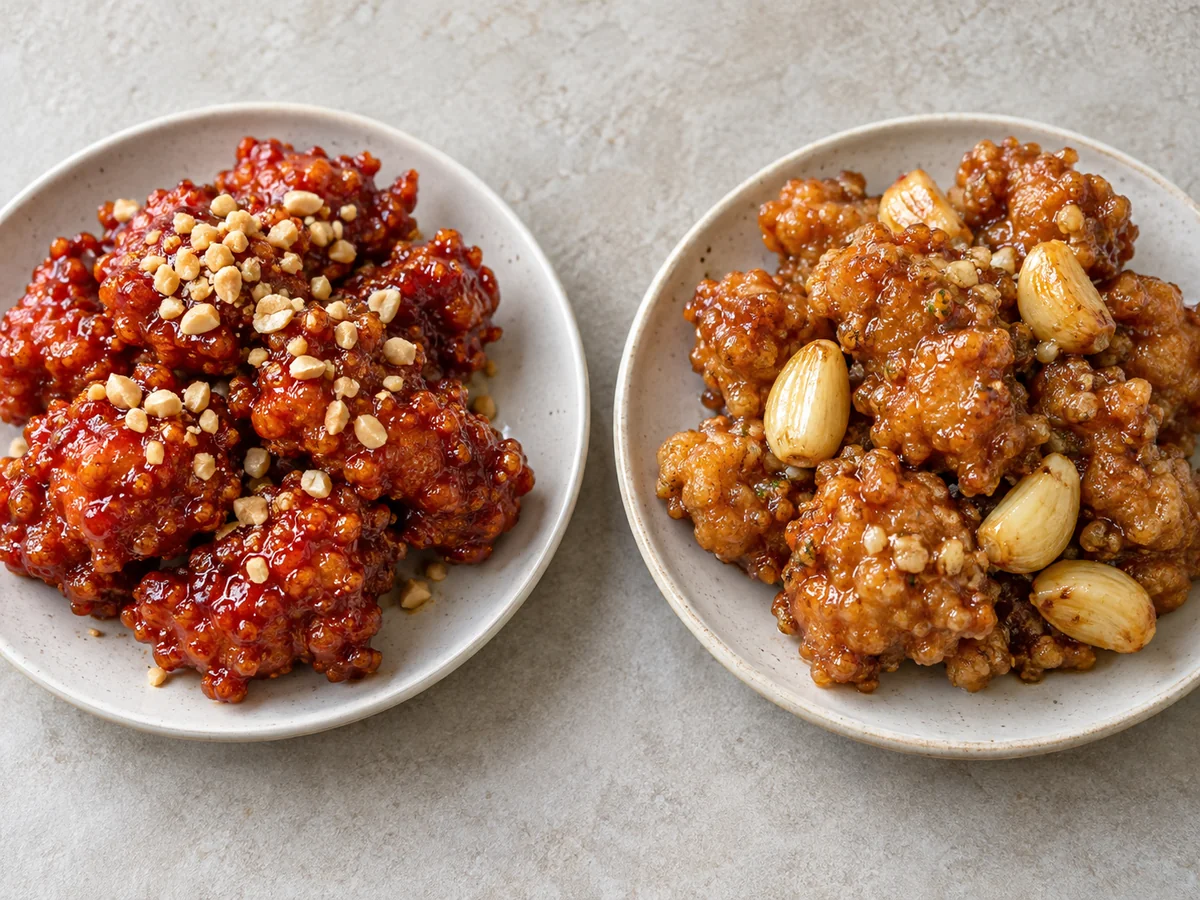
Red seasoning often combines sweetness and chili heat. Soy versions can be darker brown and mainly salty-sweet, but may contain hot chilies. A red sauce is not necessarily hotter than a soy one.
Garlic dakgangjeong may use a garlic-flavored sauce or include cooked garlic with the chicken. The Korea Tourism Organization's description of Danyang garlic dakgangjeong presents fried chicken and whole garlic tossed in red seasoning. Cooking softens the garlic and reduces its raw pungency.
Not every garlic version uses the same method. Whole cloves, minced garlic sauce and garlic chips offer different textures. If you enjoy garlic, check how it actually appears rather than relying on the flavor name.
Ordering by cup, box or weight
Dakgangjeong is sold from small snack cups to boxes for sharing. Equal-sized containers do not necessarily hold equal amounts of chicken. Check whether rice cakes, potatoes or other ingredients are included and what a stated weight covers.
For a snack, a small portion lets you assess the sauce first. For a meal or group, consider rice and other food in the total amount. If mixed flavors are available, contrasting spicy and soy versions can be useful. Sauces may mingle in one box, so ask about packaging if you want them kept distinct.
If avoiding peanuts or other nuts, do not assume removing visible toppings is enough. They may be in the sauce or used during cooking. “We can omit the topping” and “this food contains none of that ingredient” are different conditions.
Warm and cooled servings feel different
Warm dakgangjeong brings the heat of the fried meat and the sauce's aroma together. Over time, the glaze's stickiness and coating's firmness change; steam inside a package can also soften the surface. Follow the particular product's serving guidance rather than a universal claim that it always tastes better cold.
Tell the seller whether you plan to eat immediately or after traveling so they can advise on packaging. Leaving it packed for a long time is not a required texture-improving step. If storage or reheating is needed, check the seller's instructions; the glaze's sugar can scorch over high heat.
Chew one piece slowly to distinguish glaze, fried coating and meat. Deciding whether you like a rich sweet shell or lighter seasoning that shows the chicken gives you a clearer basis for your next order.