Korean Food / Jeonbok Juk: Abalone Porridge, Ingredients and How to Choose
Jeonbok juk is rice porridge simmered with abalone in water or stock, combining soft, expanded rice with the bite of abalone flesh. Including the innards can deepen its color and aroma, while versions centered on the flesh may look lighter. When choosing, consider the preparation and amount of abalone, whether innards are used and the porridge’s thickness rather than color alone.
A bowl made by rice and abalone together
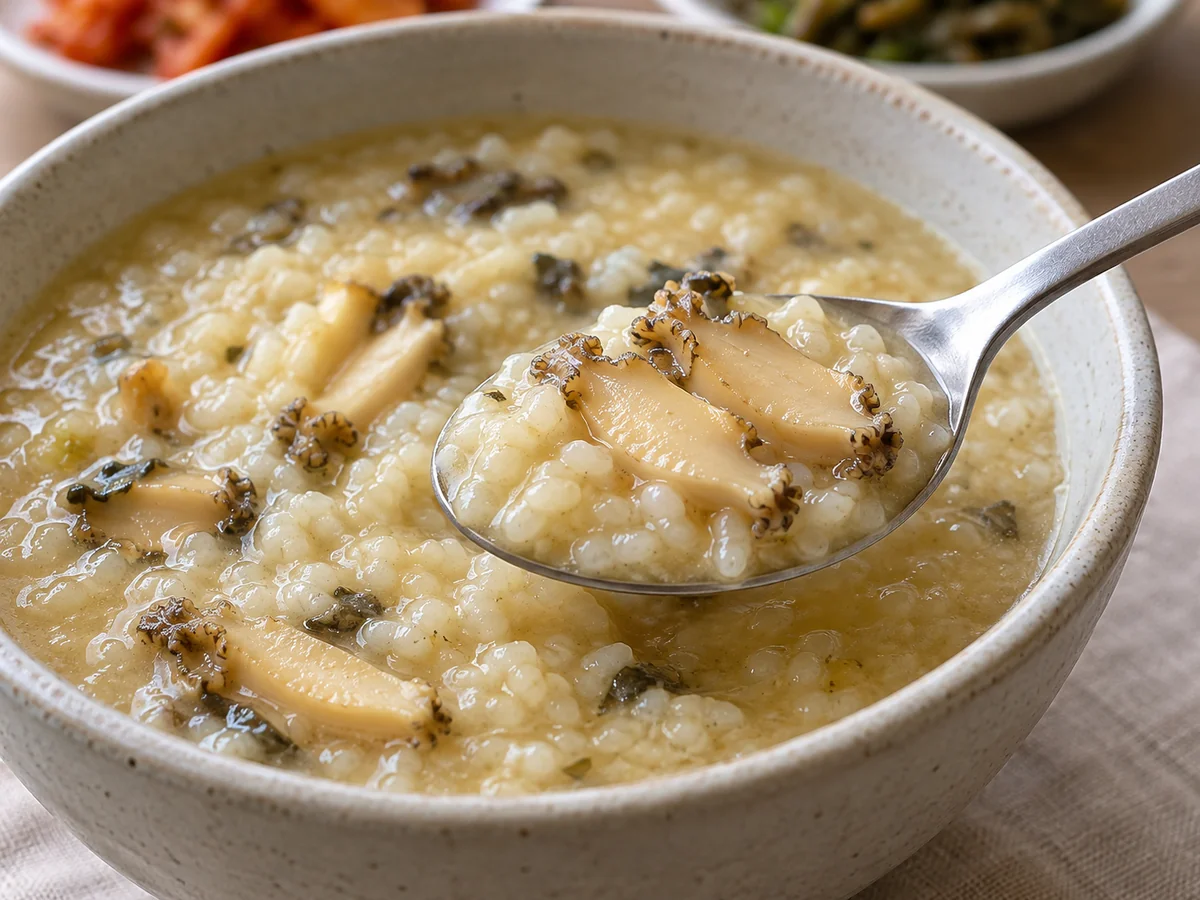
Think of this as more than plain porridge decorated with abalone. Rice combines with liquid cooked with abalone, and chopped or thinly sliced flesh may be mixed throughout. What is incorporated into the porridge matters to its taste as much as any large abalone pieces visible on top.
The Encyclopedia of Korean Culture’s entry on jeonbok juk defines it as rice cooked in a liquid made by simmering abalone and introduces it as a local food of Jeju. Cooking order and ingredient proportions vary by restaurant and product; the definition does not imply one universal recipe or a fixed abalone content.
As rice simmers, the grains soften and expand, blending with the liquid to thicken it. Some porridges retain recognizable grains, while others are finer and smoother. Even under the same name, differences in rice texture and moisture affect how quickly it flows from a spoon and how it feels in the mouth.
Abalone flesh adds a springiness unlike the rice. Thin slices mingle readily in a spoonful, whereas larger pieces have a more distinct chew. A whole large abalone on top is not necessarily easier to eat. If ease of chewing matters, ask separately whether the flesh is finely chopped and whether large toppings are added.
How do the innards change color and flavor?
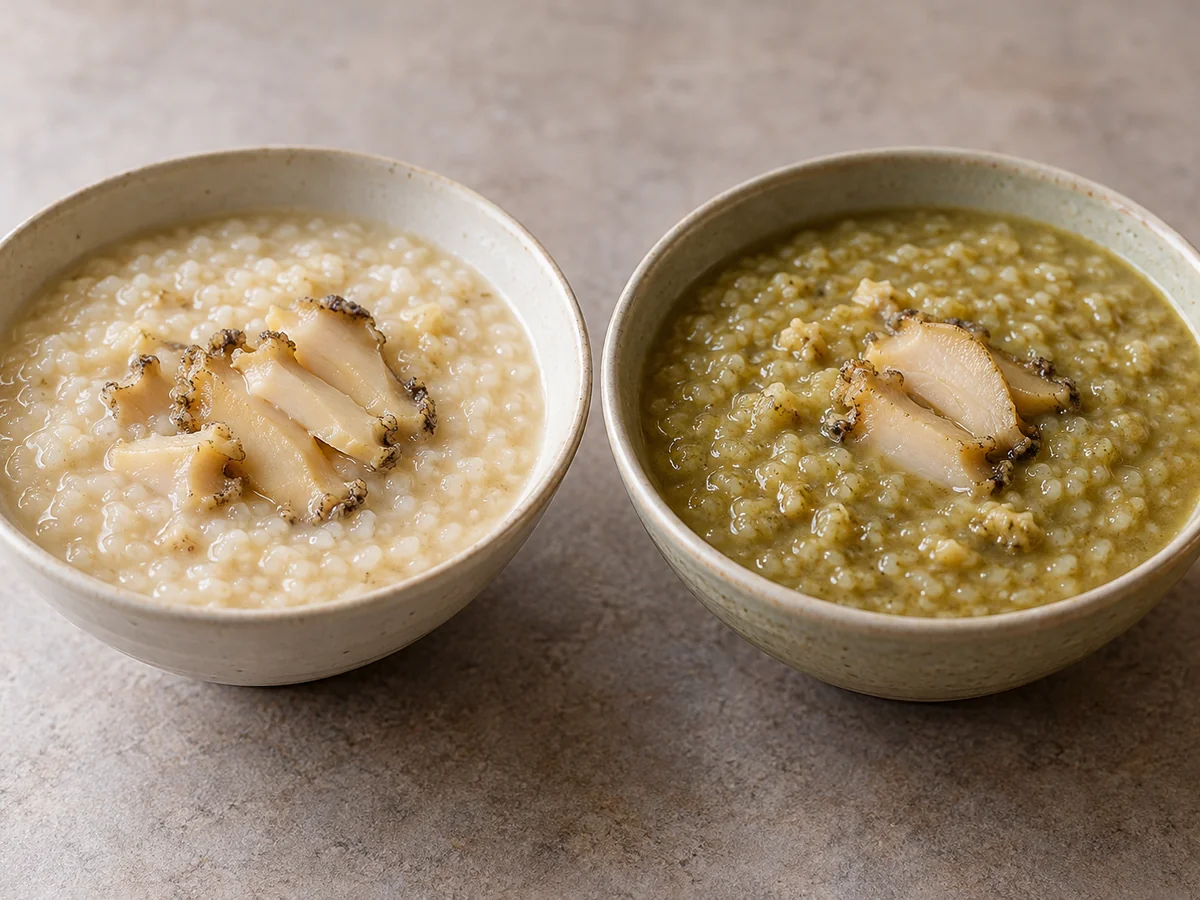
Whether innards are included is an important clue to color and flavor. The Korea Tourism Organization’s introduction to abalone porridge explains that they add a pale yellow-green color, distinctive flavor and slight bitterness. Pale and greenish-brown bowls need not be different dishes.
People accustomed to the aroma may enjoy its intensity, while newcomers may find the bitterness unfamiliar. If you want to focus on mild rice and abalone flesh, ask whether innards are used. The menu may not specify, so asking is more reliable than choosing by a photograph’s color.
A darker bowl does not necessarily contain more abalone flesh or offer superior nutrition. Innard quantities, other ingredients, broth concentration and lighting all affect its appearance. Equally, a pale bowl does not prove that abalone is absent. Checking the ingredients and actual serving is more useful than judging color.
Comparing abalone, innard and seafood porridges
Similar names can conceal different main ingredients. “Abalone porridge” does not guarantee that innards are excluded, and “seafood porridge” does not guarantee abalone. Decide which flavor and texture you want, then check the ingredients.
| Dish | What to examine | What to ask |
|---|---|---|
| Abalone porridge | Rice, abalone flesh, cooking liquid and toppings | Are innards included, and how much flesh is used and in what size pieces? |
| Abalone innard porridge | Color and flavor supplied by innards | Is flesh included too, and how pronounced is the bitter aroma? |
| Seafood porridge | Rice with a mixture of seafood | Which ingredients are actually used: abalone, shellfish, shrimp or others? |
| Vegetable or plain rice porridge | A vegetable- or rice-centered bowl | Do the stock, oil or seasonings contain animal ingredients? |
If you must avoid abalone, other shellfish or another ingredient, removing visible toppings may not be sufficient. Flavors and ingredients are already incorporated into the cooking liquid and rice, so ask specifically about the recipe. A vegetable porridge name alone does not establish that it is vegetarian.
Softness does not make abalone porridge suitable for everyone’s dietary needs. Abalone pieces may require more chewing than rice, and toppings and seasoning vary. If a clinician has prescribed texture or ingredient restrictions, check that the preparation meets those conditions rather than relying on the general menu name.
Taste before mixing in every topping and side
Sesame seeds, shredded seaweed or green onion may top the bowl. Initially move a little garnish aside and taste a spoonful of the porridge itself. Knowing the rice and stock’s savory character, abalone aroma and basic seasoning makes the toppings’ contribution easier to recognize.
If the top and bottom look different in thickness, stir gently with a spoon. Rather than stirring the whole bowl vigorously for a long time, scoop and cool small portions. Heat may remain underneath even if the surface looks cooler, so avoid hurried large spoonfuls.
If kimchi, soy-braised meat or salted seafood accompanies it, try them separately in small amounts instead of mixing everything in at once. Mild porridge can become a much saltier or spicier bite with sides. If sesame oil or soy sauce is supplied separately, check the existing seasoning before adding it to only part of the bowl.
Eat the abalone in several spoonfuls with rice rather than saving it all for the end to keep enjoying the textural contrast. Divide large toppings into manageable pieces and try some with the porridge. The dish does not require you to use every topping and sauce.
Restaurant, takeaway and packaged versions
Restaurant-cooked porridge, takeaway portions and ready-made cups or pouches are difficult to compare by the same visual measure. A larger bowl need not contain proportionally more abalone flesh. At a restaurant, check serving quantity and preparation; for processed products, examine net contents and ingredient labeling.
If extra abalone or a large topping is offered, ask whether the addition refers to more flesh, a number of abalones or a separate garnish. You can also ask whether a thinner consistency is possible. Adjustments differ by restaurant, so explain your needs before ordering.
Takeaway porridge may feel thicker as it cools. Follow the seller’s or product’s directions for reheating and adding water, and do not assume that a sealed container can be heated as it is. Storage and after-opening instructions vary, too; porridge does not have one universal storage method.
For your first bowl, check four things: innards, the size of the abalone pieces, your preferred thickness, and the basic toppings and sides. Distinguishing the roles of rice, flesh, innards and garnish makes it easier to find a bowl you enjoy beyond the general impression of a soft, savory porridge.