Korean Food / Kimchi Fried Rice: Ingredients, Flavor, and How to Eat It
Kimchi fried rice is a one-bowl meal made by frying chopped kimchi and cooked rice in oil. The kimchi’s tangy, salty seasoning flavors the rice, while ingredients such as pork, ham, tuna, or egg can add flavor and texture. Unlike kimchi simply placed over rice, the two are heated together so their flavors combine.
What changes when kimchi and rice are fried together?
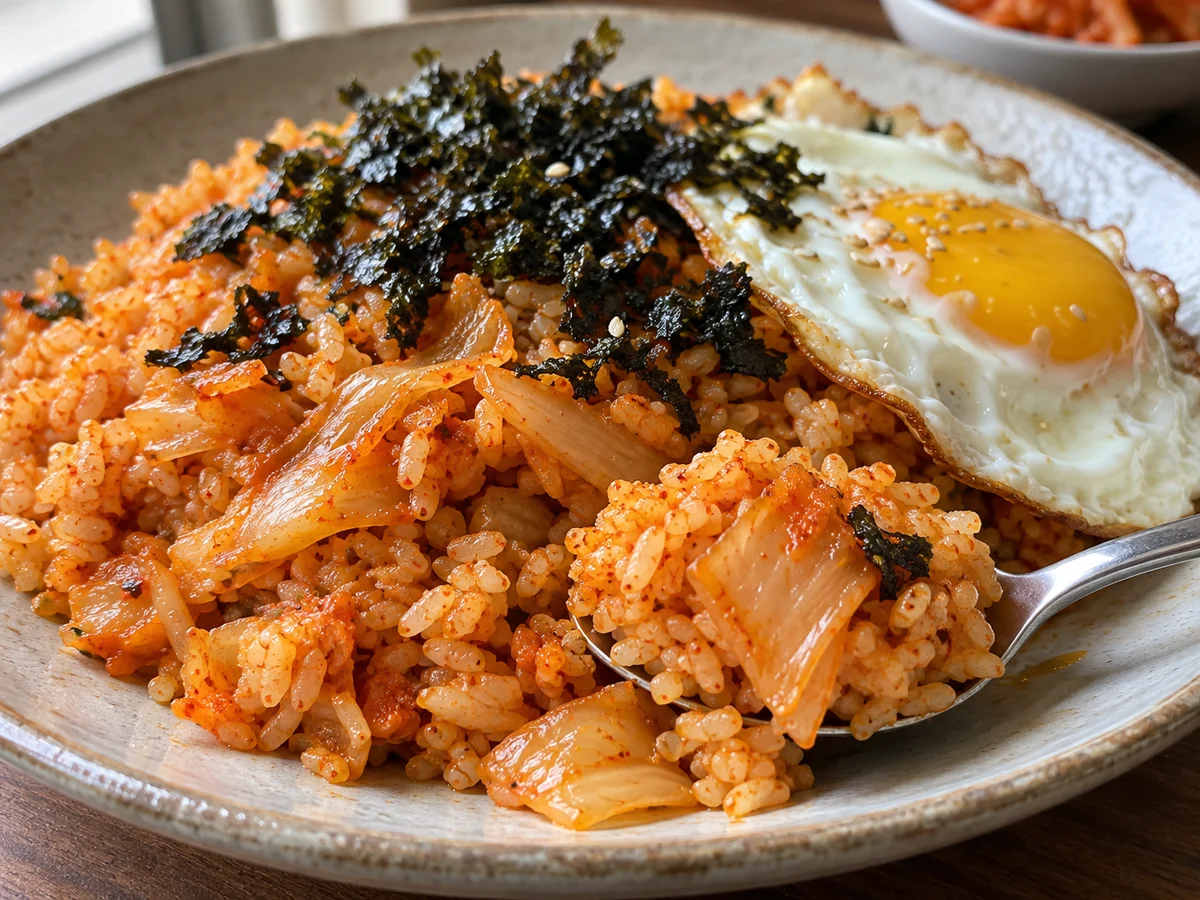
A familiar version uses finely chopped napa cabbage kimchi. When the leaves and stems are distributed through the rice, each spoonful combines soft rice grains with the bite of kimchi. Large pieces can feel separate from the rice, so chopping size also affects the finished texture.
The Korea Tourism Organization’s introduction to kimchi fried rice describes fermented kimchi fried with cooked rice. It is a fried rice dish using rice that has already been cooked, rather than raw rice cooked together with kimchi.
Frying changes the aroma and texture of kimchi compared with eating it uncooked, while combining it with oil and other ingredients. After the rice is added, the kimchi seasoning coats the grains and gives the dish its overall color and flavor. Extra seasonings may deepen the red color, but gochujang is not a required ingredient.
Why fermented kimchi and moisture matter
Well-fermented kimchi contributes acidity that stands out against the rice and oil. Less-fermented kimchi produces a different flavor, while very sour kimchi can leave a stronger acidic impression. Because kimchi types and fermentation levels differ, adding the same seasoning does not always produce the same fried rice.
Kimchi and its liquid contain saltiness, heat, and moisture together. Plenty of kimchi liquid can quickly add color and seasoning, but it can also make the rice wet and clumpy. The liquid is more than a coloring ingredient, so using it gradually makes the result easier to control.
The rice matters too. Moist rice tends to stick together, while rice with more separate grains is easier to loosen and fry. This does not mean kimchi fried rice must be made with old, cold rice. Freshly cooked rice can be used after excess steam has escaped and clumps have been gently loosened; if using leftover rice, check first that it has been stored appropriately.
What pork, ham, tuna, and egg contribute
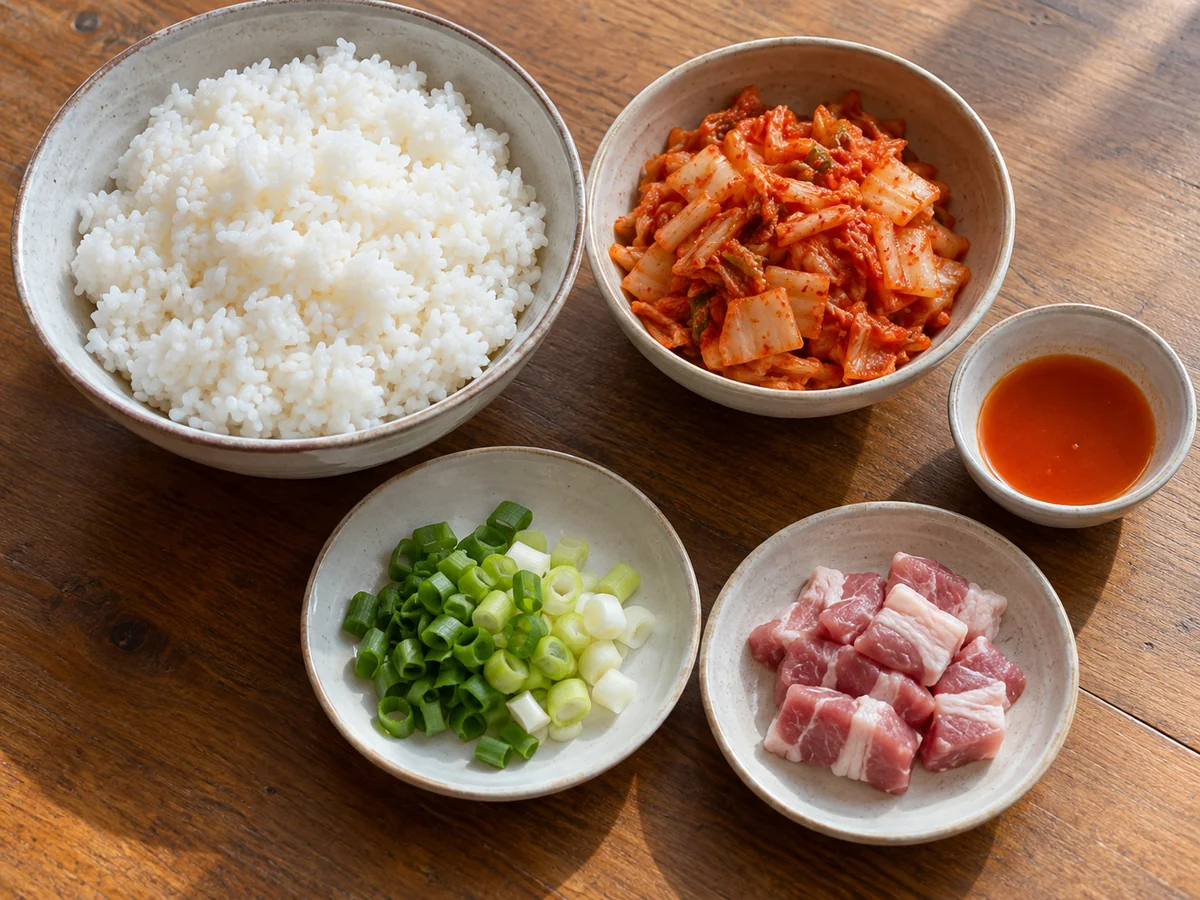
Kimchi fried rice readily accommodates additions around its core ingredients of kimchi and rice. Extras do more than increase the quantity: they change fatty richness, saltiness, and texture. The ingredient named on the menu can help you choose the flavor you want.
| Addition | Effect on flavor and texture | What to check |
|---|---|---|
| Pork | Meaty bite and richness from fat | Cut, piece size, and ratio to kimchi |
| Ham or bacon | Product-specific saltiness and flavor | Seasoning may become strong alongside kimchi |
| Tuna | Flaking fish and tuna flavor | How much oil or liquid is used |
| Cheese | Soft, stretchy texture when melted | Whether it is a topping or mixed into the rice |
| Egg | Mild flavor contrasting with kimchi; richness from yolk | Whether served fried, scrambled, or another way |
Some versions contain both meat and ham; others focus on kimchi and vegetables without an additional meat ingredient. However, the absence of meat in the dish’s name does not establish that it is vegetarian. Kimchi may contain salted seafood or fish sauce, and cooking oils and seasonings differ between restaurants, so ask specifically when ingredient checks matter.
The Korean Food Promotion Institute’s feature on eggs (in Korean) explains their role in adding richness and flavor to other foods and shows a fried egg on kimchi fried rice. Egg is a familiar accompaniment, but it is not essential, so check the menu to see whether it is included.
Cooking affects whether the rice is moist or separate
The frying process matters as much as the ingredient list when understanding the dish. Ingredients such as meat that need thorough cooking are cooked first; the kimchi is then fried to adjust flavor and moisture before the rice is added. Adding too many ingredients all at once can leave less room for moisture to evaporate in the pan.
Once the rice is added, large clumps are loosened so the kimchi does not gather in one place. Excess moisture is allowed to evaporate; if the seasoning is already sufficient, more soy sauce or gochujang is unnecessary. Since kimchi and additional ingredients vary in salt content, checking the flavor during cooking is more useful than automatically adding a fixed amount of seasoning.
Finished kimchi fried rice ranges from separate grains to a moister texture carrying more kimchi seasoning. Moist rice is not automatically under-fried, and rice browned on the bottom does not always have the same wok-like aroma. Pleasantly toasted, crisp rice and blackened, burnt patches should also be distinguished.
Eating it with egg and seaweed
If a fried egg arrives on top, try a spoonful of rice alone first, then cut off a little egg and eat them together. You can compare how the yolk and white change the impression of the seasoning. Mixing everything immediately is also an option, but tasting a portion separately helps you understand the rice itself.
Seaweed flakes and sesame add toasted aromas, while melted cheese creates a texture different from the rice. A generous amount of seasoned seaweed or cheese may make the dish taste saltier overall. Try the rice with its toppings before reaching for ketchup or another sauce.
If pickled radish, kimchi, or soup is served alongside, have a little when you want it. The presence of kimchi in the rice does not mean every spoonful needs the same proportion of side dishes. Taste the rice, egg, and sides separately to find the combination that suits you.
Distinguishing it from bibimbap and kimchi rice bowls
Bibimbap centers on mixing rice with assorted toppings and seasoning. Kimchi fried rice differs because the kimchi and rice are fried together in a pan. Both may be eaten in a mixed state, but their preparation and the way flavor reaches the rice are not the same.
A kimchi rice bowl with cooked kimchi and meat placed over white rice also differs from fried rice in which all the grains have already been cooked together. Choose according to whether you want to taste rice and toppings separately or prefer kimchi seasoning distributed through the grains. If the menu name is unclear, look at the photograph and description together.
For a first order, check the usual additions such as meat or tuna, whether egg and cheese are included, and the spice level. Start with the contrast between tangy kimchi and the richness of fried rice, then combine the toppings. This reveals more of the dish than judging it simply as a plate of red fried rice.