Korean Food / Galbi Tang: Beef Short-Rib Soup and How to Eat It
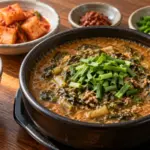
Galbi tang is beef short-rib soup cooked with ingredients such as radish and green onion, with both the broth and meat attached to the bones eaten. Relatively clear, savory broth and tender rib meat are its main features; rice may be eaten separately or added to make a meal. For a first try, taste the broth’s seasoning, move the ribs to a plate and separate the meat, then add rice and condiments gradually.
Beef soup for enjoying both rib meat and broth
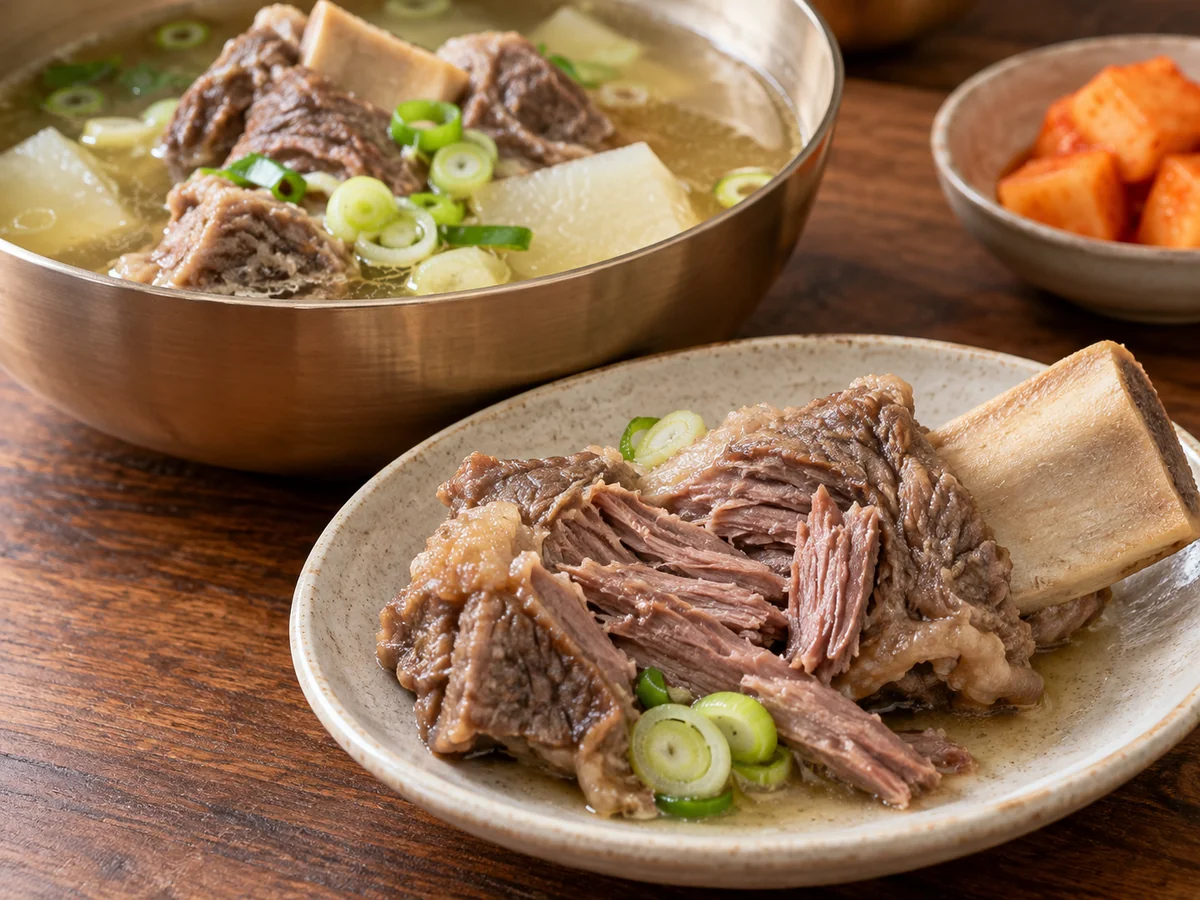
The Encyclopedia of Korean Culture’s entry on galbi tang defines it as soup made with cut beef ribs. The basic idea is to cook the ribs until their meat is easy to eat and enjoy the broth carrying their flavor. It differs from galbi jjim, braised in a sweet-salty seasoning, and grilled galbi.
The ribs contain fat, muscle and bone together. A large bone in the bowl does not mean a proportionally large amount of edible meat. Looking at the thickness of the attached flesh and any additional meat is more useful for estimating a meal than judging by bones alone.
Soft radish adds another texture between meat and broth; aromatic vegetables such as green onion and garlic add fragrance. Egg strips or jujubes may garnish it, but are not universal requirements. An elaborate photograph is no basis for inferring the basic recipe or cooking time.
Clear broth does not mean unseasoned broth
Even relatively clear galbi tang carries meat and seasoning flavors. Some restaurants season it with salt or soy sauce before serving; others provide condiments for customers to adjust it. Taste a little before adding salt just because a salt container is on the table.
Some bowls have a little floating fat; others are skimmed for a clearer finish. Clarity and fat quantity cannot establish cooking duration or meat grade. It is more practical to assess separately whether you enjoy the richness, saltiness and meat aroma.
To understand the original broth, taste a spoonful or two before adding minced spicy seasoning or kimchi liquid. Spicy additions offer another flavor but change the broth’s original aroma. Being able to change it does not mean you must.
Move the ribs to a plate and add sauce sparingly
Large ribs are easier to handle on a plate than held over the soup. A slippery bone dropped from chopstick tips can splash hot broth; use tongs if supplied or ask the staff for utensils to divide the meat.
- Taste a little broth to assess its starting seasoning.
- Move a rib to a small plate and examine the bone and attached meat.
- Separate meat along its fibers or cut it into manageable pieces with the provided scissors. Check for tough sinew or small bone fragments that may have come away.
- Try some plain meat first, then lightly dip just part of it in a soy-based sauce if supplied.
Some ribs release their meat readily; others have firmer areas next to the bone. Divide them on the plate rather than pulling hard on a hot bone by hand. If extra boneless meat is included, it may have a different chew from the ribs, making each worth tasting separately.
A sauce containing mustard or chili creates a flavor distinct from the soup. Soaking meat in it can make salt and aroma overpower the meat itself. First distinguish a meat dip from a condiment meant for the broth; ask the staff if unsure.
Should you add all the glass noodles and rice at once?
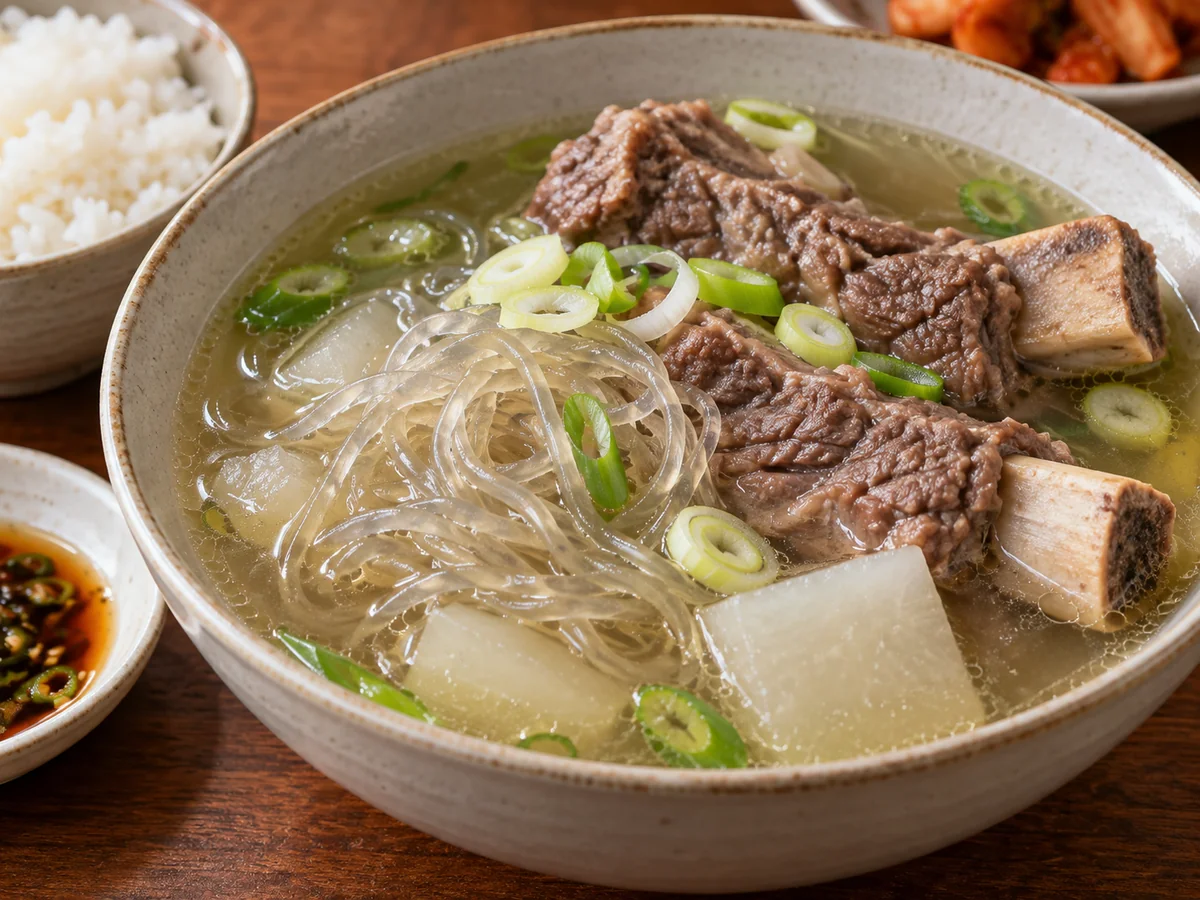
The Korea Tourism Organization’s galbi tang guide describes eating the ribs first and finishing with rice in the broth, as well as additions such as glass noodles. This order is a convenient way to taste the parts, not a rule. You may keep your rice separate throughout.
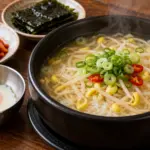
If glass noodles are included, notice their transparent, slippery texture separately from meat and radish. Their texture can change as they sit in broth, so eat small amounts while they have the firmness you prefer. If long strands are tangled, ask whether the meat scissors can be used to cut them into manageable lengths.
Start with only some of the rice if you want to add it. Rice changes the proportion of solids in each spoonful and the impression of the broth, while sides also change perceived seasoning. Rather than heavily salting broth alone, consider how it will taste with rice and cubed radish kimchi.
Kimchi and kkakdugi can be eaten alongside rather than emptied into the soup. Mixing in their liquid is a preference; if sharing broth, adjust a portion in your own bowl first. Alternating the clear soup and the sides’ acidity is another option.
Comparing seolleongtang, gomtang and braised ribs
Galbi tang, seolleongtang and gomtang are beef soups, but differ in the meat emphasized and the impression of the broth. Ingredients and methods overlap across restaurants, so do not classify a soup by color alone, such as assuming every clear broth is galbi tang.
| Dish | Typical focus | Useful checks |
|---|---|---|
| Galbi tang | Ribs, attached meat and relatively clear broth | Rib size, edible meat quantity and glass noodles |
| Seolleongtang | Milky broth simmered from bones and other ingredients, with meat | Meat, noodles and initial seasoning |
| Gomtang | Broth simmered with meat and assorted cuts | Main cuts and character of the broth |
| Galbi jjim | Seasoned ribs and vegetables | Soy-based or spicy sauce and suitable number of diners |
Galbi jjim focuses on seasoned ribs eaten with rice, while galbi tang is a bowl enjoyed with broth. Even if you want beef ribs in either case, choose according to whether you prefer sweet-salty sauce or warm broth and meat.
Wang-galbi tang and “special” galbi tang often distinguish size or quantity, but restaurants do not share one standard. Ask whether the extra is more ribs, larger bones or separate boneless meat. Distinguishing a photograph’s long bones from the edible meat helps you choose.
Ugeoji galbi tang, with outer cabbage leaves, and spicy galbi tang can differ from the clear basic version in seasoning and vegetables. Cabbage does not imply one specific seasoning paste, and spicy versions do not all have the same heat. If you avoid ingredients besides beef or care about origin, check the menu description and restaurant labeling.
When ordering, check rice inclusion, meat cuts, noodles, toppings and sauces. Taste the broth before adjusting it, divide and try the meat, then add rice a little at a time. This makes the differences between ribs and broth easier to appreciate than mixing the entire large bowl immediately.