Korean Food / Kongnamul Gukbap: Soybean Sprout Rice Soup and Jeonju Styles
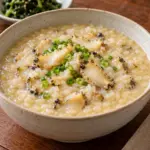
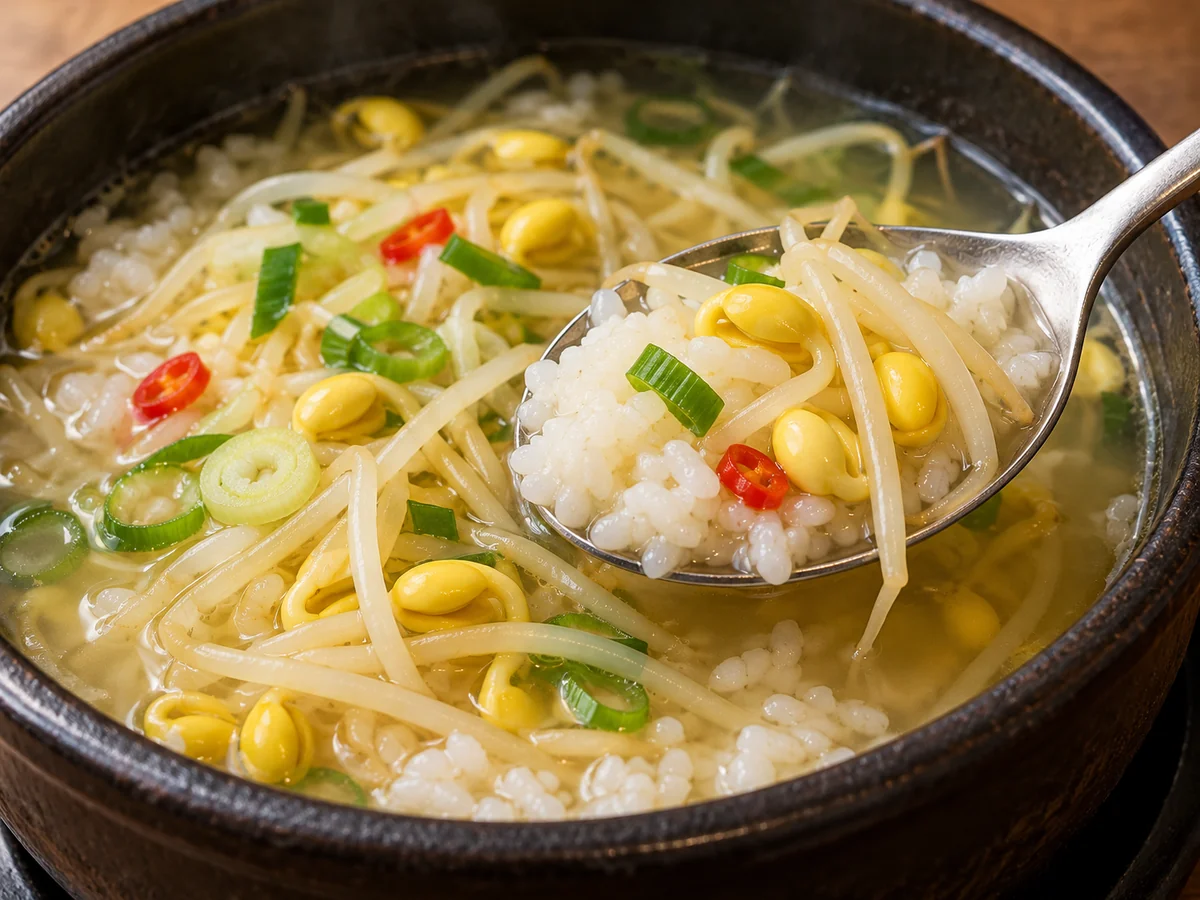
Kongnamul gukbap is soybean sprout soup served with rice in the bowl. Crisp sprout stems, soft rice and a light-tasting broth that may also be peppery come together, sometimes with egg or seaweed. Jeonju-style versions may cook the egg in the soup or serve a poached egg separately, so checking how rice and egg are served makes ordering easier.
Soup with rice, rather than soybean sprout rice
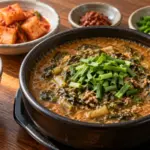
This is a bowl with plenty of broth. It differs from kongnamul bap, rice cooked with sprouts and mixed with seasoning, and may arrive differently from sprout soup with a separate bowl of rice. Even if only sprouts show on top, check whether rice is already underneath.
The Korea Tourism Organization’s introduction to kongnamul gukbap describes a rice soup with generous sprouts in connection with breakfast and Jeonju’s food culture. It is not exclusively a breakfast dish, however, and serving hours and accompaniments vary. Check a particular restaurant’s hours if planning it during a trip.
Long, crisp sprout stems contrast with rice in each spoonful. Eating most of the sprouts first can leave mainly rice and broth later. Take small amounts of sprouts and rice together and vary their ratio to enjoy the whole bowl evenly.
Check the stock and toppings even when it looks simple
Soybean sprouts are plant ingredients, but the whole soup is not necessarily vegetable-based. Stock may use anchovies or kelp, and squid, kimchi, green onion or chili may be added. Recipes vary; the presence of sprouts does not make it vegetarian.
Small squid pieces add a springy texture and seafood flavor. Kimchi versions can incorporate its acidity and seasoning into the broth. A clear color does not rule out spicy ingredients, so ask whether chili and kimchi are included as standard.
Shredded seaweed can go into the soup or be eaten with some egg or rice separately. Seasoned and unseasoned seaweed add different levels of seasoning. If seaweed, salted shrimp and sides arrive together, taste the broth and toppings before mixing everything in.
Jeonju styles do not all serve eggs or heat the same way
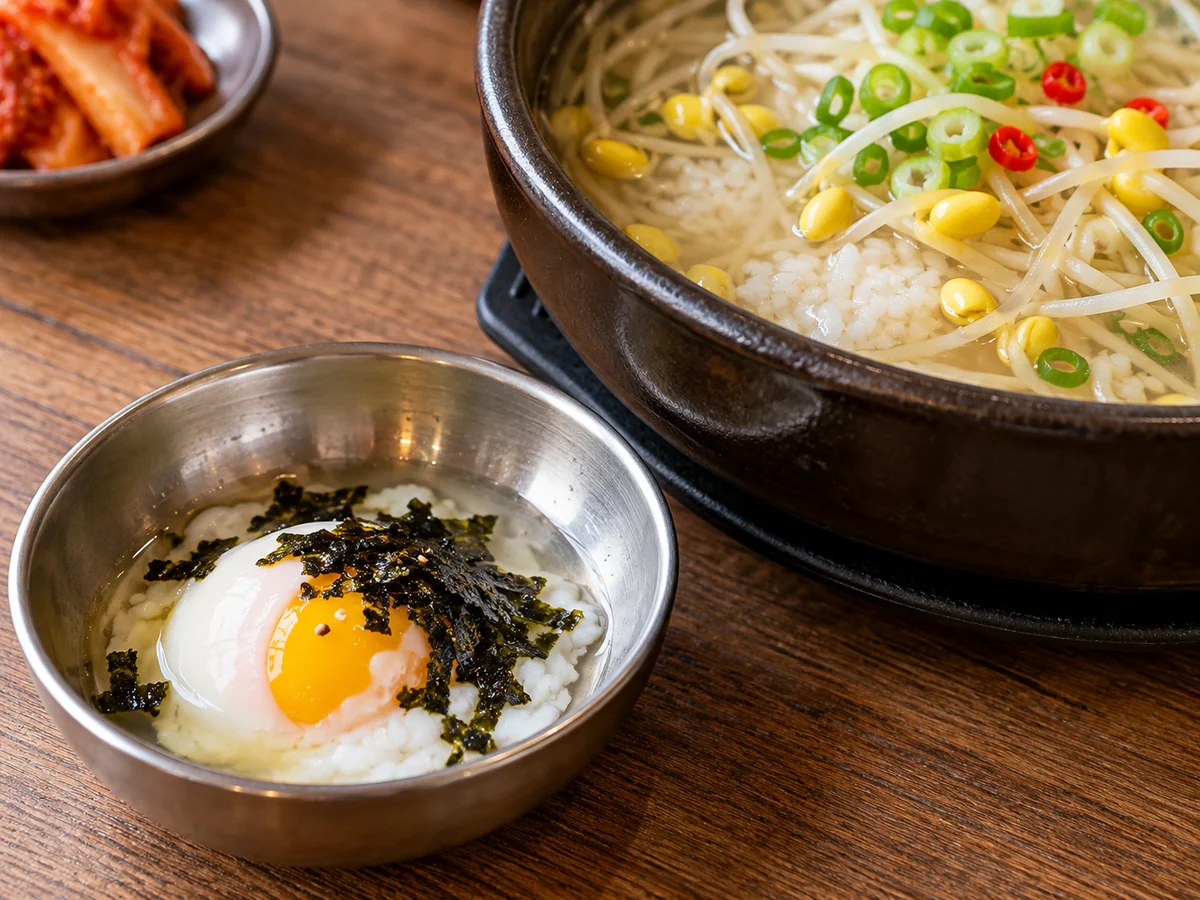
Introductions often compare a “boiled” style with a Nambu Market style. Korea’s Policy Briefing introduction to Jeonju food contrasts an egg cooked with the soup and the Nambu Market style with a separate poached egg. These two names cannot precisely classify every restaurant today.
| What to check | Egg cooked in the soup | Poached egg served separately |
|---|---|---|
| Egg location | May be inside the rice soup | Provided in a separate small bowl |
| How to eat it | Taste broth, rice and egg together | Eat the egg separately or mix it into the soup |
| Impression of the broth | Changes with how much the egg disperses | Easy to taste the broth before adding egg |
| Question before ordering | How thoroughly is the egg cooked? | How cooked is the poached egg, and can that be adjusted? |
A bubbling earthenware pot and a bowl prepared for immediate eating can differ in temperature. Nevertheless, do not assume a Nambu Market version is cool enough for a large first mouthful. Check the actual bowl and broth temperature and start small.
“Poached egg” does not imply identical doneness everywhere. Ask how set the yolk and white will be and whether a fully cooked egg can be substituted if needed. Even if advised to mix it with hot broth, clarifying your preferred doneness when ordering is more definite.
How to eat the separate poached egg
Rather than pouring it all into the soup immediately, you can add a little broth to the egg bowl and taste it there. The dispersed yolk creates a rich, soft texture different from the broth. Try it before and after adding some seaweed to notice the aroma it contributes.
Jeonju City’s winter food guide also introduces the egg served with kongnamul gukbap. There is no need to declare either eating it separately or mixing it in the only correct method. Ask the staff if you are unsure what an accompanying ingredient is for.
Adding the egg changes the flavor and texture of the egg-free broth. Keep it separate if you want a clear-tasting soup, or add small amounts to your own bowl if you prefer the egg-enriched flavor. Checking whether the soup already includes an egg can also prevent an unnecessary extra order.
Add salted shrimp and chili after tasting broth with rice
When seasoning, consider the rice, toppings and sides as well as the broth. Too much salted shrimp at the start can taste excessive once you add kimchi or seasoned seaweed. If rice is already inside, try a spoonful with sprouts before deciding on the final seasoning.
- Taste a little broth to check its saltiness and chili heat.
- Eat sprouts and rice together to assess a typical mouthful.
- Only if needed, add a little salted shrimp or another condiment and stir lightly.
- Taste again with egg, seaweed and sides before deciding whether more seasoning is necessary.
Salted shrimp adds seafood flavor as well as salt. Chili and minced garlic also change aroma and heat; there is no need to add them all simply because they accompany gukbap. If avoiding an ingredient, check before condiments have been mixed in.
Choose by the combination of broth, rice and egg
Compared with a soup centered on meat and fat, such as dwaeji gukbap, pork rice soup, this dish calls attention to sprouts, stock and egg. The shared name gukbap does not mean identical solids or broth; choose the texture you want.
Before ordering, check whether rice comes in the bowl, can be served separately, and what quantity and conditions apply to extra rice. Squid or egg extras may already be part of the basic serving. Portions and prices vary, so it cannot universally be described as a light, inexpensive meal.
It may suit you if you want crisp sprouts, hot broth and soft rice. The name does not reveal all the heat, stock ingredients or egg arrangements, however. Check those three points first and add seasoning gradually to distinguish the varied flavors inside an apparently simple bowl.