Japanese Food / Takoyaki: Octopus, Batter, Sauce and How to Eat It
Takoyaki is a Japanese dish made by cooking batter of wheat flour, stock and egg with pieces of octopus in round molds. The outside may be cooked while the soft center remains very hot, so let it cool before eating rather than putting a whole piece in your mouth. Check the ingredients in the octopus filling, batter, sauce and toppings when ordering.
What is takoyaki?
Takoyaki is made by pouring thin batter into a special griddle with round wells, adding pieces of octopus and cooking them into balls. The batter often contains wheat flour, stock and egg; tenkasu (fried batter pieces), scallions and red pickled ginger may also be added. Fillings and batter consistency vary by shop.
The Japanese Ministry of Agriculture, Forestry and Fisheries’ takoyaki guide describes cooked octopus in flour, stock and egg batter prepared on a round griddle. It is associated with Osaka street food, but styles vary by shop and region.
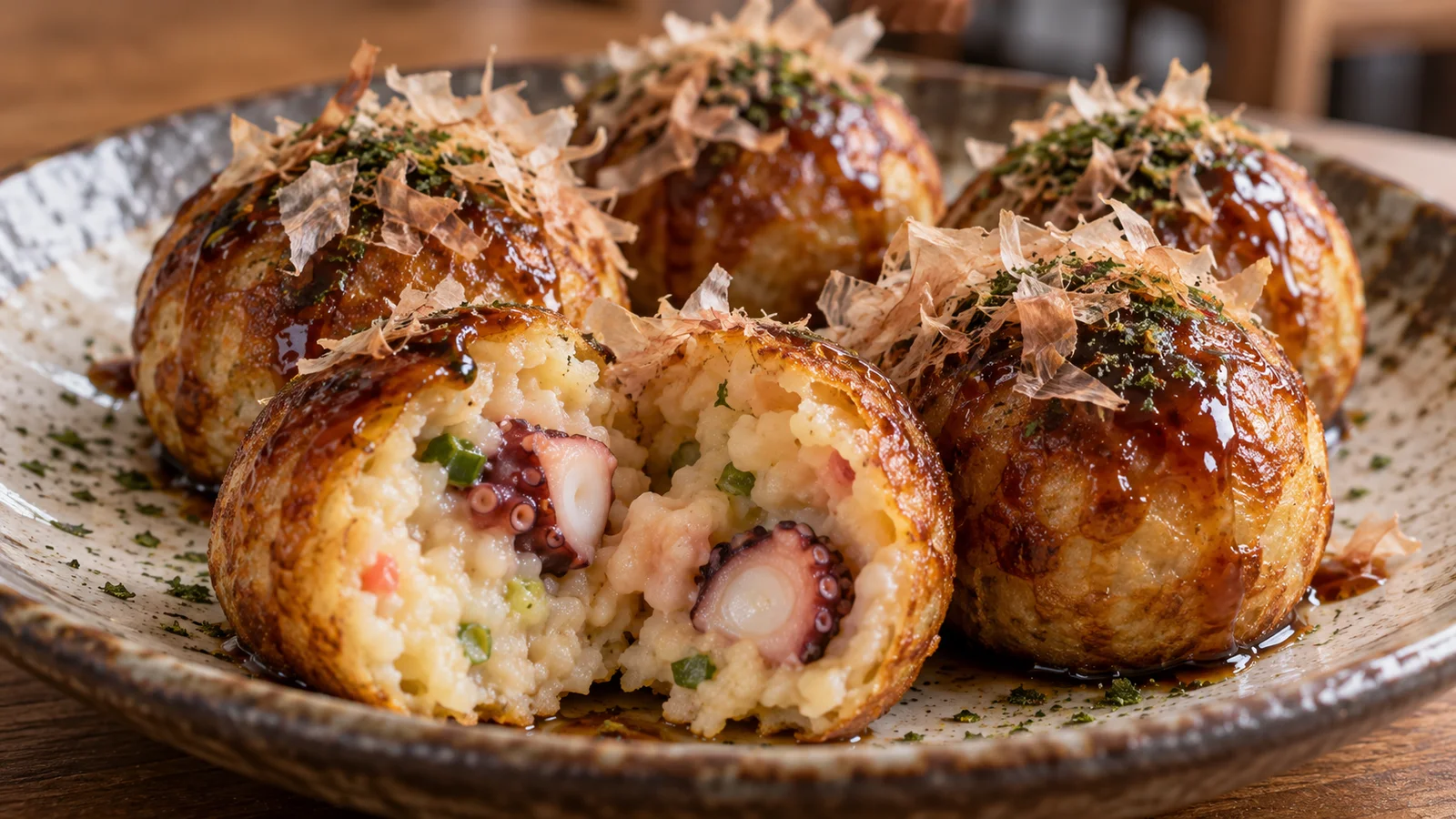
What do takoyaki taste and feel like?
Cooked takoyaki often have a browned outside and a soft interior, with octopus adding a chewy bite. Texture varies with batter amount, cooking time and the shop’s method. A soft center does not always mean it is undercooked, but outside color alone cannot establish that it is cooked through.
Takoyaki sauce is often sweet and savory, and mayonnaise adds richness. Sauce and topping amounts vary, so try the standard version first and add more if desired.
What is in the sauce and toppings?
- Takoyaki sauce: products and shops may use fruit, vegetables, vinegar and spices. Check for wheat or soy if relevant.
- Mayonnaise: it adds richness but usually contains egg. If you avoid egg, check the ingredients and whether it can be omitted.
- Aonori and katsuobushi: aonori is dried green seaweed powder; katsuobushi is fish made from shavings of smoked, dried bonito.
- Scallions and red pickled ginger: they add aroma and brightness but are not standard everywhere.
Some versions are served without sauce or seasoned with soy sauce or salt. Ingredients can differ even under the same name, so check the batter and toppings if you have allergies or dietary restrictions.
How do you eat takoyaki?
- Check the center’s temperature. Fresh takoyaki can be much hotter inside than outside. Leave them on the plate briefly or split them to cool, then eat small bites.
- Check the sauce and toppings. Find out whether sauce is already added or served separately. Add scallions or ginger to taste.
- Use a suitable utensil. Pick up one piece at a time with a skewer or chopsticks and watch for hot filling falling out. For children, divide and cool pieces appropriately.
At a restaurant where customers cook, follow staff instructions for the special griddle. Cook batter and filling thoroughly, and separate utensils used for raw ingredients from those used for cooked food. The griddle is hot, so keep hands and tableware clear of it.
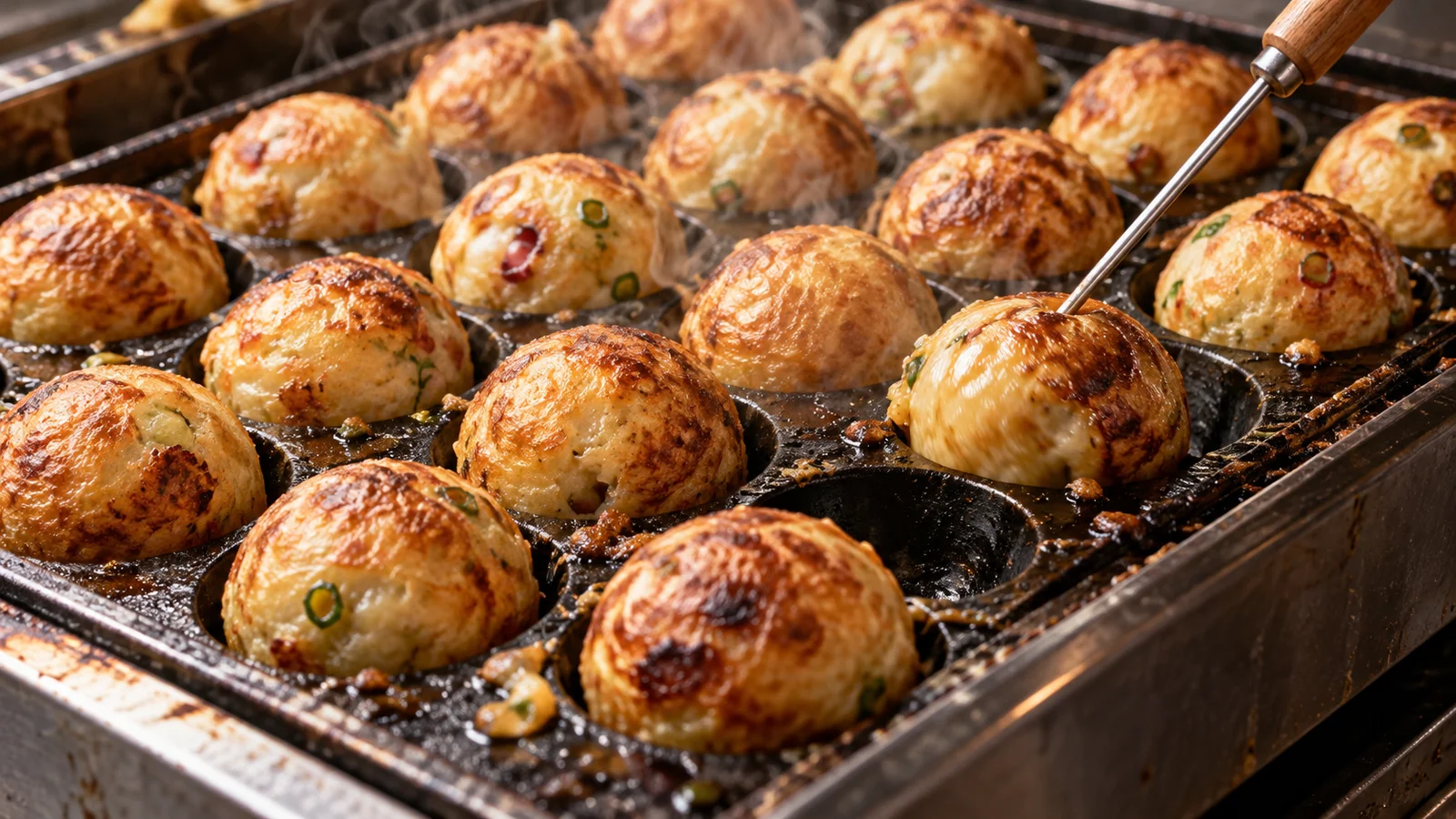
What should you check before ordering?
Ask whether octopus is included, how many pieces come in a serving and whether sauce and mayonnaise are standard. Variations can use other fillings, but do not assume the ingredients from the name or photograph.
The batter may contain wheat and egg, stock may contain fish, and sauce may contain wheat or soy. Griddles and utensils may also be shared with shellfish or other seafood. If you have an allergy, ask staff about the specific ingredients, cross-contact and whether the separate preparation you need is possible.
What about cooking or storing leftovers?
When using a special griddle at home, follow its instructions and take care around hot surfaces. Cook batter and filling thoroughly to the center and wash hands and utensils that touched raw ingredients, keeping them separate from finished food. If unsure about doneness, cook longer and check the center.
Refrigerate leftovers promptly according to the seller’s instructions or local food-safety guidance on time and temperature, and reheat thoroughly to the center. Do not judge food with an unknown storage history safe from appearance or smell alone.