Japanese Food / Soba: Buckwheat Noodles, Hot and Cold Styles and How to Eat Them
Soba is a Japanese dish of noodles made from buckwheat flour, served in hot broth or chilled with a dipping sauce. Some noodles use only buckwheat while others contain wheat flour, so anyone with a buckwheat or wheat allergy should check ingredients and potential cross-contact before ordering. Cold soba lets you appreciate the noodles’ aroma, while hot soba can be served with a variety of toppings.
What are soba noodles made from?
Soba noodles are generally made by grinding buckwheat into flour, preparing a dough and cutting it into thin strands. Some use only buckwheat flour, but others add wheat flour to help bind the dough. Buckwheat proportion, milling and preparation affect the color, aroma and texture. Neither the name soba nor the noodles’ brown color tells you their exact buckwheat or wheat content.
A Japanese Ministry of Agriculture, Forestry and Fisheries publication on traditional foods describes soba made with both buckwheat and wheat flour. If you need to avoid wheat, check the product label or ask the restaurant; even noodles made only from buckwheat can come into contact with wheat through shared equipment.
How do cold and hot soba differ?
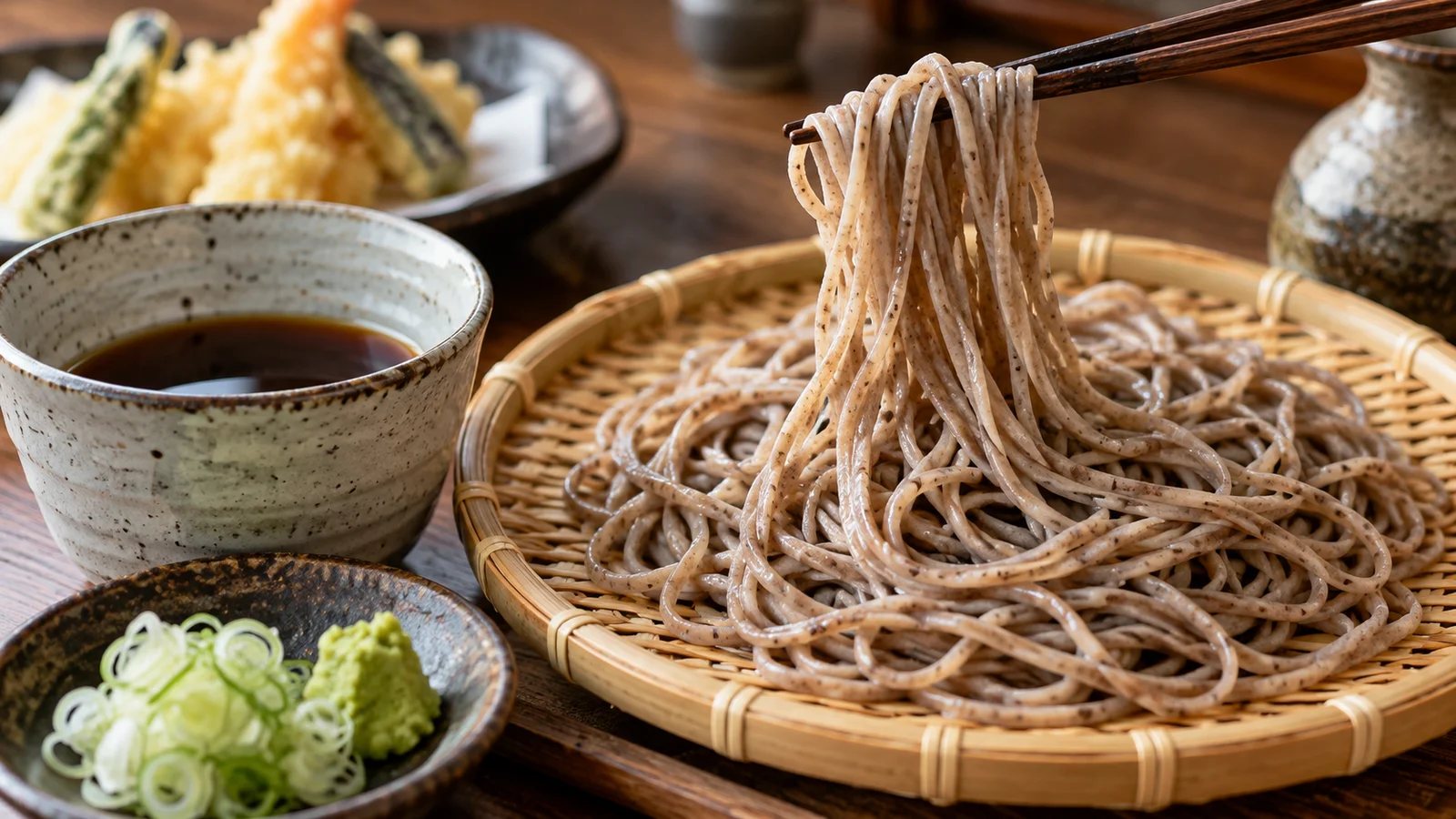
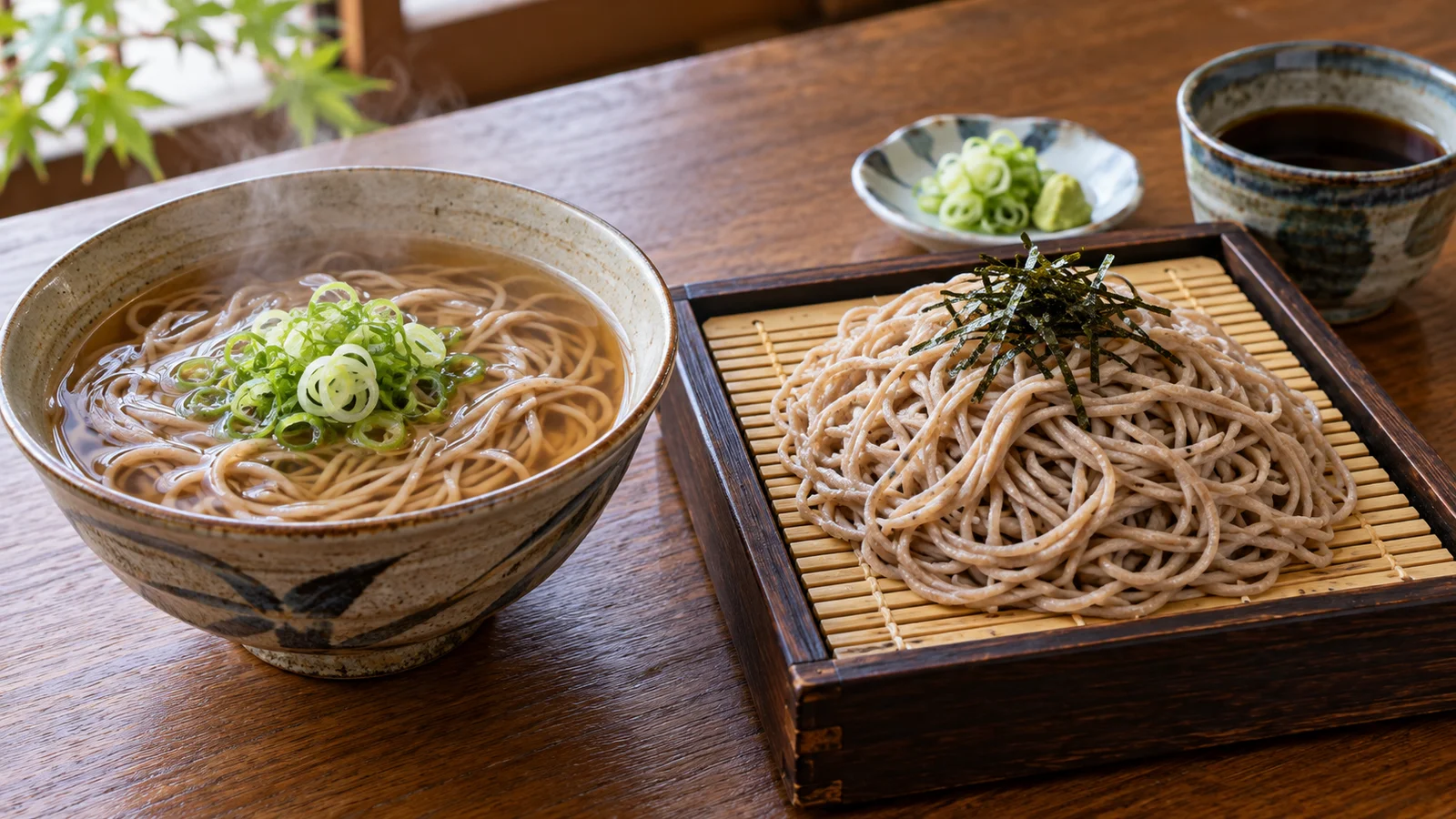
Cold mori or zaru soba is made by cooking, cooling and draining the noodles, then dipping small portions into a separate tsuyu, a seasoned dipping broth. Nori seaweed and other accompaniments vary by menu. Cold noodles make it easier to appreciate the buckwheat aroma and texture.
Hot kake soba is a basic style in which warm broth is poured over the noodles. Some versions add scallions, tempura or fried tofu. The ministry’s introduction to soba distinguishes dipped mori soba from kake soba in warm broth. Broth and toppings can vary even when the dish has the same name.
What is in the tsuyu and toppings?
Tsuyu and broth often combine soy sauce with stock made from kombu kelp, katsuobushi (shavings of smoked, dried bonito) and other seasonings. Depending on the shop, fish, soy, wheat or alcohol may be used, so ask about ingredients that matter to you. A clear sauce or the absence of visible meat does not necessarily make a dish vegetarian.
- Scallions and wasabi: when served separately, add them gradually to adjust aroma and heat.
- Nori and radish: some dishes include seaweed or grated radish. Accompaniments and quantities vary.
- Tempura: shrimp or vegetable tempura may come on a separate plate or on hot noodles. Ask about batter and shared frying oil when relevant.
- Fried tofu and egg: ask about the tofu’s seasoning or the egg’s degree of cooking if needed.
How do you eat soba?
When cold noodles and tsuyu are separate, pick up a small portion with chopsticks and dip it into the sauce. Start with a little sauce to notice the buckwheat aroma and saltiness, then add scallions or wasabi gradually if desired. If the sauce tastes strong, adjust how much coats the noodles.
Some restaurants offer sobayu, the water used to cook the noodles, near the end of the meal. It can be mixed into the remaining tsuyu to adjust the taste and then drunk, but availability and custom vary. The Japan National Tourism Organization’s Izushi soba guide describes this practice. For hot soba, let the bowl and broth cool as needed while eating the noodles and toppings.
How should you check allergies and ingredients when ordering?
- Check buckwheat and wheat separately. Soba contains buckwheat and may also contain wheat flour. People with buckwheat allergy should avoid soba; those avoiding wheat need to confirm the exact ingredients.
- Ask about shared equipment. Cooking water or utensils may be shared with other noodles. If you have an allergy, ask staff specifically whether the necessary separate preparation is possible.
- Check tsuyu and toppings. Fish stock, wheat and soy in soy sauce, and shrimp tempura can matter to allergies or dietary restrictions. Ask about ingredients and shared frying oil as needed.
- Choose temperature and portion. Check whether the dish is cold with dipping sauce or hot in broth, and whether toppings and the noodle quantity are included in the price.
What if you are vegetarian or avoid gluten?
Even if the noodles contain no meat, tsuyu can contain fish ingredients such as katsuobushi. For a vegetarian meal, check the noodles, sauce and toppings as well as shared equipment and frying oil against your dietary needs.
Buckwheat itself does not contain wheat gluten, but that does not make every soba dish gluten-free: noodles may contain wheat flour, and soy sauce or shared equipment can introduce wheat. If you have a wheat or buckwheat allergy or must strictly avoid gluten, check ingredients and preparation with the manufacturer or restaurant.