Japanese Food / Onigiri: Fillings, Nori and Grilled Rice Balls
Onigiri are Japanese rice balls formed into triangles, rounds or other shapes, with fillings inside or ingredients mixed into the rice. Fillings include salmon, umeboshi and kelp, and nori seaweed is sometimes wrapped around them. When choosing one, check its filling and seasonings as well as the storage temperature and use-by date.
How does onigiri differ from sushi?
Onigiri are generally formed by hand or in a mold, sometimes with salt or a filling. Triangles are common, but round and elongated shapes also exist. Nori is often wrapped outside to make the rice easier to hold. Some contain only salted rice, while others have ingredients mixed into it.
Sushi centers on rice seasoned with vinegar and other ingredients, whereas onigiri usually uses rice that is not sushi rice. Rice and seasoning vary by product, so check the label rather than assuming all ingredients from the name or shape. The Japanese Ministry of Agriculture’s onigiri introduction describes forming rice around fillings such as salmon and umeboshi.
What fillings are used?
- Salmon: often cooked and flaked. Salt and seasoning vary by product.
- Umeboshi: salt-pickled Japanese plum, which can taste sour and salty. It may contain a pit, so check before eating.
- Kombu: kelp simmered with soy sauce or other seasoning. Check whether the seasoning includes fish, wheat or soy if relevant.
- Tuna mayonnaise: a mixture of tuna and mayonnaise, usually involving fish and egg. Sauces and other ingredients vary.
- Okaka: seasoned katsuobushi, shavings of smoked, dried bonito. Check ingredients if you avoid fish.
Filling quantities and seasoning vary even under the same name; meat, egg or pickled vegetables can also be used. The Japan National Tourism Organization’s convenience-store guide describes a range of onigiri including ume and tuna mayonnaise.
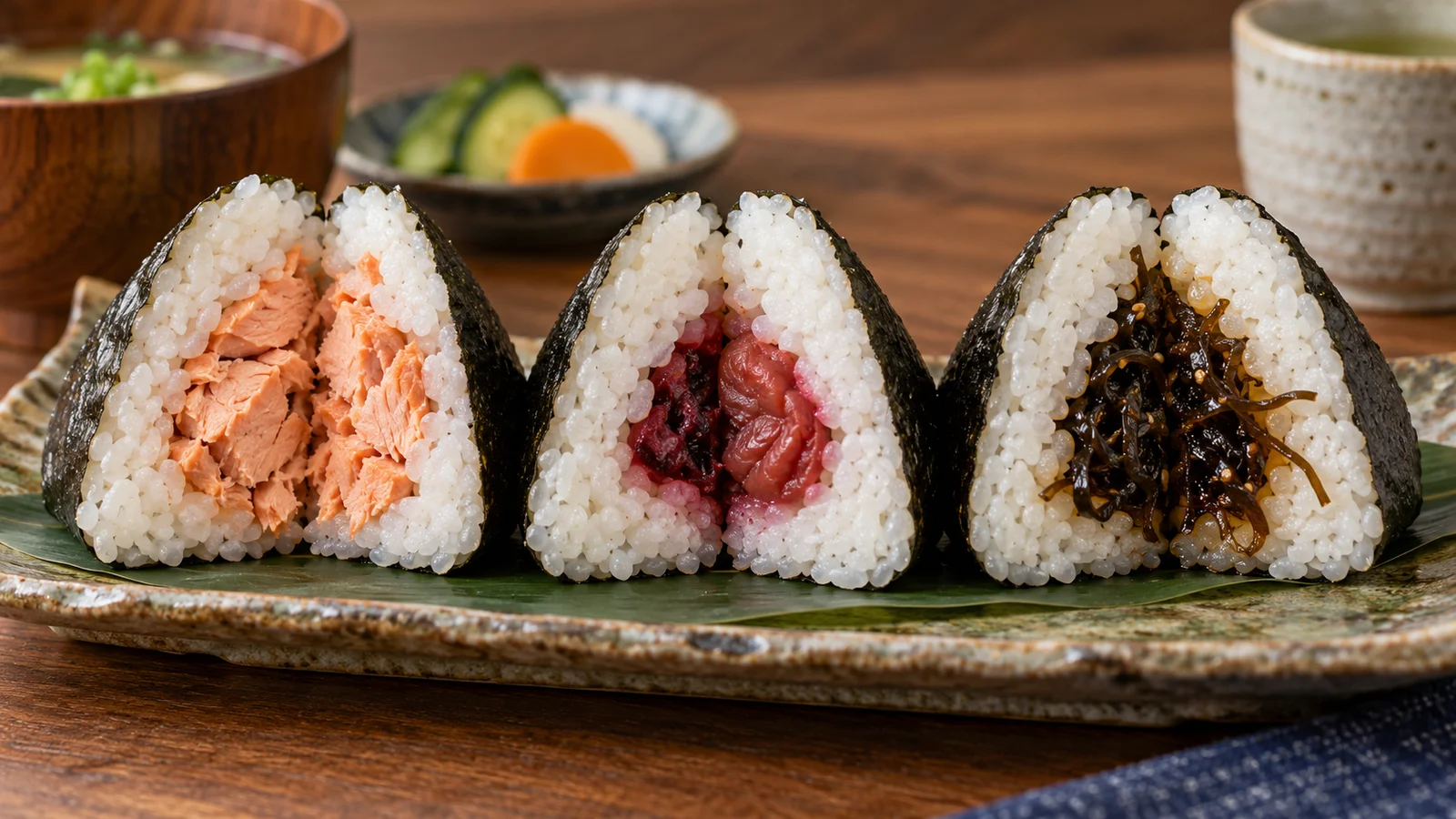
How do nori-wrapped and grilled onigiri differ?
Nori-wrapped onigiri have seaweed around the rice and filling. Some people prefer attaching the nori just before eating to keep it crisp; others enjoy it softened against the rice. Packaging may separate the nori from the rice or have it already attached.
Yaki onigiri are grilled rice balls, sometimes brushed with soy sauce or miso for a toasted aroma. Some are unseasoned, and fillings and methods vary. Soy sauce and miso can contain soy and wheat, so check if necessary.
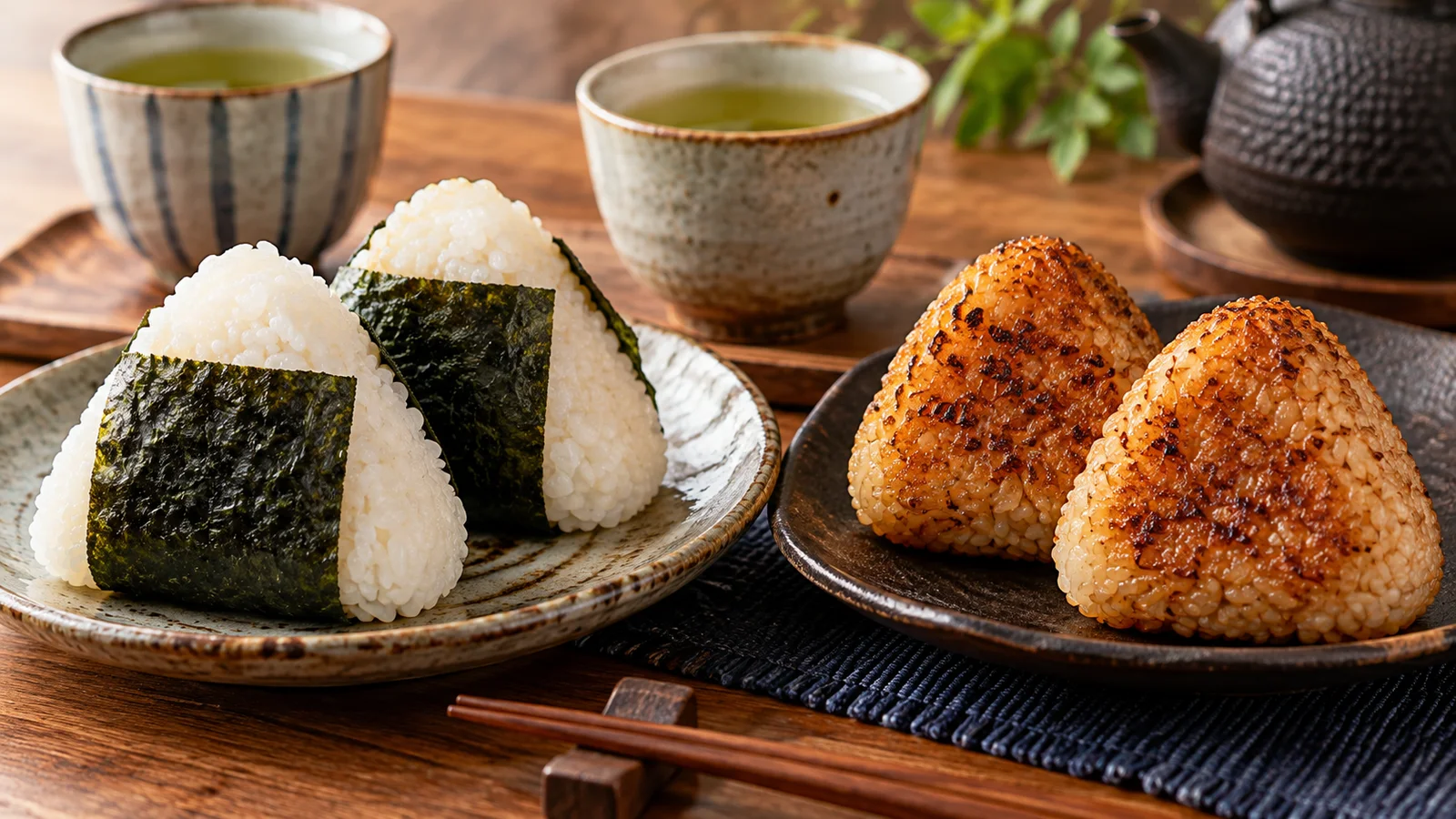
How do you choose and open convenience-store onigiri?
- Read filling and allergen information. Check ingredients relevant to you, such as fish in salmon or tuna, egg in mayonnaise and wheat or soy in seasonings. Do not judge filling from a photograph or color alone.
- Check use-by and storage instructions. Note how the shop stores the product and follow the temperature and use-by instructions after purchase.
- Follow the package’s opening sequence. Some products keep nori separate from the rice and have numbered strips to remove in order. Packaging differs, so read the illustration first.
- Ask staff when necessary. If heating or keeping the product cold during travel is unclear from the label, ask the shop.
What if you are vegetarian or avoid ingredients?
A filling that looks plant-based, such as plum or kelp, can still contain fish stock, katsuobushi or other seasonings. For a vegetarian option, check not only the filling but also rice and nori seasonings, or ask staff.
If you have allergies to fish, egg, wheat or soy, check the product-specific ingredient and allergen information and ask about shared manufacturing equipment if necessary. Labeling rules and information can differ by sales region.
How should homemade or leftover onigiri be stored?
Wash hands and tools before preparation and cook fillings as needed, handling them with clean utensils. Rice and different fillings have different handling requirements, so do not assume a rice ball can be kept at room temperature for a long time.
Refrigerate leftovers promptly according to the seller’s instructions or local food-safety guidance on time and temperature; heat products that require it according to their instructions. Do not judge rice or fillings with an unknown storage history safe solely from appearance or smell.