Holiday Dinner Party Planning: Shopping Lists for 4, 6, or 8 and a One-Week Schedule
Plan a holiday dinner party by confirming your guests' food requirements, choosing a menu that fits your kitchen, and subtracting usable supplies from the groceries you need. Split the work across the week and give each dish a cooking and storage space. A manageable menu and a realistic serving plan matter more than preparing everything far ahead.
Confirm the guests, budget, and kitchen space
Set the guest count and dinner time before buying food. Ask about allergies, ingredients to avoid, vegetarian requirements, children's needs, and appetite. For an allergy, ask the guest what ingredient checks and separation they need; switching one ingredient does not automatically make the dish suitable. Include sauces, dressings, bread, and seasoned meat in the discussion.
The FDA's food allergy guidance explains how to check ingredient and allergen information on foods it regulates. Sesame is among the nine major U.S. food allergens, but guests may also need to avoid other foods. Read each actual label rather than relying on a familiar product name. Keep packaging available and agree on any packaged alternatives with the guest. If you cannot provide the necessary separation, say so before the gathering and arrange an option they can assess.
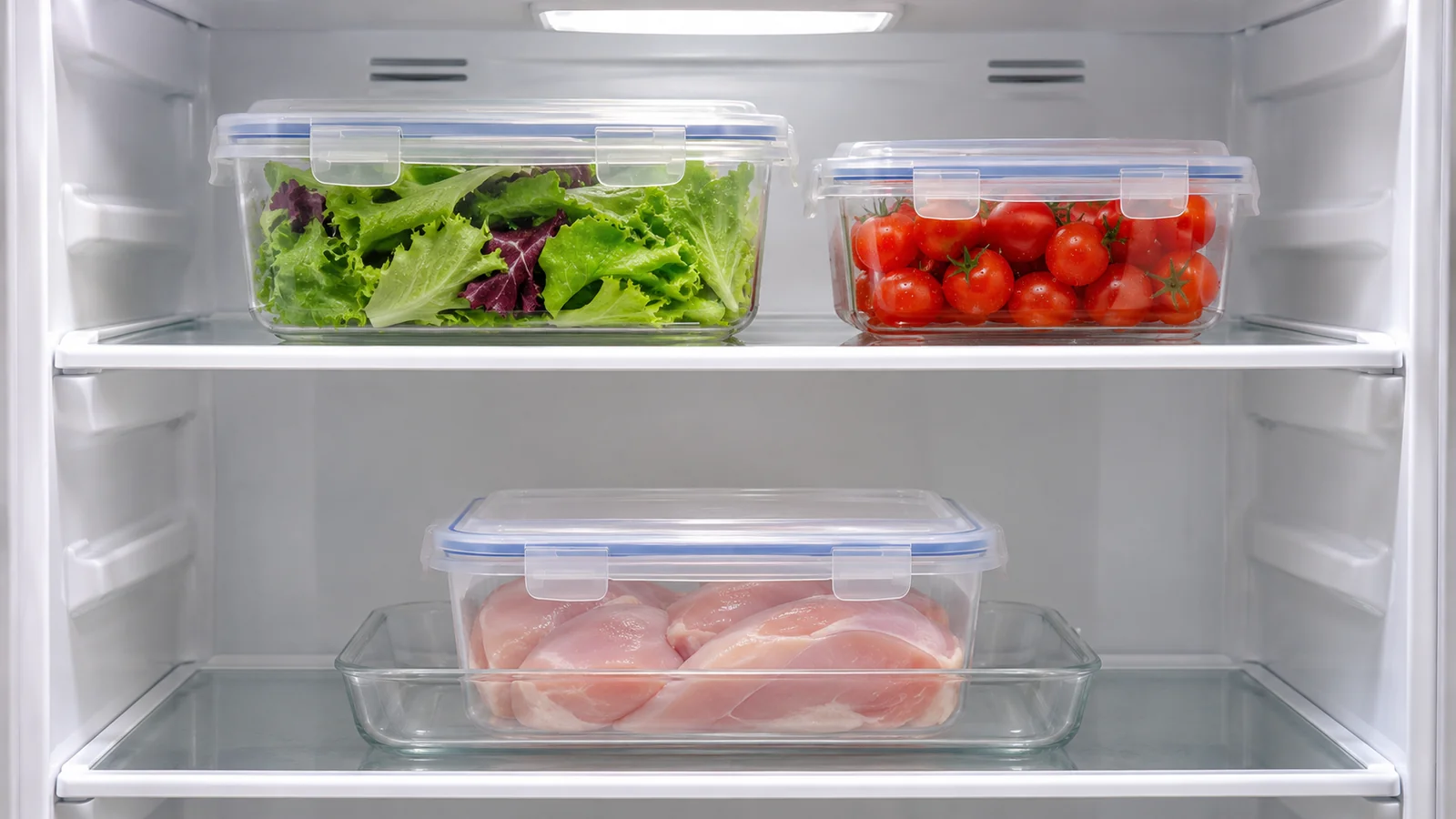
Check space with the actual roasting pan, saucepans, serving dishes, and covered storage containers. An empty refrigerator shelf is not enough if the salad containers will not fit once the raw chicken is stored separately. Have an appliance thermometer, food thermometer, separate raw-meat and ready-to-eat utensils, and suitable cold transport available.
Give the party a spending limit that includes supplies and a reserve. A fictional $100 allocation could be $80 for food, $5 for serving supplies, $5 for ice, and $10 left uncommitted. That totals $100; it is a planning example, not a current price quote or a recommended amount to spend. Reuse what you own and reduce the menu if actual prices exceed the limit.
Choose one oven main and give the sides other jobs
This example assumes four adults eating at 6 p.m., with one oven and two usable stovetop burners. It is a menu and work plan, not a complete roast-chicken recipe. Choose the actual recipe before shopping so that its seasonings, equipment, preparation, and cooking instructions are included.
| Role | Example | Equipment and preparation |
|---|---|---|
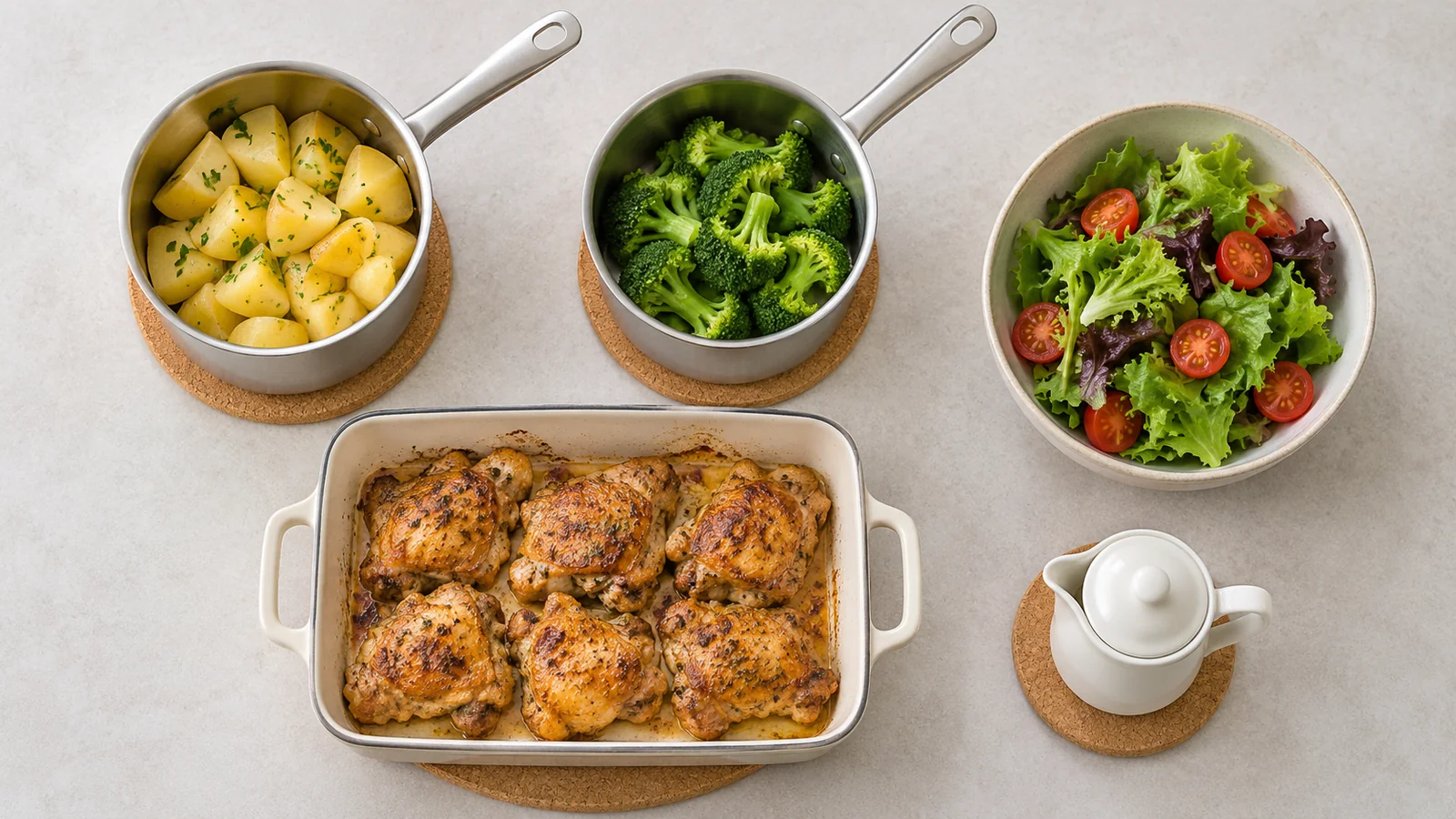
| Main | Oven-roasted boneless chicken thighs | One roasting pan in the oven; check the chosen recipe, pan capacity, and internal temperature. |
| Warm sides | Boiled potatoes and steamed broccoli | Two separate saucepans on the stovetop; confirm that both fit at once. |
| Cold side | Leaf-and-tomato salad, dressing separate | Prepare with clean equipment, cover and refrigerate, then bring out close to serving. |
| Ready to serve | Bread, fruit, and water | Choose bread that does not require the oven; prepare fruit near serving time. |
If someone does not eat chicken, decide on a suitable main and the separation it needs before adding more dishes. A soy-based or dairy-based replacement may introduce another allergen. If extra preparation exceeds the kitchen's capacity, simplify another part of the menu or agree on a suitable prepared option.
The oven temperature and cooking duration must come from the recipe and the food's actual condition. Reserving an hour on the schedule does not establish that the chicken will be done in an hour. Do not add oven-warmed bread or another roast unless you have checked the competing space and timing.
Scale the grocery list, then subtract usable stock
These U.S. customary purchase quantities are a starting point for a mixed adult dinner, not nutritional recommendations or guaranteed portions. Chicken is raw and boneless; produce weights are amounts purchased, before trimming or cooking. Adjust for appetite, other dishes, and the people attending. Ask a child's caregiver about portions and suitable food rather than treating every child as another adult.
| Item | 4 adults | 6 adults | 8 adults |
|---|---|---|---|
| Raw boneless chicken thighs | 2 lb | 3 lb | 4 lb |
| Potatoes | 2 lb | 3 lb | 4 lb |
| Broccoli | 1 lb | 1.5 lb | 2 lb |
| Salad leaves | 8 oz | 12 oz | 16 oz |
| Tomatoes | 1 lb | 1.5 lb | 2 lb |
| Bread | 8 oz | 12 oz | 16 oz |
| Fruit | 1.5 lb | 2.25 lb | 3 lb |
| Water to have ready | 2 U.S. liquid qt | 3 U.S. liquid qt | 4 U.S. liquid qt |
For example, 2 lb of raw chicken divided among four adults is 0.5 lb per person; multiplying by six gives 3 lb. The water row is a supply calculation, not a drinking requirement or limit. Make additional water available and ask about beverage preferences. Food ounces in the table are weight, while the water quantities are liquid quarts.
Add separate shopping rows for the oil, salt, spices, and other ingredients in your selected chicken recipe, and for the dressing you intend to serve. Combine ingredients used in more than one dish before subtracting stock. Check that existing supplies are still usable and suitable for your guests; having a jar in the cupboard does not by itself make it available for this menu.
| Four-person example | Needed | Usable stock | Buy |
|---|---|---|---|
| Chicken in 1 lb packs | 2 lb | None | 2 packs: 2 lb |
| Loose potatoes | 2 lb | 0.5 lb | 1.5 lb |
| Salad leaves in 5 oz bags | 8 oz | 2 oz | 2 bags: 10 oz; 4 oz remains after combining with stock and using 8 oz |
Work in this order: required amount minus usable stock, then round the shortage up to the pack size. The leaves are 6 oz short, so one 5 oz bag is insufficient and two bags provide 10 oz. Existing stock plus the purchase is 12 oz; using 8 oz leaves 4 oz. Compare other pack sizes or plan a use for that excess before buying.
Use the week for decisions, supplies, and fresh-food timing
| When | Work | Completion check |
|---|---|---|
| One week before | Confirm guests, requirements, dinner time, budget, menu, and equipment. | Every guest has an agreed food option; the pans and storage containers actually fit. |
| Three days before | Count usable stock, calculate packs, check seasonings, and obtain suitable shelf-stable supplies and thermometers. | The list distinguishes required amounts from purchases and includes recipe ingredients. |
| The day before | Buy and promptly refrigerate fresh ingredients; organize serving dishes and separate food storage. Check any thawing plan earlier if needed. | Raw chicken and ready-to-eat food have separate covered spaces; ingredients remain within their storage limits. |
| Party day | Prepare ready-to-eat produce with clean tools, handle raw chicken separately, cook, check temperatures, and serve in batches. | Record when perishable food leaves temperature-controlled storage as well as when dinner starts. |
The shopping dates depend on the food's condition, storage guidance, and the actual dinner date. Do not buy all the fresh chicken three days ahead and simply leave it refrigerated until the party. The FoodSafety.gov cold-storage chart gives fresh chicken pieces 1–2 days in a refrigerator at 40°F or below. Arrange a later purchase or an appropriate freezing and thawing plan; follow any more restrictive instructions.
Bring cold food home promptly using suitable insulated transport. For frozen chicken, allow time and a container for refrigerator thawing rather than assuming it will thaw overnight. University of Illinois Extension's thawing guidance places raw meat below ready-to-eat food with a container to catch leaks. Keep the refrigerator at 40°F or below and check the product's instructions and condition. If thawing is incomplete, choose a suitable safe method and revise the cooking plan; do not leave it on the counter or in warm water.
Give each appliance a job before the 6 p.m. meal
The following timetable allocates work space for one oven and two independent burners. Replace its cooking blocks with the requirements of your actual recipe and equipment. For six or eight guests, check pan capacity and whether extra batches are needed; increasing the shopping quantities does not make a crowded pan cook in the same time.
| Time | Main task | Space | Check or fallback |
|---|---|---|---|
| 4:00–4:30 p.m. | Check produce, prepare salad leaves, and organize clean serving dishes. | Clean counter and covered refrigerator containers | Keep salad refrigerated, rather than setting it on the table early. |
| 4:30–4:50 p.m. | Prepare chicken according to the chosen recipe; clean up raw-food tools and surfaces. | Separate board, utensils, and roasting pan | Keep raw-food handling separate from clean plates and ready-to-eat dishes. |
| 4:50–5:50 p.m. | Reserved oven block, including the recipe's preheating, cooking, and temperature checks | One oven and one suitable pan | This is not a tested 60-minute cooking instruction. Extend the block and delay service if necessary. |
| 5:20–5:50 p.m. | Prepare potatoes and broccoli according to their actual cooking requirements. | Two separate stovetop burners | If the pans cannot operate together, reschedule or simplify a side. |
| 5:50–6:00 p.m. | Check chicken, finish serving arrangements, and bring out the first cold dishes. | Food thermometer and clean serving area | The ten-minute buffer does not override an unfinished cooking or safety check. |
| From 6:00 p.m. | Serve small dishes and replace them as needed. | Refrigerated reserve and suitable hot holding if used | Track time and temperature; do not keep topping up food already on the table. |
The oven block is 60 minutes, the two parallel stovetop blocks are 30 minutes each, and the final buffer is ten minutes. Those are scheduling allocations, not evidence of how long this meal takes to cook. If the chicken is not ready, keep ready-to-eat dishes appropriately chilled and tell guests dinner will be later.
Use the U.S. poultry temperature, not the oven setting
FoodSafety.gov's minimum internal temperature chart specifies 165°F (74°C) for poultry, including chicken thighs, and for reheated leftovers. Measure the thickest part of the chicken with a suitable food thermometer, avoiding bone if present, and check more than one piece where sizes or positions differ. Clean the probe as instructed before using it with another food.
An oven set above 165°F does not establish the chicken's internal temperature. Neither browned skin nor an attractive illustration proves doneness. The poultry temperature also does not become the rule for every meat: if you change the main, check the applicable temperature and any resting requirement for that food.
The FDA's safe food handling guidance calls for washing hands with soap and water for at least 20 seconds and separating raw foods from ready-to-eat foods and their equipment. Use clean serving tools, wash produce under running water, and do not put cooked chicken back on an unwashed raw-chicken plate.
Control serving time and handle leftovers promptly
The FDA's home buffet guidance recommends small serving dishes, with replacements kept under appropriate temperature control. Hold hot food at 140°F or warmer and cold food at 40°F or below. Check the actual food temperature and the warmer's capability; a mildly warm tray may be insufficient.
Discard perishable food left at room temperature for more than two hours, or one hour when the surrounding temperature is above 90°F. Count time outside proper temperature control during preparation and service, not just time since guests sat down. Reheating or topping up a dish does not restart that history. If the time or storage conditions are unknown, do not serve the food or taste it to decide whether it is safe.
Following the FDA's safe-handling guidance, divide large quantities into shallow containers and refrigerate promptly. Keep the refrigerator at 40°F or below and the freezer at 0°F or below. Do not leave a large pot on the counter for hours while waiting for it to cool completely. Record preparation and refrigeration times and keep containers accessible without overcrowding.
The FoodSafety.gov storage chart lists 3–4 refrigerated days for properly handled cooked meat or poultry; that is not a four-day guarantee for every dish or for food left out too long. Check each food's guidance and any more restrictive instructions. Reheat suitable leftovers to 165°F before serving hot. If sending food home, account for transport and refrigeration as part of the same time and temperature plan; do not offer a take-home portion when suitable cold transport cannot be arranged.
Run a final check before buying or cooking more
- Does each guest have an agreed food option, with ingredients and necessary separation checked?
- Does the list include recipe seasonings and show usable stock, shortages, pack sizes, and expected excess?
- Do the actual pans and covered containers fit, with room to separate raw food from ready-to-eat food?
- Are thermometers, separate utensils, cold transport, and a realistic thawing plan ready?
- Can the menu fit the oven and stovetop schedule without assuming a fixed cooking time or skipping temperature checks?
- Is there a way to keep reserve food at the right temperature, track serving time, and deal with leftovers?
If one answer is no, solve that constraint before expanding the menu. Reduce a side, move an ingredient purchase closer to the party, or agree on a suitable sealed product instead of adding work the kitchen cannot support. The useful result is a meal you can prepare and serve with the space, equipment, and guest information you actually have.