Japanese Food / What Is Yakisoba? Ingredients, Sauce and Soba Differences
Yakisoba is a Japanese stir-fried dish of wheat noodles, vegetables and often meat, seasoned with sauce. Despite the name, ordinary yakisoba noodles differ from buckwheat soba. Check the noodles and sauce, meat and toppings when ordering or cooking.
What is yakisoba?
Yakisoba is made by stir-frying noodles with ingredients such as cabbage and pork on a griddle or in a pan. A common sauce is sweet, savory and slightly tangy; ingredients and flavors vary. It appears at festival stalls, restaurants and homes.
The Japan National Tourism Organization's festival food guide describes wheat noodles stir-fried with meat and vegetables and seasoned with sauce. The Japanese Ministry of Agriculture's regional food guide describes regional examples such as Yokote yakisoba topped with egg.
What ingredients and toppings are used?
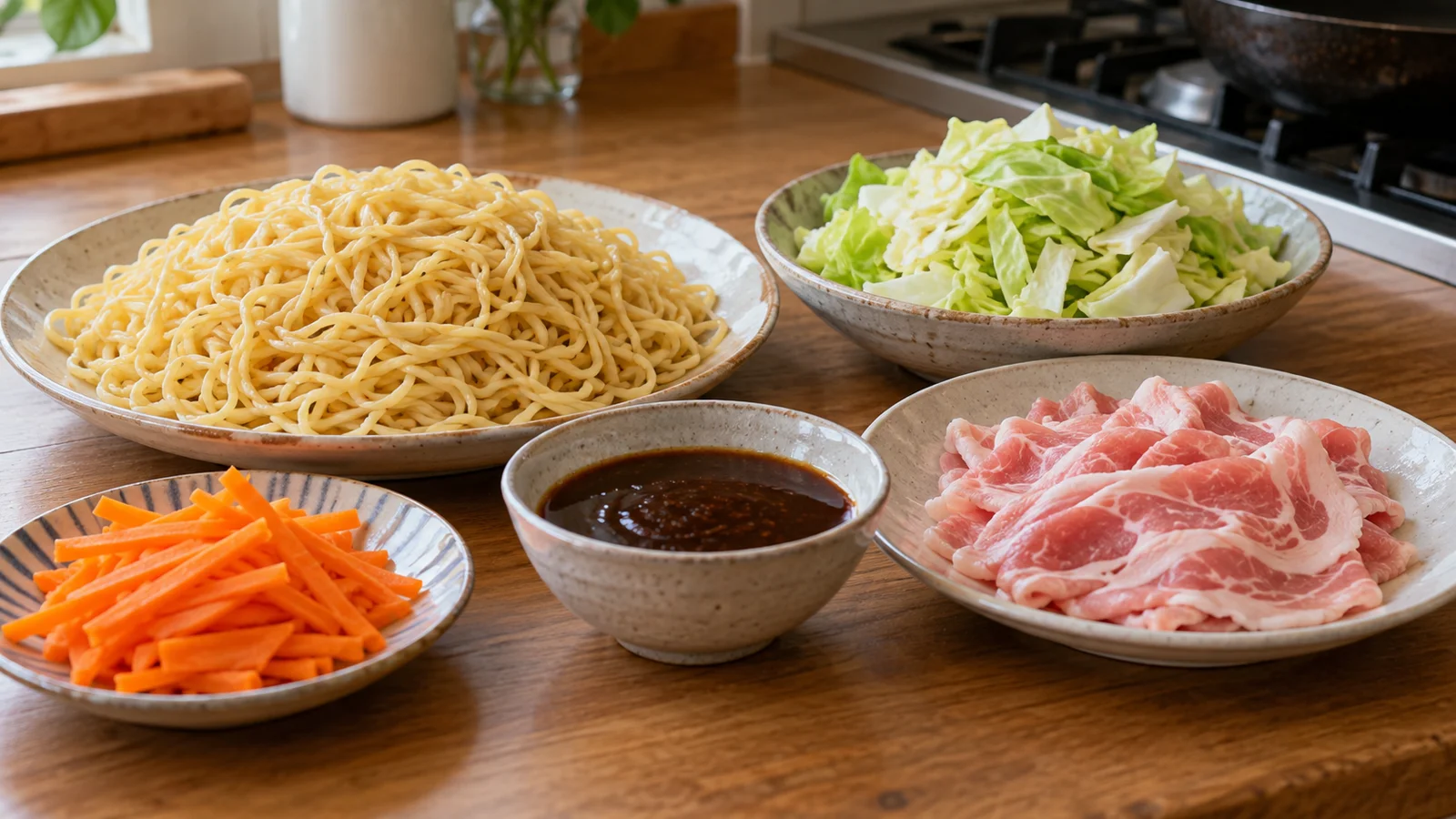
- Noodles: typically wheat-based Chinese-style noodles; thickness and preparation vary by product.
- Meat and vegetables: pork and cabbage are common, with carrot or onion also possible. Meat-free and seafood versions exist; check the menu.
- Sauce: sweet-savory Worcestershire-style sauce is one option; some versions use salt. Ingredients vary.
- Toppings: red pickled ginger, green seaweed powder called aonori, katsuobushi or egg may be added.
If you have a wheat allergy, check sauce as well as noodles. Sauce may contain soy, wheat, fruit or fish, and katsuobushi is made from fish. Verify the specific product or restaurant.
How does it differ from buckwheat soba?
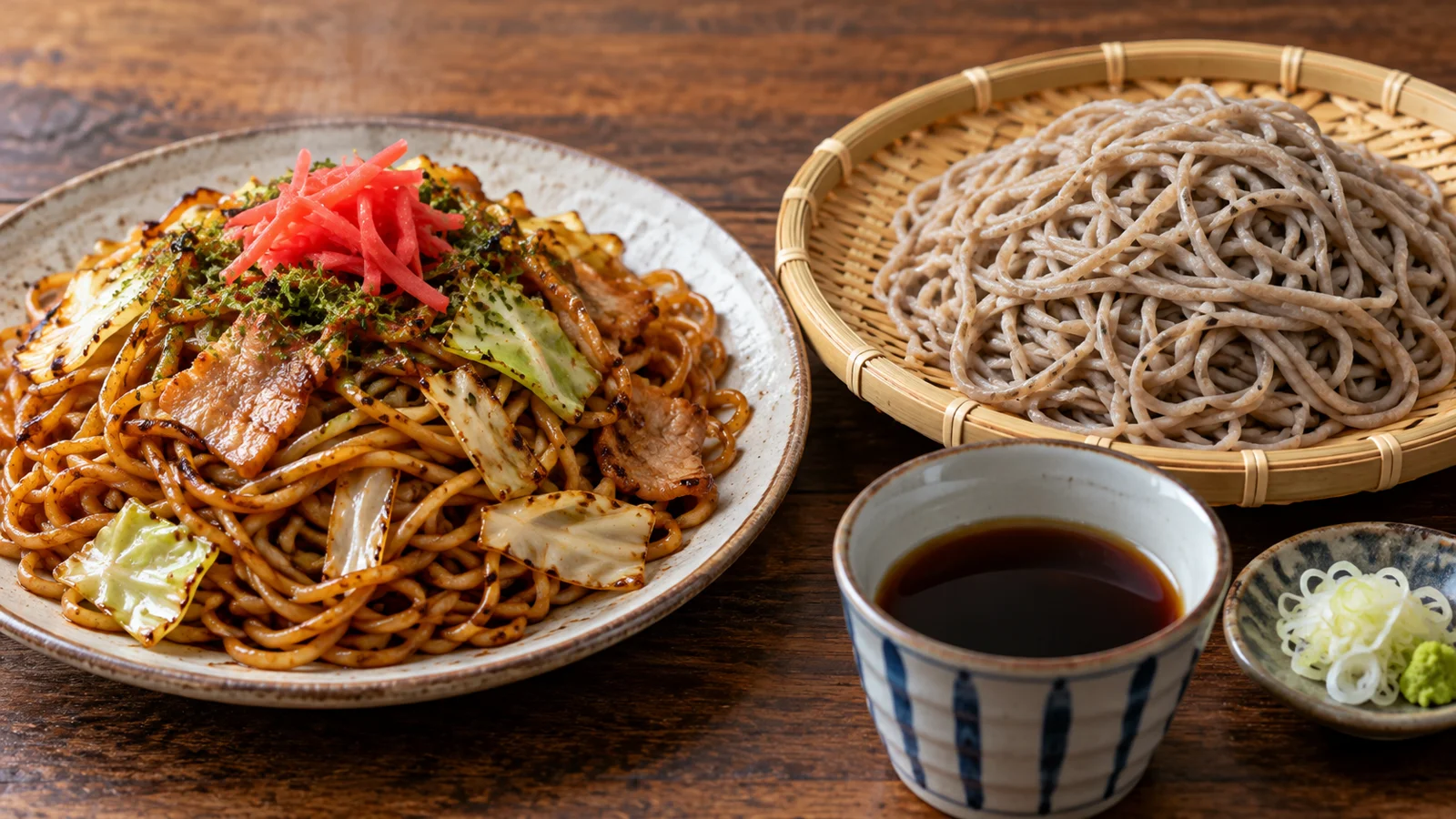
Ordinary yakisoba is stir-fried wheat noodles. Japanese buckwheat soba is made primarily from buckwheat flour, boiled and often served chilled or hot. Buckwheat soba can also contain wheat, so names alone do not establish allergens.
Check the ingredients and preparation despite the similar names. See our guide to Japanese buckwheat soba for its ingredients and serving styles.
How do regional styles and seasonings vary?
Sauce yakisoba uses a brown sauce; shio yakisoba is seasoned with salt. Regional dishes such as Yokote yakisoba may have an egg on top, but toppings are not identical at every shop. Noodle thickness, ingredients and sauce vary.
How should you choose at a restaurant or festival?
- Check meat and noodles. Ask about pork, seafood or vegetables and wheat in the noodles.
- Choose seasoning and toppings. Check sauce or salt styles and whether ginger or katsuobushi is included.
- Explain allergies and dietary needs. Ask about wheat, soy, egg, fish or seafood and shared griddles or utensils.
- Store takeaway safely. Follow the seller's time and temperature directions and do not leave cooked food at room temperature for long.
What should you consider when making it at home?
Read the noodle package directions and cut cabbage, carrot and your chosen meat. Cook meat and vegetables in a pan, add the noodles and loosen and stir-fry according to the package. Add sauce gradually, and a little water if too dry. Cook meat thoroughly for its type and thickness.
Wash utensils that touched raw meat and keep them separate from those for finished food. Divide leftovers into shallow containers, cool promptly and refrigerate, then reheat thoroughly. Follow local food-safety guidance on time and temperature; appearance or smell alone cannot establish safety.