Japanese Food / What Is Shabu-Shabu? Ingredients, Sauces and Safe Eating
Shabu-shabu is a Japanese hot pot in which thinly sliced meat and vegetables are cooked in hot broth and dipped in sauce. Ponzu and sesame sauce are common accompaniments, and pork or other ingredients can be used instead of beef. Cook meat adequately for its type and keep raw-meat utensils separate from eating utensils.
What is shabu-shabu?
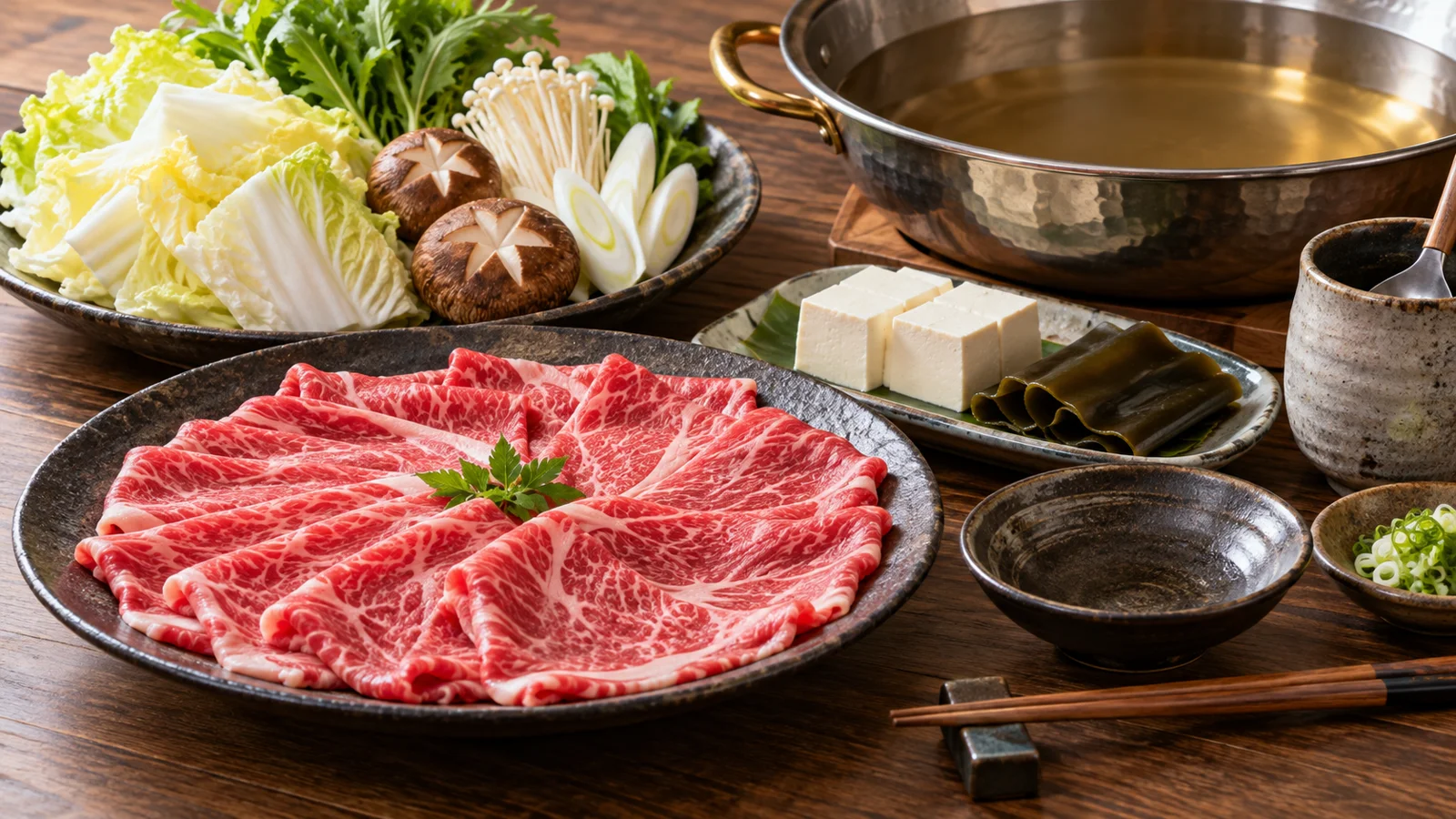
At the table, diners heat broth in a pot, cook thin slices of meat and dip them individually in sauce. Cabbage, mushrooms and tofu can also be added; broth and ingredients differ between restaurants and homes. The name is commonly associated with the swishing motion of the meat in broth.
The Japanese Ministry of Agriculture's guide to shabu-shabu and sukiyaki describes thin meat cooked in broth and served with ponzu or sesame sauce. Check the specific meat and sauce ingredients when ordering.
What ingredients and broth are used?
- Meat: thin beef or pork is common. Cuts, fat content and available meats vary by menu.
- Vegetables and mushrooms: napa cabbage, green onion, edible chrysanthemum, shiitake and enoki are possible choices.
- Tofu and noodles: tofu and mushrooms may be added; udon or rice is sometimes served near the end. Ask whether it is included or costs extra.
- Broth: water or a clear kelp stock can be used, but stocks and seasonings vary.
Broth may contain bonito or meat ingredients. If you are vegetarian or avoid certain ingredients, check the broth as well as the vegetables.
How do ponzu and sesame sauce differ?
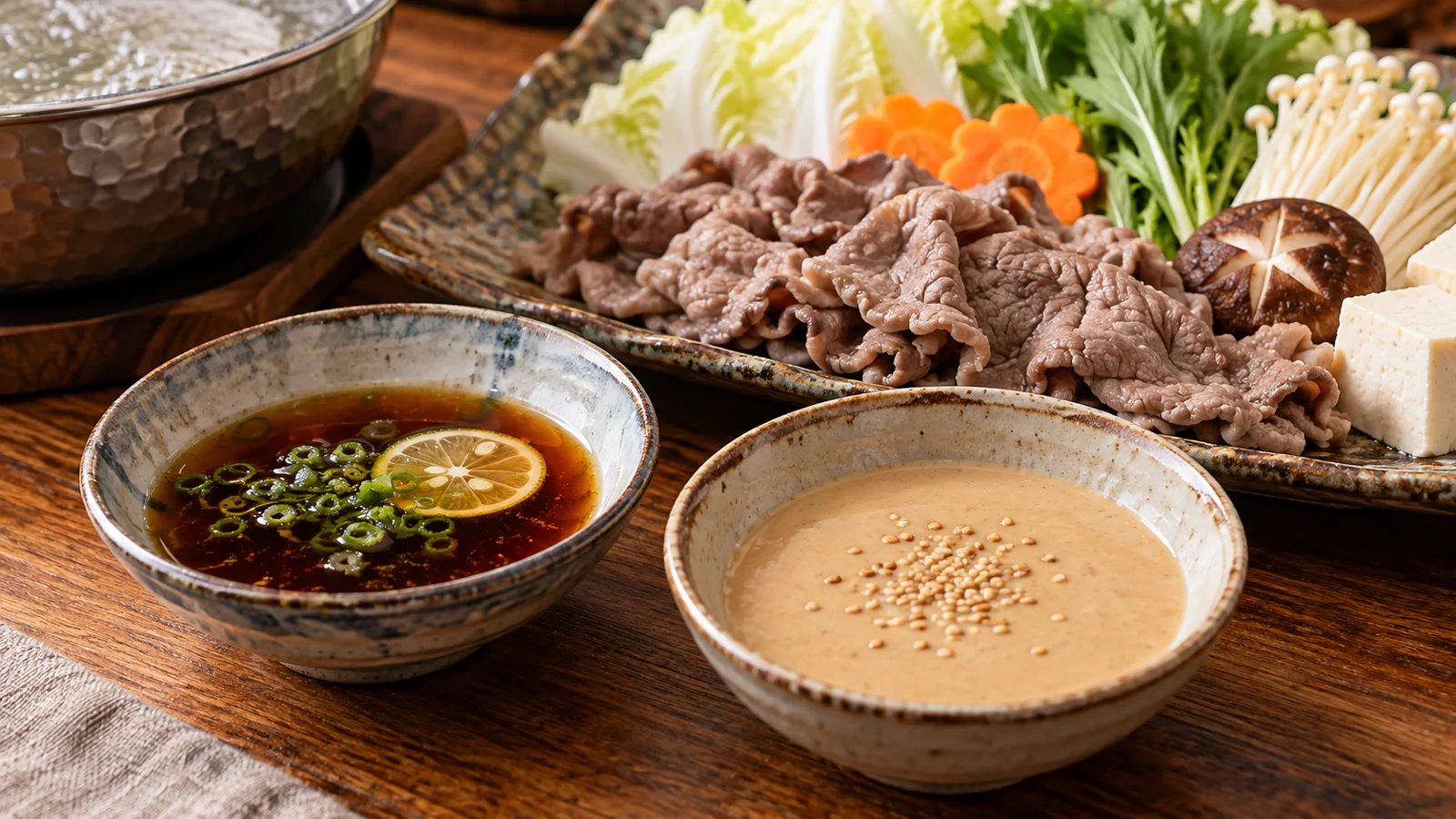
Ponzu has a citrus tang and many versions include soy sauce. It adds acidity to meat and vegetables, though saltiness and tartness vary. Sesame sauce uses ground or processed sesame and is generally richer and thicker.
Ponzu may contain soy and wheat; sesame sauce may contain sesame, soy, wheat and other ingredients. Check the particular sauce and shared containers if you have an allergy.
How is it different from sukiyaki?
Shabu-shabu generally cooks ingredients in clear broth before each diner dips them in sauce. Sukiyaki often cooks meat and vegetables in a sweet, savory soy seasoning. Neither has one fixed broth or cooking order. Read more in our guide to sukiyaki ingredients and methods.
How do you order and eat it?
- Check meat and portion. Choose beef or pork as appropriate and ask what is included, the cost of extras and any time limit.
- Choose broth and sauces. Ask about stock ingredients and the contents of ponzu and sesame sauce; explain dietary restrictions.
- Handle raw meat safely. Use separate tongs or chopsticks for raw meat and eating, and prevent raw meat juices from touching cooked food.
- Cook meat and vegetables thoroughly. Cook meat to the center according to its type and thickness; a quick swish alone does not establish doneness.
- Check the finishing course. Ask whether udon or rice is included, costs extra or contains relevant allergens.
What should you consider at home?
Wash and cut vegetables and mushrooms, then prepare thin meat, tofu and desired sauces. Heat water or kelp stock, add ingredients that take longer first and avoid adding too much meat at once, which can cool the broth. Once cooked adequately, serve with clean utensils.
The Japanese Ministry of Agriculture's meat-safety guidance recommends cooking meat not intended for raw consumption thoroughly to the center. Do not eat undercooked pork or chicken; cook according to the type, thickness and local guidance. Wash utensils used for raw meat and keep them separate from eating utensils.