Japanese Food / What Is Oyakodon? Chicken and Egg Rice Bowl Guide
Oyakodon is a Japanese rice bowl topped with chicken and onions cooked in seasoned broth, then combined with egg. Its name means “parent-and-child bowl,” referring to chicken and egg together. Some versions have softly set egg, but thoroughly cooking both chicken and egg helps reduce foodborne illness risk.
What is oyakodon?
Oyakodon is a donburi, a Japanese rice bowl with toppings. Chicken and onion are cooked in broth and soy-based seasoning, beaten egg is added, and the mixture is served over rice. “Oyako” means parent and child, referring to the chicken and egg.
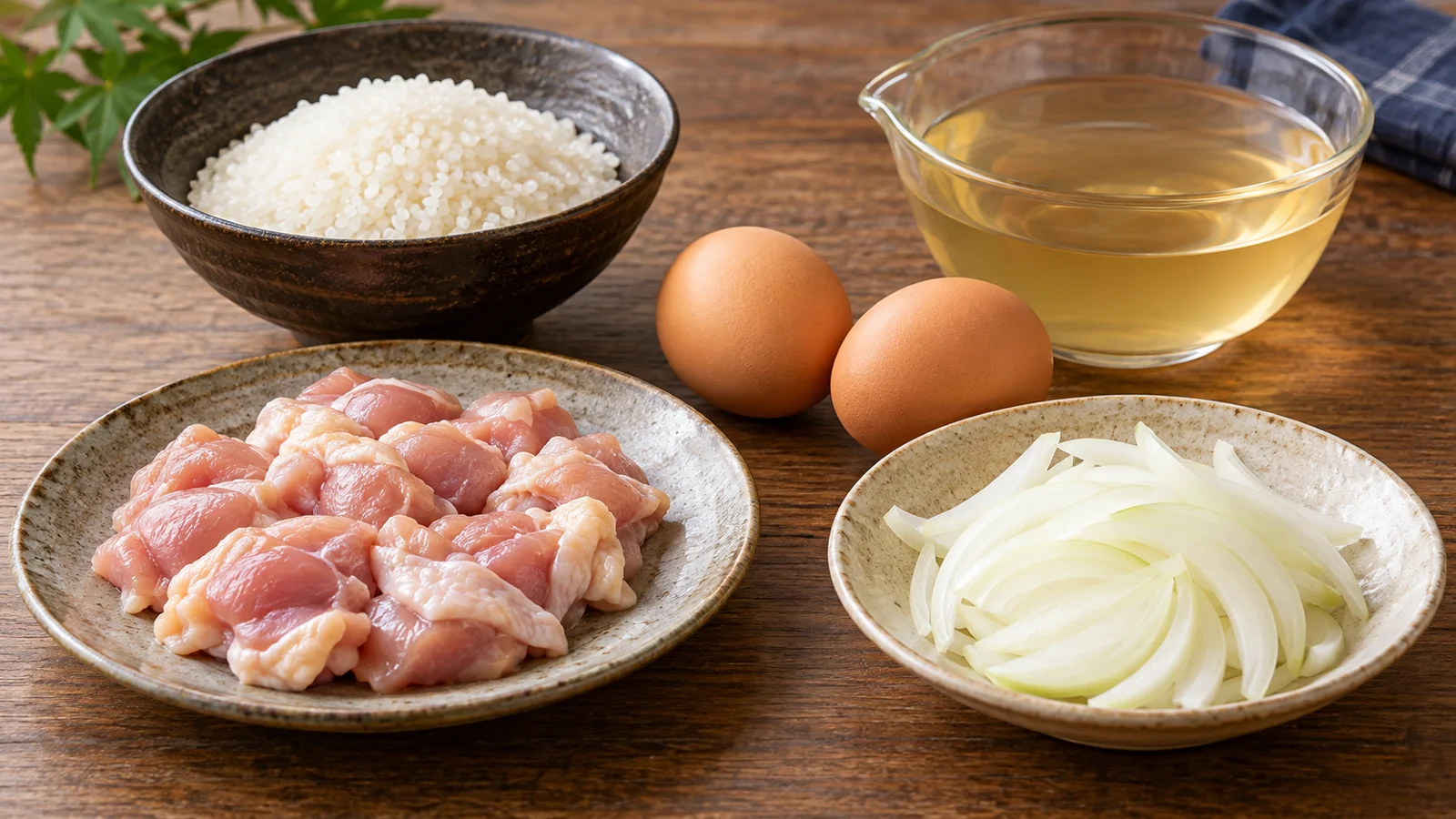
The Japanese Ministry of Agriculture's oyakodon guide gives an example with chicken thigh, onion, egg, stock and rice. Ingredients and seasoning vary by region and household.
What ingredients and seasonings are used?
- Chicken: thigh cut into bite-sized pieces is one option; cuts and sizes vary.
- Egg: beaten and added to the chicken and onion; texture depends on how fully it is cooked.
- Onion and rice: onion adds sweetness when simmered; the topping is served on warm rice.
- Stock and seasoning: dashi stock, soy sauce, sugar and mirin may be used. Herbs such as mitsuba can be added.
Dashi may contain fish and soy sauce may contain wheat and soy. Check the particular menu or product if you have egg, wheat, soy or fish allergies or avoid alcohol.
How does it differ from gyudon and katsudon?
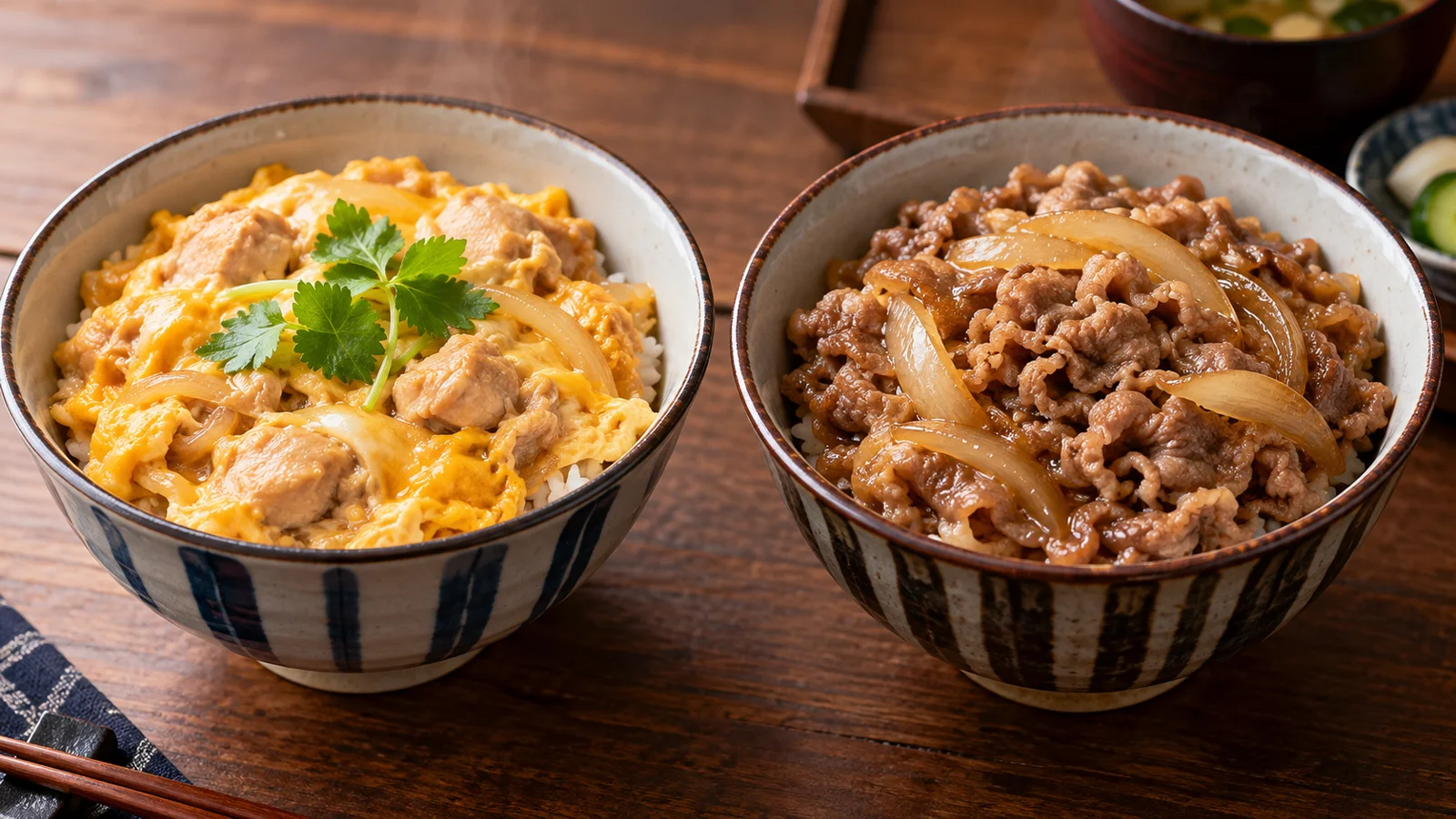
Oyakodon cooks chicken and egg together. Gyudon generally has beef and onion over rice, while katsudon has a fried cutlet, often cooked with egg. Seasoning and toppings vary. Our gyudon guide covers its ingredients and ordering.
What should you check when ordering?
- Portion and set: check rice and chicken quantities, included soup or sides, and extra charges.
- Egg doneness: some restaurants serve softly set egg; request fully cooked egg if needed.
- Allergies and restrictions: ask about egg, wheat and soy in sauce, fish in stock, mirin and shared equipment.
- Takeaway storage: follow the seller's time and temperature directions and do not leave cooked food at room temperature for long.
How can you make it at home?
Prepare rice, cut chicken into bite-sized pieces and slice onion. In a small pan, simmer onion and chicken in stock, soy sauce and a little sugar. Once the chicken is cooked through, pour beaten egg evenly over it and cook the egg thoroughly. Serve on rice with herbs if desired. Adjust seasoning gradually and add a little water or stock if too salty.
Keep the knife and board used for raw chicken separate from other ingredients and finished food, and wash them after use. The Japanese Ministry of Agriculture's meat-safety guidance recommends cooking chicken thoroughly to the center before adding the egg.
What about egg doneness and leftovers?
Undercooked egg can carry foodborne illness risk. Children, pregnant people, older adults and people with weakened immune systems should choose fully cooked egg and request that at restaurants. Guidance for raw eggs varies by region and product.
Divide leftovers into shallow containers, cool promptly and refrigerate, then reheat thoroughly. Follow local food-safety guidance on time and temperature; appearance or smell alone cannot establish safety.