Japanese Food / What Is Gyudon? Beef Bowl Ingredients, Toppings and Ordering
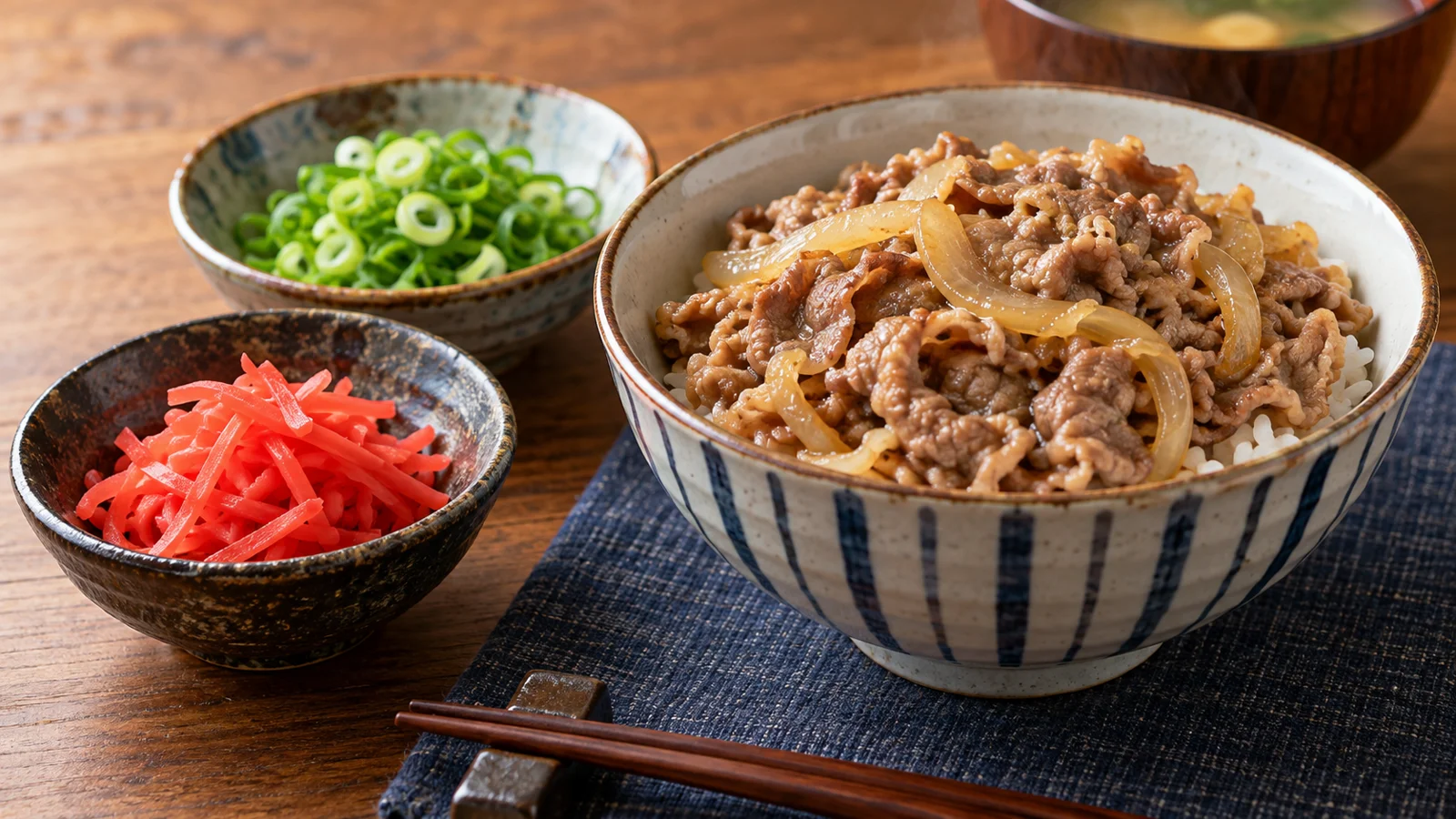
Gyudon is a Japanese rice bowl topped with thinly sliced beef and onion simmered in a sweet and savory soy-based sauce. It is often eaten as a simple meal, with optional pickled ginger, green onion or egg. When ordering, check the rice and meat portions, toppings and sauce ingredients.
What is gyudon?
Gyu means beef and don is short for donburi, a bowl of rice topped with other ingredients. Thin beef and onions are simmered in seasoning and served over warm rice, which absorbs some of the sauce. Recipes and flavors vary between restaurants and homes.
The Japan National Tourism Organization's beef guide describes gyudon as thin beef and onions in sweet soy sauce over rice. Yoshinoya's ingredient information also describes simmering beef and onions in sauce.
What ingredients and flavors are typical?
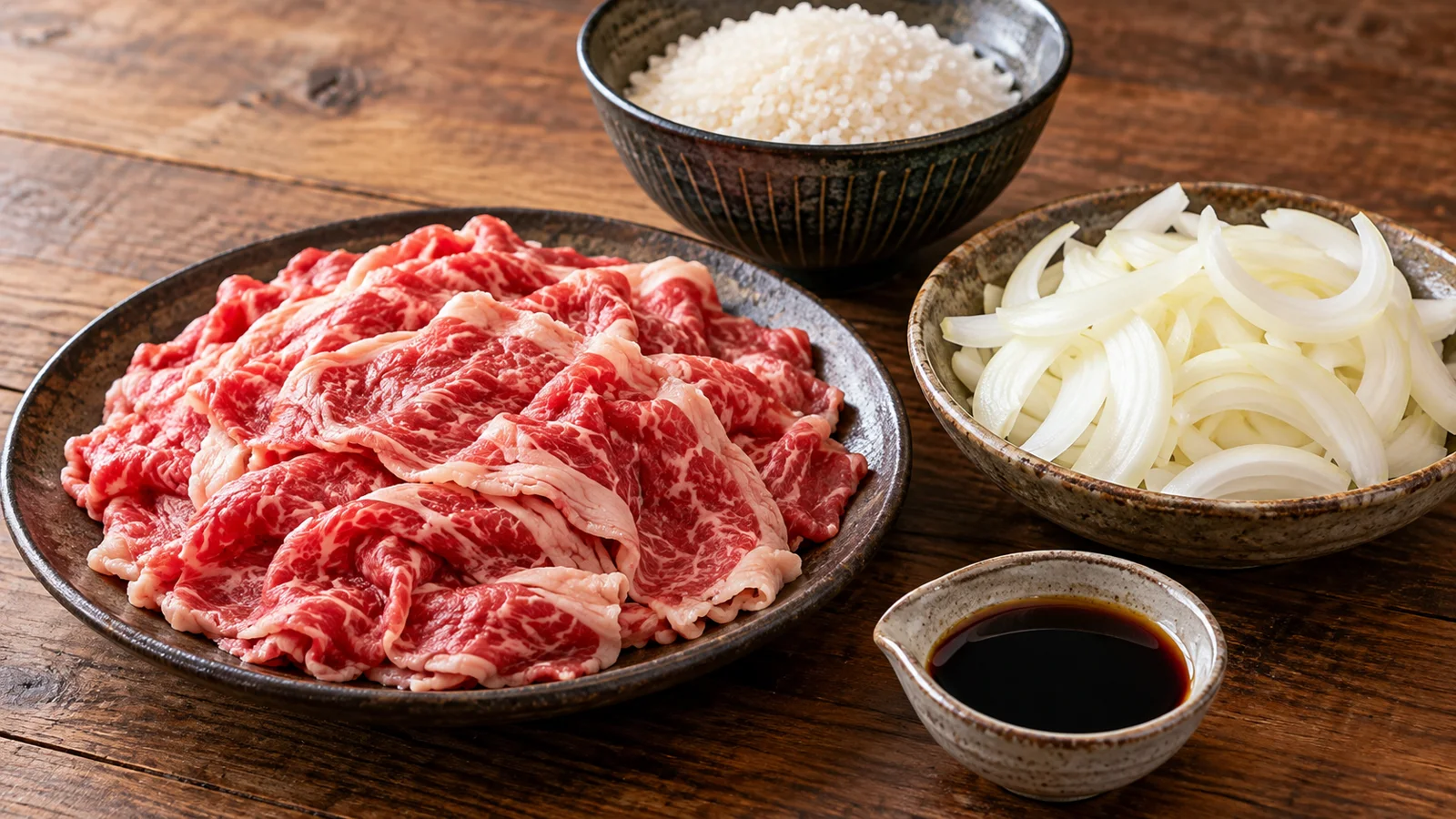
- Beef: thin slices are used; cut and fat content influence flavor and texture.
- Onion: cooked with beef to add sweetness and a soft texture; cooking varies.
- Rice: beef and onion are served over warm rice. The amount of sauce determines how much soaks in.
- Seasoning: soy sauce, sugar, stock and mirin or cooking alcohol may be combined. Saltiness, sweetness and ingredients vary.
Soy seasoning can contain wheat and soy; some products also contain alcohol or other animal ingredients. Check the specific menu if you have allergies or dietary restrictions.
What toppings and accompaniments are available?
Beni shoga is red pickled ginger, adding acidity to the sweet and savory bowl. Green onion and a small amount of shichimi, a spice blend, are other options. Ingredients and service vary by restaurant.
Some menus add egg, but raw eggs can carry foodborne illness risk. Children, pregnant people, older adults and people with weakened immune systems should avoid raw egg and consider thoroughly cooked egg or another option. Standards for raw consumption vary by region and product, and the dish can be eaten without egg.
How does it differ from other Japanese rice bowls?
Gyudon mainly uses beef and onion, while oyakodon centers on chicken and egg. Katsudon is topped with a fried cutlet, often cooked with egg. Seasonings and toppings vary within each dish.
How do you order at a restaurant?
- Choose a portion. Size names differ. Ask whether rice and meat both increase or extra meat is available separately.
- Check toppings and sets. Find out whether ginger, onion, egg or miso soup is included or costs extra.
- Check sauce and allergens. Ask whether sauce quantity can be adjusted and check wheat, soy, egg or shared equipment as relevant.
- Store takeaway safely. Follow the seller's time and temperature instructions and do not leave it at room temperature for long periods.
How can you prepare and store it at home?
Prepare rice and slice an onion. Simmer it in water or stock with soy sauce and a sweetener, add thin beef and cook thoroughly, then taste and serve over rice. Ratios vary; adjust gradually and add a little water or stock if too salty.
Use separate utensils for raw meat and finished food and cook meat adequately for its type and thickness. Divide leftovers into shallow containers, cool promptly and refrigerate, then reheat thoroughly. Follow local food-safety advice on time and temperature; appearance or smell alone cannot establish safety.