Japanese Food / What Is Karaage? Chicken, Coating and Tempura Differences
Karaage is a Japanese method of coating ingredients in flour or starch and deep-frying them; on menus it often means bite-sized fried chicken. Chicken seasoned with ingredients such as soy sauce, ginger and garlic offers a crisp exterior and the flavor of the meat inside. Cuts, seasonings and coatings vary between restaurants.
What is karaage?
Chicken karaage consists of small pieces of chicken that are seasoned, coated with flour or starch and fried. Thigh or breast may be used. Boneless versions are common, but bone-in pieces also exist. Check the cut and size when ordering for the first time. The word does not exclusively mean chicken, so distinguish menus specifying fish or other ingredients.
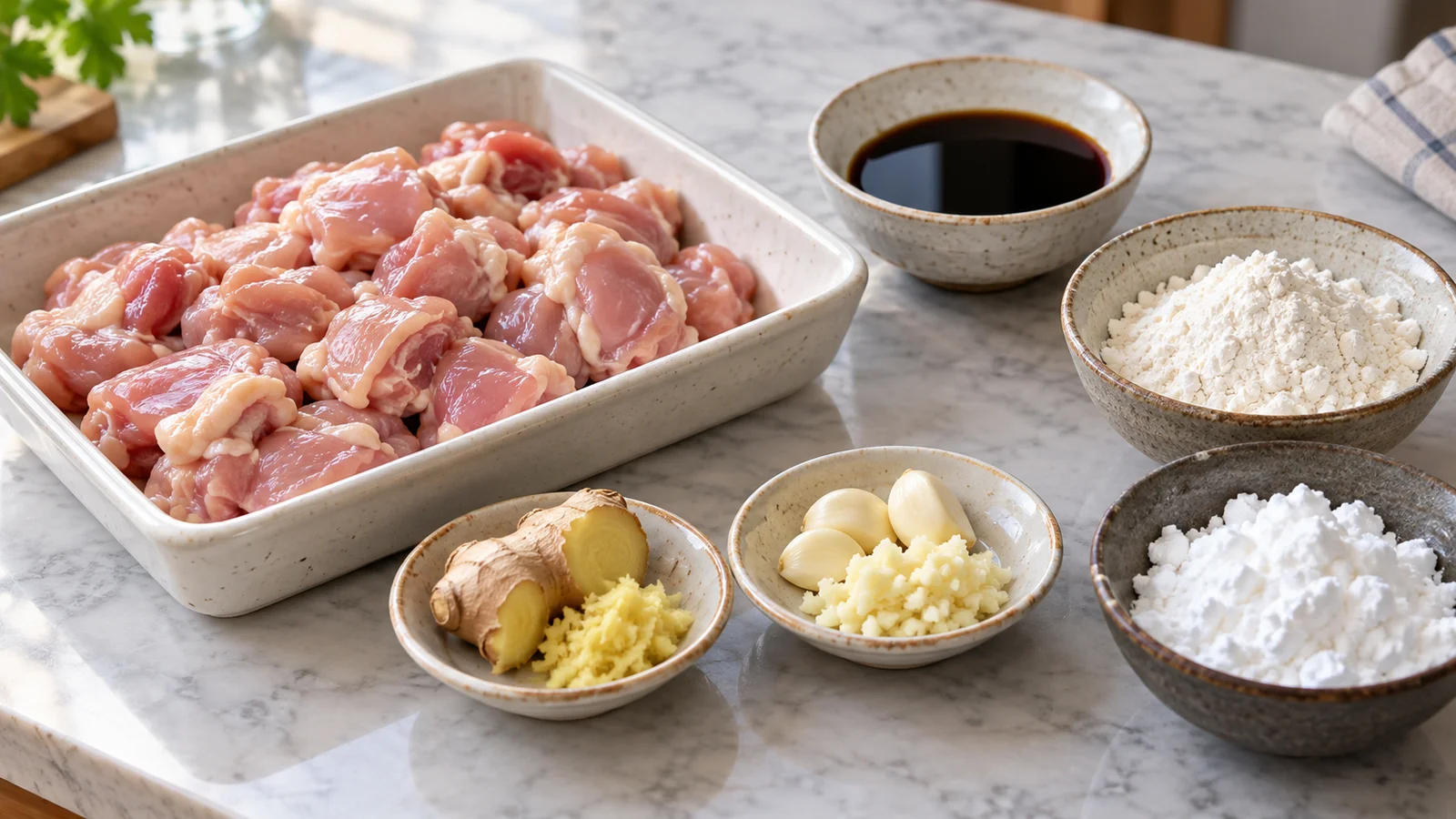
The Japanese agriculture ministry's chicken karaage recipe gives an example using thigh, ginger, garlic, soy sauce, wheat flour and potato starch. This is one recipe, not a universal restaurant standard.
How do ingredients affect the taste?
- Chicken cut: thigh and breast differ in fat and texture. Check whether skin or bones are included.
- Seasoning: soy sauce, ginger and garlic influence saltiness and aroma. Salt-based versions also exist, so color alone does not establish flavor.
- Coating: wheat flour, potato starch or blends may be used, and some recipes contain egg. A mention of starch does not establish that a dish is wheat-free or egg-free.
Crispness also depends on coating thickness, cooking and storage. Choose for the occasion rather than expecting freshly fried chicken and chicken packed in a lunch box to have identical texture.
How does it differ from tempura and toriten?
Karaage typically uses a flour or starch coating, while tempura usually uses a wet batter. Toriten is chicken fried in the tempura style, so two dishes described as Japanese fried chicken are not necessarily the same.
The ministry's Oita toriten guide lists chicken and tempura flour as main ingredients. Seasonings and sauces can overlap; look at the menu name, actual coating and accompaniments together.
How is it served and eaten?
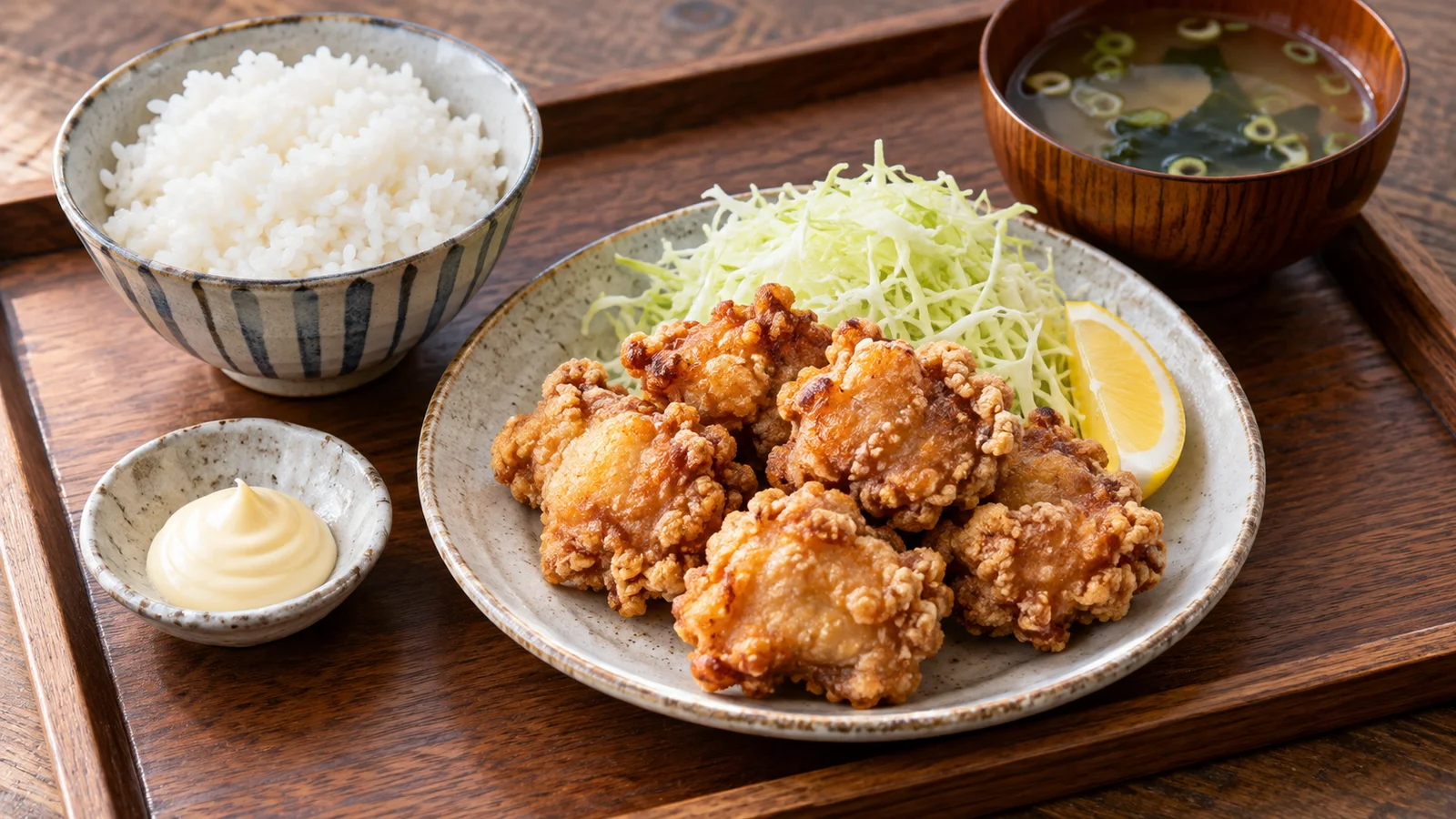
Karaage can be a snack, a set meal with rice and sides, or part of a bento lunch. Lemon or mayonnaise may accompany it, but the chicken is already seasoned: taste a piece before adding more. When sharing, ask others before squeezing lemon over the whole plate.
Hot oil or juices can remain inside, so avoid eating a large piece in one bite. Check for bones and divide pieces if necessary. Establish whether rice and vegetables are included or the chicken is sold separately when choosing a portion.
What should you check when ordering?
- Contents and quantity. Check the number of pieces, whether it is sold by weight, and whether rice and soup are included. Equal piece counts do not guarantee equal sizes.
- Explain allergies specifically. Ask about wheat and egg in the coating, wheat and soy in soy sauce, sauce ingredients and shared fryers or tongs. Omitting a dipping sauce does not remove ingredients already in the marinade.
- Check dietary restrictions. Ask whether sake, mirin or other alcohol is used, and whether the meat and cooking oil meet your requirements. Chicken alone does not establish compliance with a religious dietary standard.
- Follow takeaway instructions. Read storage and reheating directions and avoid lengthy room-temperature storage. Check whether frozen products are fully cooked or require further cooking.
What matters when cooking and storing it at home?
Cut chicken into similar sizes, marinate under refrigeration and coat according to your chosen recipe. Keep boards and tongs for raw chicken separate from plates and utensils for cooked food. Moisture and excess marinade can splatter in hot oil: handle them as directed and avoid overcrowding. Oil temperature and frying time depend on piece size and equipment.
A browned or crisp surface does not guarantee a cooked center. Use a food thermometer in the thickest part. The US FoodSafety.gov safe temperature chart specifies 165°F (74°C) for poultry and reheated leftovers. Also follow product instructions and local food-safety guidance.
Divide leftovers into shallow containers and refrigerate promptly. US FoodSafety.gov refrigeration guidance says to refrigerate perishable food within two hours, or one hour when exposed to temperatures above 90°F (32°C). Reheating does not automatically make food left out too long safe. Restoring crispness and storing or heating food safely are separate concerns.