Japanese Food / What Is Chawanmushi? Savory Egg Custard and How to Eat It
Chawanmushi is a Japanese steamed egg custard made by mixing egg with dashi stock and cooking it in a small bowl with ingredients such as chicken, shrimp and mushrooms. Its texture resembles pudding, but it is usually a savory dish flavored by stock rather than a sweet dessert. Fillings and seasoning vary between restaurants and households.
What is chawanmushi?
The Japanese name 茶碗蒸し refers to steaming in a bowl. Egg diluted with stock sets around various fillings. It may arrive in a small covered cup, but it is food rather than a tea drink.
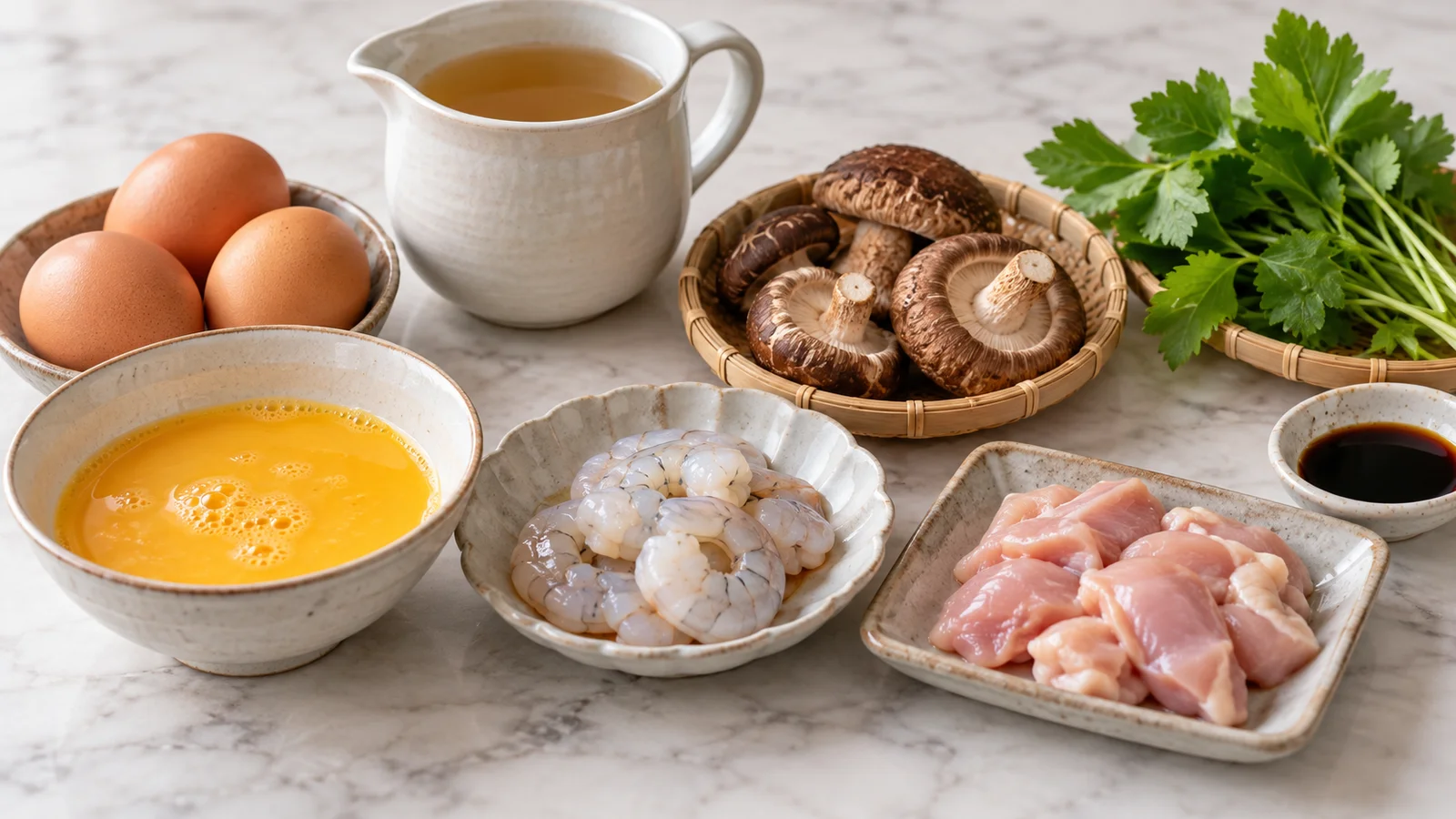
The Japanese agriculture ministry's chawanmushi recipe gives an example using egg, dashi, shiitake, chicken and shrimp. A plain-looking surface can conceal meat or seafood, so check the ingredients.
What ingredients and stock are used?
- Egg and stock: egg forms the gently set base, while stock determines flavor and consistency. Dashi is Japanese stock, made with ingredients such as kelp and bonito flakes; recipes and products differ.
- Fillings: chicken, shrimp, shiitake and kamaboko fish cake are possible ingredients. A bowl does not necessarily contain every type.
- Seasoning and aroma: soy sauce, salt or mirin-style seasonings may be used, with mitsuba as a garnish. Mitsuba is a leafy herb used in Japanese cooking.
Kikkoman's chawanmushi food-culture guide also describes steaming fillings with egg and stock. Visible vegetables do not establish that it is vegetarian: check fish stock and fish-cake ingredients too.
Why is it soft, and why do bubbles form?
Stock mixed into the egg produces a texture different from firm egg dishes. Straining the mixture to remove lumps and skimming surface foam can help create a smooth finish. The ministry's recipe includes both straining and removing bubbles.
Excessively strong heat can create small holes or a rough surface, so regulate heat according to the recipe. Smoothness is a texture characteristic, not proof of safe cooking. Check that the chicken and shrimp inside are thoroughly cooked separately from checking whether the egg has set.
How do you eat it?
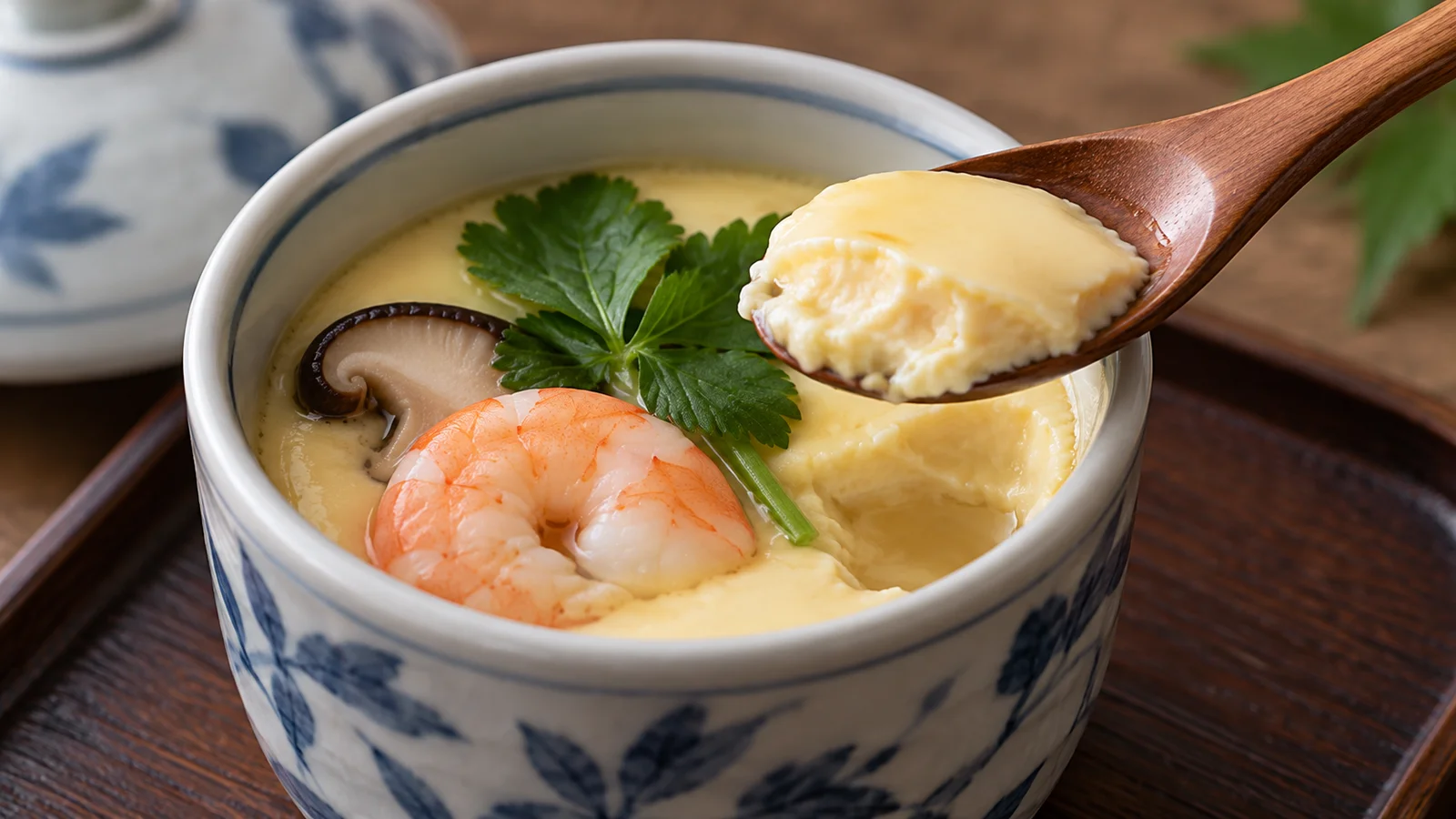
Use a small spoon to scoop custard and fillings together. Vigorous stirring can disrupt the delicate texture; try taking small spoonfuls from one side. Check whether it is a small accompaniment or a separate dish, and the cup size, when judging portions.
The cup, lid and stock inside can be hot. Watch for steam when opening it and begin with a small amount: a cool-looking surface can hide a hot center. Look for fillings at the bottom and avoid swallowing shells or hard parts.
How do you check allergies and dietary restrictions?
- Check egg. Egg is a basic ingredient, so people with an egg allergy should consider another dish.
- Ask about stock and fillings separately. Check crustaceans such as shrimp, fish stock, fish cakes and chicken. Removing visible pieces does not remove the ingredients already present.
- Check seasonings and shared equipment. Ask specifically about wheat and soy in soy sauce, alcohol in seasonings and shared utensils. A soft appearance does not guarantee any dietary standard.
- Read packaged-product instructions. Check whether it is intended to be eaten cold or heated and whether its container is microwave-safe. Do not heat a lid or container without checking.
What matters when making and storing it at home?
Check the chosen recipe's egg-to-stock ratio and vessel size first. Cool the stock, mix with egg and strain, then divide into heatproof bowls with prepared fillings. Remove foam, cover as directed to limit excessive dripping condensation and heat gently. Cooking time varies with vessel size, filling quantity and steamer or pan; elapsed time alone does not establish doneness.
Separate utensils for raw chicken or seafood from those for finished food. When using chicken, the Japanese agriculture ministry's chicken-safety advice recommends heating its center to at least 75°C for at least one minute. Check the fillings with a food thermometer or another appropriate method and follow local food-safety guidance and product instructions.
Do not leave leftovers at room temperature for a long time: divide into clean, shallow containers and refrigerate promptly. The Kinki Regional Agricultural Administration Office's leftover-food guidance recommends small portions for storage and thorough reheating. Reheating may change texture, but do not omit necessary heating to keep it soft. Smell or appearance alone cannot establish safety when storage is uncertain.