Japanese Food / What Is Yakitori? Chicken Skewers, Seasonings and Ordering
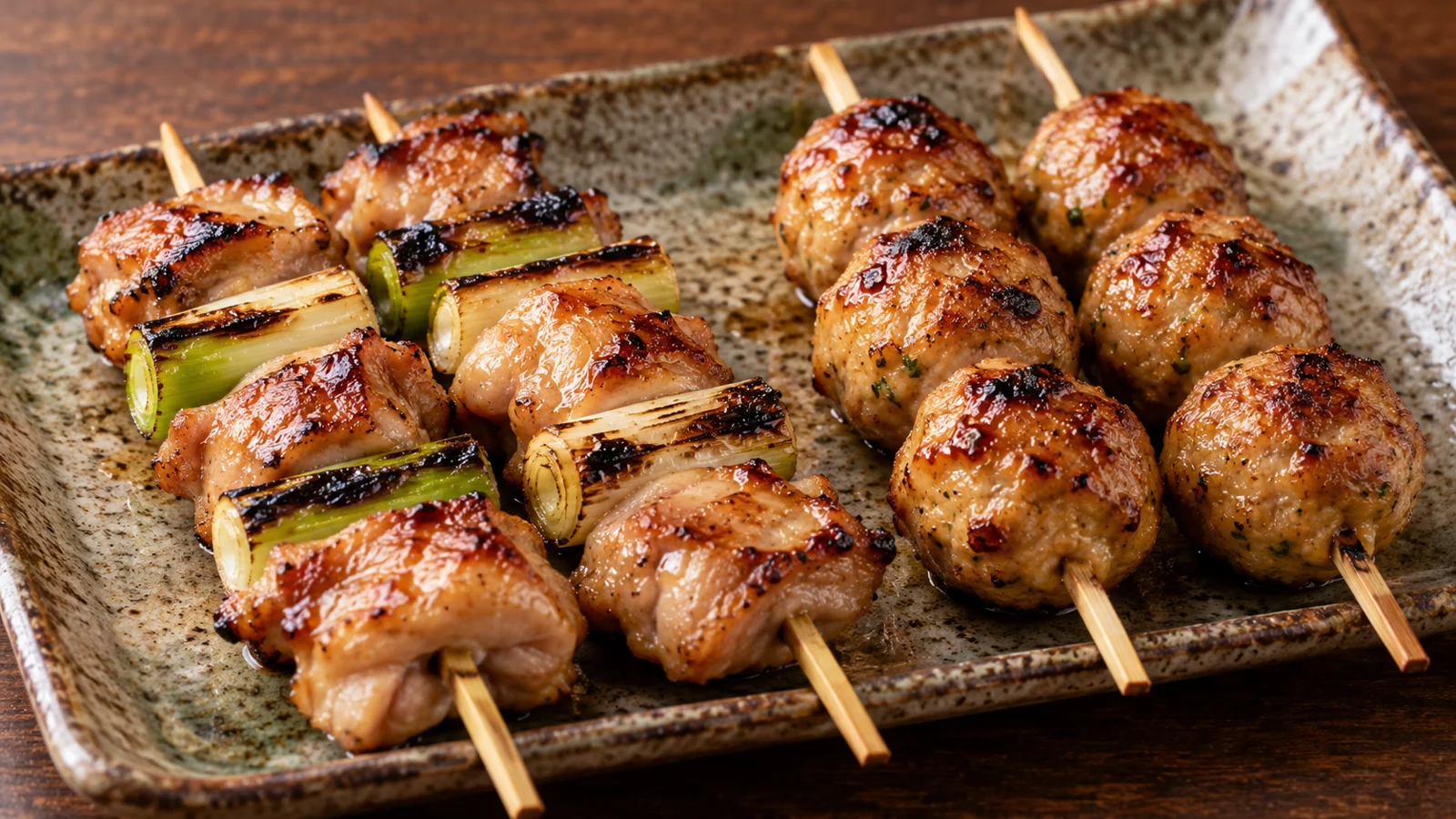
Yakitori is a Japanese dish of chicken and various chicken parts threaded onto skewers and grilled. The two familiar seasonings are shio, or salt, and tare, a savory-sweet sauce; flavor and texture vary with the cut and seasoning. If you are ordering for the first time, consider negima, chicken alternating with green onion, or tsukune, a minced-chicken skewer.
What is yakitori?
Yakitori consists of bite-sized chicken pieces threaded on skewers and grilled. Restaurants may serve thigh and breast alongside skin, hearts and gizzards. Cuts, portion sizes and grilling methods vary, so skewers with the same name can differ in texture and quantity.
Negima combines chicken and green onion, while tsukune is shaped from minced chicken. The Japan National Tourism Organization’s yakitori guide describes different cuts and salt or sauce seasonings. Yakitori restaurants may also sell other meats or vegetables on skewers, so check the menu rather than assuming every skewer contains chicken.
What kinds of skewers and chicken cuts are there?
- Negima: chicken and green onion alternated on the skewer for a combination of meat and onion flavors.
- Momo: chicken thigh, an option for those looking for a relatively tender cut.
- Sasami: chicken tenderloin, often chosen for its mild flavor; some restaurants serve it with wasabi.
- Tsukune: minced chicken shaped into meatballs or an elongated skewer. Additional ingredients and sauces vary.
- Kawa and sunagimo: chicken skin and gizzard, respectively, offering textures different from ordinary cuts of meat.
Some skewers come with a fixed seasoning. If a cut is unfamiliar, start with a small order and ask staff what it contains.
How do shio and tare differ?
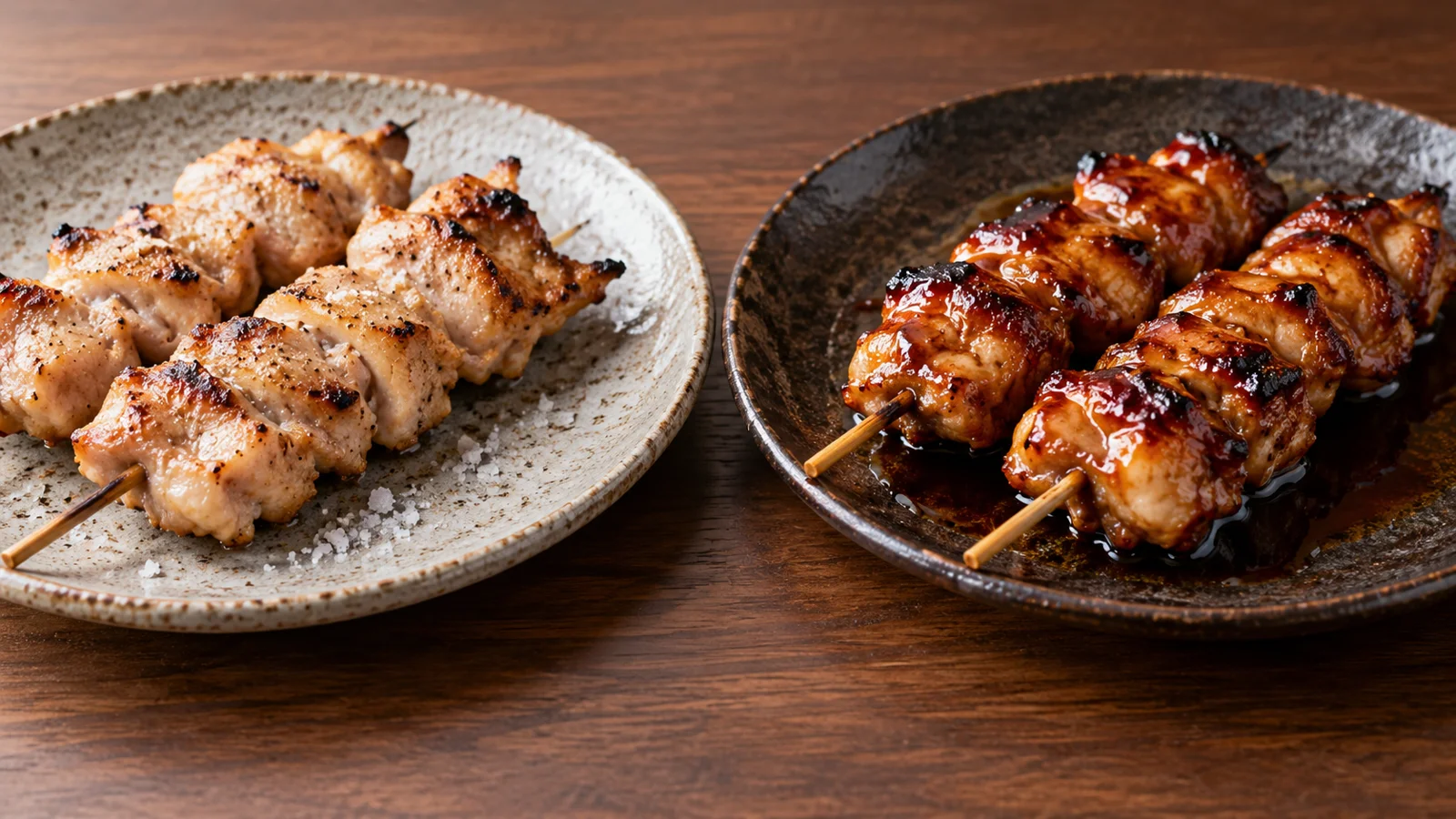
Shio is salt seasoning, allowing the taste of the meat to come through. Tare is usually a soy-based sauce with sweetness and savory depth; brushing it on while grilling gives the surface a gloss. Recipes, saltiness and sweetness differ between restaurants.
If both are available for the same skewer, order one of each to compare. Soy-based sauce may contain wheat or soy, and some recipes use mirin or other alcohol-containing ingredients. Ask about the particular sauce if you have an allergy or dietary restriction.
How do you order and eat it at a restaurant?
- Check the cut and quantity. Find out whether the price is for one skewer or a set, and ask about unfamiliar parts.
- Choose the seasoning. Ask whether shio or tare is available. Negima is an approachable chicken-and-onion combination.
- Explain allergies and dietary needs. Ask about wheat or soy in the sauce, egg or other ingredients in tsukune and shared cooking equipment.
- Eat it thoroughly cooked. Skewers may be hot. If chicken or minced meat appears undercooked, ask staff to cook it further.
What matters when making yakitori at home?
Cut chicken and green onion into similar-sized pieces, thread them onto skewers and grill with salt or a prepared sauce. Evenly sized meat helps it cook evenly. Adjust the heat because sauce can burn, and do not brush cooked food with sauce that has touched raw meat.
The Japanese Ministry of Agriculture’s chicken food-safety guidance recommends cooking chicken thoroughly to the center and handling equipment hygienically. Wash hands, knives, boards and tongs after contact with raw meat, and use separate utensils for cooked food. Surface color alone does not establish that the center is safely cooked.
What should people with dietary restrictions check?
Chicken skewers are not vegetarian. Even vegetable skewers may be prepared with chicken fat or animal-based sauce, or on the same grill. Explain your dietary requirements and any concern about cross-contact.
If you have a wheat or soy allergy, check marinades as well as tare. Tsukune can contain egg or wheat, and its meat and seasonings vary by restaurant. If the information is incomplete, ask staff about the ingredients and preparation of the specific skewer.