Korean Food / What Is Doenjang-Jjigae? Ingredients, Flavor and How to Eat It
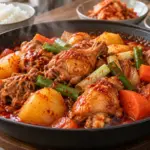
Doenjang-jjigae is a Korean stew made by simmering tofu and vegetables, sometimes with meat or seafood, in broth seasoned with doenjang, a fermented soybean paste. Its main flavors are earthy, savory and salty, and it is usually eaten with rice. The paste, stock and amount of chili can make two bowls taste quite different.
How doenjang gives the broth its flavor
Doenjang is made by fermenting and aging soybeans. In a traditional method, fermented soybean blocks called meju are aged in brine; the liquid is separated as soy sauce, and the remaining solids become paste. Other methods do not separate the soy sauce. The Encyclopedia of Korean Culture entry on doenjang (in Korean) distinguishes these methods. Doenjang therefore does not have one fixed color, consistency or aroma.
The brown broth combines the paste's saltiness and fermented aroma with the flavors of the other ingredients. Paste with visible soybean pieces can give it a slightly grainy texture, while finely dispersed paste makes a smoother stew. Cloudy broth does not mean it is undercooked, and a darker color does not necessarily mean a hotter or saltier flavor.
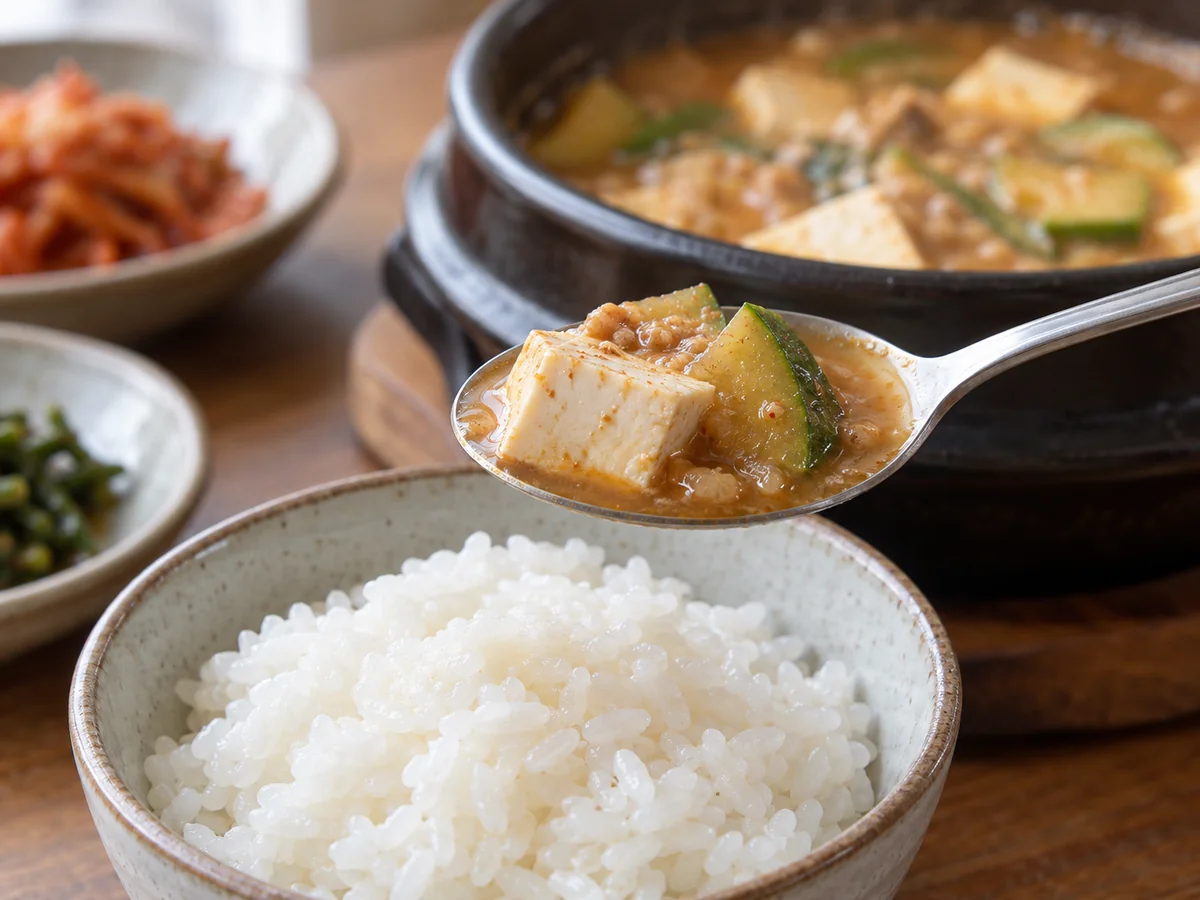
On a first taste, try a spoonful of broth and a piece of tofu separately. The broth shows the aroma and seasoning; the tofu reveals how much broth it has absorbed and provides a softer texture. If the fermented aroma is unfamiliar, try it with rice before adding seasoning.
What tofu, vegetables, meat and seafood contribute
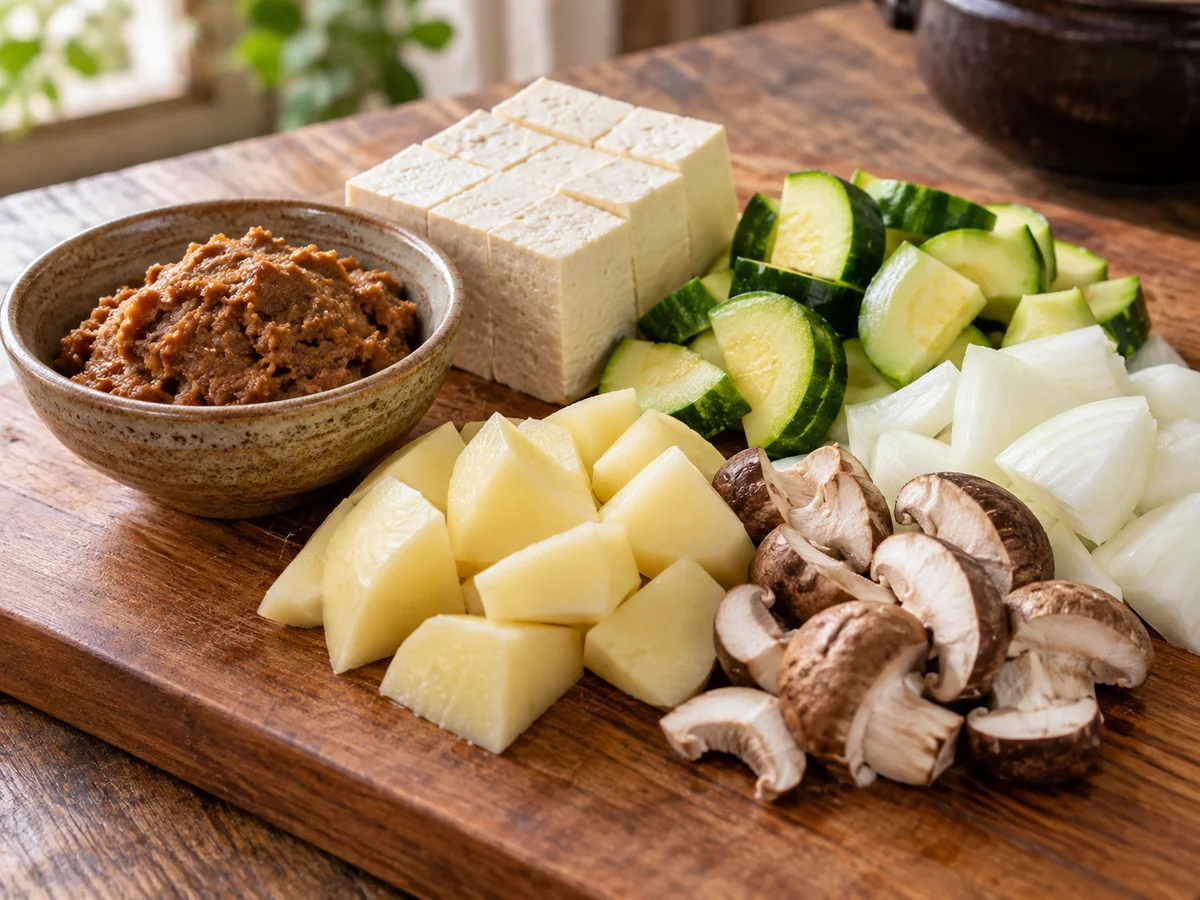
Common ingredients include tofu, Korean zucchini, onion, potato, mushrooms, green onion and chili. A bowl does not need to contain all of them. Tofu provides soft pieces among the vegetables; zucchini and onion become sweeter as they cook, balancing the salty paste. Potato adds a fluffy texture, and different mushrooms change the aroma and bite.
Some versions contain beef, such as the thinly sliced fatty beef used in chadol doenjang-jjigae at barbecue restaurants. Others use clams or other seafood. Meat adds richness from its fat, while shellfish contributes a seafood aroma. The Korean Food Promotion Institute's introduction (in Korean) also describes a dish bringing together the paste with ingredients such as meat, vegetables, tofu and mushrooms.
A bowl with no visible meat may still use anchovy or meat stock. If you are vegetarian or avoid an ingredient, ask both whether the meat can be omitted and what the stock contains. Visible tofu and vegetables do not reveal the ingredients of the whole stew.
Earthy flavor and chili heat are separate questions
Doenjang-jjigae differs from stews built around red chili paste or powder, but it is not always mild. Plenty of hot Cheongyang chili can make a brown broth quite spicy. If you prefer little heat, ask whether the chilies can be reduced and whether the prepared broth is already hot.
The aroma also varies between kitchens. Some bowls foreground the fermented paste, while others taste more strongly of meat or vegetables. Instead of relying on a description such as “rich,” consider the paste's aroma, the presence of meat and the level of heat separately.
If the stew seems salty, alternate rice with the broth and solid ingredients. For an individual pot, you can ask whether extra stock is available. Adding water or seasoning to a shared pot changes everyone else's meal too, so serve yourself a portion or discuss it with the table first.
How it differs from doenjang-guk, cheonggukjang and gangdoenjang
The differences involve more than the amount of soybean paste. Look at the balance of liquid and solids, the fermented ingredient used, and how the dish accompanies rice or vegetables.
| Dish | Typical feature | How to approach it |
|---|---|---|
| Doenjang-jjigae | Tofu and vegetables in doenjang broth | Alternate broth and solid ingredients with rice |
| Doenjang-guk | Often a soup with a larger proportion of liquid | Notice both the broth and the vegetables |
| Cheonggukjang-jjigae | Cheonggukjang, another fermented soybean preparation, supplies the beans and aroma | Consider the strength of the aroma and the bean texture |
| Gangdoenjang | Usually thick, with little liquid | Add small amounts to rice or vegetable wraps |
These boundaries vary by household and restaurant. A cook may mix a little cheonggukjang into doenjang-jjigae, and doenjang-guk can contain plenty of vegetables. Avoid treating the fermented soybean dishes as entirely unrelated or classifying soup and stew by thickness alone.
Where the red broth of kimchi-jjigae centers on the flavor and acidity of fermented kimchi, doenjang-jjigae starts with soybean paste's aroma. When choosing between them, consider whether you want that earthy fermented flavor or kimchi's tang rather than deciding by color.
Eating it with rice and understanding the table setting
The stew often comes with a separate bowl of rice. Taste a little broth, then eat tofu or vegetables with rice, adding a small amount of broth if you like. There is no need to put the entire bowl of rice into the pot. Combine individual spoonfuls if you want the rice to retain its texture.
For a communal pot, serving bowls and a ladle are useful. A small earthenware pot may instead be an individual portion, so check the setting. Both the pot and broth can be very hot; avoid grabbing the rim or swallowing a freshly lifted spoonful in a hurry.
If ordering the stew after barbecue, check whether rice is included. It may be shared during a samgyeopsal meal, but restaurants do not all provide it free or with the same accompaniments. The menu should clarify whether rice and stew are separate extras or part of a set.
Useful questions before your first order
- Which version is it? Check whether it is the basic stew or a version featuring beef, clams or another ingredient.
- Can the heat be adjusted? Ask about the chilies and the heat already in the broth.
- Does it include rice? An individual dish, a set meal and an extra pot after barbecue may have different accompaniments.
- What is in the stock and seasoning? Dietary restrictions may require checking ingredients beyond the visible pieces.
For example, if you enjoy fermented flavors but find chili difficult, ask whether a tofu version with fewer chilies is available. If you want a meatier flavor, look for a beef version. Thinking of doenjang-jjigae as a combination of paste and other ingredients, rather than one fixed taste, makes ordering easier.