Korean Food / What Is Gamjatang? Pork Bones, Broth and How to Eat It
Gamjatang is a Korean soup or stew made by simmering meaty pork backbone pieces with potatoes, vegetables and seasoning. It combines tender meat picked from the bones, the aroma of perilla leaves or seeds, and a rich broth that goes well with rice. Despite the potato in its name, this is primarily a pork-bone dish, rather than a vegetable soup.
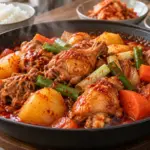
Why the pot contains large bones, potatoes and leafy vegetables
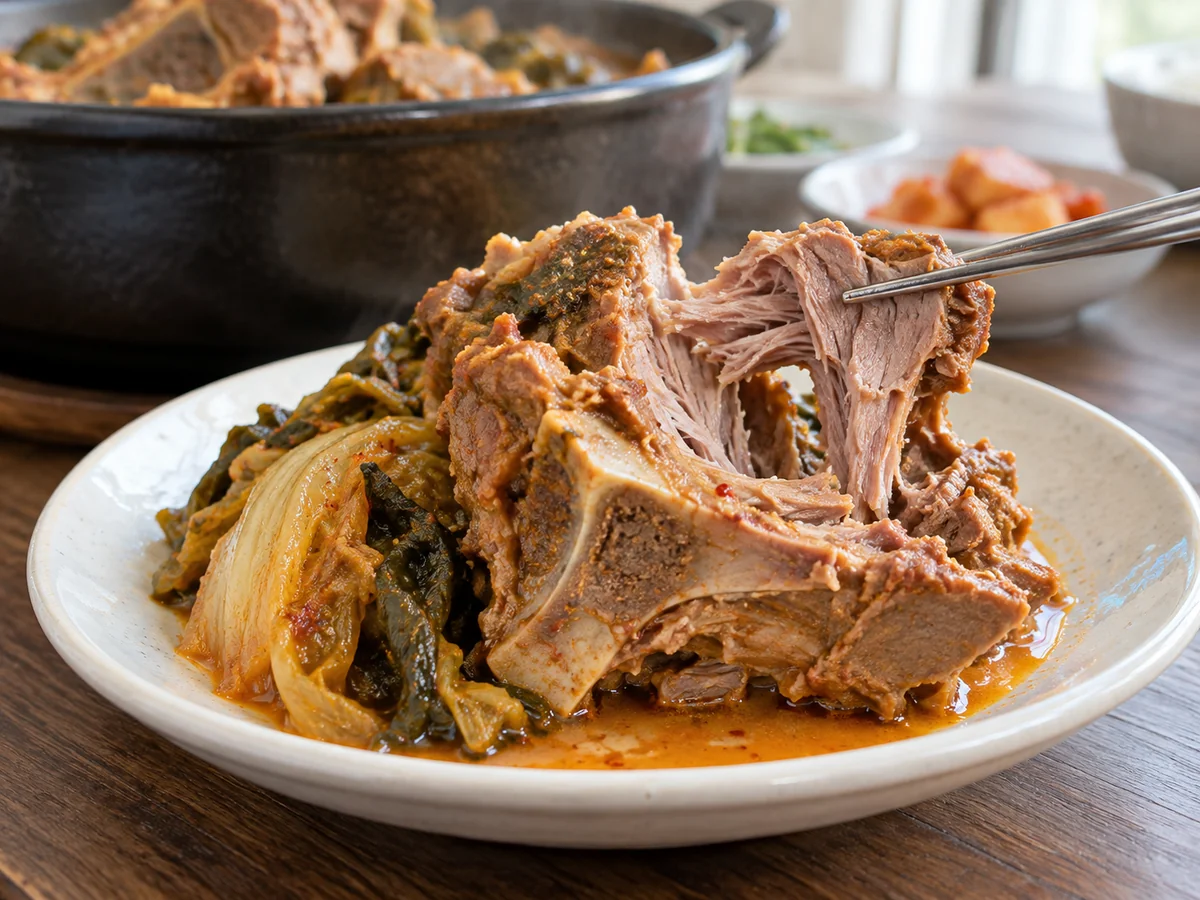
The meat clings to the large bones in the pot. Because you eat it by removing the cooked meat from those bones, the height of the pile or number of pieces does not reliably indicate how much meat you will get. Consider the amount of attached meat, vegetables and optional additions together.
The Korea Tourism Organization's introduction to pork-bone gamjatang describes pork backbone broth with potato, cabbage and ground perilla seeds, and notes variations using dried radish greens or aged kimchi instead of cabbage. Ugeoji generally means outer vegetable leaves, often cabbage; siraegi usually refers to dried radish greens. The greens used change the aroma and texture.
Potatoes absorb the broth and become soft and crumbly. Leafy vegetables carry the broth's flavor between bites of meat, while perilla leaves and seeds contribute leafy aroma and nuttiness respectively. Their proportions vary by kitchen. A version with plenty of aged kimchi can also have a noticeable tang.
Several explanations exist for the name gamjatang. There is no need to insist it must come from a particular pork part supposedly called gamja. For ordering, the actual bones and vegetables matter more than choosing one etymological explanation.
How spicy is the broth, and what does it smell like?
A typical red-to-brown broth combines chili powder, garlic and other seasonings. A rich-looking broth and a high level of heat are not the same thing. Plenty of ground perilla seeds can make it thicker and nuttier; stronger chili seasoning can leave a hotter finish.
If perilla's aroma or texture is unfamiliar, taste a little broth and then try it with meat. If a dipping sauce is provided, taste the meat without it first, then add a little. This helps distinguish the sauce's heat from the stew's own seasoning.
As the pot continues simmering, the liquid reduces and can become saltier. If it tastes stronger later, ask whether the heat can be lowered or stock added before adding any more seasoning. Potatoes and noodle additions also affect the remaining liquid, so the broth need not taste identical throughout the meal.
A practical way to remove the meat from the bones
Moving a large bone around inside the pot can splash broth. Transfer one piece to your own dish, support the bone and remove small pieces of meat with chopsticks. These steps apply to gamjatang that is already cooked; if the restaurant says it needs further cooking at the table, follow that instruction first.
- Use a ladle or tongs to transfer one bone and some vegetables to your dish, and let them cool briefly.
- Remove the larger visible pieces of meat first, turning the bone to reach smaller pieces between its curves.
- Check the separated meat for small bone fragments before eating it with rice or broth.
- Place stripped bones in the empty bowl provided, keeping them separate from the edible pieces.
Even well-cooked meat does not always slide off in one piece. Follow the grain and the shape of the bone instead of pulling hard. For children or anyone who finds deboning difficult, separating the meat before serving can make the meal easier.
Is gamjatang different from ppyeo-haejangguk?
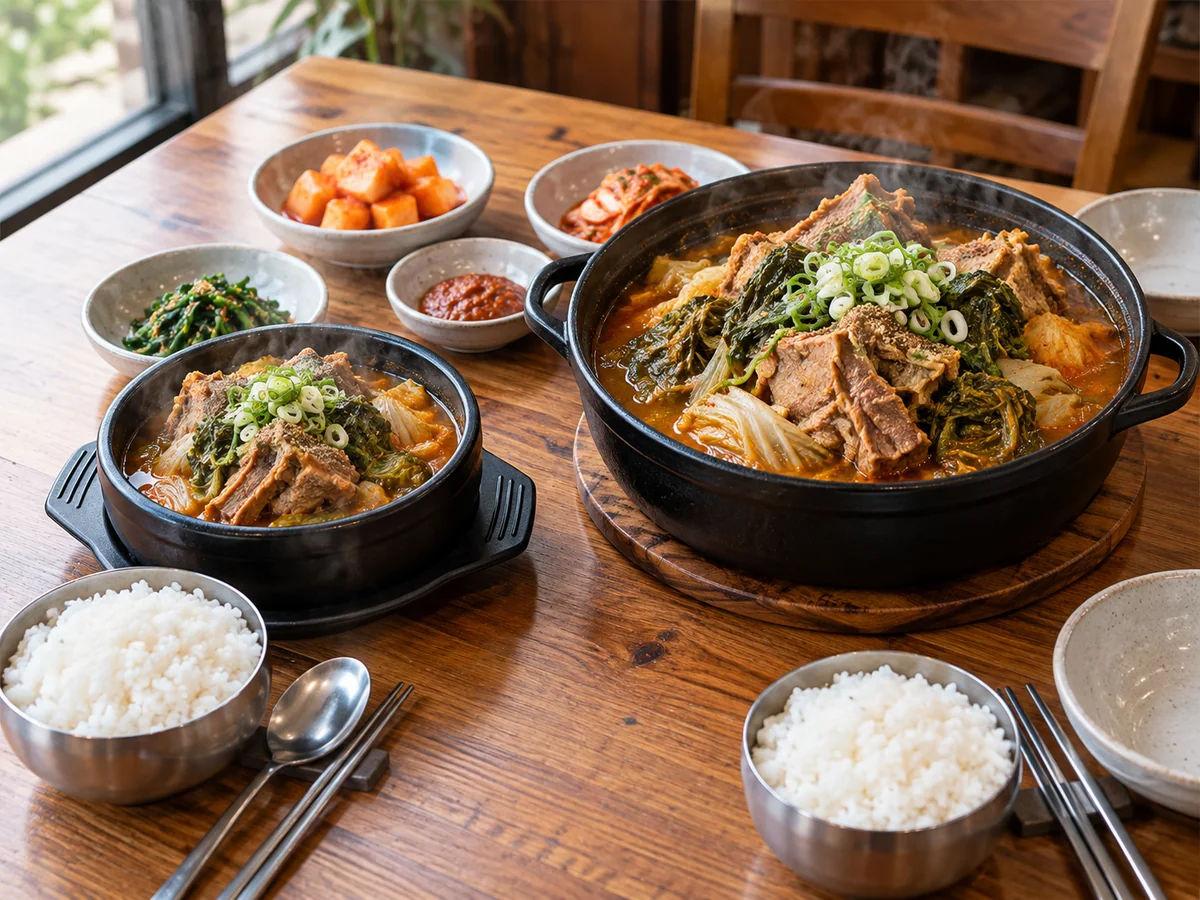
The ingredients and broth often overlap. A useful practical distinction is a communal pot simmered at the table versus an individual earthenware bowl. That does not mean every restaurant uses identical broth, meat and vegetables for both.
| What to check | Gamjatang | Ppyeo-haejangguk |
|---|---|---|
| Serving style | Often a shared pot available in several sizes | Often an individual pot or bowl |
| Meal format | Share meat and greens, sometimes with additions | A convenient meal with rice |
| Menu details | Portion size and whether rice or extras cost more | Whether rice is included and what bones and solids are served |
| What not to assume | A small pot is not necessarily one portion | The name haejang, associated with hangover meals, does not guarantee a remedy |
If dining alone, first look for an individual option such as ppyeo-haejangguk. When sharing gamjatang, do not calculate servings from “small,” “medium” and “large” alone. Explain how much rice or other food you intend to eat and ask about portions: pot sizes and included additions vary.
Another pork-broth meal, dwaeji-gukbap, generally focuses on eating pieces of pork in soup with rice. If removing meat from large bones seems inconvenient, comparing these serving styles can help you choose.
When to order noodles or fried rice
A restaurant may offer ramyeon noodles, glass noodles or hand-torn dough pieces as additions. Types and timing vary, so ask when ordering instead of waiting until all the meat is gone. Noodles added too early can become softer than intended; with too little broth, they may stick to the pot.
Fried rice may be offered as a separate finish using some of the remaining seasoning and broth. It is not available for every pot or menu, and staff may control how much liquid to leave. If you want it, mention it early, clear away bones and inedible parts, and follow the restaurant's instructions.
Assuming that rice, noodles and fried rice are all included can lead to ordering too much. Decide whether you want meat with plain rice or shared noodles followed by fried rice. As with extras and fried rice with dakgalbi, choose additions in the context of the whole meal.
What to check on your first order
- Bones and serving style: Is it an individual bowl or a shared pot, and can one person order it?
- Greens and aroma: Does it contain outer cabbage leaves, dried radish greens or aged kimchi? Are perilla leaves or seeds included?
- Heat: Ask separately about the standard broth's heat and whether it can be adjusted.
- Additional food: Check whether rice, noodles or fried rice are included and when to order them.
If two first-time diners want plenty of meat and rice without noodles, explain that plan when asking which size to choose. If deboning seems difficult, look for a serving format that makes removing meat easier or consider an individual meal. Gamjatang is best chosen with its whole eating experience in mind: slowly sharing bones, meat and vegetables as well as broth.