Korean Food / What Is Dakbokkeumtang? Spicy Chicken, Potatoes and Similar Dishes
Dakbokkeumtang is chicken cut into pieces and simmered with potatoes, onions and other vegetables in spicy seasoned broth. The chicken and potatoes absorb flavor as the liquid reduces, making it a good dish to eat with rice. Despite bokkeum, or stir-frying, in its name, its texture and way of eating differ from stir-fried or grilled dakgalbi.
Chicken and potatoes simmered together
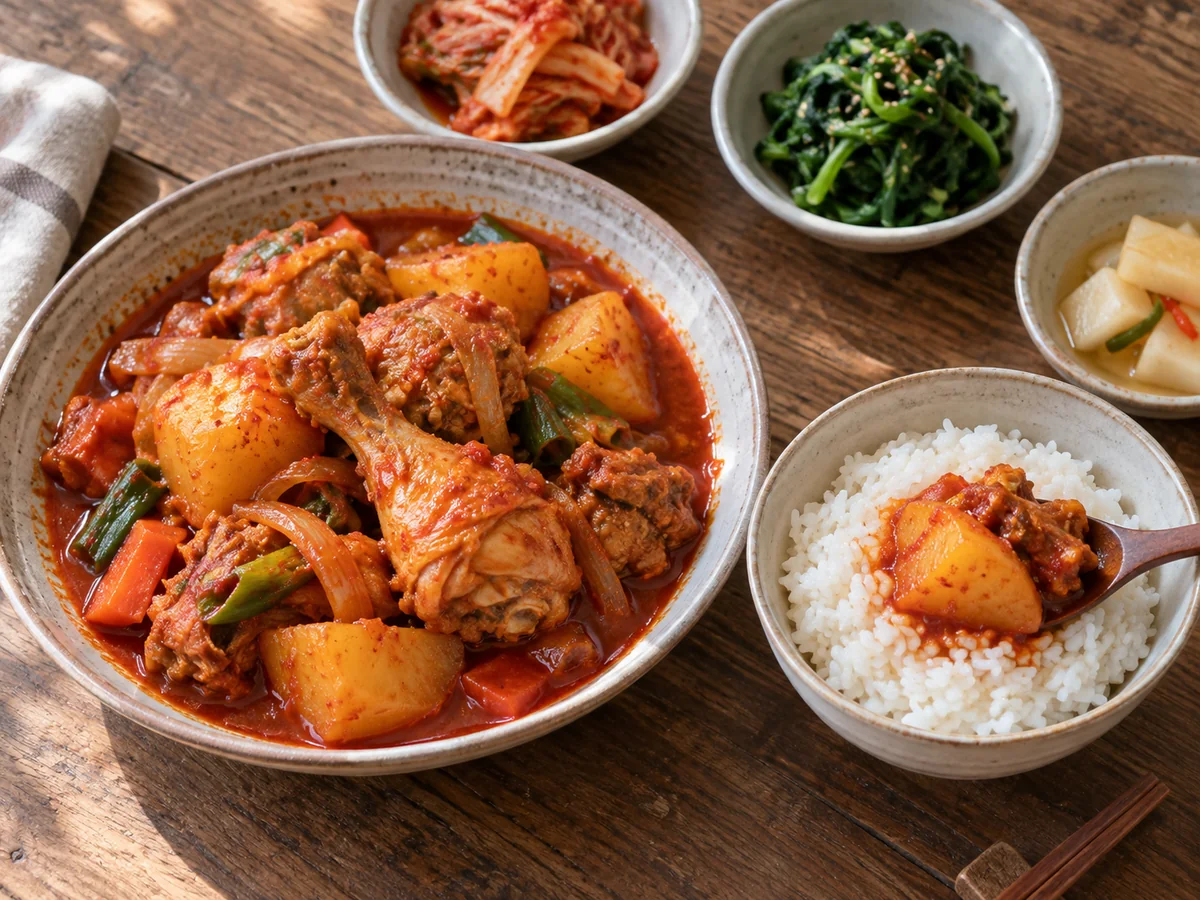
A whole chicken chopped into manageable bone-in pieces is common. Potatoes, onion, green onion and carrots cook with it in red broth. Potato is more than decoration beside the chicken: it absorbs liquid and softens, contributing to the dish's flavor and texture.
The Korea Tourism Organization's introduction also describes simmering seasoned chicken in broth and eating the well-cooked potatoes. Vegetables, remaining liquid and seasoning proportions vary by home and restaurant. More or less broth than a photograph does not necessarily make it a different dish.
Bone-in chicken offers different cuts together. Drumsticks, wings and breast have different textures, so one piece need not define the whole pot. Boneless options reduce the work of removing bones, but their cuts and piece sizes still affect texture.
Spicy seasoning and broth that grows more concentrated
The red color mainly comes from chili powder or chili-paste seasoning, with soy sauce, garlic and sweet ingredients contributing to the base. There is no fixed formula requiring the same amount of gochujang everywhere. Some versions emphasize chili-powder aroma, others a thick, sweet-savory sauce.
The broth gathers flavor from the cooking chicken and vegetables. As water evaporates, seasoning concentrates, and pieces of potato may break down and thicken it. A liquid initially easy to spoon can later become a richer sauce around the meat. Saltiness and consistency therefore change even within one pot.
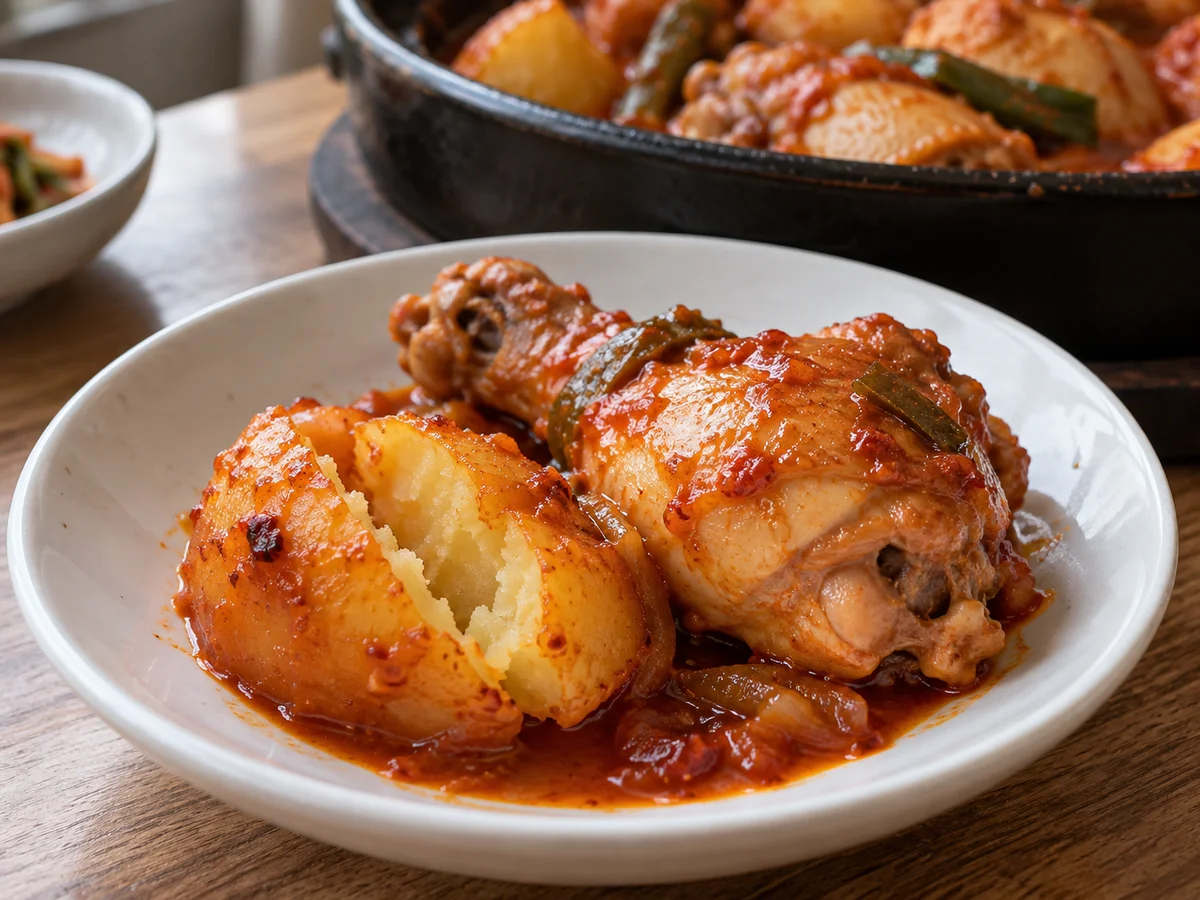
Potatoes let you compare seasoned outsides with mild centers. Break one open on your dish and let the hot interior cool rather than biting straight into it. Alternating chicken and potato helps distinguish meat fibers, fluffy potato and the strength of the seasoning.
How it differs from jjimdak and dakgalbi
All three combine chicken and vegetables, but their methods and seasonings create different impressions. Comparing them helps you decide whether dakbokkeumtang matches the chicken dish you want.
| Dish | Representative style | What to check |
|---|---|---|
| Dakbokkeumtang | Chicken and potatoes simmered in red seasoned broth | Heat, liquid and bone-in or boneless meat |
| Jjimdak | Often soy-seasoned chicken, vegetables and glass noodles | Soy or red version, noodles and hot chilies |
| Dakgalbi | Seasoned chicken and vegetables cooked on a griddle or otherwise grilled | Griddle or charcoal style, bones and accompaniments |
Jjimdak commonly suggests soy sauce and glass noodles, but red-seasoned versions exist. Dakbokkeumtang may also have added glass noodles, so their presence alone does not identify jjimdak. Consider both the seasoning and how the dish is cooked.
Dakgalbi is widely associated with chicken and cabbage cooked on a griddle, but charcoal-grilled versions also exist. Do not expect identical service from every dakgalbi menu. For broth and potatoes with rice, start with dakbokkeumtang; for stir-fried or grilled chicken, consider the appropriate dakgalbi style.
From the main ingredients to rice
First check whether the dish arrives fully cooked or needs more cooking at the table. A finished pot may only need gentle heat to stay warm. For a pot still cooking, the outer sauce color does not establish that chicken is ready; follow the restaurant's instructions and let it cook sufficiently.
- Taste a little broth to check the seasoning and temperature.
- Transfer chicken and potato to your dish. Remove meat from the bones, checking for small fragments.
- Mash a little potato and try it with broth over rice. Adding small amounts lets you adjust the balance.
- If you want noodles or fried rice, ask about availability and timing before the pot is empty.
Mixing broth into rice is different from the restaurant's fried-rice option. The latter may involve separately cooking rice and other ingredients with the remaining seasoning. Not every kitchen offers it, and the amount of liquid or solids to leave varies, so ask early.
Choosing additions and the total amount
A large shared pot is common. A whole chicken, half chicken or small/medium/large label does not precisely define servings. Chicken size, vegetables and whether rice is included vary; tell the restaurant how many people will eat and ask about the contents.
Rice cakes, glass noodles and other noodles absorb seasoned liquid and change the meal. They may reduce or thicken the broth, so follow the restaurant's timing and eat cooked noodles rather than leaving everything over high heat. Consider the whole quantity before ordering rice, noodles and fried rice together.
If there are heat levels, ask what the standard one is like. “Mild” does not necessarily mean no chili. If some diners cannot manage much heat, check before ordering whether the pot can be made less spicy or whether they should choose a separate meal.
Useful questions before ordering
The name and photograph cannot explain the entire meal. Questions directly connected to how you want to eat can make ordering straightforward.
- Is the chicken bone-in or boneless? Which cut is used for boneless meat?
- Can you lower the standard heat?
- Is rice included? Are noodles and fried rice separate?
- Does it arrive cooked, or must we keep cooking it?
If you expect a broth-rich chicken dish, watch how far it reduces. If you enjoy its initial broth, avoid simmering it too long once fully cooked; if you like concentrated seasoning with rice, combine small portions of liquid and solids. Tasting the potatoes and rice as well as chicken reveals how the pot works as a meal.