Korean Food / Agwi Jjim: Spicy Monkfish, Textures and How to Order
Agwi jjim is monkfish cooked with soybean sprouts, minari (water dropwort) and a spicy seasoning, with the fish and vegetables eaten together. Firm white flesh, soft skin and crisp sprouts provide contrasting textures. Menus may spell it agu jjim. Although jjim can suggest steaming, picture a platter coated in a thick red sauce rather than a plainly steamed fish.
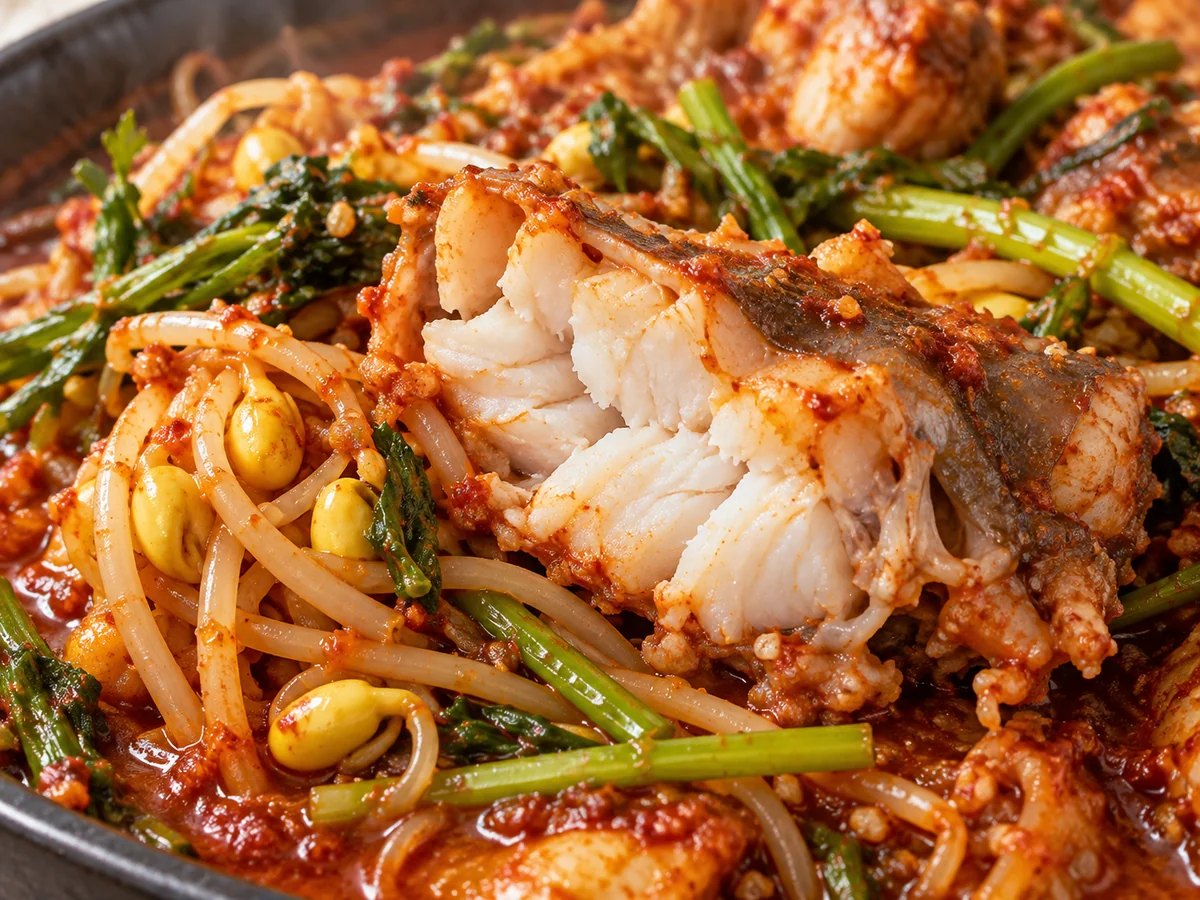
The flesh and skin have different textures
The Korea Tourism Organization’s guide to agwi jjim describes monkfish pieces cooked with soybean sprouts, minari, chili powder, minced garlic and other seasonings. The platter is not necessarily a collection of uniform white chunks: skin-on and bone-in pieces may be included too.
The flesh has coarse flakes and a springy bite unlike fish that crumbles lightly. Skin-on parts can feel smooth and soft, and some pieces contain bones. On your first try, transfer a large piece to your own plate and identify the flesh, skin and bones before eating it.
You do not have to enjoy every part. If the skin is unfamiliar, try the flesh first and check whether there is as much fish as you want. Some places offer boneless agwi jjim, but its preparation and portion size need not match the standard dish. “Boneless” should not be treated as a guarantee that no small bones remain.
Fresh versus dried monkfish can also give different textures. The Encyclopedia of Korean Culture’s entry on jjim introduces agwi jjim as a local dish of Masan, but a regional name does not mean every restaurant uses identical ingredients and methods. Check the restaurant’s description if you expect a particular texture.
The sprouts and minari do more than fill the plate
Soybean sprout stems add moisture and crunch; minari contributes aroma and the texture of its stems. Including vegetables lets you vary each bite rather than eating only fish. A mound dominated visually by sprouts does not mean those vegetables are unnecessary.
Their importance and the adequacy of the fish portion are separate questions, however. A platter’s height and diameter do not reveal how much fish it contains. When sharing, check the recommended party size, the composition of the fish pieces, added ingredients and whether rice is included.
Some versions include mideodeok, a small sea squirt, or other seafood. These add aromas and textures different from fish, but are not mandatory in every agwi jjim. If you have seafood allergies or ingredients to avoid, ask about the seasoning, stock and secondary ingredients rather than simply removing visible large pieces.
The spicy sauce coats both fish and vegetables. Sprouts are not always a milder option; they may carry plenty of sauce. If heat is a concern, ask which levels can be adjusted before ordering, and start by tasting a small portion.
How does it differ from seafood jjim, monkfish soup and suyuk?
Haemul jjim, a mixed seafood dish with red sauce and sprouts, can look similar but has different ingredients. Soup and suyuk made with the same monkfish instead give broth or accompanying sauces a different role. Decide first whether you want spicy sauce, fish flesh or broth.
| Dish | Main focus | What to check when ordering |
|---|---|---|
| Agwi jjim | Seasoning coating monkfish and vegetables | Proportions of flesh, skin and bones, and heat level |
| Haemul jjim | Several kinds of seafood with vegetables | Whether monkfish is included and which shrimp, squid or shellfish are used |
| Agwi tang | Broth cooked with monkfish | Clear or spicy broth, and the quantities of broth and solids |
| Agwi suyuk | Cooked monkfish eaten with accompanying seasonings | Cuts, serving format, sauces and vegetables |
Names such as tang or suyuk do not guarantee light seasoning or the absence of particular ingredients. Distinguish the format indicated by a dish’s name from the actual recipe. Agwi jjim usually suggests a spicy sauce, but its heat is not identical across restaurants either.
Choose heat level and portion size first
Agwi jjim is often one shared platter. The number of people served by small, medium or large varies, as does the right quantity depending on whether it is the main meal or accompanied by other dishes. Explain your situation, for example: “Two of us are having it as a meal; which size works with rice?”
Heat levels have no common restaurant-wide standard. Rather than using another restaurant’s “regular” as a reference, ask what the mildest level is like and whether the seasoning can be reduced. It is difficult to change a finished platter’s heat, so check beforehand whether anyone sharing struggles with spicy food.
Check whether accompanying broth, sauces and rice are included or extra. Ordering plenty of rice and extra noodles immediately can leave too much food before you have enjoyed the vegetables and fish. If you want fried rice afterward, ask whether it is available and how portions are ordered, then adjust the initial plain rice accordingly.
Try fish and vegetables separately; fried rice is optional
Start with a piece of fish and a few vegetables instead of vigorously mixing the whole platter. This helps avoid breaking up the fish or scattering skin and bones, while letting you assess the coating of sauce. Changing the ratio of flesh to sprouts creates different bites from the same dish.
- Transfer small amounts of fish and sprouts separately to your own plate.
- Check the fish piece for bones or difficult-to-eat parts and divide the flesh.
- Taste a little flesh alone, then try it with sprouts and minari to compare textures.
- Add rice or a separate sauce only after assessing the seasoning, and only as needed.
If the restaurant offers fried rice, staff can explain how the remaining sauce and rice will be used. Not every agwi jjim platter is suitable for direct heat, so do not heat it yourself at the table. Check whether extras such as seaweed or sesame oil are added and whether fish bones are cleared before preparation.
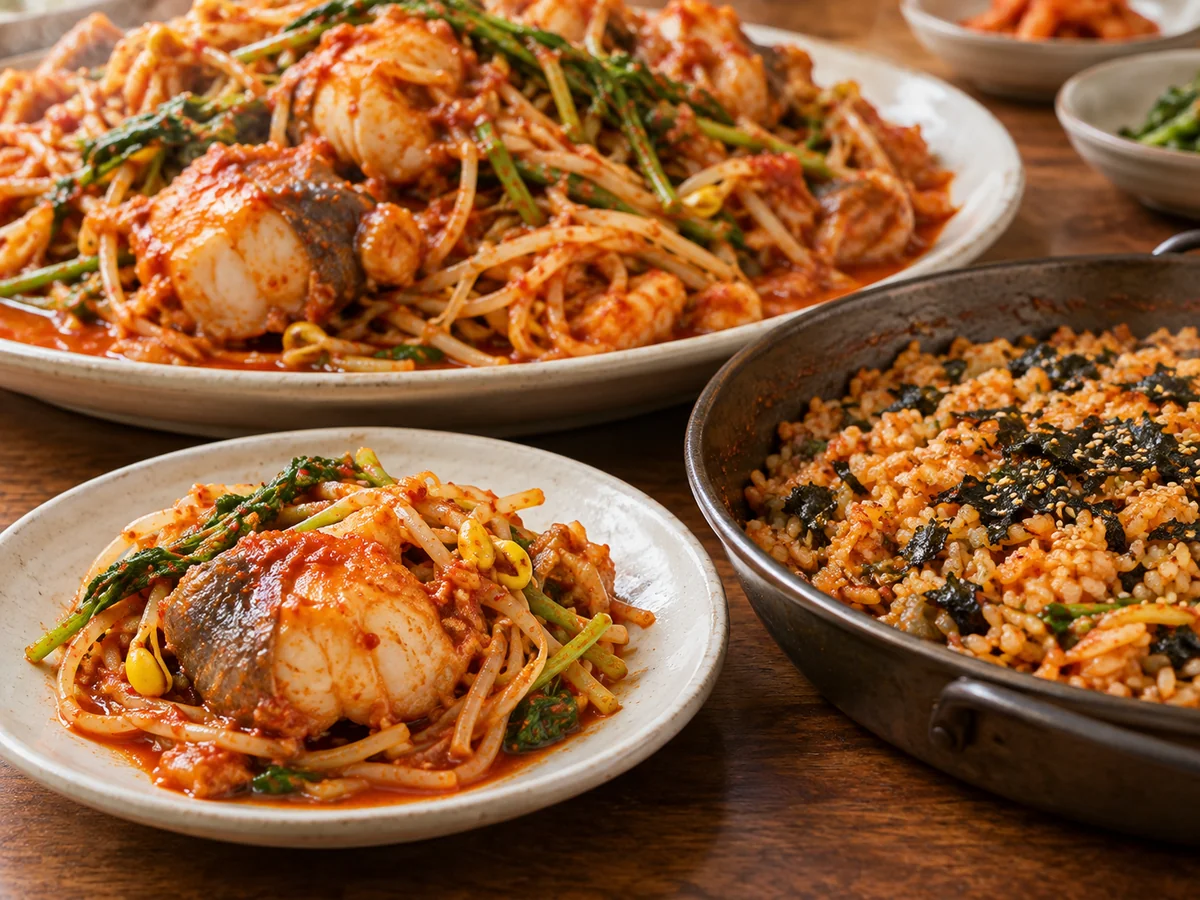
Fried rice is an optional finish, not a requirement for eating agwi jjim properly. Skip it if fish and rice have already been enough. For a first order, check the cuts, heat level, fish-to-vegetable quantity and rice arrangement, then take time to notice the contrasting fish parts and vegetables.