Korean Food / Sikhye: Sweet Rice Drink, Barley Malt and How to Enjoy It
Sikhye is a traditional Korean drink sweetened by treating cooked rice with malted-barley water. It is known for a gentle grain aroma and soft rice grains, commonly chilled and served after a meal. Yeotgireum is dried sprouted barley, not oil despite the Korean word gireum in its name, and plays a key role in creating sweetness.
How malt makes rice sweet
Simply putting ordinary cooked rice in water does not immediately create sikhye’s sweetness. Enzymes in malt break rice starch into smaller sugars. This conversion is called saccharification; enzymes are substances that help the transformation take place.
The Rural Development Administration’s material on making barley malt describes dried barley sprouts as a source of starch-converting and breakdown enzymes. Rice and malt are combined not merely to mix grain flavors but to draw sweetness from rice starch. Understanding the ingredient is easier if you do not interpret gireum as a liquid oil or fat here.
Saccharification for sweetness differs from alcoholic fermentation. Ordinary sikhye is a sweetened drink that is boiled and cooled; using rice does not make it equivalent to alcohol such as makgeolli. A Korean word for letting food transform does not imply the same process and result in every food.
Sweetness varies by recipe. Sugar or other sweeteners may be added to the sugars developed during saccharification, and the drink can become sweet even without separately added sugar. Check the taste and ingredients rather than assuming a traditional or homemade label means less sweetness.
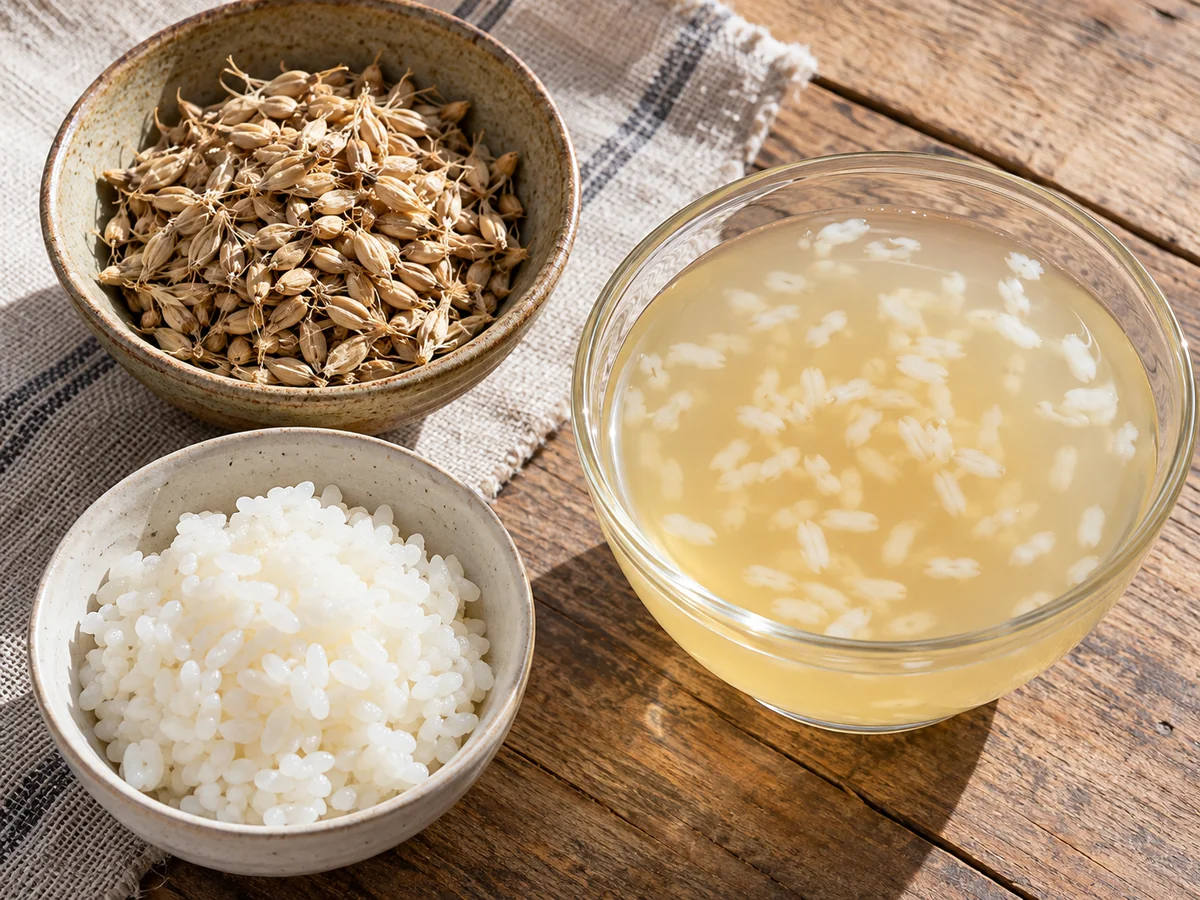
What is the basic preparation sequence?
Prepare malt water, add cooked rice, allow saccharification at an appropriate temperature, then boil and cool. The Rural Development Administration’s holiday recipe guide separates steeping and straining malt, settling it and using the upper liquid with rice, and boiling. Depending on the recipe, ginger or a sweetness adjustment may be included.
Settling malt water and using the upper liquid affects remaining particles and cloudiness. Temperature matters too. The Encyclopedia of Korean Culture’s sikhye entry explains that temperatures too low or high make the desired saccharification and flavor difficult to achieve. It is not simply a matter of leaving rice standing for a long time.
At home, manage water, rice quantities and temperature according to the malt or sikhye product’s instructions and the recipe. Rice-cooker warming functions do not necessarily maintain identical conditions. Check your own product and recipe rather than borrowing only someone else’s timing.
Remember that boiling follows the sweetness-developing stage. Do not treat sweet rice liquid at that earlier stage as a finished storage-ready drink, or leave finished sikhye at room temperature to make it sweeter. Follow the completed recipe’s or commercial product’s storage instructions.
Do you eat the rice grains?
The rice grains are part of the serving and can be eaten. Rice in a drink may look unfamiliar, but it adds grain flavor and another texture. Sip the liquid and spoon up some grains, or drink with a few small grains together.
Their amount and condition vary. Some methods remove and rinse grains before floating them on the finished drink; some products have few or none. More grains is not a universal sign of better sikhye. Choose according to whether you want something to chew or a clearer drink.
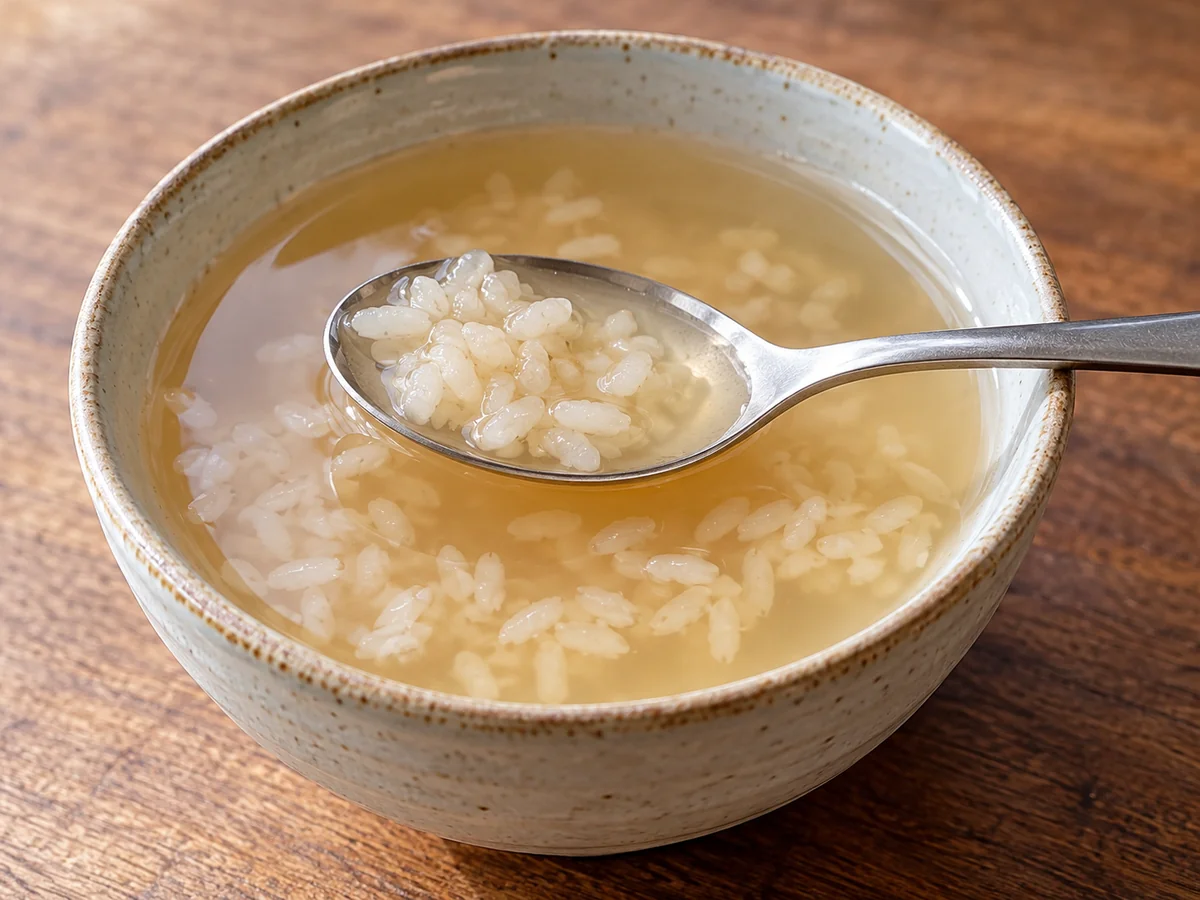
If grains gather at the bottom, stir gently and scoop them with a spoon. A spoon makes portioning easier than forcing grains through a narrow straw. Floating or sinking grains alone cannot establish freshness or storage quality; check labeling and actual storage conditions.
How does it differ from sikhae and Andong sikhye?
Sikhye and sikhae sound similar but are different foods. The Encyclopedia of Korean Culture’s sikhae entry describes fish fermented with salt and cooked rice. A name such as flounder sikhae should not be confused with a sweet rice drink.
Andong sikhye shares the name but differs in taste and ingredients from the familiar clear sweet drink. The Encyclopedia’s Andong sikhye introduction describes a regional drink using rice, radish, ginger, chili powder and malt water. Expecting the usual sweet rice-grain drink from the name alone may be surprising.
| Name | Main ingredients and format | Key distinction |
|---|---|---|
| Sikhye | A drink sweetened using rice and malt | Choose by grain aroma, sweetness and rice-grain texture. |
| Sikhae | Fish fermented with salt, rice and other ingredients | A different food from a sweet dessert drink. |
| Andong sikhye | A regional drink with rice, radish, ginger and chili powder | May include a spicy, peppery flavor. |
Are gamju and sujeonggwa the same drink?
Gamju can be used as another name for sikhye. Traditional food descriptions may instead distinguish a version with more broken-down grains and stronger sweetness as gamju. Everyday usage and culinary texts do not always agree, so ask whether grains are present and whether it is served cold or warm.
Sujeonggwa is a traditional drink emphasizing cinnamon, ginger and similar aromas, with a different base from rice-and-malt saccharification. Being offered alongside sikhye after a meal does not make them color variants of the same drink. Compare sikhye for grain aroma and rice, and sujeonggwa for cinnamon-type fragrance.
Choose sweetness, aroma and rice grains separately
Sikhye is familiar at holiday tables and after meals but is not limited to one season. Cold servings are common and some are slushy. Melting ice changes flavor and temperature, so try a sip or two first to judge your preferred concentration.
- If sweetness matters, check added sugars and the product’s nutrition label. “Handmade” or “traditional” does not establish sweetness.
- Check whether ginger, yuja or another aroma has been added. Choose between the basic grain aroma and other flavors you enjoy.
- Check rice grains and the amount of ice or slush to anticipate drinking method and texture.
- For purchased products, distinguish storage instructions before and after opening. Shelf-stable products and refrigerated shop-filled drinks need not have the same requirements.
It is best understood as a sweet drink to enjoy. A custom of drinking it after meals does not guarantee that it treats digestive problems. Try a small amount for grain aroma and sweetness, then decide whether to eat the grains to explore an unfamiliar drink comfortably.