Korean Food / Songpyeon: Filled Rice Cakes, Chuseok and How to Choose
Songpyeon are Korean rice cakes made by shaping rice-flour dough around fillings such as sesame, beans or chestnuts and steaming them. Half-moon shapes are familiar, but size, shape and dough ingredients vary by region and method. A representative Chuseok food, they are easier to choose by checking the filling rather than the exterior color.
What kind of rice is used?
Basic songpyeon uses non-glutinous rice flour, from the ordinary type of rice familiar in cooked meals, distinct from glutinous rice. Chewy rice cakes are not all made from glutinous rice. The Encyclopedia of Korean Culture’s songpyeon entry describes hot-water dough made from non-glutinous rice flour, filled, shaped and steamed.
Ikbanjuk means kneading flour with hot water. Once the dough can be shaped, filling is placed inside and the opening pinched shut. The wrapper and filling therefore remain distinct to taste. Its shaped form differs from seolgi, steamed as a bed of flour, or garaetteok, formed into long cylinders and cut.
Rice-flour songpyeon has a smooth, resilient exterior surrounding a filling, giving separate textures when chewed. Flour mixtures, wrapper thickness and time since steaming affect firmness and stickiness. Regional versions using potato or other additions cannot all be described by one texture.
How do sesame, bean and chestnut fillings differ?
So means the filling inside. Names may identify it, as in sesame or bean songpyeon. Identical white exteriors can contain different fillings, so consult labels or the seller rather than guessing from color.
| Filling | Typical flavor and texture | What to check |
|---|---|---|
| Sesame | Crushed seeds combine nutty flavor and sweetness. | How sweet and moist the filling is. |
| Beans | Cooked beans can have an earthy flavor and a distinct bite. | Whole or mashed beans, and whether they are sweetened. |
| Chestnuts | A soft, crumbly texture and gentle sweetness. | Chestnut pieces or a mashed filling. |
| Red beans / mung beans | A savory bean flavor and soft filling combine with the dough. | Whether skins remain, sweetness and any mixed ingredients. |
Added sugar or honey varies by recipe. Bean filling is not necessarily salty, nor is every sesame filling equally sweet. For a less sweet rice cake, ask how the filling is seasoned as well as which ingredient it contains.
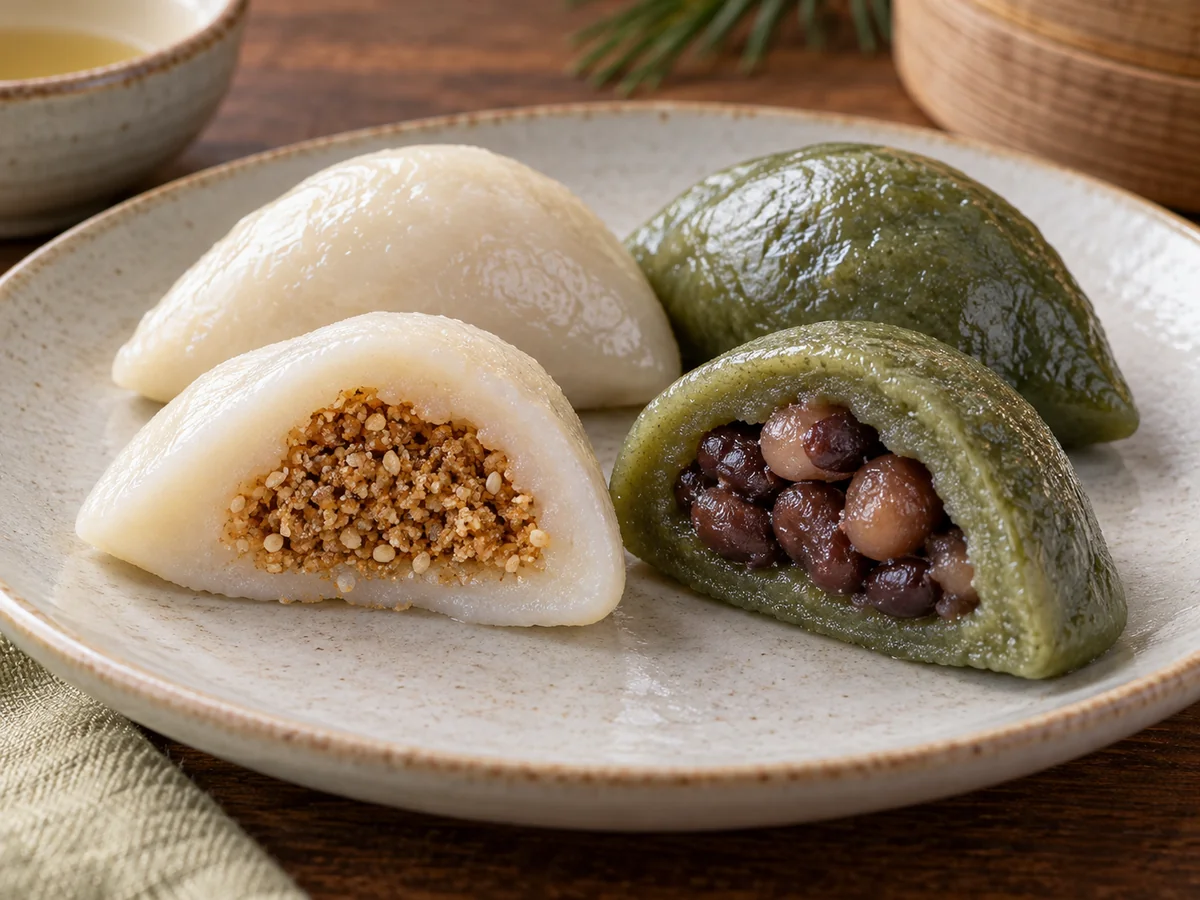
Hot sesame filling can feel hotter than the wrapper or flow out. Cool freshly steamed cakes a little and divide them into small pieces. Examining the cut surface is also more useful for identifying the filling than putting a whole cake into your mouth.
Why steam them on pine needles?
Traditionally, pine needles may be placed underneath and between the cakes. They help reduce sticking and add aroma. The Korean Food Promotion Institute’s guide to steamed rice cakes explains dough, filling and the purpose of pine needles. They are generally a steaming material, not a filling to chew with the cake.
Modern steaming tools and production settings vary, so not every songpyeon has the same pine aroma. The absence of needles on a serving plate does not disqualify it. Remove any needles clinging to the surface before eating and notice the aroma separately from the dough.
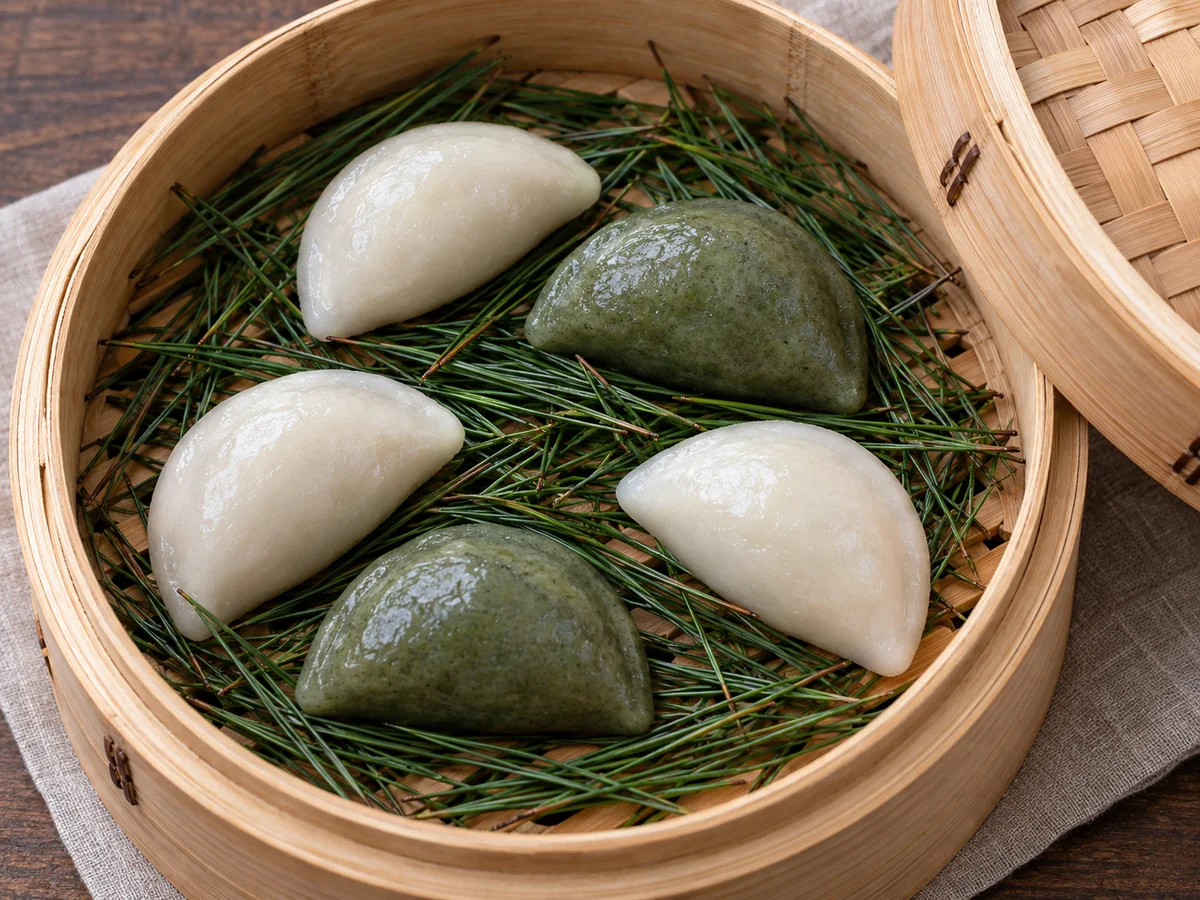
The Korean Food Promotion Institute’s shaping guide separates hot-water dough, filling preparation, closing and steaming. Sealing the opening matters not only for shape but for preventing leakage. At home, flour moisture and cake size vary, so follow the recipe and check doneness rather than applying one cooking time to every version.
Does green mean mugwort? Shapes and colors
Besides white dough, mugwort, sweet pumpkin or black rice may add color and aroma. Green versions may use mugwort or ramie leaves, producing different aromas. Color offers a clue but is not an exact ingredient or filling label.
Mugwort songpyeon generally describes the outer dough, while sesame songpyeon describes the filling. Both can apply to one cake, such as mugwort dough with sesame inside. Separating dough type from filling type helps you understand an assortment.
Small half-moons are familiar, but regional forms may be flatter or retain finger impressions. The Korean Food Promotion Institute also introduces potato-dough and ramie-leaf versions. Rather than dismissing a different shape as inauthentic, consider local ingredients and shaping methods together.
How are songpyeon connected with Chuseok?
Chuseok includes a culture of preparing food from harvested grain and making and sharing songpyeon. The Encyclopedia of Korean Culture connects new-rice songpyeon with Chuseok ancestral rites and grave visits. It is both a type of rice cake and part of a holiday scene of families shaping and sharing food.
Not every household makes them on the same day, uses the same method or chooses the same ingredients. Families may make them at home or buy them, and preferred fillings and shapes vary. Calling it a representative Chuseok food does not mean all households follow identical customs.
Its exact first creation is difficult to establish. Explanations of the half-moon shape or good fortune from shaping beautiful cakes should be distinguished as cultural stories and beliefs. Understanding the actual rice, filling and shaping and steaming methods first gives a clearer view of its taste and form.
What to check when buying and eating
At a rice-cake shop, ask about dough, filling, count or weight, and whether it is for eating that day or sold frozen. For a gift assortment, ask whether only the exterior colors vary or the fillings too. Identical packaging sizes can hold different cake sizes and filling proportions.
Even small rice cakes are resilient and sticky, so divide them and chew thoroughly rather than putting several in your mouth. Unsweetened tea or water can accompany them; extra sweet sauce is generally unnecessary. The rice wrapper alone does not establish ingredient suitability: check sesame, beans and nuts in fillings too.
If eating later, follow the seller’s storage and reheating instructions. Do not assume prolonged room-temperature storage is suitable or try to swallow hardened cakes as they are. Start with a small amount with clearly labeled fillings and compare thickness and sweetness to find what you prefer.