Korean Food / Bindaetteok: Mung Bean Pancakes, Texture and How to Eat Them
Bindaetteok is a Korean pancake made by soaking and grinding mung beans into a batter, adding vegetables, meat or other ingredients, and pan-frying it in oil. Despite tteok in its name, expect a golden exterior and a nutty, soft, slightly crumbly interior rather than a sweet, chewy rice cake. Also called nokdu jeon, it varies in flavor and texture with its ingredients and thickness.
The base is mung beans rather than wheat flour
The Encyclopedia of Korean Culture’s entry on bindaetteok defines it as ground mung beans cooked like a pancake. Mung beans form the base and give a flavor and texture different from flour mixed with water. This is the first distinction to notice beside egg-coated meat jeon or wheat-batter pancakes.
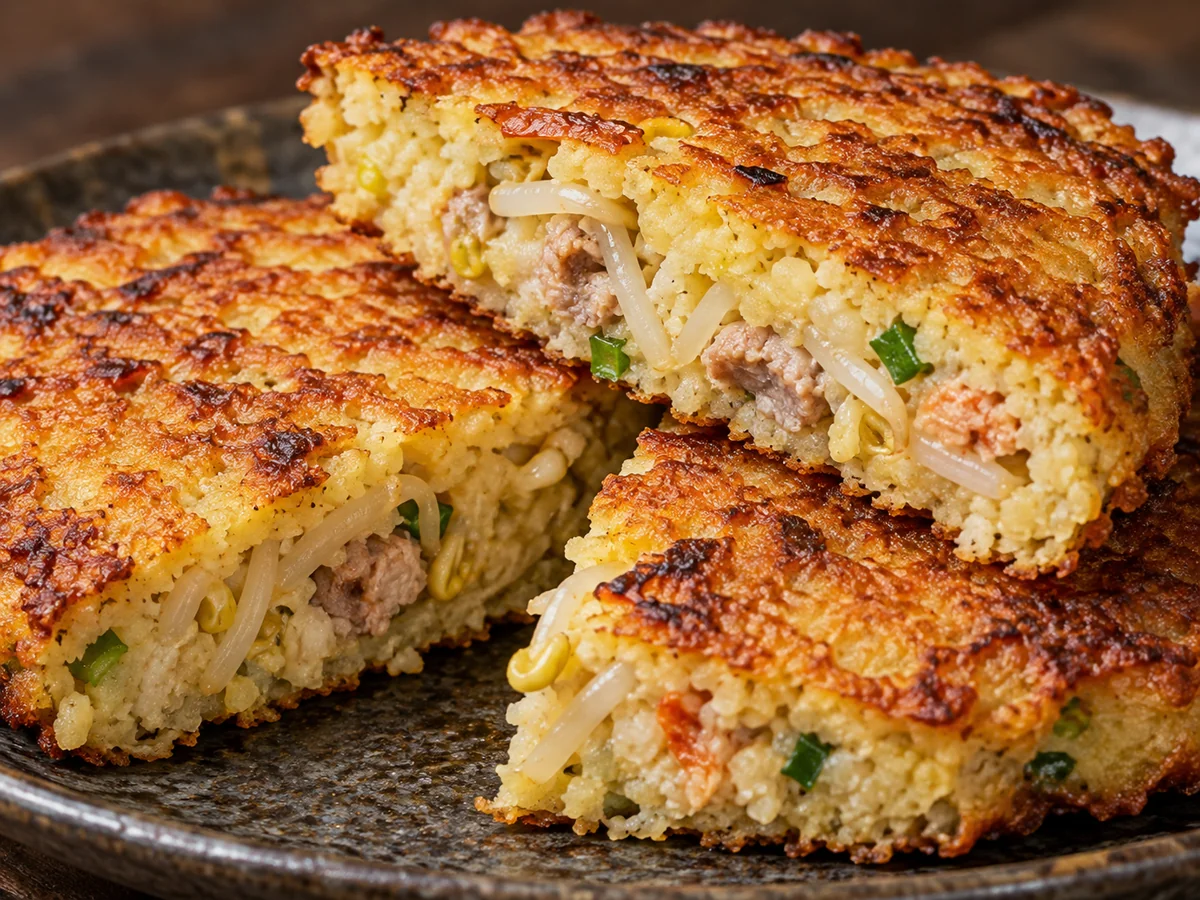
Contact with oil browns the surface and may crisp the edges, but the whole pancake is not cracker-crisp. Thicker versions retain moisture and softness inside, with ground bean particles and added ingredients to chew. It differs from the springiness of rice cakes or the smooth texture of a thin crêpe.
Mung beans as the main ingredient does not mean no other flour is added. Recipes vary; the Korean Food Promotion Institute’s mung bean pancake introduction includes glutinous rice flour. If avoiding an ingredient, check the actual batter rather than relying on the menu name.
What do mung bean sprouts, kimchi and pork add?
Sukju are mung bean sprouts whose long stems add texture among the batter. Although both start from mung beans, batter binds the pancake while sprouts act as distinct pieces inside. They resemble soybean sprouts but are not the same ingredient.
Pork can add meat flavor and chew; kimchi can add acidity and seasoning. Some recipes also use bracken and green onion. The Korea Tourism Organization’s bindaetteok guide describes pork, mung bean sprouts and bracken in ground mung bean batter. These ingredients are not compulsory in every version.
A kimchi-heavy pancake carries its flavor inside, while meat-forward versions may feel more substantial. To avoid heat, ask whether kimchi or chili is mixed into the batter rather than only requesting removal of a red pepper garnish. Once ingredients are combined, individual additions may be difficult to remove.
Comparing nokdu jeon, seafood pajeon and meat patties
Bindaetteok and nokdu jeon generally name the same family of dishes. Scallion pancakes and meat jeon differ in their main ingredients and batter. Sharing a pancake-restaurant menu does not imply identical thickness or chew.
| Dish | Main composition | Texture to notice |
|---|---|---|
| Bindaetteok / nokdu jeon | Ground mung bean batter with vegetables, meat or other additions. | Contrast between golden surface and soft, moist interior. |
| Haemul pajeon | Scallions and seafood pan-fried with batter. | The ratio of long scallions, seafood and batter. |
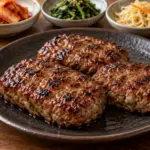
| Donggeurangttaeng / meat jeon patties | Usually small patties of minced meat, tofu and vegetables. | How finely ingredients are minced and the meat flavor. |
If you enjoy the scallion and seafood combination of haemul pajeon, compare it with mung-bean-centered bindaetteok. Check separately whether “meat bindaetteok” and “meat patties” on a menu are the same item. Added meat in mung bean batter and a separate minced-meat patty can be easy to confuse by name.
Why the outside can be crisp while the center stays soft
The batter and additions are mixed or layered, then cooked in oil in a pan. The recipe from Korea.net and the Institute of Traditional Korean Food shows soaking and grinding mung beans, preparing sprouts, kimchi and pork, and frying both sides. Soaking the beans is a preparation stage distinct from the actual frying.
The outside touching the hot pan and oil browns while moisture remains in the thicker center. Do not expect the inside to match the surface. Cutting a large pancake reveals vegetables and meat between the mung bean batter.
Bigger and thicker is not automatically better: preference depends on crisp edges versus moist centers. Whether a shop makes small pancakes, cuts up one large pancake or cooks to order helps you anticipate the format you want.
Use vinegar-soy dip sparingly and divide manageable pieces
Divide a pancake into smaller pieces. Surface oil and moisture inside can make it hotter than expected, so set aside a portion and cool it a little. Try the first piece plain to notice the mung beans and the seasoning of kimchi or meat.
Choganjang is soy sauce mixed with vinegar and other ingredients, adding salt and acidity; some shops serve onions in it. If the batter is already seasoned, a light dip at one edge may suffice. Pouring it over the plate or soaking pieces wets the crisp surface and lets seasoning dominate the beans.
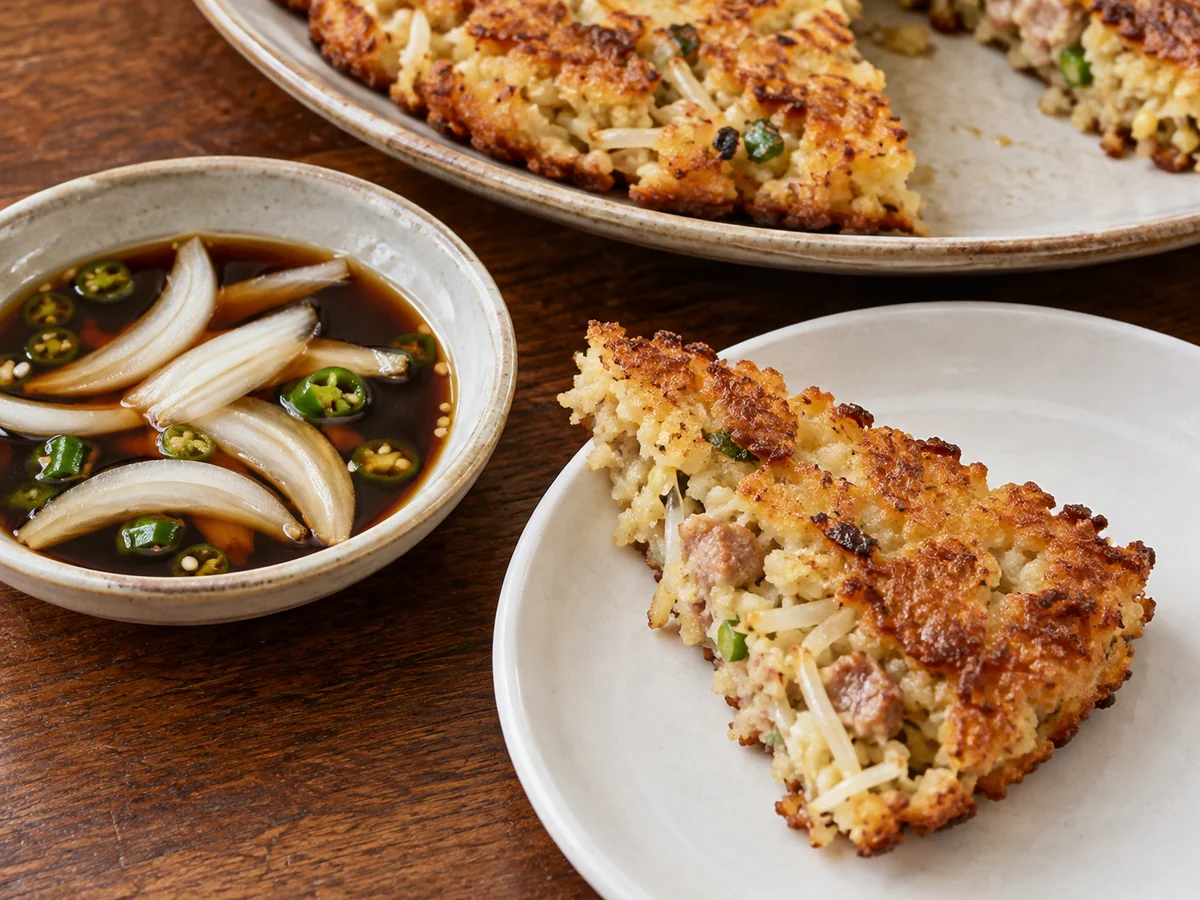
Onion or kimchi provides contrasting flavor and texture. Although known as a drinking accompaniment, the food does not require ordering alcohol. Choose the quantity according to pancake size and other dishes, whether as part of a meal or food to share.
For takeaway, consider size and when you will eat
Check whether the order is mixed jeon or one mung bean pancake, and what “one pancake” or “one plate” means. Thickness and additions can make a small-looking portion more substantial than expected. If sharing alongside other food, you can start small and decide on extras later.
Steam in a lidded takeaway container can soften a freshly fried surface. Losing some just-cooked crispness does not erase the dish’s mung bean character. Choose immediate eating if crispness is the priority; if reheating at home, follow the seller’s storage and reheating instructions.
On a first try, notice the mung bean batter’s nutty flavor, the sprouts and meat textures, and the difference between outside and center. Tasting these before adding much sauce helps explain what sets it apart from other jeon.