Korean Food / Janchi Guksu: Banquet Noodles, Broth and How to Eat Them
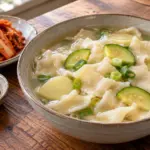
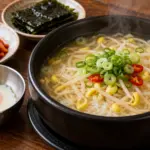
Janchi guksu is a Korean noodle dish made by pouring warm, clear broth over thin noodles and adding toppings such as egg, vegetables and seaweed. Anchovy stock is a representative base; unlike noodles mixed with spicy sauce, the focus is a gentle combination of broth and noodles. Taste the broth first and add seasoning sauce gradually to preserve its character.
Why is it called “banquet noodles”?
Janchi means a gathering to share a happy occasion. Noodles are associated with celebrations such as weddings and birthdays. Koreana, published by the Korea Foundation, on janchi guksu distinguishes that ceremonial meaning from today’s familiar thin wheat noodles and anchovy stock.
A traditional name does not mean every historical banquet served exactly the same noodles and broth as today. Distinguish the culture of serving noodles at celebrations from the current preparation. It is now an everyday meal in noodle shops and casual snack restaurants, not food reserved for special events.
The expression “When will you treat us to noodles?” can ask about marriage because of this food culture. Yet the menu name does not refer only to wedding food. In a restaurant, the actual broth, noodle and topping choices matter more.
The roles of noodles, broth and toppings
The dish generally uses somyeon, long, thin wheat noodles. Instead of the extended chew of thicker noodles, the fine strands move together with the broth. Thickness and cooking affect the texture, so not every bowl is equally soft.
Anchovy stock supplies savory flavor and aroma. Kelp and other dried seafood may accompany it; the Korea Tourism Organization’s introduction describes stock made with anchovies, dried large-eyed herring and kelp, with a soy-based seasoning. A clear-looking broth need not be weak or made from few ingredients.
Jidan is egg cooked in a thin sheet and cut into strips, adding softness and color. Zucchini contributes vegetable flavor and seaweed a toasted aroma. Some restaurants add kimchi, chopped green onion or sautéed vegetables; there is no fixed number or nationwide standard of toppings. The Korea Tourism Organization’s winter food guide also features egg, zucchini and seaweed.
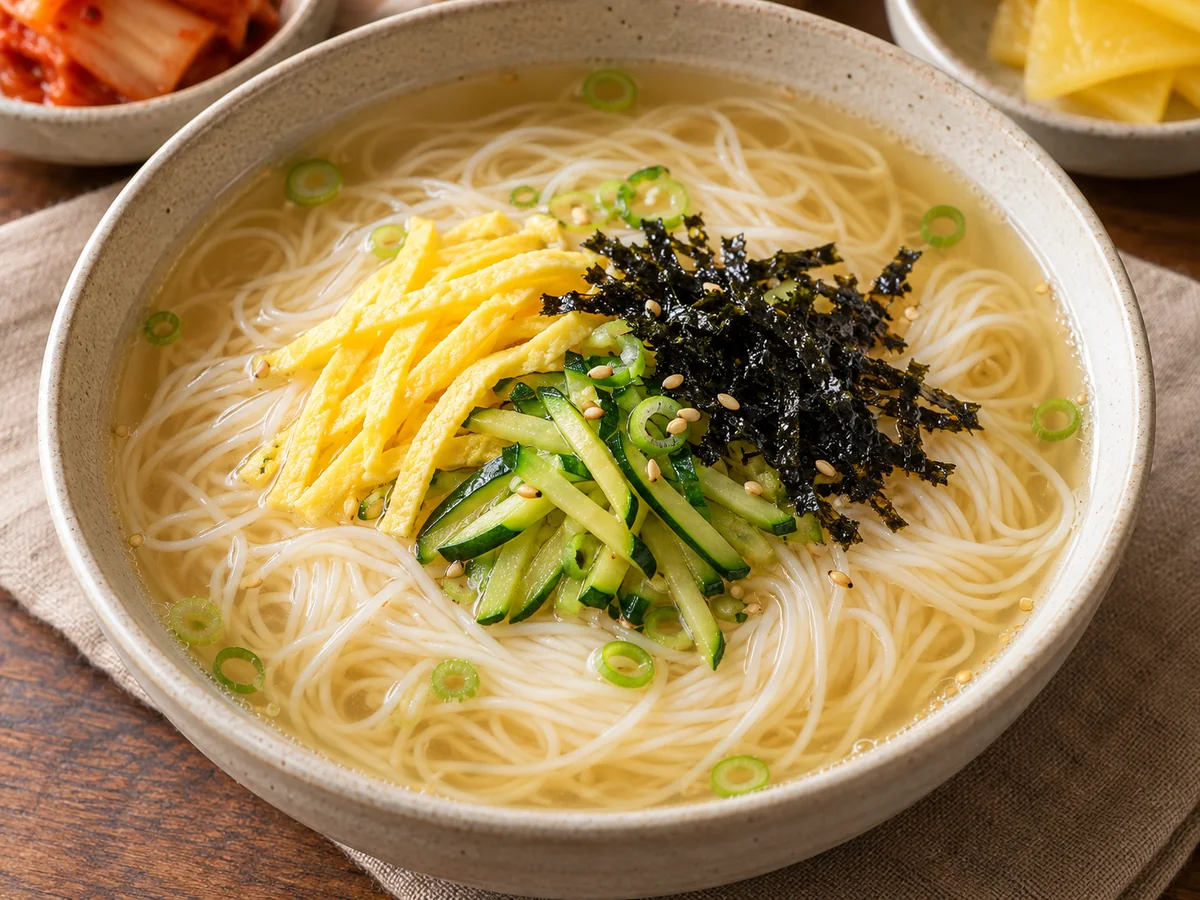
Taste a spoonful or two of broth before mixing every topping to understand the stock itself. Then take noodles with toppings and compare how seaweed or kimchi changes the broth. There is no requirement to preserve the decorative arrangement until the end.
How does it differ from kalguksu and bibim guksu?
Consider whether there is broth, which noodles are used and how the seasoning is eaten. Even with the same wheat flour, dough and noodle forms differ; even with the same thin noodles, serving them in broth or mixing them with sauce creates different dishes.
| Dish | Noodles and broth | When to choose it |
|---|---|---|
| Janchi guksu | Thin noodles with warm clear broth and toppings. | When you want hot broth and light strands. |
| Kalguksu | Rolled and cut noodles, with stock and solids varying by type. | Compare it when you prefer thicker noodles. |
| Bibim guksu | Cooked noodles mixed with seasoning, commonly a red sauce. | When you want tangy, sweet or spicy sauce rather than broth. |
Janchi guksu and the noodles and broths of kalguksu both make warm meals, but their chew differs considerably. Adding enough chili sauce to turn janchi guksu red does not turn its noodle-and-broth composition into bibim guksu. Check the basic format and season to your own preference.
How much seasoning sauce and kimchi should you add?
The presence and quantity of sauce can greatly change perceived saltiness and heat. Even when soy sauce mixed with green onion, garlic, chili powder and sesame is provided, you need not use it all if the broth is already seasoned. Check whether chili is separate or mixed into the sauce.
- Taste the broth alone for anchovy aroma, salt and any existing chili heat.
- Loosen some noodles and try them with toppings to judge whether the complete mouthful is seasoned enough.
- If needed, stir in a little sauce and taste again. Increase gradually rather than pouring it all over the bowl.
- Start with kimchi as a side and add only some if you want its acidity and heat in the broth.
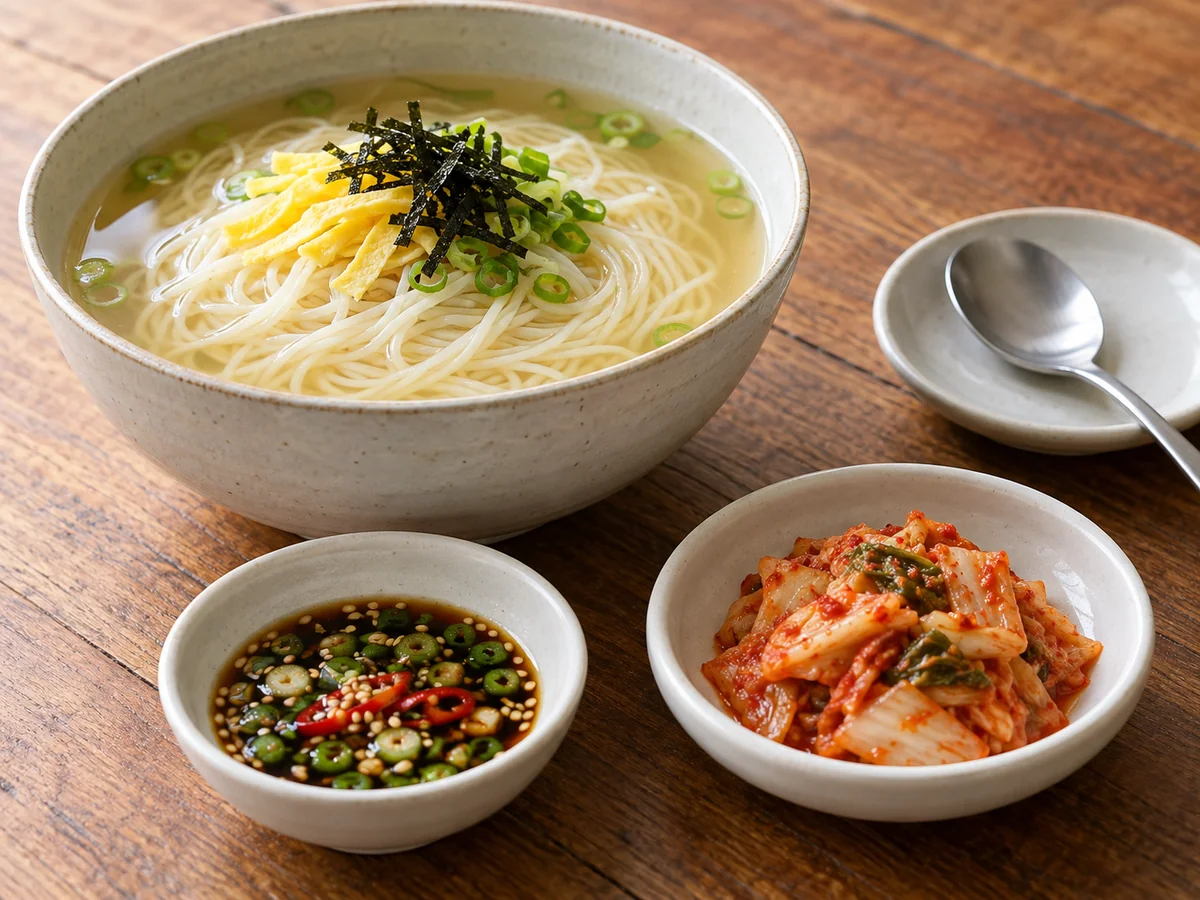
Adding more kimchi or sauce is unlikely to fix excessive saltiness. Control the amount before adding it, or ask whether extra broth is available. For a nonspicy meal, check chili in the basic toppings and stock as well as omitting the red sauce.
Eat comfortably before the noodles soften further
Thin noodles change texture if left in hot broth. Rather than spending too long taking photographs or choosing sides, loosen them when the bowl arrives and eat manageable amounts. Small portions make it easier to control hot broth and toppings than one large bundle.
Use chopsticks for noodles and a spoon for broth, or put a little of each on the spoon. No rule requires keeping every long noodle unbroken. Let them cool if hot or difficult to handle, and divide them into comfortable portions.
Check the regular portion, the availability of larger servings and whether gimbap or dumplings cost extra. Consider noodle quantity and the meal you want rather than ordering several dishes just because the bowl looks small. When choosing gimbap ingredients and varieties, think about balancing its seasoning with the noodles’ gentler character.
Fish stock, wheat noodles and egg strips combine visible and hidden ingredients. If avoiding something, check separately whether removing the garnish is sufficient and whether it is also in the stock or sauce. Examining those three components makes this simple-looking bowl easier to order for your preferences and needs.