Japanese Food / Tempura: Ingredients, Dipping Sauce, Tendon and How to Eat It
Tempura is a Japanese dish of shrimp, fish, vegetables or other ingredients coated in a thin batter and fried. It can be served separately with salt or dipping sauce, over rice as tendon, or with noodles. When ordering, check the ingredients, batter, sauce and shared frying oil together.
What is tempura?
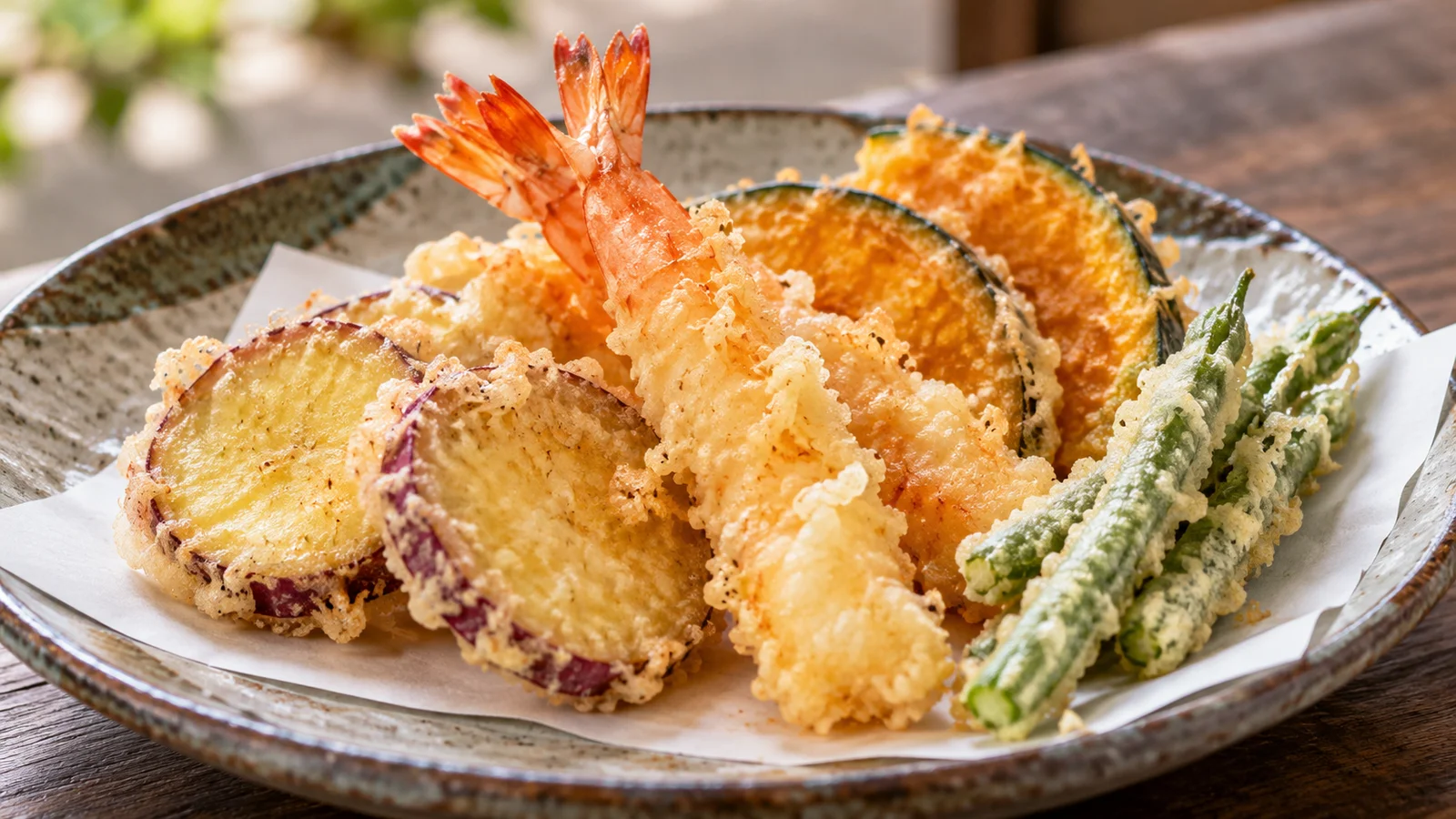
Tempura is made by coating seafood or vegetables in flour, dipping them in a batter that may contain flour, water and egg, and frying them. Ingredients and methods vary, and not every batter contains egg. The Japanese Ministry of Agriculture, Forestry and Fisheries’ introduction to tempura describes seafood and vegetables fried in an egg-and-flour coating.
The appeal includes both the ingredient’s flavor and a crisp coating, but texture changes with time after cooking and when sauce is added. Even a thin-looking batter needs checking if you have a wheat or egg allergy.
What ingredients are fried?
- Shrimp and fish: shrimp and white fish are among the possibilities. Shrimp size, species and treatment of the tail vary by restaurant.
- Vegetables: sweet potato, squash, eggplant, mushrooms and green peppers are examples. The inside can be hot, so eat carefully.
- Kakiage: chopped vegetables or small pieces of seafood are mixed into batter and fried together. Ingredients may be hard to identify visually, so ask if you have an allergy.
The contents and number of pieces in an assortment vary. Even a vegetable assortment may share oil or utensils with shrimp; ask if you have dietary restrictions or allergies.
How do salt and tentsuyu differ?
Salt lets you taste the ingredient and batter without adding much liquid. Tentsuyu is a dipping sauce made with stock and soy-based seasoning, sometimes served with grated daikon radish. The Japan National Tourism Organization’s food guide describes serving tempura with a soy-based dipping sauce and grated radish.
Try a little without sauce first, then add salt or sauce to taste. Batter can soften if left in sauce, so a brief dip can preserve more crispness. Saltiness and ingredients differ among sauces and restaurants.
What are tendon and tempura udon?
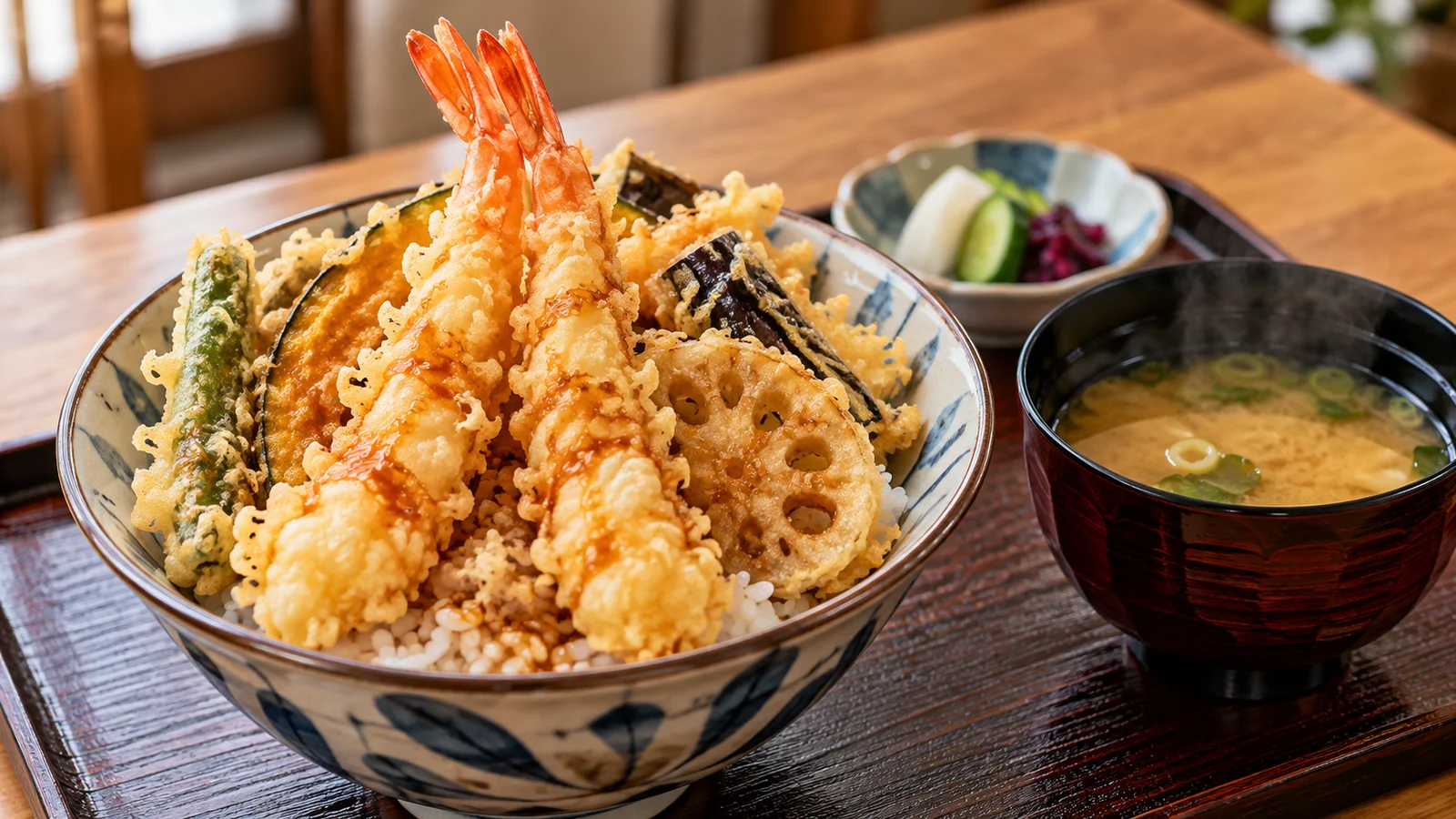
Tendon is a rice bowl topped with tempura, often with seasoned sauce added to the tempura or rice. Tempura udon or soba instead pairs fried pieces with noodles and broth. The tempura may be placed on the noodles or served on a separate plate, depending on the shop.
Sauce or broth soaking into the coating changes its texture from tempura served separately. If you want to keep it crisp longer, ask when ordering whether sauce or tempura can come separately.
What should you check before ordering?
- Ingredients and quantity: ask how many shrimp, fish and vegetable pieces are included in an assortment. Check the contents of kakiage or sauce when relevant.
- Allergies: batter may contain wheat and egg, and an assortment may include shrimp or fish. Ask whether oil, tongs or work surfaces are shared and whether the separate preparation you need is possible.
- Dietary restrictions: vegetable tempura may still be served with fish-based sauce or share oil with seafood. Check batter, oil and sauce separately if you are vegetarian or avoid particular ingredients.
- Serving and temperature: check whether sauce is already added and whether tempura is on noodles or rice. Freshly fried food can be very hot inside, so allow it to cool and eat small bites.
What about cooking or storing leftovers?
Water can cause hot oil to splatter, so dry the outside of ingredients and keep wet utensils out of hot oil. Do not overfill the pan or leave it unattended. Ingredients cook at different rates: check that they are cooked through rather than relying only on color. Freshness alone does not establish seafood safety.
Refrigerate leftovers promptly according to the seller’s instructions or local food-safety guidance on time and temperature, and reheat thoroughly to the center. Do not judge food of unknown storage history safe solely from appearance or smell.