Korean Food / Nakji-Bokkeum: Spicy Stir-Fried Octopus and How to Order It
Nakji-bokkeum is Korean stir-fried small octopus cooked with vegetables and a usually spicy red seasoning. Its appeal is the contrast between chewy octopus, softer vegetables and a sauce that can be eaten with rice or noodles. If you are ordering it for the first time, ask about the heat level, portion and whether rice or noodles are included.
What goes into nakji-bokkeum?
The Korea Tourism Organization's dish entry describes briefly boiled octopus stir-fried with cabbage, onions, carrots, spring onions and red chilies. Its example seasoning combines gochujang (Korean red chili paste), chili powder and soy sauce; noodles may be added. This is a representative preparation, not a fixed recipe for every kitchen.
Nakji means the small octopus used in the dish, and bokkeum means stir-frying. It is cooked food: the name does not mean live octopus served raw. Another tourism-organization guide to octopus dishes describes bite-size octopus stir-fried with vegetables and spicy sauce. Ask a restaurant which seafood it uses if the precise species matters to you.
What should its texture and heat be like?
Cooked octopus has a springy, chewy bite, especially in the tentacles; vegetables tend to be softer. The close-up image shows those separate textures, but it does not prescribe a universally ideal cooking time. Different piece sizes and kitchens produce different results, so taste a small piece before judging whether you want rice or another accompaniment to balance the sauce.
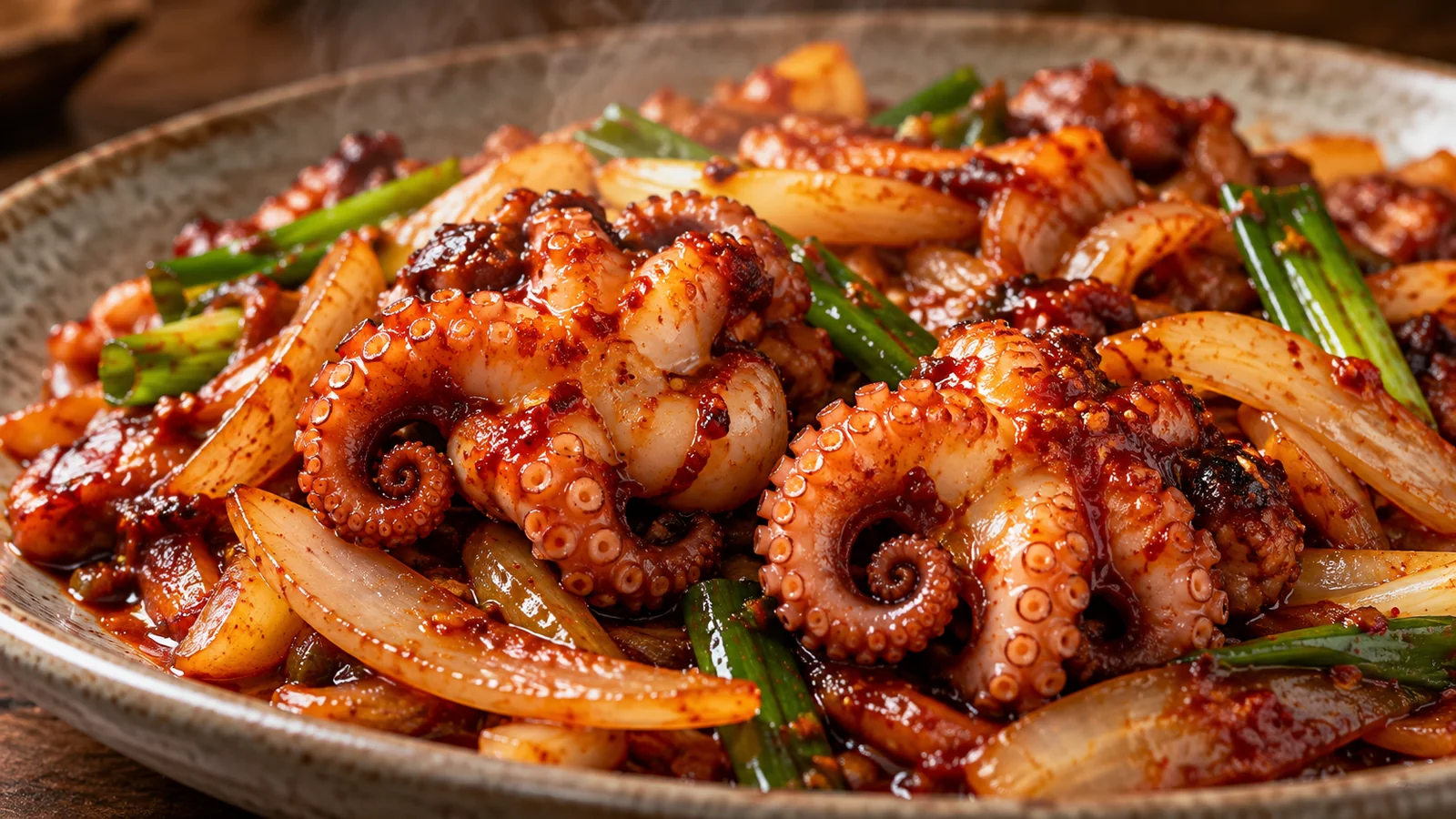
The usual red sauce is spicy, but color alone cannot tell you how hot a serving will feel. One Busan restaurant listed by the Korea Tourism Organization offers mild and spicy options; this is an example of possible choice, not a promise that every restaurant can change the heat. Ask before ordering, and do not assume a dish marked mild contains no chili.
How is it served with rice or noodles?
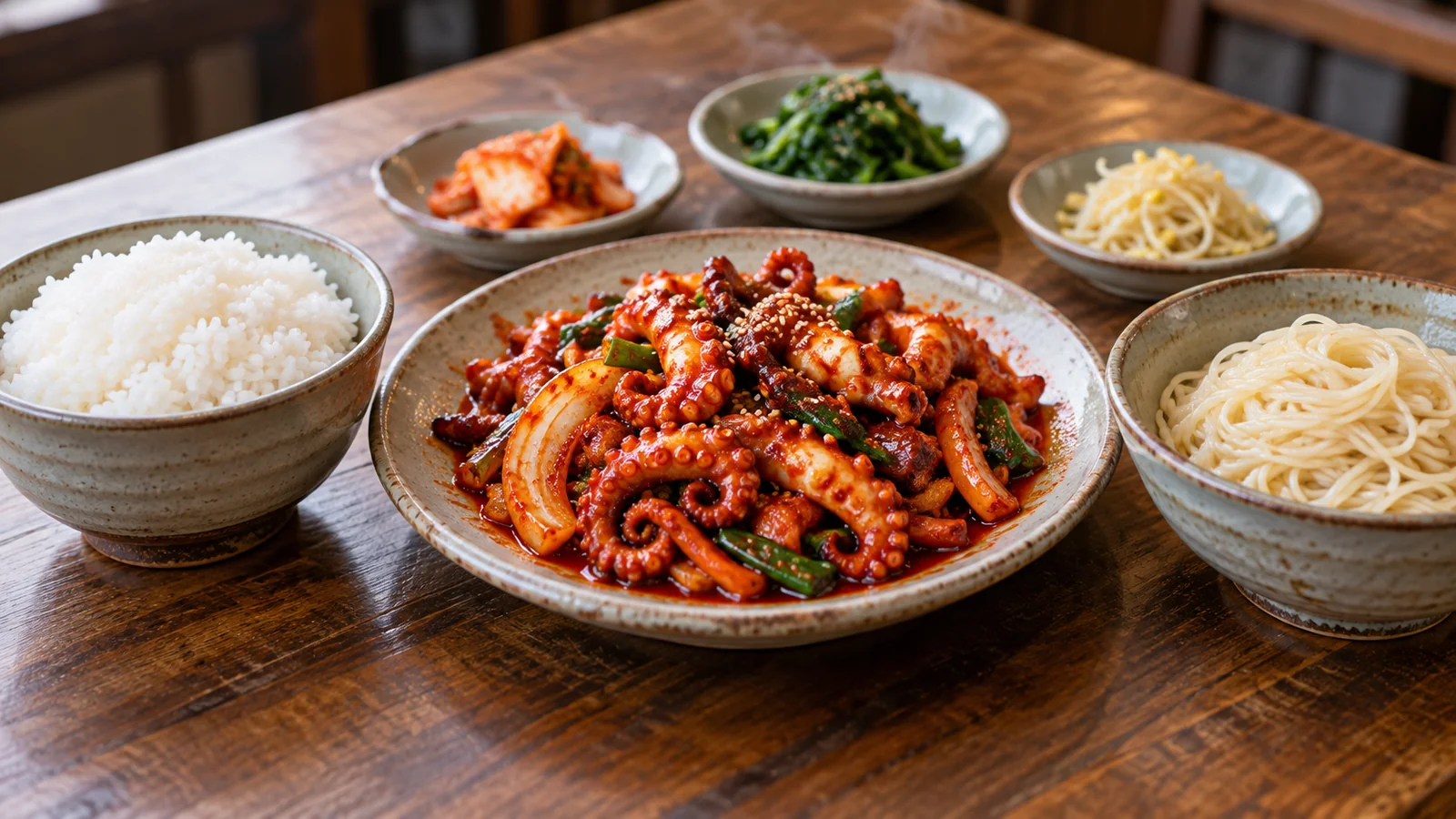
Nakji-bokkeum may arrive as a shared plate beside individual bowls of rice. You can take some octopus and vegetables onto your rice and adjust the amount of sauce bite by bite. A rice-bowl version called nakji-deopbap comes with octopus over rice; its arrangement and portion are different from ordering a plate to share. Confirm which menu item you are buying rather than assuming rice is included.
The tourism organization's description also notes noodles as an addition. Some restaurants serve noodles separately to mix with remaining sauce, while others include them from the start or do not sell them. The photograph shows separate rice and noodles as possible accompaniments, not one standardized set meal.
How do you order a portion that suits you?
- Specify the dish. Ask for nakji-bokkeum if you want stir-fried octopus. Nakgopsae is a different dish with octopus, small intestines and shrimp, so read the whole menu name.
- Ask about spice and serving size. Check whether a mild option exists, how the restaurant defines its portion and whether rice or noodles cost extra. A menu's “one portion” is not a universal weight.
- Check ingredients if necessary. The seafood, gochujang, soy sauce and other seasonings can raise allergy or dietary questions. Ask about the actual sauce, toppings and shared cooking equipment rather than inferring from the red color.
The Korea Tourism Organization's nakgopsae entry spells out the octopus, intestine and shrimp combination. If someone in your group avoids one of these ingredients, do not treat the two menu names as interchangeable. A request for less spicy sauce also does not remove a seafood or soy ingredient.
How should leftovers and takeout be handled?
For takeout, ask whether rice or noodles are packed separately; this helps you control how much sauce they absorb and makes the order easier to check before leaving. Hot sauce can collect at the bottom of a container, so mix carefully after opening and let a bite cool before eating. Packaging affects texture, not whether uncertain storage is safe.
Follow the restaurant's handling advice or local food-safety guidance for leftovers, refrigerating and reheating. Time and temperature depend on the actual food and conditions, so do not rely on a single rule based on the dish name. When storage history is unclear, appearance or a quick reheating step cannot establish safety.