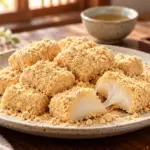
Korean Food / Yakbap (Yaksik): Sweet Sticky Rice with Nuts and Jujubes
Yakbap, also called yaksik, is Korean sweet glutinous rice mixed with chestnuts, jujubes and nuts. A soy-sauce-and-sugar seasoning gives the rice its brown color, while the grains remain chewy and sticky. It is commonly served in small portions, often pressed and cut into squares; check the actual ingredients if you need to avoid nuts, soy or sesame.
What is yakbap, and is yaksik the same dish?
The Korea Tourism Organization's yakbap description identifies the dish as sweet rice with nuts and jujubes and gives yaksik as another name. Its preparation cooks glutinous rice, combines it with a sauce of soy sauce and brown sugar plus chestnuts, jujubes and nuts, then steams the mixture again. The names identify a food, not a medicine or a promised health benefit.
Glutinous rice is a sticky variety of rice; despite its English name, the word does not mean that the rice itself contains gluten. Yakbap differs from an ordinary bowl of steamed rice because the grains are seasoned, sweetened and studded with additions. A particular serving may use different nuts or sweeteners, so the name alone cannot tell you its complete recipe.
Why is yakbap brown, glossy and chewy?
Soy sauce and brown sugar color the rice as they coat the cooked grains. Depending on the recipe, honey, cinnamon or sesame oil can add aroma and sheen. The Korea.net yaksik recipe includes these seasonings along with glutinous rice, chestnuts, jujubes and pine nuts. It is a useful example rather than the only possible formula.
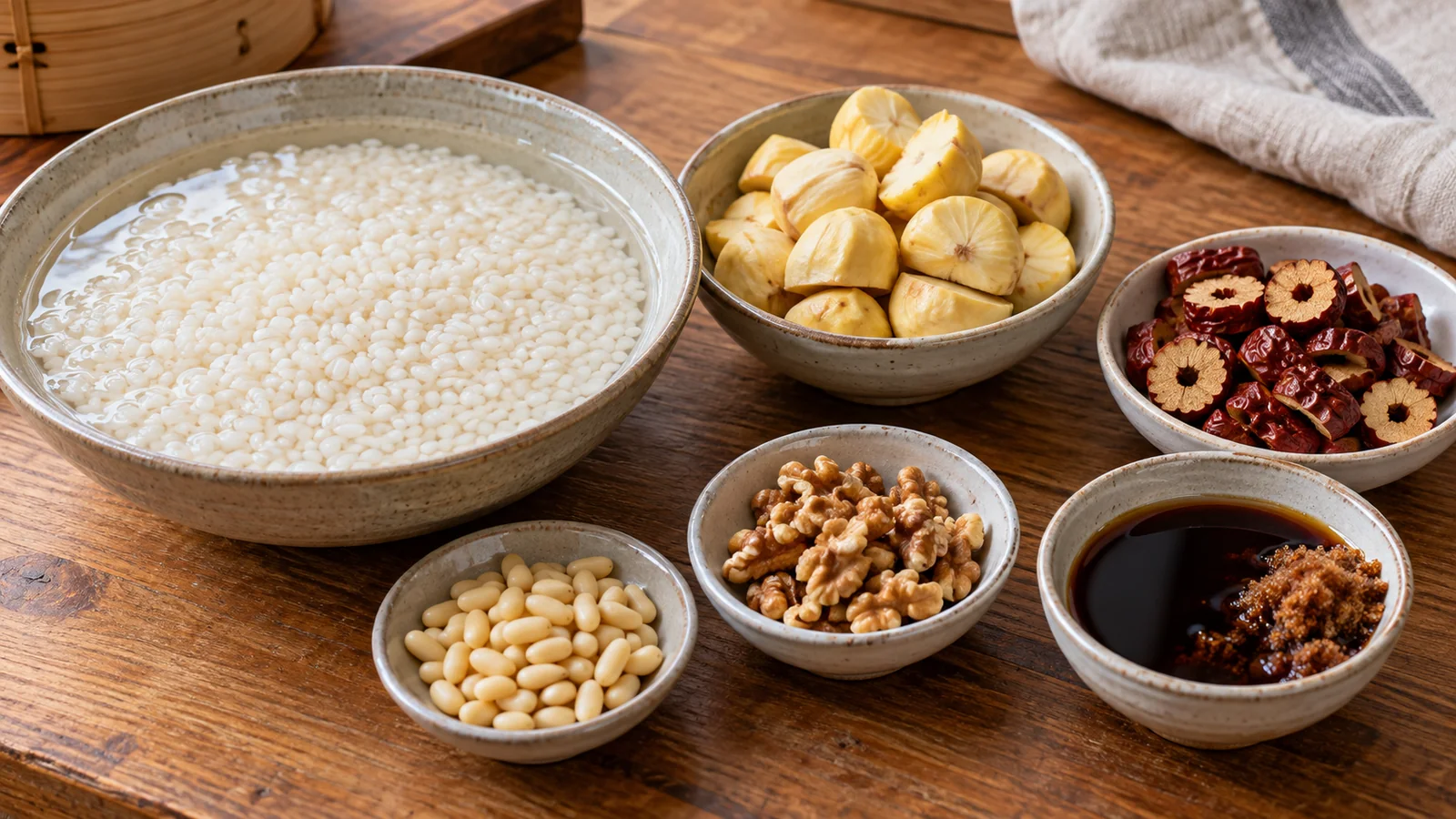
Glutinous rice supplies the cohesive chew that lets a cooled batch be cut into pieces. Chestnuts give a softer, starchy bite; jujubes contribute fruity sweetness; pine nuts or walnuts add a different crunch. The prepared-ingredient photograph helps distinguish these additions before cooking. A darker piece is not automatically sweeter: the type and amount of soy sauce and sweetener both affect its appearance.
How is a basic batch prepared?
- Prepare the rice and additions. Rinse and soak glutinous rice as the chosen tested recipe directs. Cut chestnuts into manageable pieces, remove jujube pits and prepare the nuts. Keep the seasoning ingredients measured separately so they can be mixed evenly.
- Cook and season. Cook or steam the rice until its grains are ready for the recipe's second stage. Combine the warm rice with a dissolved soy-sauce-and-sugar seasoning, then fold in chestnuts, jujubes and nuts without crushing the grains. The mixing photograph shows this stage before the final steam.
- Finish and portion. Steam the seasoned mixture again following the recipe's directions until the rice and additions are cooked through. Serve it loose, or press it into a shallow tray, let it become firm enough to handle and cut it into small squares with a clean knife.
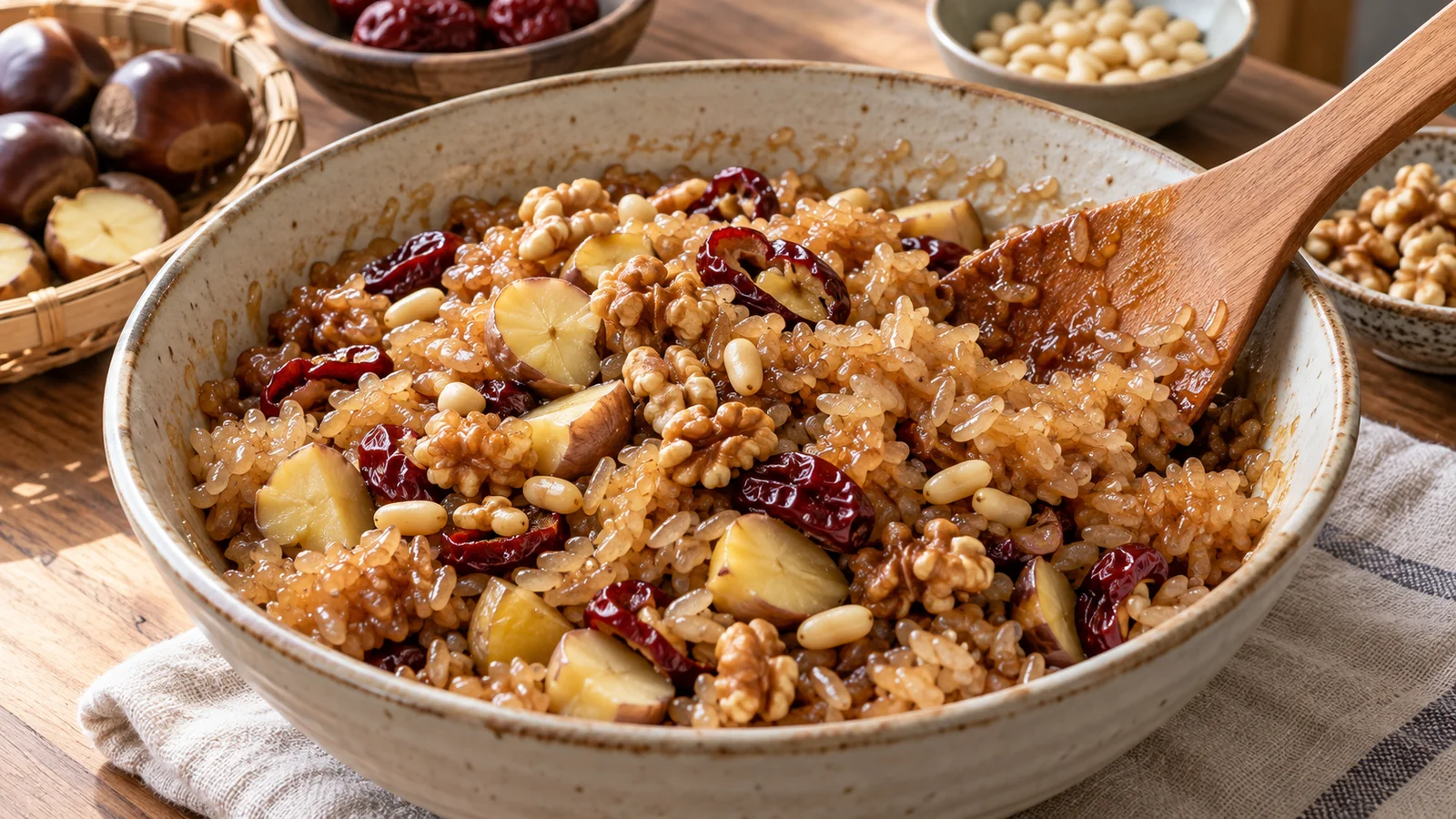
Use one reliable recipe for the liquid amounts and timing rather than mixing measurements from different methods: a stovetop steamer and an electric rice cooker do not handle water the same way. If the seasoning pools in one place, fold the rice again before the final cook. If a portion is still hard in the center, continue cooking according to the chosen method rather than masking the problem with more syrup. When pressing the cooked rice, spread it evenly; very thick pieces take longer to cool.
How do you serve and choose yakbap?
Yakbap can be eaten as a small sweet snack with tea, or placed among foods for a gathering. Neat squares are convenient to share, while spooned portions have the same essential rice-and-topping character. If you are comparing shop versions, look for visible rice grains and the additions you actually want rather than treating a glossy surface as proof of quality.
Sweetness and saltiness vary because both sugar or honey and soy sauce are involved. Ask whether the batch contains chestnuts, pine nuts, walnuts or other nuts; sesame oil and soy are also common recipe considerations. For a food allergy, check the seller's ingredient information and shared preparation equipment. A nut-free-looking square is not enough evidence that it was made without nuts.
What should you check when storing leftovers?
Follow the package or seller's storage instructions for purchased yakbap. For homemade portions, cool them promptly in a shallow container and follow applicable cooked-rice storage guidance; sweet seasoning does not make cooked rice shelf-stable. Keep a utensil clean when portioning, and separate pieces before storing if you want to lift out a single serving later.
Reheat a stored piece according to the original recipe or product instructions until it is warm throughout, taking care because dense sticky rice can heat unevenly. Check all ingredients if serving someone with an allergy, including the nut garnish and seasoning. Do not rely on its brown color, sweetness or smell alone to decide whether old leftovers are safe to eat.