Korean Food / Dotori-Muk: Acorn Jelly, Salad and Broth Dishes
Dotori-muk is a soft Korean jelly made by cooking processed acorn starch with water and letting it set. It has a mild, slightly earthy or bitter taste, so the seasoning and the dish around it matter: slices may be eaten with sauce, tossed with vegetables, or served in broth with rice. Check the menu name to know which version you are ordering.
What is dotori-muk made from?
The Korea Tourism Organization's acorn-jelly entry describes acorn starch stirred with water, boiled and cooled until it forms a jelly. Muk is the broader name for a set starch jelly; dotori identifies the acorn source. The finished brown block is cut into slices or strips. It is not tofu, meat or a sweet gelatin dessert despite a similarly wobbly shape.
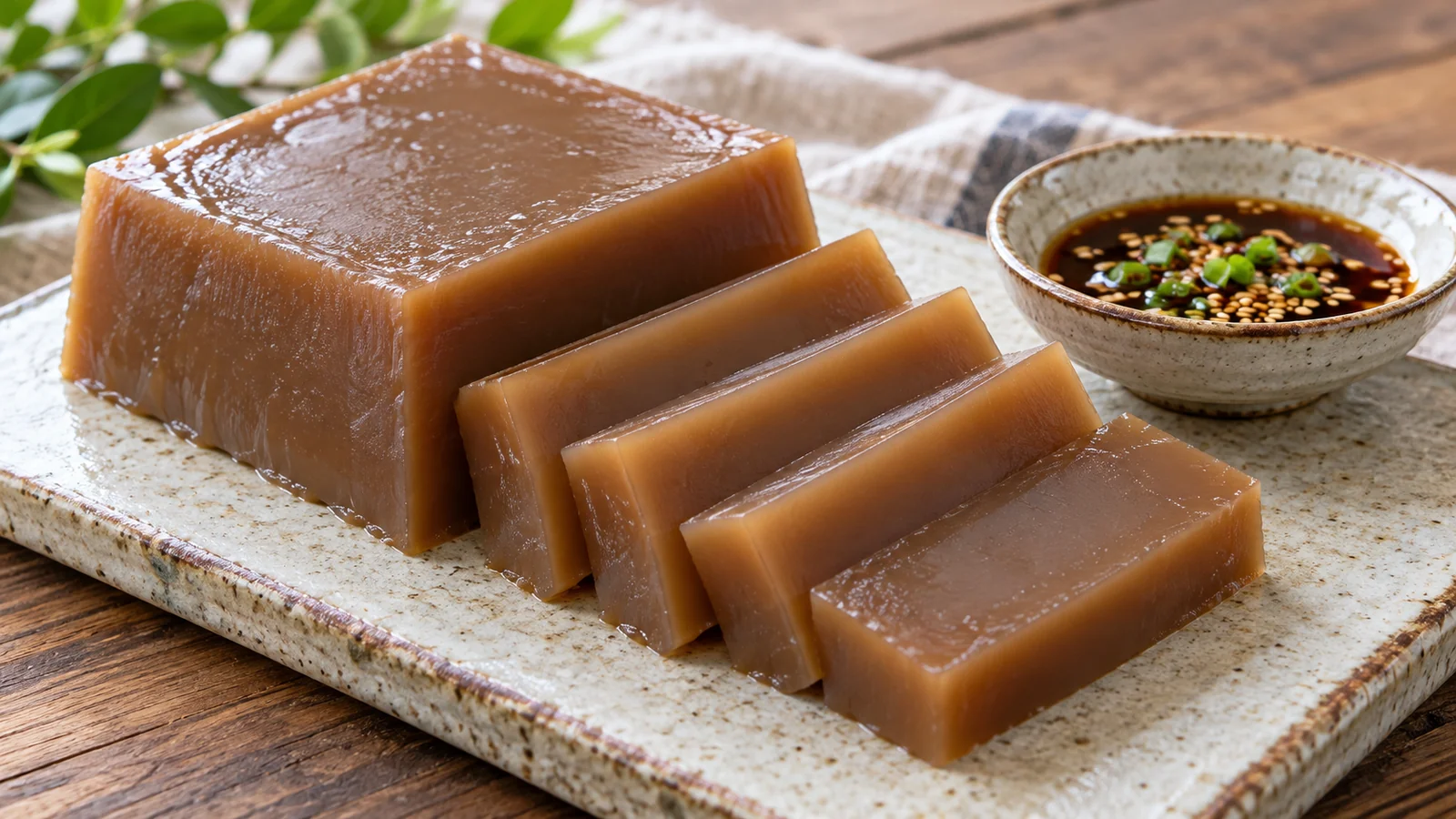
The plain-jelly photograph shows a smooth, translucent block and cleanly cut pieces before a dressing is added. A prepared commercial block or food-grade acorn-starch product is easier to identify than unprocessed acorns. If buying an ingredient to cook, follow that product's instructions and ingredient label; do not assume a recipe intended for processed starch applies to raw gathered acorns.
What does it taste and feel like?
Plain dotori-muk is soft and gently springy rather than crunchy. Its own flavor is subdued with a slight acorn bitterness; crisp vegetables and a salty or spicy dressing create much of the contrast in a salad. The tourism organization's description notes its soft, slightly bitter character and names both salad and a cold-broth rice dish.
Cut a small piece and taste it with a little sauce before adding more. The jelly can break if stirred vigorously, so fold it gently with vegetables. A thin slice may feel different from a thick cube, and a heavily seasoned plate can hide the plain acorn flavor. Neither color nor wobble alone tells you the exact starch content of a packaged product.
How are salad, plain slices and mukbap different?
- Plain slices: cut jelly is served with a dipping sauce. You can compare its own taste with the seasoned bite.
- Dotori-muk muchim: jelly is gently mixed with crunchy vegetables and a soy-based, sometimes spicy dressing. It is a salad or side dish rather than a bowl of soup.
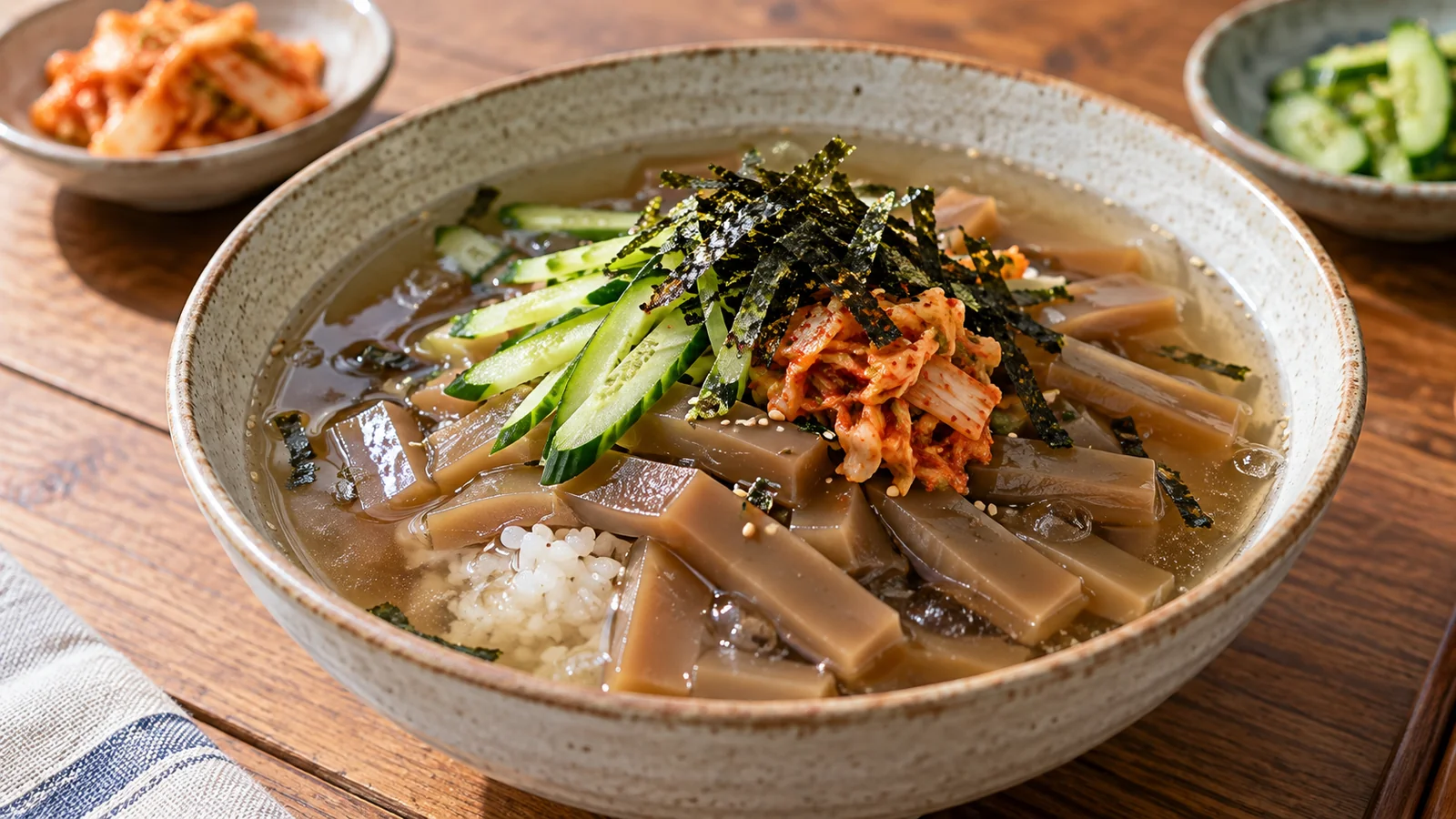
- Dotori-mukbap: pieces are placed in broth with rice and toppings. A cold version is one option; ask the restaurant whether it serves its bowl cold or warm.
The Korea Tourism Organization's guide to vegetarian options describes plain muk with sauce and the vegetable salad. A listed muk restaurant gives a concrete cold-broth bowl with rice, kimchi and laver. These examples show why the word muk alone cannot tell you whether you will receive a dry salad or a meal in broth.
How do you choose and order it?
- Specify the serving style. Ask for plain slices, dotori-muk muchim or mukbap, and check whether the bowl contains rice and broth.
- Ask about the dressing and toppings. Soy sauce, sesame, chili, kimchi or stock can change taste and ingredients. Request the sauce separately if you want to try the unseasoned jelly first and the restaurant can provide it.
- Check dietary needs. Acorn starch itself is plant-based, but the complete dish may include fish sauce, seafood stock, egg or other additions. Ask about the actual dressing and broth rather than assuming that every muk dish is vegetarian, soy-free or sesame-free.
For a mild first taste, begin with a plain piece and add a little sauce; choose muchim for vegetable crunch or mukbap if you want rice and broth. Ask what a portion includes rather than inferring a serving size from the photo. The word muk can also refer to jellies made from buckwheat or mung bean, so confirm dotori if acorn is the flavor you seek.
What should you know about packaged jelly and leftovers?
For a packaged block or starch powder, follow its own storage and preparation directions. The amount of water and setting method depend on the product, so one universal ratio would be misleading. Once a salad or broth dish has been prepared, its vegetables, sauce and temperature also affect how it should be handled; ask the seller about takeout and leftovers.
Do not judge safety only by whether the jelly still holds its shape. If storage conditions are unknown, a firm-looking block does not establish that the full prepared dish is safe. When serving it again, follow the package or restaurant's guidance and expect the texture to change when the jelly sits in dressing or broth.