Korean Food / Gamjajeon: Potato Pancake Texture, Ingredients and Cooking Tips
Gamjajeon is a Korean potato pancake made by pan-frying grated or ground potato, often with some potato starch. It is usually mild, with browned edges and a moist, chewy center. To choose or make one, pay attention to how finely the potato is prepared, the thickness in the pan and whether a dipping sauce or extra vegetables are included.
What makes gamjajeon a potato pancake?
The Korea Tourism Organization's gamjajeon guide describes ground potato mixed with starch, spread in a lightly oiled pan and fried. Chives, carrots or mushrooms may be added. It calls the resulting texture mild and chewy and suggests onion-soy dipping sauce. These additions are choices, not ingredients every restaurant must use.
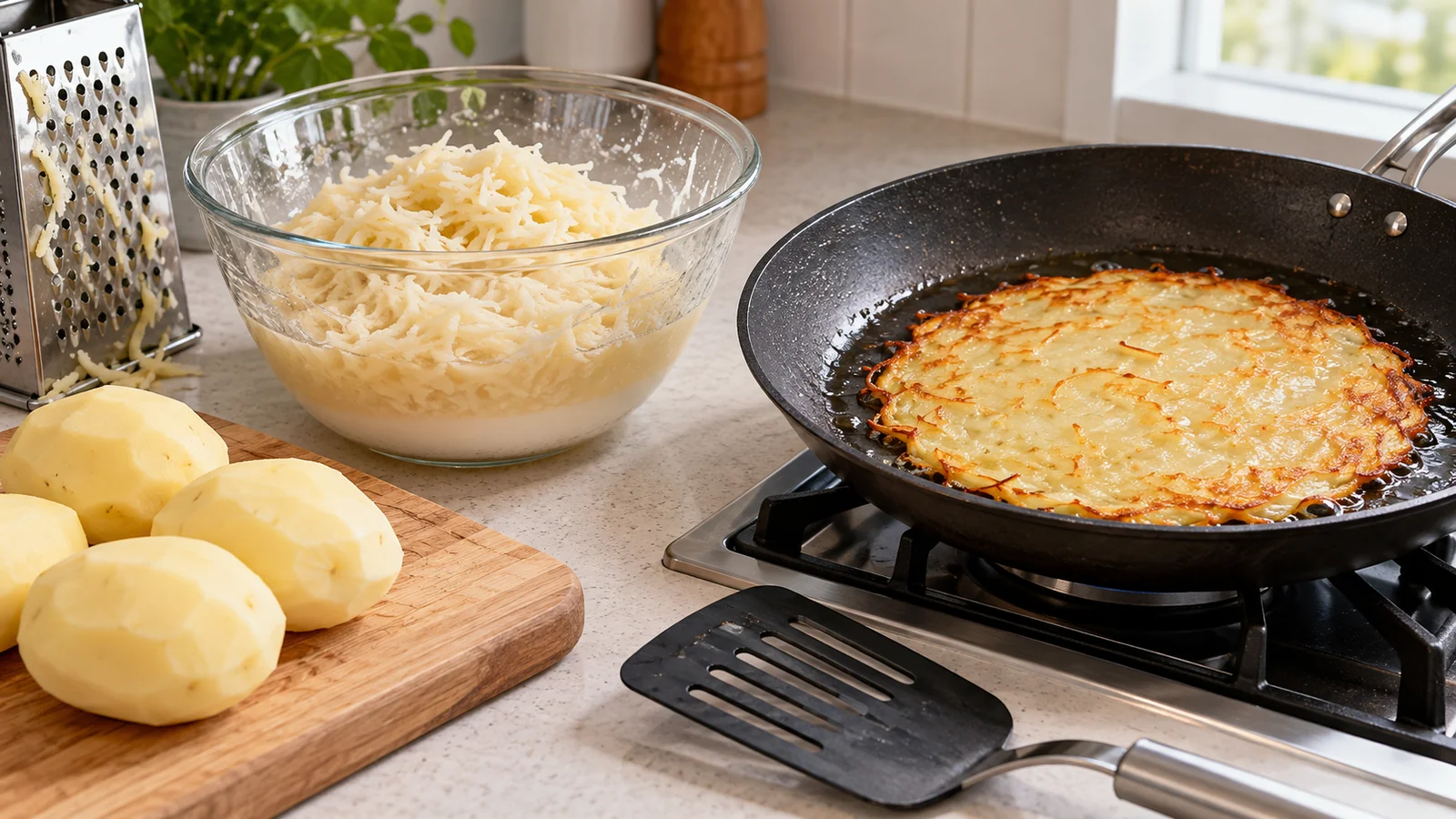
Gamja means potato and jeon refers to a pan-fried Korean pancake or fritter. Unlike a sweet breakfast pancake, the potato is the focus here. Some cooks grate the potato finely for a cohesive, soft interior; others leave longer shreds that remain more visible and create a different bite. The preparation photo shows grated potato and a pancake in the pan, not a measured formula that every cook follows.
Why can the outside be crisp while the middle is chewy?
Thin portions in contact with the hot, lightly oiled pan brown first, creating a firmer edge. Moist potato inside stays softer and can feel chewy because of its starch. The cutaway image makes that contrast visible. A thick pancake may retain more soft center, while a thinner one exposes more surface to browning; neither texture alone proves a particular recipe or potato variety.
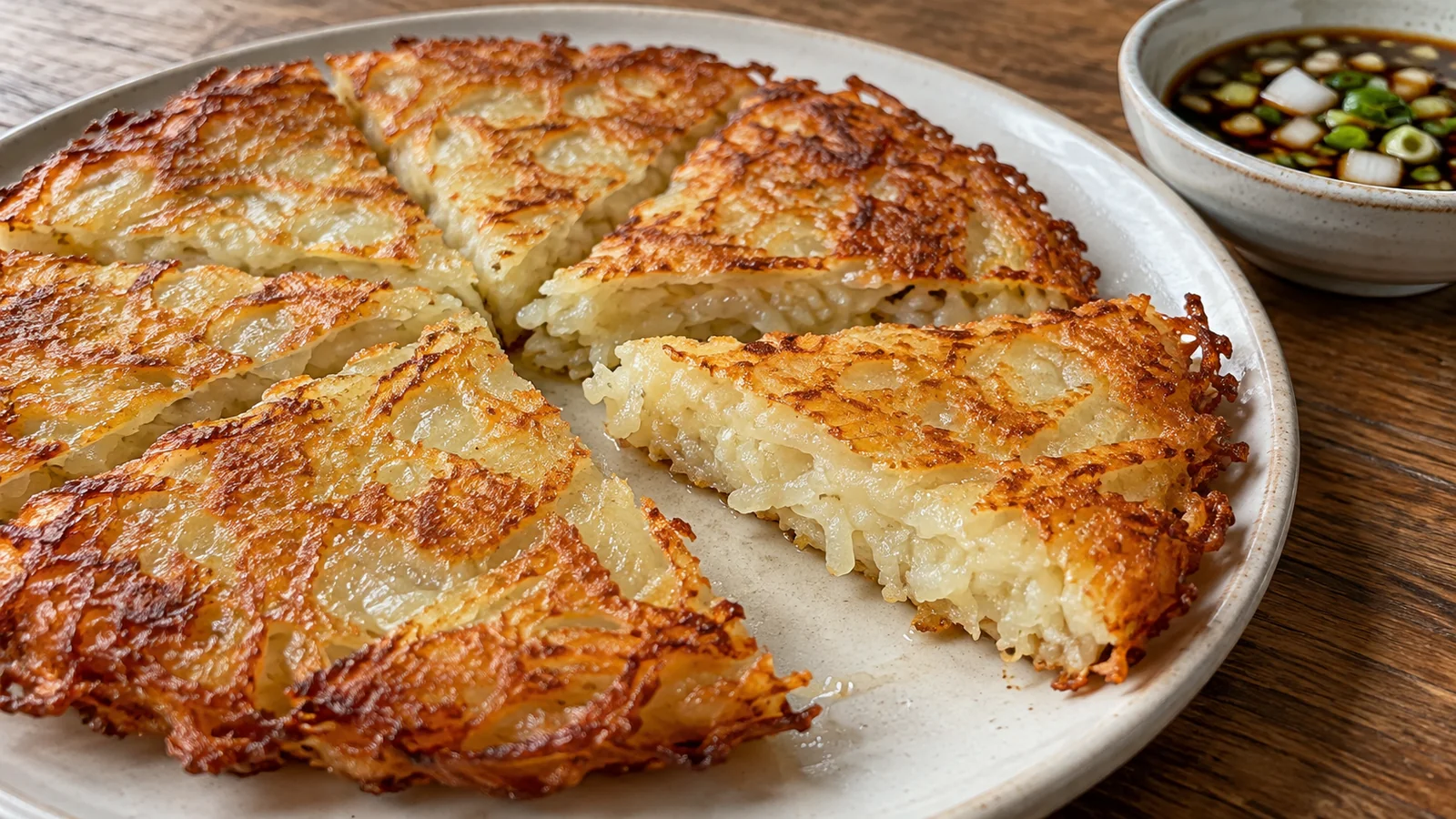
If a pancake feels wet or fragile, pressing it thinly and waiting until one side holds together before turning can help. Overcrowding a pan or adding very watery vegetables makes browning harder. These are cooking judgments, not an exact temperature or number of minutes: pan size, potato water content and thickness change the result.
How can you make a simple version at home?
- Prepare the potato. Peel and finely grate enough potato for the pan you are using. If a lot of liquid collects, let the grated potato settle briefly and remove excess water without throwing away all the potato starch at the bottom.
- Make a cohesive mixture. Stir the potato and retained starch together. Add a little potato starch only if the mixture does not hold; optional finely cut chives or other vegetables should not overwhelm the potato. Season lightly and check any prepared starch for its ingredient label.
- Spread and fry. Heat a frying pan with a thin film of oil, spread a small thin round layer and allow the bottom to set and brown. Turn carefully when the edge holds together; cook the other side until browned and the potato center is cooked, adjusting the heat if the edge darkens too fast.
Serve a small test pancake first. If it breaks, use a smaller round, remove more loose liquid or let the first side set longer before turning. If the center is gummy while the edge is dark, use a thinner layer or lower heat and allow more time for the middle. This observation-based method is more reliable than promising one universal starch ratio or frying time.
What can you add, and how should it be eaten?
Chives, carrots and mushrooms are among the optional additions named by the Korea Tourism Organization. Additions affect flavor and moisture, so check what a restaurant's version contains instead of assuming plain potato. Potato and potato starch can form the base, but the name gamjajeon alone does not guarantee that a particular kitchen avoids wheat, egg or a shared griddle.
A little onion-soy sauce adds salt and sharpness to the mild potato. Dip a corner first so you can compare the plain pancake with the seasoned bite; soaking every piece will soften the browned surface. A fresh, hot pancake emphasizes the contrast between edge and center, while a covered takeout container can trap steam and reduce crispness.
How is it different from other Korean jeon?
The main ingredient and batter structure matter more than the fact that all are pan-fried. Pajeon features scallions, while seafood pajeon also includes seafood; gamjajeon centers on potato. A restaurant may add vegetables to potato jeon, so use the menu description and ingredient questions rather than judging by a round shape alone. This distinction is particularly useful if you want a potato-forward taste or need to avoid a seafood filling.
When ordering, ask how large one piece is, what vegetables or starch are mixed in and whether dipping sauce is included. Prices, portion sizes and thickness differ by kitchen. If you are taking it away, ask how the restaurant packs it and expect some surface crispness to change during travel; a warmed edge does not by itself tell you how a leftover was stored.